
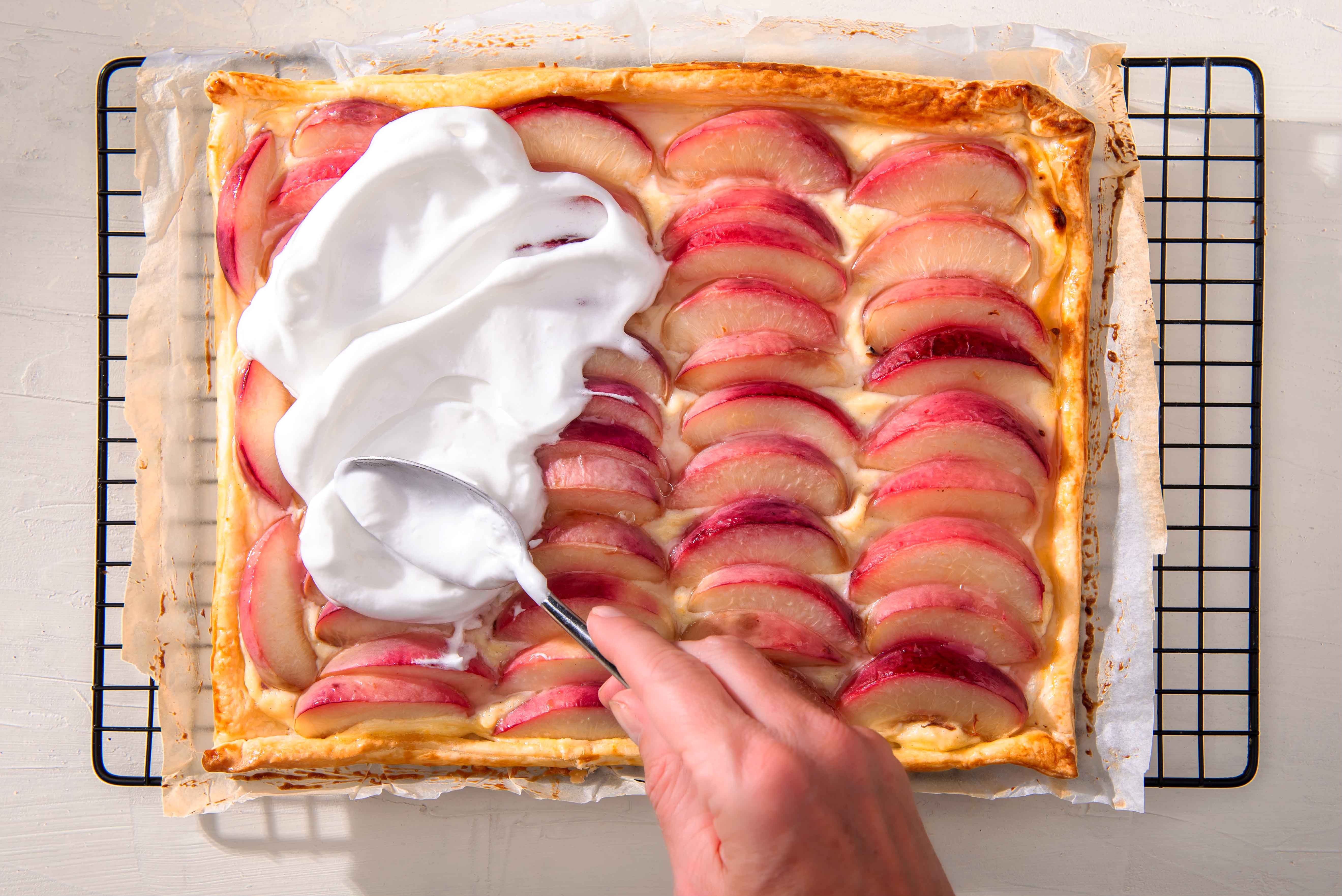
Few things are as satisfying as a freshly baked tart loaded with summer fruit. Stone fruits like apricots, peaches, nectarines, plums, and cherries are perfect for this. And right now, they’re all in season. Capture the flavor of summer in a crisp crust with a rich filling. In this issue, we help you perfect your fruit tart. Which crusts work best, how do you keep them dry with all that juicy fruit, how do you make the most delicious fillings, and how do you prepare the fruit for the best result? Let’s bake.
Stone fruits are fruits with a hard pit in the center, surrounded by juicy flesh. This group includes cherries, apricots, plums, peaches, and nectarines: all summer favorites from orchards close to home. The pit is botanically the seed, enclosed by a woody stone layer (endocarp), which is where the name comes from. Stone fruits are rich in aromatic esters, acids, and sugars that develop as the fruit ripens on the tree. Their balance of juiciness, brightness, and structure makes them ideal for tarts.
All stone fruits can be eaten with their skin on. The skin is rich in flavor compounds and dietary fiber. There are times when you’d want to remove it, though: peaches with their fuzzy skin, for instance, where a smooth filling or a clean glaze matters. And in fine patisserie, texture and appearance can play a role. Use the classic blanching technique: submerge the fruit in boiling water for 10 seconds, transfer immediately to ice water, and the skin slips right off. This only works with ripe fruit.
How do you get the pit out cleanly?
Apricots and plums: halve the fruit along the natural seam and pop the pit out with your thumbs or a spoon.
Peaches and nectarines: cut around the pit and twist the two halves in opposite directions. The variety matters here. Freestone peaches release the pit easily and are ideal for halving cleanly, perfect for baking. Clingstone varieties hold tight to the pit. Removing it takes more effort and tends to bruise the flesh. You can’t tell from the outside, so ask at the market or test one fruit before buying a large batch for your tart.
Cherries: use a cherry pitter. No cherry pitter? Place the cherry (stem removed) over the opening of an empty bottle and push the pit out with a firm straw or chopstick. The cherry stays whole and you avoid splatter.
Ripe fruit doesn’t need precooking; it’s soft enough to bake in the oven. Precooking can actually make it mushy. The key is to buy fruit that’s ripe but still firm enough to slice without falling apart.
If the fruit is too hard, you have a few options:
Cut into pieces and briefly blanch (about 30 seconds in boiling water, then cool immediately).
Cut into pieces and briefly microwave (start with 30 seconds at full power).
Cut into pieces and roast in the oven. This concentrates the juice and deepens the flavor. Allow about 15 minutes at 320°F (160°C) convection.
Macerating is a smart technique for working with juicy fruit. You mix the fruit with sugar (and optionally some flavorings) and let it sit for a while. You’re essentially marinating the fruit in sugar. Through osmosis, the sugar draws moisture out of the fruit, similar to what salt does when brining vegetables, meat, or fish. Pastry chefs use this method often for tarts with peaches, nectarines, plums, or pears. It has two advantages: the fruit becomes slightly softer and more flavorful, and the juice is released before baking. You can drain that juice or cook it down into a syrup, so it doesn’t seep into the crust. The dough stays drier and crispier, and the filling holds together better.
How to do it:
Mix the fruit with 5 to 10% sugar by weight. Use caster sugar or light brown sugar.
Add cinnamon, vanilla, or lemon zest if you like.
Let sit for 30 to 60 minutes.
Drain off the released juice. You can reduce it to a syrup and brush it over the finished tart or stir it into the filling.
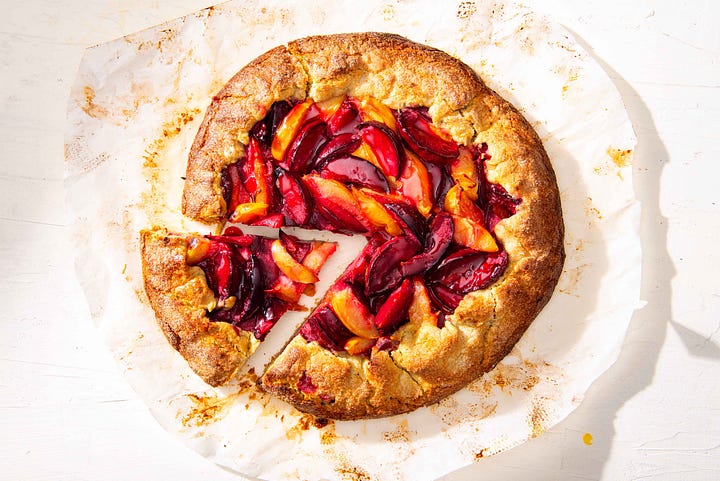
In the crostata recipe further on in this newsletter, we macerate fresh plums this way.
The idea of a fruit tart with a crisp crust, juicy filling, and a glossy finish is distinctly European. Outside Europe, fruit appears in desserts but rarely in this form. In the Middle East, fruit is mostly dried, candied, or used as syrup in pastries with nuts or semolina. In Asia, fruit tends to appear alongside puddings, jellies, or steamed cakes. In the US and UK, fruit desserts like pie, crumble, or cobbler are much looser and more rustic, with crumbly dough or biscuit-like toppings.
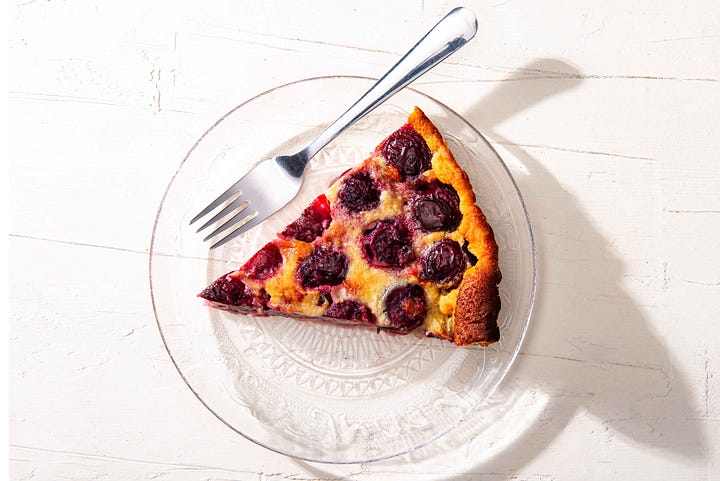
France, Germany, Austria, and Italy have developed fruit tarts into a refined genre within patisserie. In France, the clafoutis is the classic fruit bake, but it uses no dough at all. The batter is liquid, similar to a flan made with eggs, milk, sugar, and a little flour. You pour it over the fruit in the pan and bake; the batter turns custard-like as it sets. The moisture from the fruit is actually welcome here: it’s absorbed into the batter. A clafoutis is truly the simplest fruit tart you can make.
The Italian crostata is a proper tart with a crust. Italians use pasta frolla, a sweet dough very similar to pâte sucrée, sometimes with a little oil or baking powder added for extra crumbliness. The filling is usually jam, which avoids moisture problems. The dough is laid partly on top in a classic lattice pattern. Crostatas are robust, keep well, and tend to be slightly sweeter than French or British tarts. We made one with fresh plums.
Which dough to use when (and why)?
Smart techniques to prevent a soggy bottom
Which layer goes between dough and fruit for flavor and crunch?
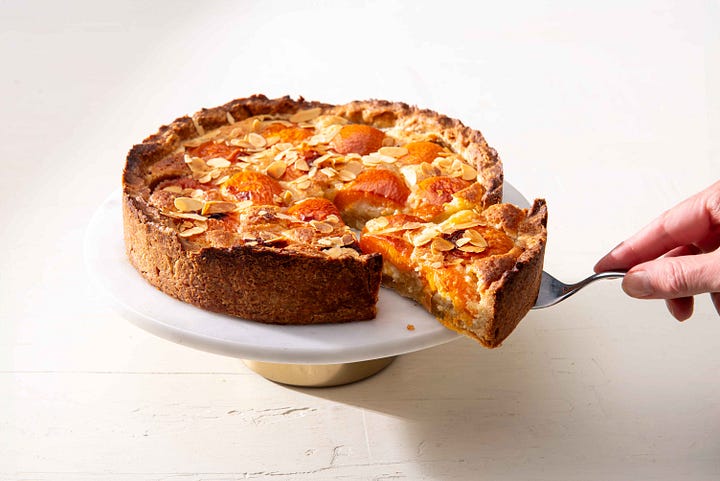
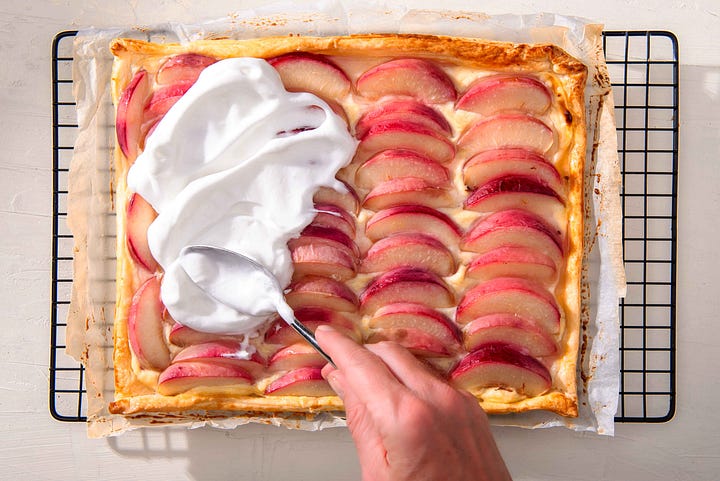
Recipes: apricot frangipane tart, cherry clafoutis, plum crostata, nectarine tart with meringue
Already a paying subscriber? Then just keep reading below. Not yet subscribed but want to read on, learn techniques, and cook better with real knowledge? Subscribe via our website for the best price (€60/year or €6/month). In the app you’ll pay €85/year due to Apple and Google service fees. As a subscriber you receive the full Kitchen Lab newsletter every other Sunday, in your inbox or on Substack, plus access to all our back issues and the Kitchen Lab Chat.
Comments
Nothing yet. Say the first thing.
Sign in to join the conversation.