
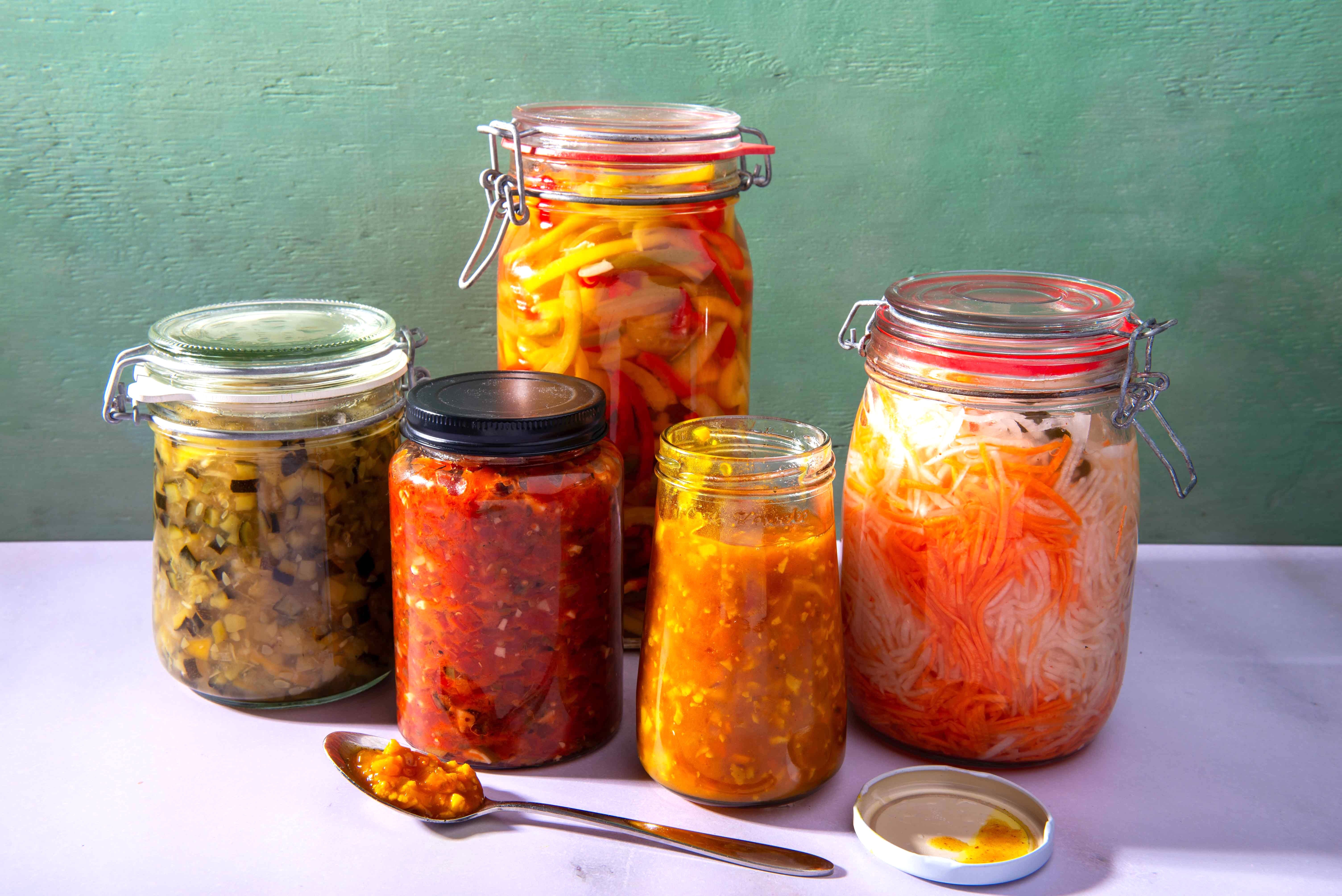
With vegetables, fresher is almost always better. But sometimes you end up with more than you can eat. Preserving is the answer: as chutney, relish, jam, or pickled in a sweet-sour brine. A great way to keep seasonal vegetables going all winter. And preservation isn’t only about shelf life: the flavor and texture of preserved vegetables can be fantastic in their own right.
One more thing before we dive in. At the end of this issue you'll find a short poll. Kitchen Lab has always been vegetarian, and I'm considering whether to expand beyond that. Three quick questions, and your input genuinely shapes what comes next.
Most vegetables and fruits are designed by nature to be eaten quickly, so their seeds get spread. After harvest, decay sets in from the outside via bacteria and molds, and from the inside via enzymes in the plant cells. To preserve vegetables, you need to create an environment where the bacteria and molds responsible for spoilage can barely survive.
The most efficient way to stop harmful microorganisms is to dry them out: simply deprive them of the water they need to survive. You can do this by drying vegetables, but also by adding large amounts of sugar or salt. Because the concentration of salt or sugar outside the plant is much higher than inside the plant cells, water flows outward through osmosis. Microorganisms can’t survive in high concentrations of salt or sugar because they dehydrate.
Another way to stop bacterial growth is to lower the acidity (pH) using vinegar. This is the essence of pickling. Many bacteria and molds can’t tolerate acid and die off. A popular combination is sweet and sour: it provides double protection, dehydration through sugar and an acidic environment. It’s also a great flavor match, since the sugar balances the sharpness of the vinegar.
Lactic acid fermentation is a preservation technique that uses the naturally occurring lactic acid bacteria on most plants. We’ll dedicate a separate issue to this technique in the future.
Every plant cell is surrounded by a cell wall that gives the plant its structure. The liquid inside the cell is under pressure, which is why biting into a fresh carrot is crisp: the cells don’t give way under pressure, they snap. Old carrots, on the other hand, lose moisture through evaporation. The pressure inside the cells drops, and with it, the crunch.
The same thing happens when you preserve vegetables in salt or sugar: they soften as they lose moisture. Acid (like vinegar) does the opposite: it firms up cell walls, which is why vegetables pickled in vinegar stay crisp. Calcium and magnesium ions also strengthen cell walls. Use unrefined salt (which contains these minerals) when preserving vegetables for a slightly crunchier result.
Flavor balance: the right ratios of salt, sugar, and vinegar
Step-by-step: clean working, jars, sterilizing, filling, and cooling
Pickling in vinegar: sweet-sour vegetables
Chutney and relish: what’s the difference?
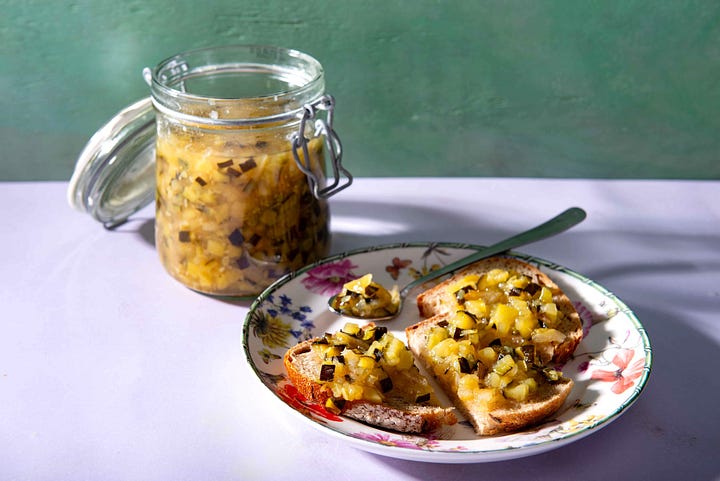
Recipes: sweet-sour pickled vegetables, spicy pepper pickles, piccalilli, tomato chutney, zucchini jam
Already a paying subscriber? Then just keep reading below. Not yet subscribed but want to read on, learn techniques, and cook better with real knowledge? Subscribe via our website for the best price (€60/year or €6/month). In the app you’ll pay €85/year due to Apple and Google service fees. As a subscriber you receive the full Kitchen Lab newsletter every other Sunday, in your inbox or on Substack, plus access to all our back issues and the Kitchen Lab Chat.
When I started Kitchen Lab, I made a deliberate choice to focus exclusively on vegetarian cooking. I believe the world needs to move in that direction, and I still do.
But a 100% vegetarian world isn’t realistic, and it’s not what I’m asking of anyone. The principle I’ve come to embrace is 80% plant-based, 20% animal. And if you’re going to eat meat or fish, you might as well do it well. That’s the Kitchen Lab philosophy: understand what’s happening in your pan, and make every ingredient count.
Yes, I'm aware of the irony: I'm asking this question in a newsletter entirely dedicated to vegetables. But here we are. Three quick questions, and I'd love to hear what you think.
Comments
Nothing yet. Say the first thing.
Sign in to join the conversation.