
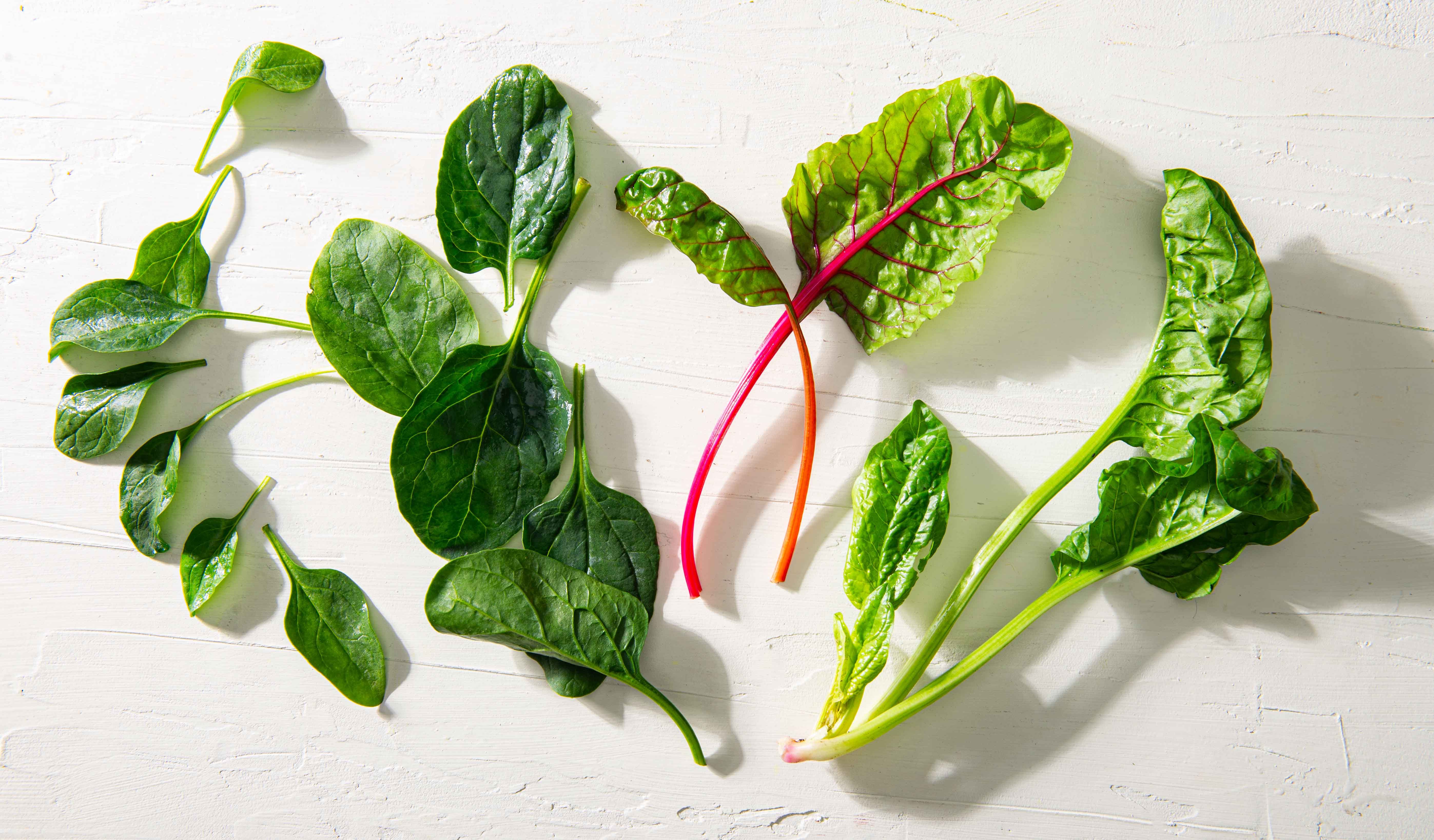
This edition is all about the fresh spring vegetable spinach and its lesser-known relative Swiss chard. Why? Because they’re in season right now, and that’s when they taste best. We’ll show you that these fresh green leaves can go in almost any direction: raw, briefly blanched, stir-fried, or quickly braised. But first, we take you into the world of chlorophyll, the green leaf pigment that not only provides color but also brings some surprising cooking properties along with it. And of course we answer the question: can you reheat spinach or not?
Spring is a remarkable season. Everything turns green again, young leaves emerge, and photosynthesis kicks back into gear. Plants are preparing for a new growth cycle, with flowering, reproduction, and seed formation as the goal. Chlorophyll, the pigment that colors leaves green, plays a central role in this. It captures sunlight and converts that light energy, using water and carbon dioxide, into sugars: fuel for the plant’s cells. This makes plants fundamentally different from humans and animals. They produce their own energy and are, in a sense, self-sufficient.
Green is not just a color; it also shapes flavor. Chlorophyll itself tastes fairly neutral, a bit like the smell of fresh grass. But the leaves that contain it have a distinctly pronounced flavor. Think of spinach and Swiss chard: both spring vegetables, both bright green, yet completely different. Spinach tastes earthier and more acidic; Swiss chard has something of cabbage to it. That difference comes from the fact that chlorophyll never occurs in plants on its own. It typically goes hand in hand with other substances characteristic of young, active leaves, such as oxalic acid, glucosinolates, and nitrate. Each one is a compound that protects the plant and delivers a clear flavor.
Spinach, like rhubarb, can leave a gritty, almost chalky feeling on your teeth. That comes from oxalic acid, a plant acid that binds calcium in your mouth and forms tiny crystals (calcium oxalate). It’s like brushing your teeth with chalk. In the past, people would cook rhubarb with a copper coin to neutralize the acid. That helps a little, but more effective is adding something with calcium: milk, eggshell, chalk, or even a pinch of powdered plaster. This way the acid binds during cooking and spares your enamel. With Swiss chard the effect is less pronounced, because its oxalic acid content is lower than spinach.
In the paid section:
Can you actually reheat spinach and Swiss chard, or combine them with fish?
The best cooking techniques for leafy greens: blanching, stir-frying, braising, raw
What varieties of spinach and Swiss chard are there?
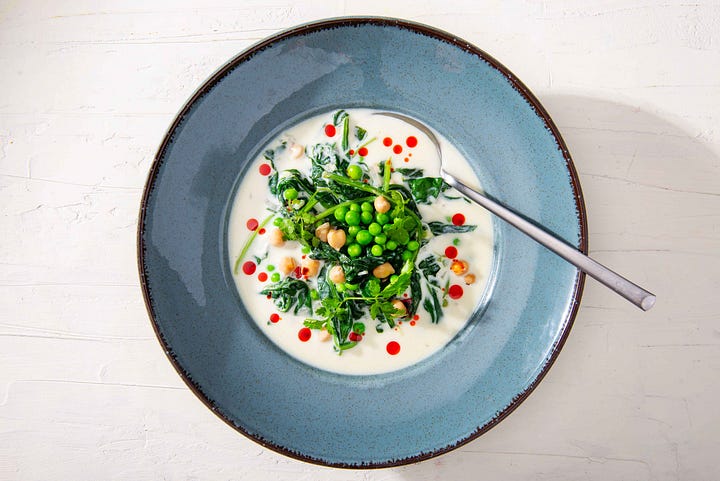
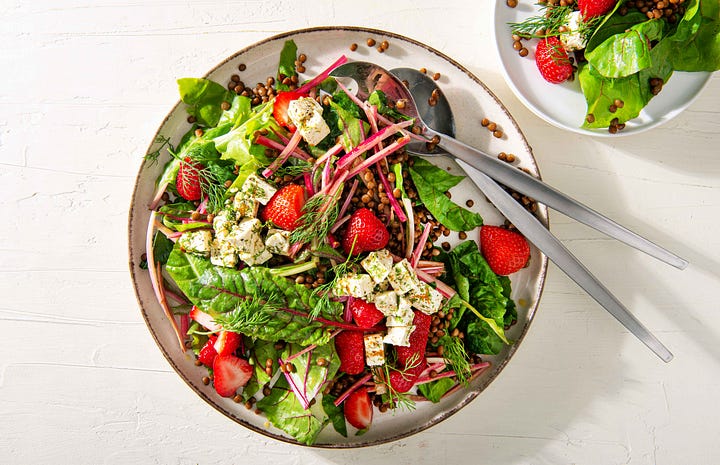
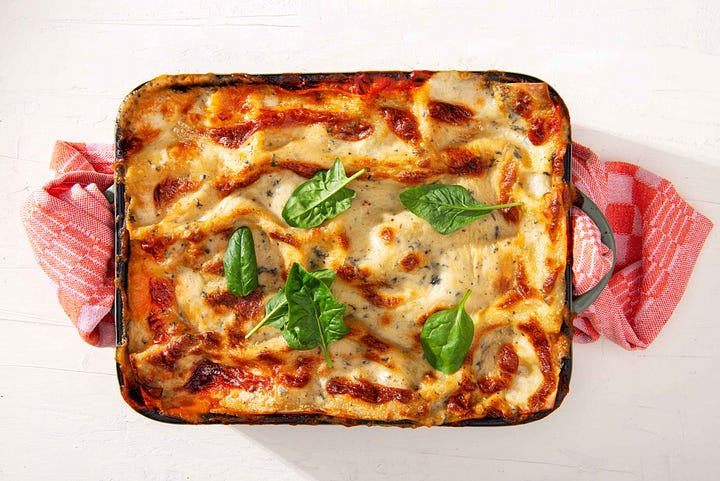
5 exceptionally delicious spring recipes
Not a member yet? Join Kitchen Lab and get the full newsletter every other Fridaymorning, straight to your inbox. Plus access to our complete archive and the Kitchen Lab Chat, where you can ask questions and swap recipes with fellow food nerds. Subscribe at kitchenlab.substack.com/subscribe: €60/year or €6/month. To avoid app store fees (€85/€9), use the link above rather than subscribing through the Substack app.

Comments
Nothing yet. Say the first thing.
Sign in to join the conversation.