
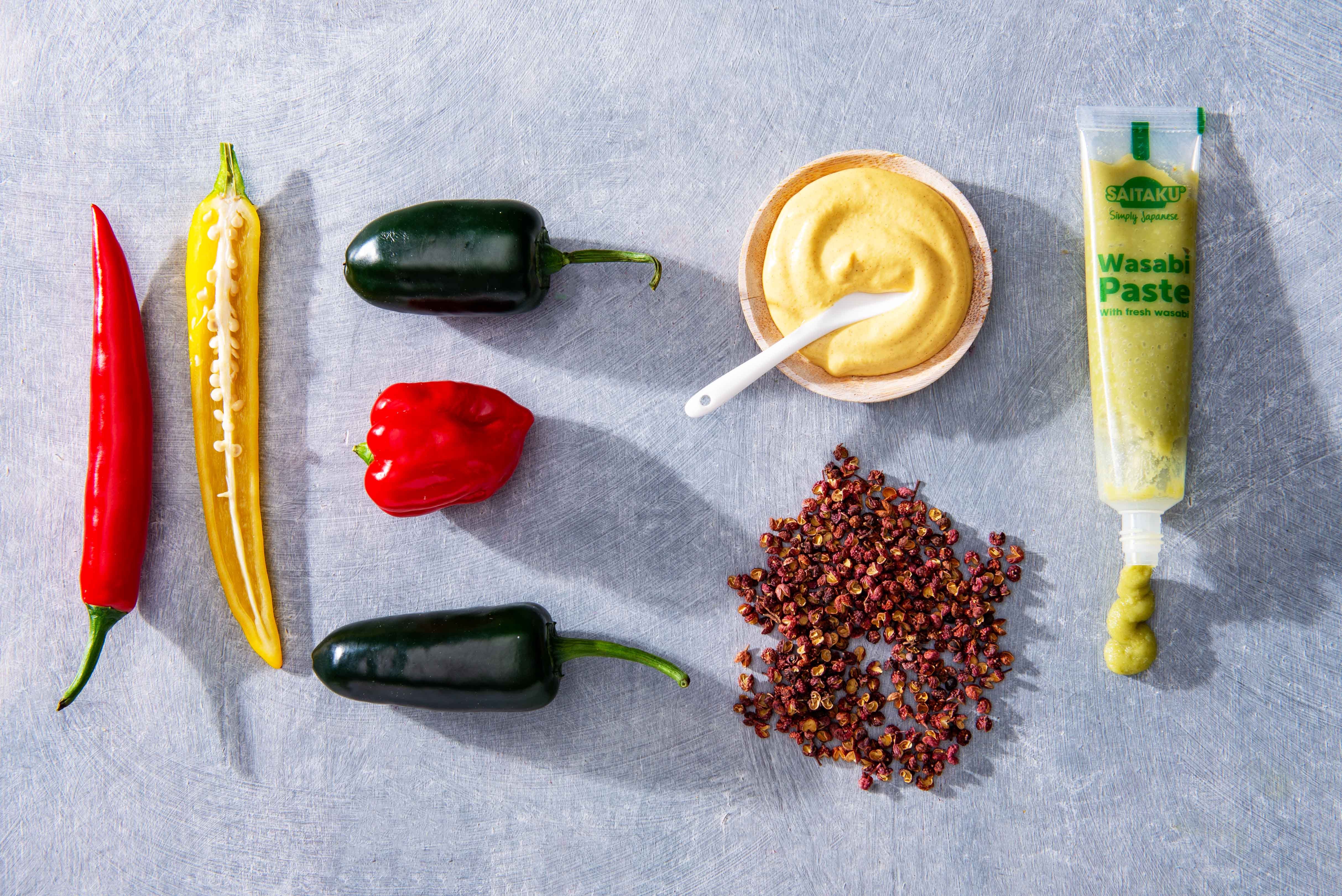
Some people fish every last chili out of a dish, others add a spoonful of hot sauce to just about every meal. How you experience heat is deeply personal. Why is that? And why do some people love spicy food so much? We explain what makes a pepper hot and look at the different types of heat (and the very different sensations they create). We also cover why chili is good for you and share tips for cooling down the burn. And of course: a few fiery recipes for a hot summer.
We often describe the sensation of spicy food as “hot,” but that’s not quite accurate. Heat isn’t a flavor the way sweet or salty are. What you feel when you eat a chili pepper is mild pain. Spicy compounds stimulate nerves that are normally designed to signal heat, cold, or physical damage. This form of perception is called chemesthesis: the sensing of chemical stimuli through the skin or mucous membranes. These nerves are also found on your tongue, lips, and in your throat. They respond to heat (like hot tea), cold (menthol), fizz (carbonation), and certain compounds in food. The most well-known example? Capsaicin, from chili peppers.
Capsaicin binds to a kind of “heat sensor” in your mouth: the TRPV1 receptor. This receptor sits on nociceptors (pain nerve fibers) and is designed to detect heat signals. Normally, TRPV1 is activated at temperatures above 107°F (42°C), such as when you take a sip of too-hot tea. But capsaicin does the same thing, without any actual heat involved. The result: an intense burning sensation in the mouth.
Spicy food hurts, yet many people love it. Why? Part of the answer lies in the brain. Capsaicin activates the pain system, but causes no actual damage. This creates a paradox: you feel discomfort, but your body responds as if you’re in danger and releases a dose of endorphins. These natural painkillers produce a euphoric or relaxed feeling, similar to what you experience after exercise, sex, or a cold-water plunge. Dopamine, the reward hormone, is also released. The result: a mini-high at the dinner table.
This explains why spicy food feels exciting and can even be addictive. Like a roller coaster, it involves controlled stress: you know you’re safe, but your body reacts as if something is happening. That contrast between “panic” and “pleasure” is irresistibly appealing.
Some examples of this “delicious stress” in the kitchen:
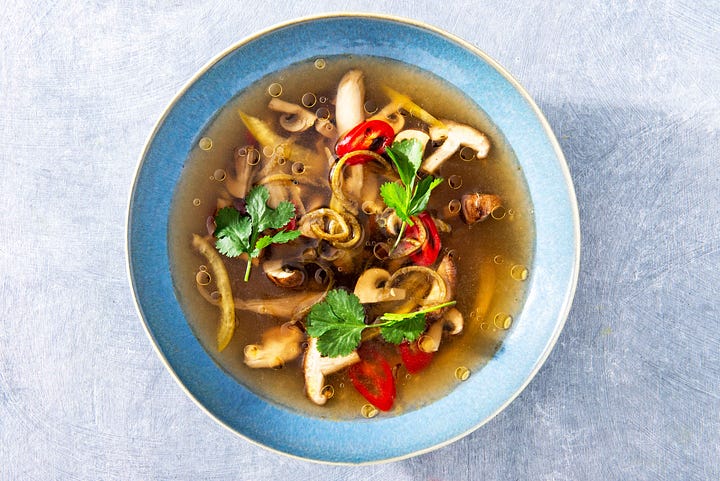
Thai tom yum soup with chili and kaffir lime leaf: hot and fresh, stress and relief. (see the recipe, for subscribers only)
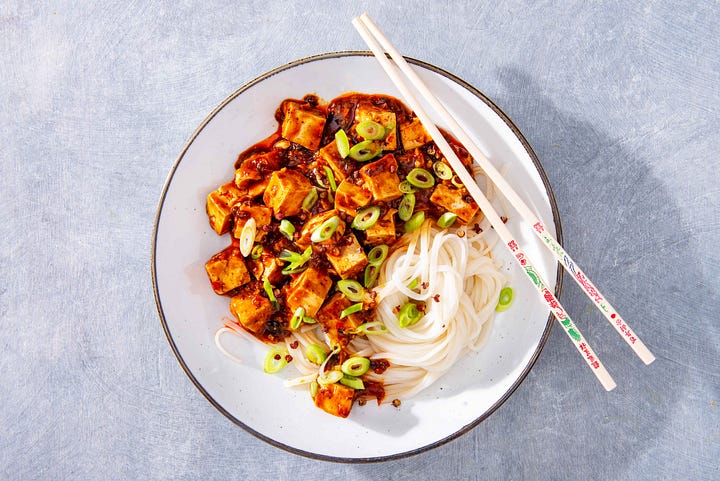
Sichuan mapo tofu: an almost “electric” tingle from sanshool (more on that below), burning from chili, mellowed by fermented bean paste. (see the recipe, for subscribers only)
Mexican chipotle salsa: smoky heat that builds slowly and fades just as slowly.
There’s also the phenomenon of tolerance. The nerves in your mouth that register capsaicin (TRPV1 receptors) become less sensitive with repeated exposure. That’s why people who eat spicy food regularly can handle more and more, just like with coffee or alcohol. What’s unbearable for a beginner is a pleasant tingle for a seasoned chili eater. Culture plays a role too. In countries where spicy food is the norm (such as India, Mexico, and Thailand), people learn from a young age to handle heat. But it remains a learning process.
So we love spicy food not despite the discomfort, but because of it. It’s a controlled form of pain, rewarded with pleasure. And just like other thrilling experiences: the more you do it, the more you can handle, and the bigger the kick.
Pepper plants produce capsaicin as a defense mechanism: it keeps mammals away. Birds don’t experience that pain sensation, so they can spread the seeds without issue. Smart evolution. The amount of capsaicin varies between species (bell peppers have none; habaneros will torch your tongue), within species (supermarket chili vs. market chili: same variety, different heat), and depending on growing conditions (more sun often means more heat). Breeders can also deliberately select for more or less heat by choosing varieties with more capsaicin glands in the fruit wall. That’s how superhot varieties like the, in our view completely inedible, Carolina Reaper came to be.
But capsaicin isn’t the only thing that creates a peppery sensation. In the paid section of this newsletter, more on:
Different types of heat (black and white pepper, mustard and wasabi, Sichuan pepper)
How to cool down pepper heat
Health benefits
A quick pepper guide for the kitchen: which pepper goes in which dish?
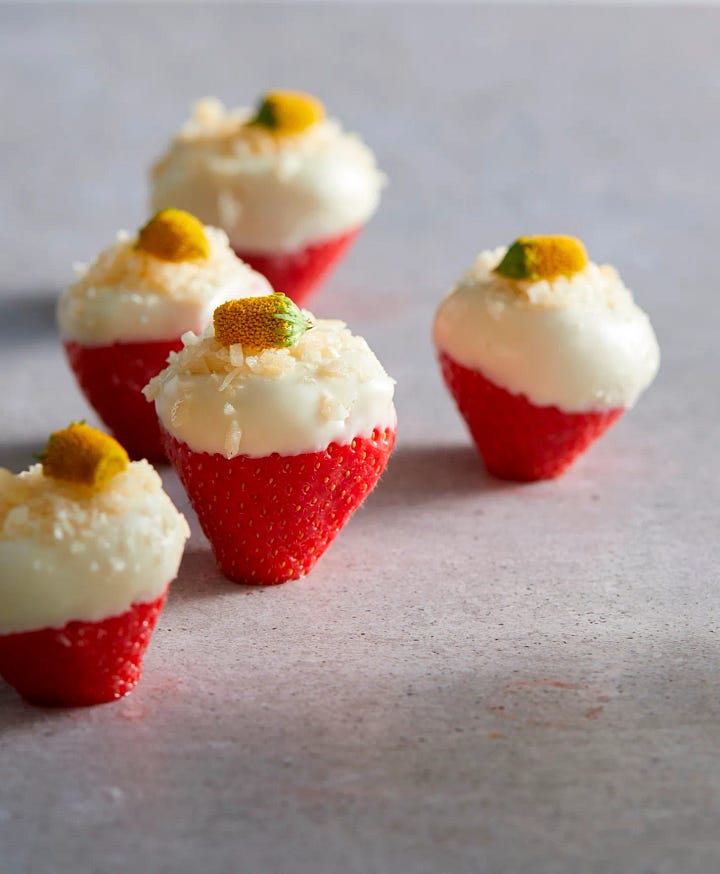
Four fiery recipes: tom yum soup, mapo tofu, Sichuan pepper chocolates, and toast with asparagus and wasabi cream
Not a member yet? Join Kitchen Lab and get the full newsletter every other Fridaymorning, straight to your inbox. Plus access to our complete archive and the Kitchen Lab Chat, where you can ask questions and swap recipes with fellow food nerds. Subscribe at kitchenlab.substack.com/subscribe: €60/year or €6/month. To avoid app store fees (€85/€9), use the link above rather than subscribing through the Substack app.

Comments
Nothing yet. Say the first thing.
Sign in to join the conversation.