
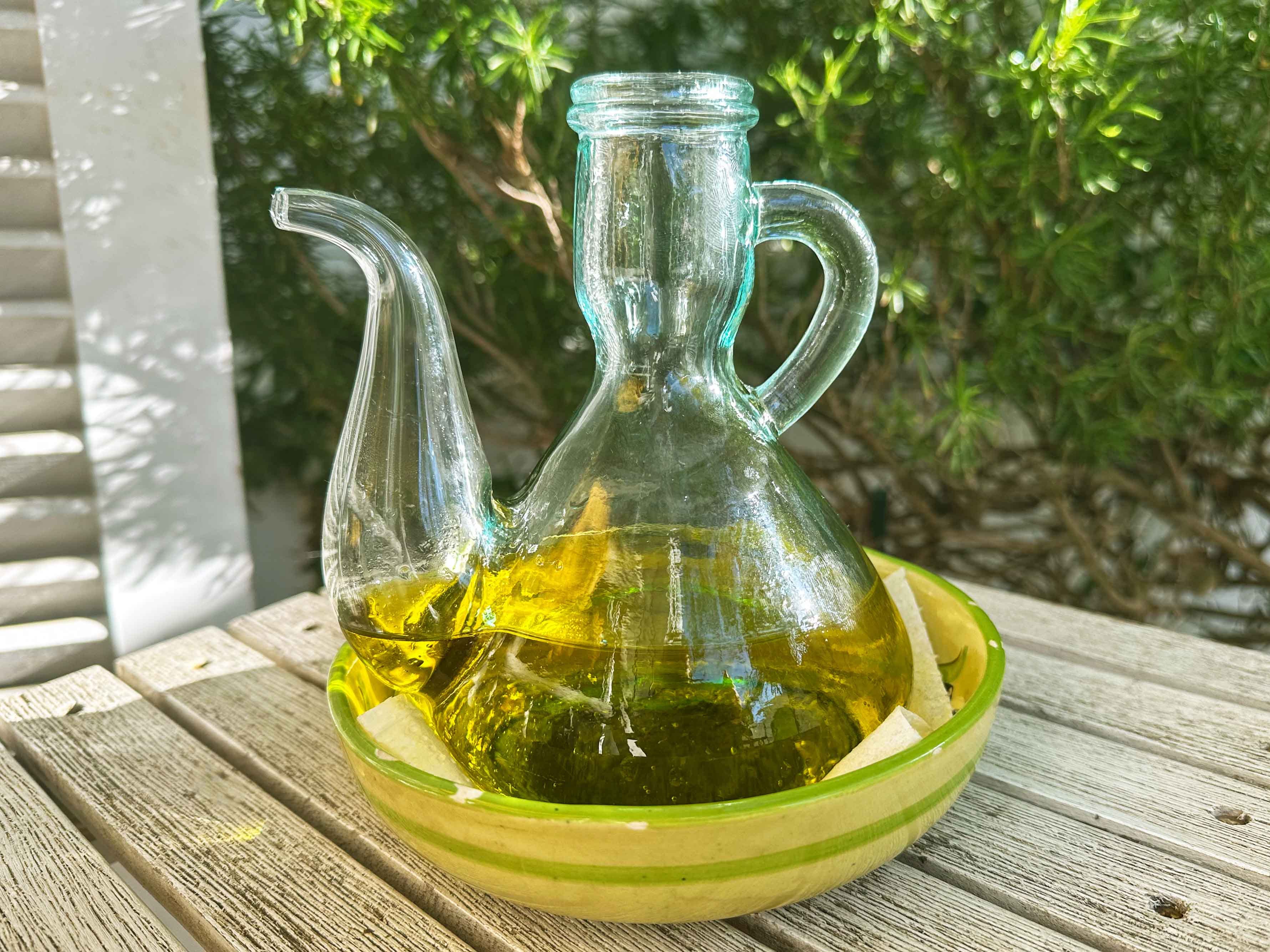
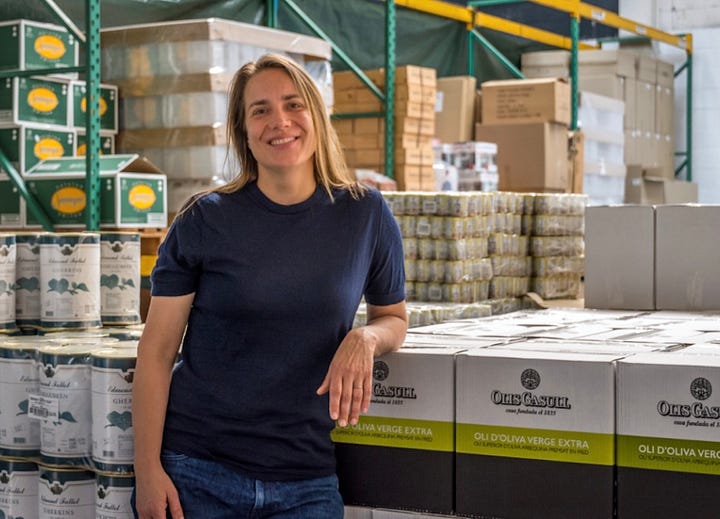
Olive oil is indispensable in the kitchen, but choosing the right one from an overwhelming selection can be tricky. What should you look for? Which oil for which dish? Judith van Unen, certified olive oil taster and owner of olive oil wholesale and specialty shop Meeuwig and De Oliewinkel in Amsterdam, explains exactly how it works. We also answer the question of whether or not you can heat olive oil, and explain why it’s so good for you. Of course, we’ve also included a few flavorful, simple recipes where olive oil takes center stage.
Olives are the fruit of the olive tree, and they’re exceptionally rich in oil. While apples and pears contain almost no fat, an olive consists of 11 to 15% oil. No wonder this fruit has been used as a plant-based oil source for thousands of years. Over the centuries, olive varieties have been selected for ever-higher oil yields. The methods used to extract the oil have also changed dramatically, and with them, the yield per olive.
Several factors determine the quality of the oil.
Simply put, there are two ways to make oil from an olive: mechanically, by pressing or centrifuging, or chemically, through solvent extraction. Traditionally, olives were ground pit and all into a pulp, then pressed. Stone mills and wooden or metal lever presses were used, later replaced by screw presses. The pressed liquid, a mix of oil and water, was left to settle until the oil floated to the top, then poured off: the “first pressing.”
Today, presses have been replaced by stainless steel centrifuges that process olives continuously into oil. No more wooden barrels; modern technology with the same goal: separating oil from water and solids. The higher the pressure or centrifugal force, the higher the yield. This method produces extra virgin olive oil: the highest quality. The pulp left after centrifuging, called sansa or pomace, still contains some oil. This is extracted with solvents (such as hexane). The resulting oil can only be consumed after refining, and is sold under names like “light olive oil” or “pomace olive oil.”
You may still see the term “second pressing,” but it’s outdated: nearly all edible olive oil is now produced in a single pass. Whatever oil remains afterward isn’t pressed again; it’s chemically extracted.
Processing temperature plays an important role in final oil quality. Olive oil may only carry the “cold extraction” label if production takes place at a maximum of 27°C (81°F). The higher the temperature, the more the oil’s flavor and aroma can change. Many reputable producers work at lower temperatures, often around 20°C (68°F), to preserve taste and aromatic properties at their best.
Olive oil quality is also measured by acidity. Here, acidity doesn’t mean pH, but the percentage of free fatty acids in the oil, mainly oleic acid. Low acidity signals freshness and a careful production process where olives are processed quickly and without damage. According to EU regulations, extra virgin olive oil may have a maximum acidity of 0.8%. Virgin olive oil falls between 0.8% and 2%. Oil with higher acidity is classified as lampante oil and is only suitable for consumption after refining. Although acidity itself isn’t perceptible to the palate, low acidity typically goes hand in hand with better flavor, aroma, and shelf life.
Extra virgin olive oil isn’t just a flavoring agent; it’s a proven healthy ingredient. Research shows that people who use olive oil daily have a lower risk of cardiovascular disease and death from dementia (the Mediterranean diet). One important detail: those benefits apply almost exclusively to extra virgin olive oil. Minimal processing preserves sensitive bioactive compounds like polyphenols and vitamin E. These antioxidants protect your blood vessels, reduce inflammation, and support healthy brain function.
One of the most studied polyphenols in olive oil is oleocanthal, known for the mild peppery sensation it causes at the back of the throat in fresh oil. Oleocanthal acts as a natural anti-inflammatory, comparable to a mild version of ibuprofen. So the spicier and more peppery an olive oil feels in the back of your throat, the more likely it is to be rich in oleocanthal. Hydroxytyrosol, a powerful antioxidant, also plays an important role in protecting cells from oxidative stress.
Refined olive oil undergoes heat and chemical processing, during which nearly all polyphenols are lost, along with most of the health benefits. In short: good-quality olive oil is an investment in both flavor and yourself.
According to Judith van Unen, certified olive oil taster and co-owner of Meeuwig and De Oliewinkel, two Amsterdam-based specialty shops for olive oil, vinegar, and Mediterranean delicacies, everything begins with your own palate. “Taste, taste, taste. That’s the only way to develop your sense of flavor. Customers are welcome to taste, especially with a new harvest. If you’re spending twenty, thirty euros on a bottle, you want to know what you’re getting.”
She emphasizes how diverse olive oil can be. “With wine, people understand that different grapes and regions produce different flavors. With olive oil, we’re still discovering that.” That’s why she prefers to import oils from the regions where the olive variety originates: Arbequina from northern Spain, Taggiasca from Liguria. “The chances of top quality are simply higher.”
Judith’s approach is refreshingly direct: you don’t need to know anything about olives or olive oil. You just need to know what you like. She never starts a consultation with technical terms, but always with the question: do you prefer mild and smooth, or bold and peppery?
She deliberately limits her range to oils from the Mediterranean basin. “I don’t want an oil with a plane ticket. But I do see opportunities for the future: enormous numbers of olive trees have been planted in Rajasthan, India. For bulk oil, the refined varieties, that could become quite interesting.”
For paid subscribers:
• Judith’s tips for choosing the right oil and her kitchen favorites
• Answers to pressing questions:
How do you store olive oil?
Can you heat it?
How do you taste it?
What does the oil color tell you?
• The best recipes, from classic to out-of-the-box, plus 4 additional recipe links
Not a member yet? Join Kitchen Lab and get the full newsletter every other Sunday, straight to your inbox. Plus access to our complete archive and the Kitchen Lab Chat, where you can ask questions and swap recipes with fellow food nerds. Subscribe at kitchenlab.substack.com/subscribe: €60/year or €6/month. To avoid app store fees (€85/€9), use the link above rather than subscribing through the Substack app.
Comments
Nothing yet. Say the first thing.
Sign in to join the conversation.