
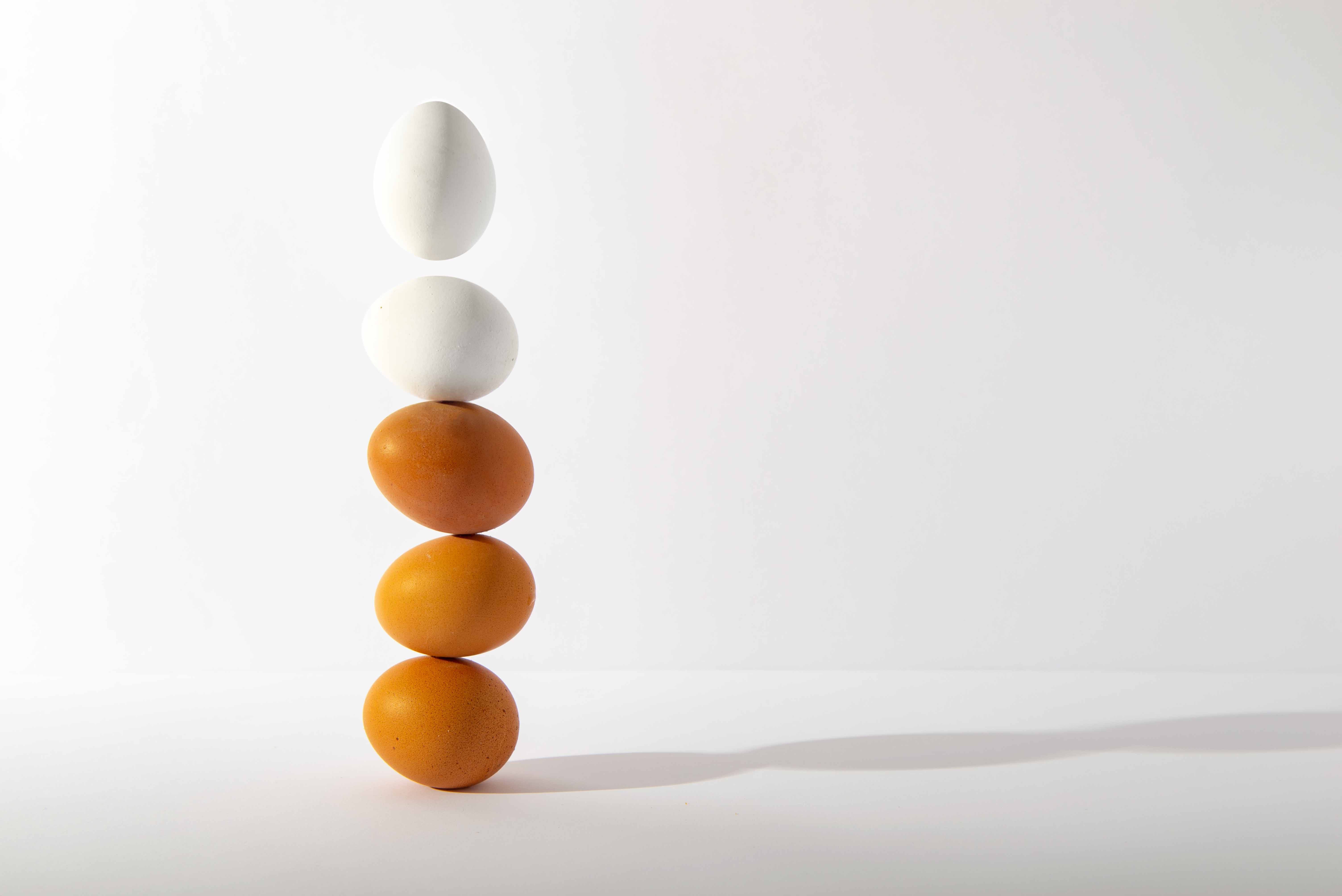
A well-cooked egg seems simple. It isn’t. In this newsletter, we dive into the molecular logic of proteins, coagulation, and temperature control. Why does an egg solidify when heated? Why is there a difference between the white and the yolk? And most importantly: why does your egg so often end up slightly too hard or too soft, even when you’ve done everything right? With the knowledge in this newsletter, you’ll serve a perfect boiled egg every time. And for extra creaminess, we take a detour into poaching. Also an art, but definitely not hard.
It’s remarkable that eggs become firm when heated. Vegetables soften, liquids evaporate, but egg proteins solidify. That’s due to the unique structure of the proteins in eggs. Both the white (90% water, 10% protein) and the yolk (17% protein) contain a mix of protein molecules that denature when heated. They unravel, form long strands, and bond with each other. This process is called coagulation. It creates a firm network that traps water, turning the egg from liquid to solid.
But here’s the catch: the white and yolk contain different proteins, each with its own setting temperature. The yolk starts to set at 144°F (62°C) and is firm at 158°F (70°C). The white doesn’t start to set until 145°F (63°C) and is fully set at 176°F (80°C). Serve an egg at 154°F (68°C) and you get a firm yolk with a soft white. A reverse soft-boiled egg, in other words.
For a proper soft-boiled egg, you need to keep the water at temperature long enough for the white to just set while the yolk stays warm and runny. That’s where the difficulty lies. The key to success is temperature control. So how do you do that?
Start hot. Always place eggs in boiling water. It’s more precise than starting in cold water. It also makes the eggs easier to peel, more on that later.
Know your egg. Size (S, M, L, or XL) and temperature affect cooking time. A cold egg straight from the fridge (39°F / 4°C) can easily cost you an extra minute. XL? Takes longer than S.
Cook smart. Cooking a lot of eggs at once? The water temperature drops when you add them. And with a weak heat source, it takes a while to return to a boil. Match the pan size and water quantity to the number of eggs. Make sure all the eggs fit in a single layer and that you have about 1 inch (2 to 3 cm) of water above them.
Be precise. The perfect time comes through trial and error. You know your pan, your heat source, and your eggs. Keep track and stay consistent.
Soft: 5 minutes
Medium-soft: 6 minutes
Salad egg: 7 minutes
Hard: 10 minutes
Pierce or crack. The air pocket sits at the rounded end of the egg. As the egg heats up, the air expands. Piercing a small hole in the air pocket lets the air escape and prevents the shell from cracking. It also gives the egg a nicer, rounder shape. If the air pocket stays intact (in an unpierced egg), the white sets around the cavity and you get a dent or indent on one side.
Shock them. Cool your eggs in cold water immediately after cooking to stop the cooking process.
Does shocking really make a difference?
Our recipe for the perfect boiled egg, with the nuances for an even better result.
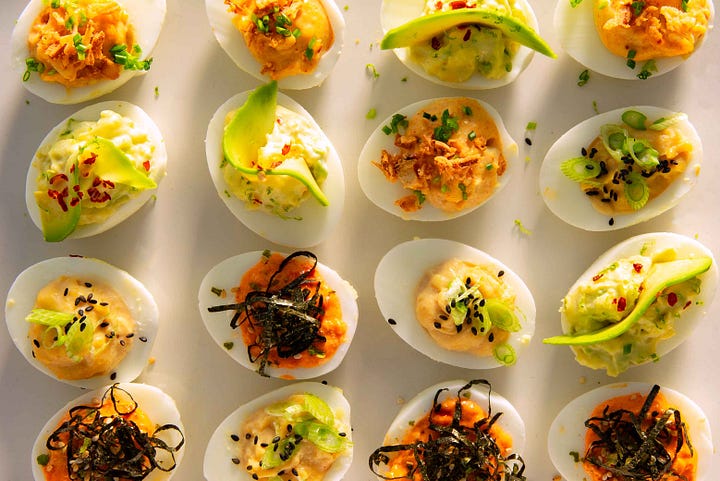
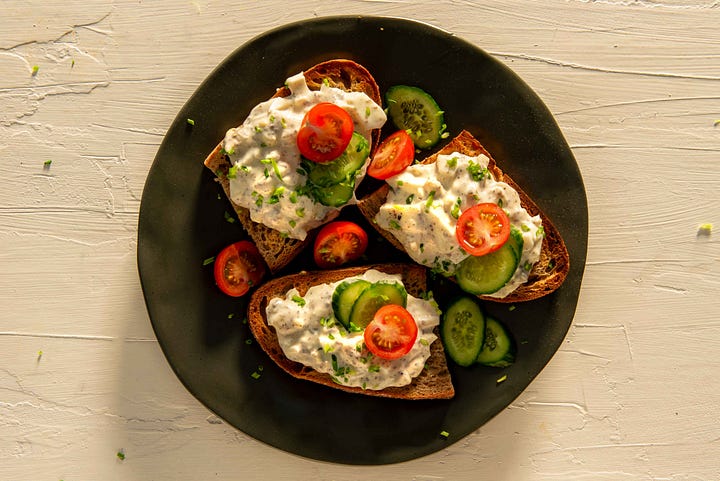
Recipes: egg-truffle salad and stuffed umami eggs.
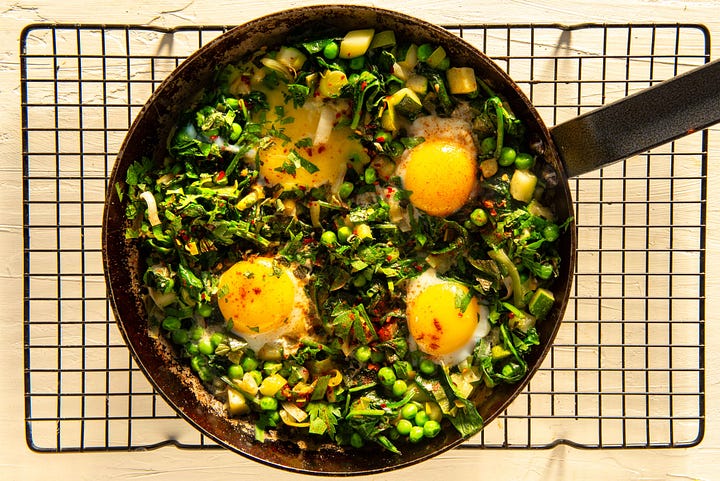
Poaching made easy, with a green spring shakshuka.
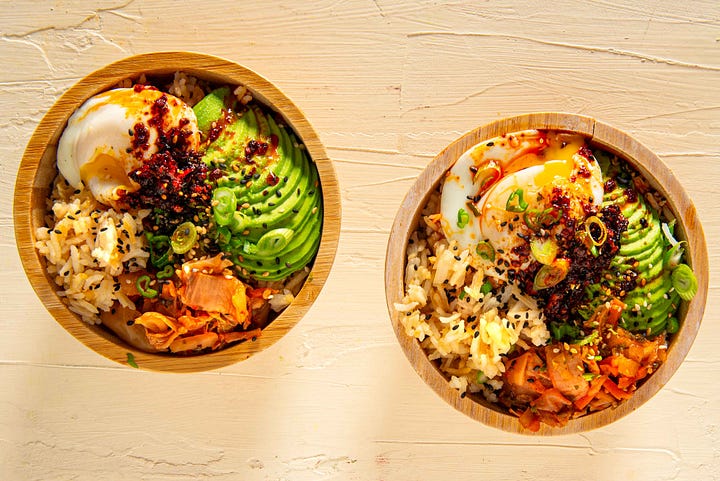
Oil-poaching (the Chinese takeout egg) with a recipe for poached egg with chili crunch, kimchi, and avocado.
Not a member yet? Join Kitchen Lab and get the full newsletter every other Sunday, straight to your inbox. Plus access to our complete archive and the Kitchen Lab Chat, where you can ask questions and swap recipes with fellow food nerds. Subscribe at kitchenlab.substack.com/subscribe: €60/year or €6/month. To avoid app store fees (€85/€9), use the link above rather than subscribing through the Substack app.
Comments
Nothing yet. Say the first thing.
Sign in to join the conversation.