
Two notes before we dive in:
If anyone can explain the value of the Relationship Economy and Middle Out Economics, and why they matter for the independent film community, it’s Emily Best and Christie Marchese, the founders and CEOs of Seed&Spark and Kinema respectively. In a Ford Foundation gathering about reorienting toward the Common Good, they presented a vision and proof points on Radical Collaboration as the path forward. Their presentation is worth a read.
Jeanie Finlay, who offers much wisdom on film distribution in our conversation below, is hosting a live virtual ‘Your Fat Friend’ Case Study Event where you can learn even more from her. As KFF readers, you get 25% off with code: KINEMA5. In Jeanie’s words,
“It’s basically going to be an image laden case study. We’ve learned a lot of stuff and I think it’s sometimes really good to see what we did but also think about the questions that we ask. This is not a ‘how-to guide’ but it’s like a ‘how-to change your brain guide.’
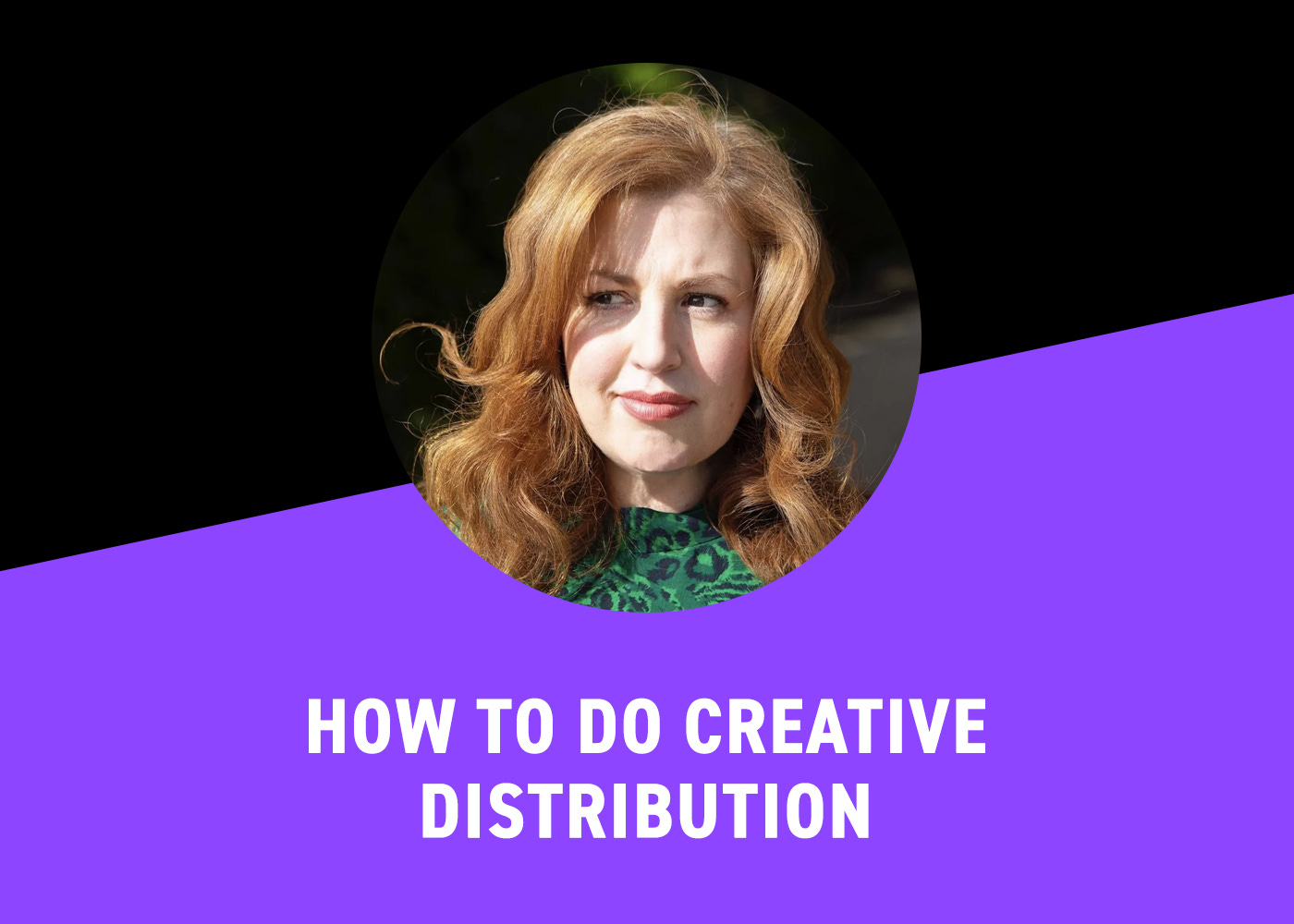
Listen now on YouTube, Apple, or Spotify.
Jeanie Finlay is a filmmaker and the founder and CEO of Glimmer Films, a production company she set up in 2008. She recently finished her 10th feature, All Rivers Spill Their Stories to the Sea, which just had its UK premiere at Sheffield DocFest. Alongside longtime collaborator Suzanne Alizart, Jeanie has launched Glimmerama, which she describes as an experimental creative distribution lab. Before filmmaking, Jeanie developed branding for creative businesses where she picked up future collaborators and skills (like hand-coding websites).
In our conversation, we discuss:
Why filmmakers accept bad distribution deals and how to stop
Building a brand identity that is an extension of the film itself
How to create demand before a release without exhausting your audience
The “film drop” model
When to hold off on press
How to observe audience behavior and adapt your release strategy in real time
Experimenting with your back catalog
And more!
Kinema for Filmmakers is a newsletter about creative film distribution. This is a recap of our latest podcast episode.
Key Takeaways:
People accept bad deals because they think getting distribution is a validation of their film.
“I think that people often accept really terrible distribution offers because they believe that there’s a sort of respectability in doing that and it’s a commendation for their film.”
The desperation comes at a cost. Get in the weeds and make more informed decisions. “A lot of filmmakers are scared of lawyers. And I think that you need to embrace your rights and understand where you sit legally with your projects.”
With Glimmerama the question the team wants filmmakers to pause and ask is, “Is the best distributor for my film me?”
Distribution is storytelling.
“I came to all of this as an artist and when you’re an artist, the storytelling never stops. I think about the distribution or the getting the film out there stage. It’s just another part of the story. So, I always want for the storytelling to bleed into the world.”
“It's challenging isn't it because a lot of documentary makers I know are sort of like secret nerds who are interested in you know small quiet stories and you know I myself describe them as shy people telling small stories quietly because the act of distribution is an act of amplification but there's no reason why you can't develop a language to talk to an audience about that.”
Start audience research early, but you don’t have to reveal everything early.
“I think it’s a mistake to exhaust people too early.”
“We’re doing a lot of showing the ankle. We’re showing a little glimp, a little glimmer, a little glimmer glimpse, a little tiny tiny glimmer because you don’t want to exhaust people and you don’t want to like ransack all of your assets or show your trailer too early.”
On the film All Rivers: “We’re just showing 4-second clips from a 10-minute block of the film and we will not show any more, so that when they get to see it in cinemas, it feels satisfying.”
Save press for when there’s somewhere for the audience to go.
“We will not do any press that is review-based until October because there’s no point in us sort of exhausting things, also using up that press opportunity.”
“I’ve seen it time and again where you go to film festivals, especially baby filmmakers or less experienced filmmakers, they maybe got PR on board or they’ve got someone excited and they’re booking all of these press interviews and they’re doing all this press and then when their film comes out no one’s interested because they’ve already done it.”
“I think that sometimes people don't think strategically about the whole life of the film. They're just eating the meal in front of them. All the time I'm thinking this is a marathon. So we're at mile two, mile three. What comes next? I'd rather do one or two things really well than do too much.”
The film drop model:
For Your Fat Friend,“We did our first film drop on Kinema and we had no idea how that was going to work. We had the sense that doing a film drop and sort of we knew that there was enough interest but we were overwhelmed by the response.”
One feature of the drop was artificial scarcity. A cap was put on ticket sales to limit how many people can have it. Each time it sold out, creating more demand.
Meet your audience inside communities that already exist.
“A lot of what we’re doing is observing audience behavior and then thinking how do we make an intervention that’s fun.”
On ‘Your Fat Friend’ they launched ‘Hot Fat Summer,” “In fat community, a lot of people have pool parties which are inclusive and people hang out and so we got all these like neon koozies. We branded it ‘Hot Fat Summer’ and we sent all these koozies to these parties because they show up really good in the pictures.”
She then hand-coded a selfie filter so fans could take a ‘hot fat selfie’ where they could upload a photo, choose an overlay, and get an Instagram-ready image with the film’s branding built in.
On iterating after the first film drop sold out: “Let’s do it again but let’s change it up a bit. Let’s have gift tickets this time. Let’s do vouchers. Let’s do a different set of hosts, guest hosts.”
On choosing guest hosts: “Brilliant, articulate people that we wanted to hang out with. And I think that the audience could sense that we were having a good time as well.”
The branding of the marketing is also the film. Apply creativity and budget accordingly.
“I think that the poster is the film, the trailer is the film, the sticker is the film. I believe you have to think of those things as artist multiples that are going out into the world and they’re going to rep your film and you have to keep the design absolutely consistent.”
“I always work with incredible photographers and probably put more money into my budget to do branding and design than other filmmakers do because I think it’s really really really important as an artist.”
On the Your Fat Friend typeface, “Aubrey Gordon collects vintage diet books. And one of those is called ‘Help Lord — The Devil Wants Me Fat.’ So the entire design of our poster and the branding is based on a 1970s diet book called ‘The Devil Wants Me Fat.’ And so then we extrapolated that out to everything else.”
“Be as creative as you would be when you’re directing a film.”
Don’t copy another filmmaker’s distribution campaign. But understand the thinking.
“A filmmaker came up to me and said, ‘Oh my god I love what you did on Your Fat Friend, we just copied everything for our release,’ and I sort of said to them, ‘Why? Your film was entirely different.”
“I think every film has its own path to audiences in it. You have to listen to the film.”
Give yourself time to distribute your film.
“If you can afford it I would go low and slow because I think that there’s a real value in observing audience behavior and then leaning into it.”
You can make decisions based on what you learn IRL. On All Rivers, “The thing that I’m really struck by in the conversations after the screenings are that young people are really responding to the film... That’s interesting to me. So it’s making me think, oh should I bring on someone who’s Gen Z to help us understand or adapt our strategy?”
Your back catalog still has an audience.
Think about how you might experiment with your back catalog. Those learnings (and potentially audience) are transferrable.
“Can we apply all the things we know now to a film that was made 15 years ago and what does that look like?”
“Often when people die, they get the box set, they get the retrospective treatment and everyone loves their films. And I sort of thought, what happens if you do that while you’re still alive to enjoy it?”
Tenacity is the underrated asset filmmakers already have.
“I think that there’s a real value in just being tenacious. The thing that filmmakers know more than anything is tenacity and that can be our strongest asset.”
“I don’t come from independent wealth. I haven’t got a sugar mommy or daddy in the background who is like funding this. Everything I’ve made has been made independently.”
“Doing it wrong but learning and then moving on to the next bit.”
BONUS: At Sheffield a few days ago, Jeanie continued to bust distribution myths with Christie and other esteemed panelists. She’s summarized the takeaways here:
Where to Find Jeanie:
Website: https://www.glimmerama.com/
July 1st case study event: https://www.glimmerama.com/your-fat-friend-case-study-event (Code: KINEMA5)
Instagram: https://www.instagram.com/glimmer.ama/
In this episode, we cover:
(0:00) Jeannie’s background
(3:11) Glimmerama
(6:41) On bad distribution deals
(7:19) How the creator economy intersects with film
(9:30) Distribution is storytelling
(11:39) How Jeannie researches communities for a new film (#CrabTok, #LobsterTok)
(13:04) Branding as a creative discipline
(18:06) When to start building audience
(21:06) On holding press
(22:31) Release strategies
(24:15) The Your Fat Friend film drop on Kinema
(26:22) The upcoming July 1st case study event
(27:33) Why copying another filmmaker’s campaign is the wrong move
(30:59) Final thoughts from Jeanie
Referenced:
Dor Dotson:
Help Lord — The Devil Wants Me Fat: https://www.thriftbooks.com/w/help-lord-the-devil-wants-me-fat_cs-lovett/268261/
If you’re finding this newsletter valuable, share it with a friend, and consider subscribing if you haven’t already.
Comments
Nothing yet. Say the first thing.
Sign in to join the conversation.