
Listen now on YouTube, Apple, or Spotify.
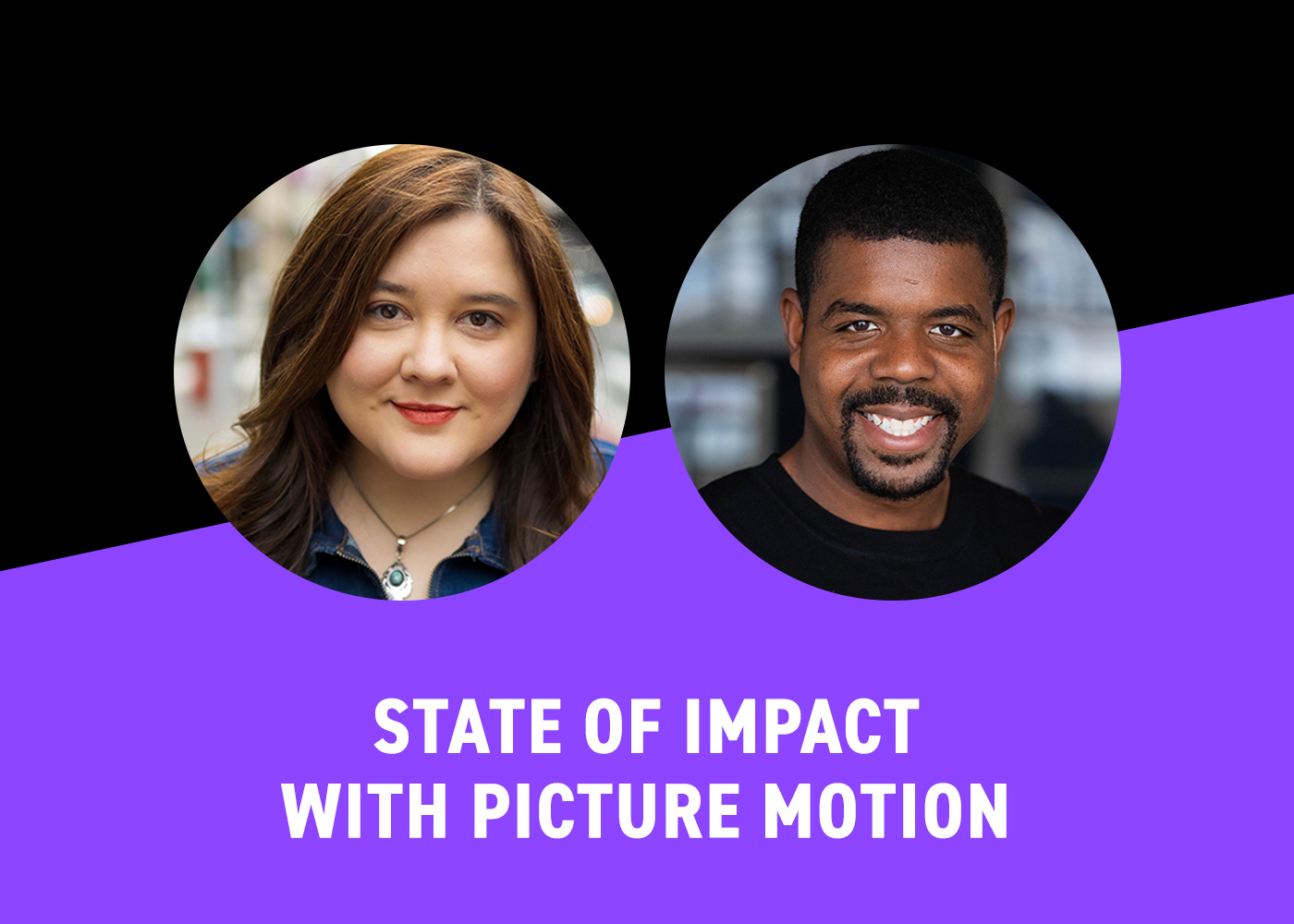
Picture Motion is a social impact agency developing advocacy and marketing campaigns for film, television, books, podcasts, and more. They do strategy and partnerships and educational resource development and screenings and immersive experiences. The team has partnered on over 400 projects, working with storytellers / studios / brands to mobilize communities and drive long-term impact. We talk with Brian Walker, Picture Motion's CEO and Juliette Richey, Picture Motion's COO. Both have extensive experience at the intersection of independent film and impact.
In our conversation, we discuss:
What has changed in impact campaign funding
When to budget for impact campaigns
The To Be Seen initiative, supporting mission-driven films’ during awards season
What it looks like when an impact campaign is the distribution
Why the filmmakers finding the most success right now think like both artists and organizers
Non-transactional ways to structure partnerships
The future of impact storytelling
And more!
Kinema for Filmmakers is a newsletter about creative film distribution. This is a recap of our latest podcast episode.
Key Takeaways:
Impact campaigns used to be funded by philanthropy. As their participation narrows, brands are filling some of the gap.
“Philanthropy had a huge role in impact for a long time, especially through 2021. We saw many of the major funders, foundations, high net worth donors, family foundations, a range of partners who were really deeply involved into investing into this space.”
“It hasn’t necessarily gone away from philanthropy, but I think they’re more focused on the folks that they have funded historically. So, emerging filmmakers, it’s more challenging for them to break through.”
“What we’re seeing is an increase in brands. Brand storytelling is increasing and they know that developing relationships with younger audiences, building trust through community engagement and through a mixture of consumer community interactions is a part of their marketing strategy.”
Budget for marketing and distribution. Budget for impact.
“We constantly talk to filmmakers as they’re even in the pre-planning stages as they’re raising funds for their project and we’re like, you should be thinking about what is the infrastructure you need for pre-production, production, post-production. And please don’t forget marketing and distribution.”
“It’s always an afterthought. It’s like we talk with filmmakers and they’re like, ‘Oh wait. I really want to do an impact campaign, but I never raised any money for this. I didn’t know that it cost money.’”
10% to 50% of your budget should be allocated for marketing and distribution.
The role of impact has grown to fill the gaps left by traditional distribution.
“Impact campaigns sort of used to orbit around a distributor’s timeline, but since we’re talking about distribution and now that’s completely changed. We know that there are obviously fewer acquisitions at festivals.”
“We’re constantly sort of hearing from indie filmmakers who have gone to over 60 festivals, won all the awards you can win at the festivals, still having trouble finding a larger distribution pathway.”
“We’ve built upon that type of alternative distribution — what we used to call it — but now it’s not alternative distribution. I think it’s a great distribution pathway for a lot of filmmakers.”
The filmmakers finding success right now have a ‘dual brain’: artist and organizer.
“Filmmakers who come to us with this dual brain of being an artist but also being an organizer are finding the most success because they understand that I’ve made this film because it’s an artistic achievement. But I’ve really thought about:
Who is this film for?
What is the audience I want to reach?
How can I bring them along on this journey?”
A brain trust is a pitch asset.
“We produce things like brain trusts and advisory councils or advisory boards for film teams and their projects throughout that process.”
“When they have that they can collect that validation first and foremost — aggregate what is the potential reach of all those partners. If it’s an international NGO or a national NGO or some other influencer or creator who really is passionate about it, that person’s reach can be included in the pitch that they have for distributors or for funders.”
“It’s not just a nice to have. It is about increasing the value and it is about increasing the business proposition for a project.”
The future of impact is experiential, short form, and built around community.
“Community screenings are so important. People want to be with other people. They want to be in community. They want to find purpose again. Maybe they will through a film. Maybe they will through an event.”
“Younger generations don’t want to be on their phones. They want to be in community. They want to make connections with other people.”
“Digital will definitely continue to play a big role — whether it’s short form repurposed content from the long form pieces or it’s fully vertical short series from a long form piece of content that can engage a very different audience. There’s no longer one-size-fits-all.”
Think about your film as an ecosystem.
“What does your website look like? If I go there to learn more about your film, what’s actually there? Is it resources? Is it additional content? Is it short form? Is it partners who have formed a coalition to support not only the film but maybe the progress around the film for the next couple of years?”
“Spending time and making those connections with community leaders or potential partners that you might do another film on…that is an investment as a filmmaker as you’re starting to build what your catalog or what your slate might be in the future.”
“I think we all have to lean on each other during this moment.”
Start impact work early.
“You can’t bake impact into an already completed film the same way you can do it when you are at the script stage or at the brainstorming stage with the production team.”
“It just makes it easier when we can connect partners at those [early] stages. They feel invested into the project.”
Steer away from a transactional partnership approach and find ways to engage over a longer period of time:
“Don’t look at it as transactional. What is it that we’re using this project to help support that partner with? Because no one project is going to change the issue that you’re talking about. It’s really a broad ecosystem or universe of storytelling that creates the type of change that we want to see.”
On advisory boards: “We might have a letter of intent that states specifically, hey, as a partner, we’d love for you to have two touch points throughout the next 6 to 12 months for this project.”
Impact films still have to be good films.
“Make sure it’s entertaining. At the end of the day, when we’re talking about content, when we’re talking about the attention economy, essentially, everyone is being pulled in every direction of content. Make sure your content is compelling, that it’s entertaining.”
“It has to be a good project. It can’t just be a lecture. How do you still be the best filmmaker, the best storyteller when it comes to that content? I think that’s still the foundation of this work.”
Where to Find Picture Motion:
Website: https://picturemotion.com/
Instagram: https://www.instagram.com/picturemotion__/
In this episode, we cover:
(0:11) Intro to Picture Motion
(1:32) What has changed in impact producing
(8:23) Shrinking impact budgets
(9:22) Budgeting for impact
(11:13) To Be Seen: Picture Motion’s awards campaign initiative
(13:22) Outcomes of awards campaigns
(15:14) Impact as the primary approach to distribution
(16:10) Impact work: strategy, educational resources, and experiential/partnerships
(18:55) When to start thinking about impact
(21:10) Brain trusts and advisory boards
(22:32) Picture Motion’s offerings
(27:13) Accessibility as a growing priority
(28:12) How to build partnerships
(29:22) CAA’s Full Story platform
(32:02) Advice for impact storytellers
(36:12) Case study: Ghost in the Machine
(37:00) The future of impact storytelling
(41:27) Closing thoughts
Referenced:
To Be Seen (program to support awards campaigns): https://picturemotion.com/to-be-seen/
CAA’s Full Story platform: https://deadline.com/2026/04/caa-relaunches-full-story-initiative-glaad-1236877824/
Ghost in the Machine release:
Conversation with Loira Limbal of Firelight Media:
If you’re finding this newsletter valuable, share it with a friend, and consider subscribing if you haven’t already.
Comments
Nothing yet. Say the first thing.
Sign in to join the conversation.