
I first heard about the “New Wave 50 for 50” campaign when Kathleen Lingo took over Ted Hope’s newsletter in early 2025.
New Wave is a documentary about Vietnamese American identity told through the lens of the underground music scene. Filmmaker Elizabeth Ai began her festival run with a world premiere at Tribeca in 2024, where she earned an Albert Maysles Special Jury Mention for Best New Documentary Director. Despite numerous festival screenings and awards, the traditional distribution path that the New Wave team initially envisioned did not materialize. So Elizabeth forced herself into action.
Kathleen wrote that Elizabeth had just launched a campaign to bring her film “to fifty cities and fifty screens in 2025 in commemoration of the 50th anniversary of the end of the Vietnam War.” That single sentence jumped out at me. The name of that campaign, “New Wave 50 for 50,” does everything right:
It’s easy to say. 50 for 50.
It’s clear. 50 screenings in 50 cities.
There’s a story in the name itself. For the 50th anniversary of the end of the war.
It’s directly related to the film. The Vietnam War is what led to a mass exodus from Vietnam and the start of the diaspora.
It’s timely / carries historical weight. 50th anniversary.
It sets an audacious and specific goal. 50 cities.
It makes you want to be part of it (or at the very least, follow along). I’m rooting this film on.
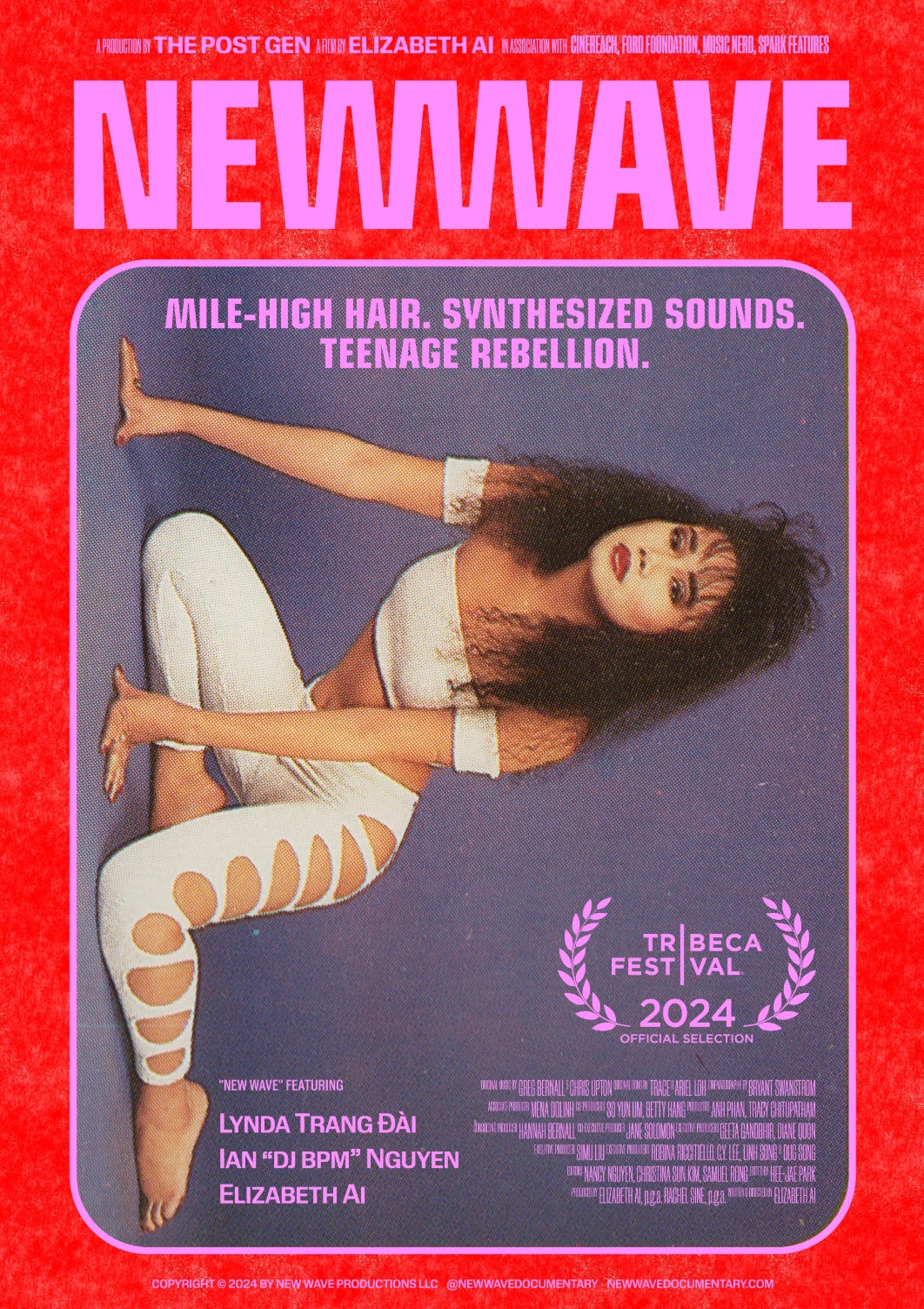
In the conversation below I ask Elizabeth about that 50th anniversary year. How the 50 for 50 campaign came together, how successful it was, and what advice she would offer to filmmakers managing their own screening tours.
Kinema for Filmmakers is a newsletter about creative film distribution. This is a series about memorable film events.
Event Title: New Wave 50 for 50
Event Description: A campaign to screen New Wave in 50 cities in 2025
Venue: The resulting venues were film festivals, art house theaters, classrooms, community centers, and museums in 80+ cities
Dates: Various dates throughout 2025
Audience Size: Events ranged in size from 50-400
Price: $0-$50 tickets
Festival Consultant: The Film Collaborative
Impact Producer: AZN AMERICANA
Film Brand Identity: Studio Lhooq
Cost: The New Wave team worked within their screening fee to support and promote each event
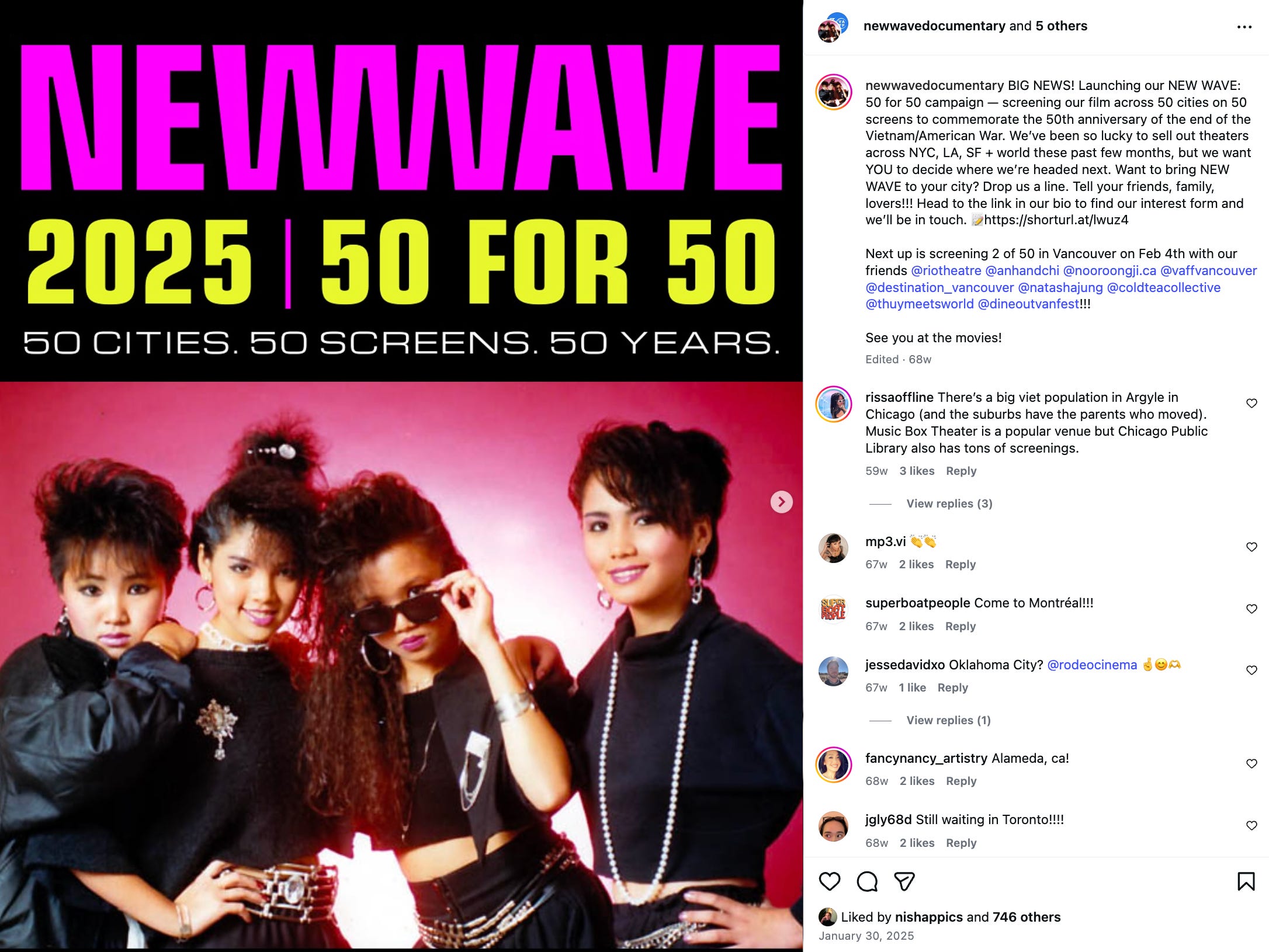
Ami Vora: What inspired the 50 for 50 campaign?
Elizabeth Ai: June was our premiere at Tribeca. By December, we had done close to 30 festivals, received awards, and built a passionate audience but I was still waiting for some ‘awesome’ deal to come along that just didn’t. That was depressing. And then I remember talking to a friend and saying, “I’ve spent six years of my life on this film. We’ve come this far, and I still don’t know where it’s going.” My friend said, “What are you waiting for? Distribute it yourself.” I didn’t know the first thing about self-distribution but found myself waking up in the new year with a new sense of purpose to go ahead and give it a shot.
2025 was the 50th anniversary of the end of the American war in Vietnam, and that was the whole reason I was doing this thing. So I said, ‘Regardless of what happens, we’re going to do 50 cities in 2025 for the 50th anniversary.’ We called it 50 for 50. And that was it.
And you exceeded your goal by the end of the year. How did the campaign turn out?
I told our team we already had 10 festival bookings lined up for 2025 already. So I was like, ‘What’s 40 more cities?’ After sharing the campaign on Instagram and our newsletter, there was an outpour of support from our community and networks. We hit our goal, via email commitments, by various parties within three months after launching our campaign. By the end of 2025 our film screened in 80+ cities.
How many screenings have you done in total?
Since 2024 we’ve had about 180 screenings in 10 countries. Because of demand in certain areas, a number of cities had encore showings.
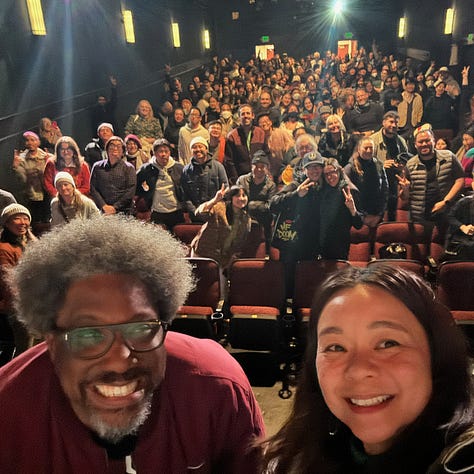
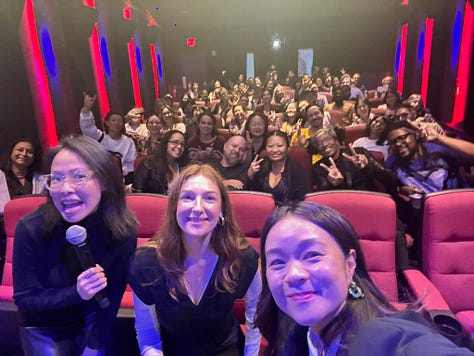
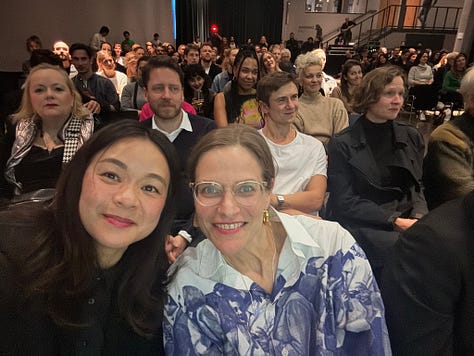
I want to acknowledge the folks from The Popcorn List, who selected New Wave for their 2025 roster and helped us book screenings in 10 cities, The Film Collaborative, who helped with dozens of festival bookings around the world, and our impact producers AZN AMERICANA, who helped us with audience building and eventizing a whole year before our film premiered. And last but not least our core film team and community who helped spread the word.
You dreamt up this idea while you were at a low point and said to yourself, ‘what’s 40 more cities.’ What did it really take to get those next 40 cities?
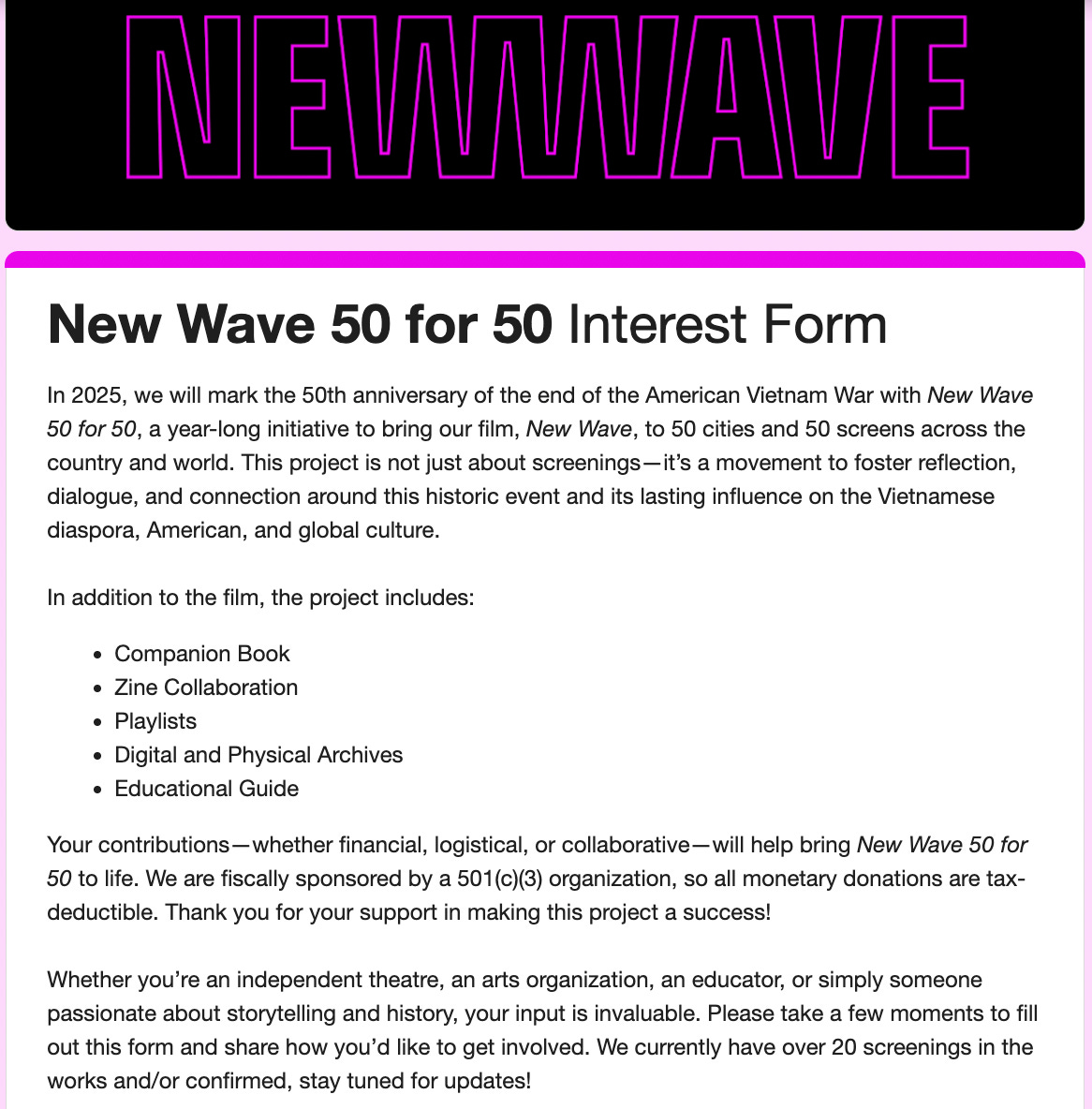
We put together a Google interest form. I encourage every filmmaker to do it too. It’s so helpful because from the first six months of film festivals we had built a network of people already supporting our film and wanting to engage. For example, I’d meet people at screenings and someone might say, ‘I’m a fan and a professor. I’d love to show your film to my class. How can we make that happen?’ I’d share my contact info and we would have this protracted back and forth. After having done this with a number of people the idea to create an interest form was born. It saved us a lot of time. Looking back, the interest form became more than a booking tool. It helped us understand who was finding the film, where they were located, and how they wanted to participate.
We charged a screening fee that made sense so that our team could be additive promotional partners with the organizations that booked screenings. We wanted to really support the promotion so it wasn’t just like, ‘here’s our film. Good luck with it.’ Some organizations or schools couldn’t afford the rates but many others were able to figure it out. Like a professor from one department would connect with their friend from another department to support the screening fees and combine their audiences. Students also became our foot soldiers. They would wrangle classmates and bring them to screenings. Many of our screenings would sell out and it wasn’t long before a number of indie theaters reached out to us.
Who was doing that promotional work on your team?
Our film team (producers, executive producers, core teammates) and extended community consistently shared our events on socials. And a special shout out to Mỹ Linh Triệu Nguyễn of Studio Lhooq who dressed us up and helped with our film’s brand identity: the New Wave logo, film poster, website, and art direction for our book.
It was a true team effort, and I’m incredibly proud of what we accomplished. While some organizations had the resources to manage their own promotion, most needed support, so we often stepped in with graphics, outreach, social media, and audience-building strategies to help make the screenings successful.
For the marketing that you were doing, was it all organic? It sounds like your team created most of the social graphics. Did you ever put spend behind your posts?
Sometimes. It depended on the screening. We had strong communities in certain cities, but if we were heading somewhere new, we'd often put a little money behind local promotion. We treated these screenings as partnerships and genuinely wanted organizers to have a good turnout. The thing that convinced me it was worth doing was hearing people come up afterward and say, “I only found out about this because it popped up on Instagram.” I attended more than 40 screenings over the past two years, and I heard some version of that again and again. You realize pretty quickly that great programming doesn't matter if people don't know it exists.
You were at over 40 screenings in person. How did you decide what to go to?
I’m grateful for my producing background because it helped me think strategically about scheduling travel. If an organization was covering an honorarium, travel, or both, I’d use that as an anchor and then try to build a small tour around it. If I was already flying to Texas, the Bay Area, Pacific Northwest, or East Coast, I’d see if I could add a few more screenings nearby rather than making separate trips back to those areas.
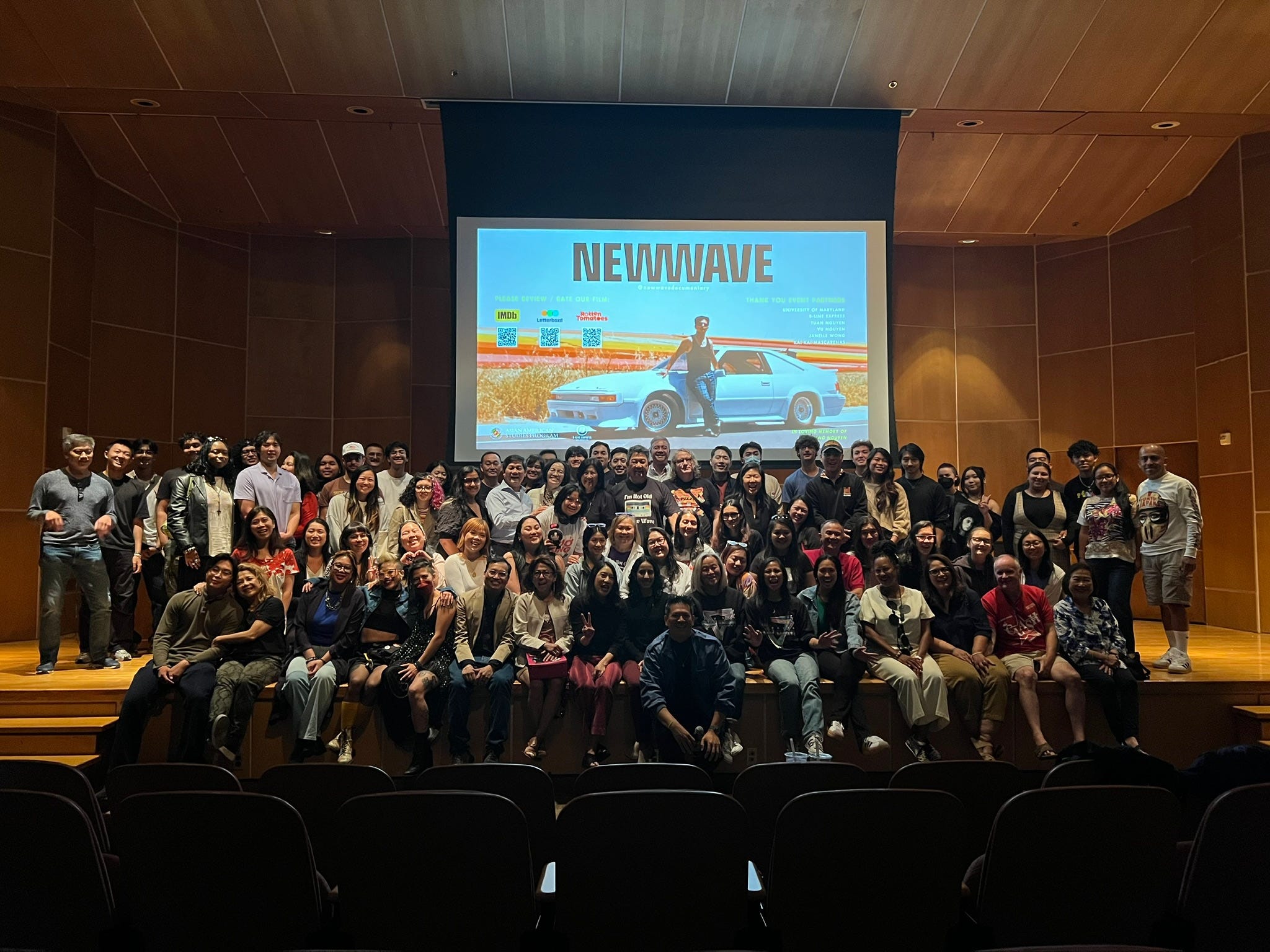
We were never in a rush. If someone wanted to screen the film seven months out, that was completely fine with me. Once we had one committed partner, we’d figure out how to make the most of the trip. I started thinking about it like a band on tour, moving from city to city instead of treating every screening as a standalone event.
As a parent, being away wasn’t easy, so I tried to cluster screenings into a block of time. I wasn’t traveling constantly, but when I was on the road, I’d often attend multiple screenings and events in a single trip. That made it much more sustainable for me, my family, and the film.
Did you have a discussion guide that you shared, or were the Q&As all driven by the screening host?
It was all driven by the screening host. Different organizations had different priorities. There were some folks who asked the basic questions like, ‘where did the inspiration come from? Why did you make this film? How long did it take?’ I understand why those questions are being asked, even though in my head I’m like, ‘oh my God, I’ve answered this question so many times.’ But as an audience member, you do want to know. Maybe they came in blind, a friend dragged them in, and there’s a lot of mystery behind the filmmaking process. I am a fan of stories and process and I too sit there at book events and at film Q&As fascinated by everyone’s origin story. So I don’t mind those questions. I think a lot of people want to know a bit about the journey.
I saw on The Popcorn List that you had a screening in Traverse City where there was a dinner screening. What was that like?
That screening was great. I wasn’t able to attend, but it was hosted in partnership with a Vietnamese-owned restaurant, and one of the restaurant’s partners joined for the Q&A. What really stood out to me throughout the tour was how often community partners wanted to build gatherings around the film. We had sold-out events that included dinners, receptions, after-parties, book conversations that continued long after the credits rolled.
We’ve been incredibly moved by how invested our partners became in creating spaces for people to connect before and after the film. It reinforced something we learned over and over again: people weren’t just showing up to watch a movie. They were showing up to be together, share memories, and continue the conversation.
Honestly, one of the biggest surprises for me was realizing that the film was often just the reason people gathered. Of course they cared about the movie, but they also wanted to meet one another, bring their families, reconnect with friends, share stories, eat together. Some of the most meaningful moments happened outside the theater.
It made me think differently about what a screening can be. Sometimes it’s not just about watching a film. It’s a catalyst for community, memory, and conversation.
I love that. Were you able to use that insight to plan or “eventize” other screenings?
One of the biggest lessons from this tour was that people genuinely wanted to help. Not everyone had the budget to host a large event, but there were so many ways to contribute. Someone would bring food or want to DJ or photograph the event or record audience reactions and tag us on Instagram. Others would organize after-parties, buy books to give away, or simply help spread the word. We’ve had people donate sandwiches, bring trays of food, host receptions, and create space for connection in ways we never could have planned ourselves.
What really moved me was how often people wanted to do more than just host a screening. They wanted people to gather before and after the film, share stories, meet one another, and continue the conversation. The most memorable screenings often felt less like film events and more like community gatherings. They were helping create the experience together, and that sense of collective ownership made the events feel really special.
You also dropped merch. Was that developed for 50 for 50 or did you already have merch from the festival circuit?
The merch actually started with incentives from our Kickstarter. We had some leftover inventory and had a few instances where we brought it on the road with us. Looking back, we definitely underutilized it. I’d never traveled this extensively with a film before, but toward the end of touring I realized that filmmakers can learn a lot from indie bands. If you’re traveling city to city and people are excited about the work, they often want something tangible to take home.
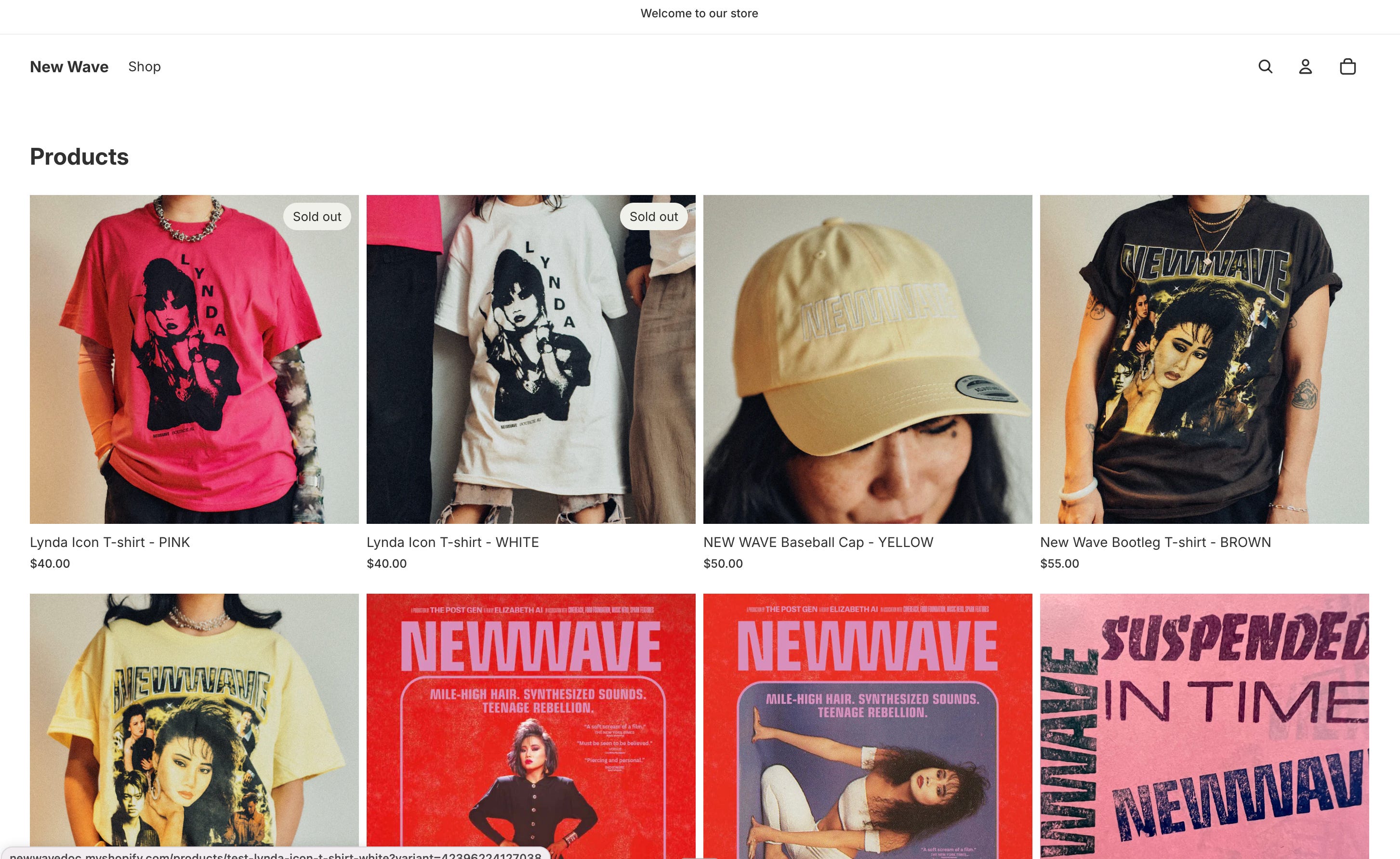
I don’t recommend making a huge amount of merch, but it can be a meaningful supplemental revenue stream. Something you can test with a small quantity to begin with. We weren’t making more than 50-100 units of anything but for us, it occasionally helped offset some travel costs, meals, and other minor expenses that come with being on the road. Also, I feel like it’s a great way to market the project and see New Wave ‘in the wild.’ We loved being tagged on IG posts and seeing folks wearing our tshirts or hats or holding our book. At this point we’re basically selling through the last of our tour merch on our website, but it’s definitely something I’ll think about more intentionally on future projects.
The book is a beautiful coffee table book. Did the publication of that coincide with the release of the movie? How did that come together?
Totally separate, and honestly, if you can do it, do it. I had done so much research, collected so many archival images, and written so many grant narratives that I was like, “This is not just going to sit on a hard drive and disappear.” There was so much material that never made it into the film, so I pitched the companion book, New Wave: Rebellion and Reinvention of the Vietnamese Diaspora to Angel City Press, the publishing arm of the Los Angeles Public Library. And they said, ‘yes!’
It created another way for people to engage with the project. We also worked with advisors and educators Virginia Nguyen, Thuy Vo Dang, and Ky-Phong Tran to create an educator guide, which became a useful resource for universities, libraries, and other institutions screening the film.
The book had its own distribution pathway. It became a meaningful access point for people who may not have attended a screening but still wanted to engage with the history, archive, and stories behind the film.
The project also wouldn’t exist in its current form without the many community members who contributed essays, photographs, memories, and archival materials. And I have to give special thanks to our lead humanities advisor, Thuy Vo Dang, whose knowledge, generosity, and community relationships made both the film and book significantly richer.
The film, book, educator guide, and archive all fed into each other. Someone might discover the book through a library, attend a screening, use the educator guide in a classroom, or contribute materials to the archive. The project reached different audiences in different ways, which was really rewarding to see.
What advice do you have for other filmmakers? What do they need to have in place to build out an effective screening tour? Anything to avoid?
Build your team. Find your people. I say some version of this all the time because it’s true.
It’s not just about filmmaking. It’s about life. Have your advisory board. I’m very fortunate because I came up through fellowships with Firelight Media, Center for Asian American Media, Sundance, Film Independent, where they connected me with amazing mentors and advisors. Many of those relationships lasted long after the programs ended.
Beyond that, there is my ride or die, producer and friend, Rachel Sine, our core New Wave team, our EPs, funders, community partners, and on and on. I could name people for days. There is no version of this story where I did it alone.
Be kind. Be generous. Build real relationships. Don’t think of networking as networking. Just be a good person and stay in touch with the people you connect with. You never know where those relationships will lead. They might become friends, collaborators, advisors, audience members, hosts, or champions for your work.
One of the most moving parts of this journey has been seeing people show up again and again, bringing their friends, their families, and their communities with them. The thing I keep coming back to is that none of this happened because of some brilliant strategy. It happened because people showed up.
“New Wave” is available for screening events on Kinema. Join the next screening on June 20th.
Comments
Nothing yet. Say the first thing.
Sign in to join the conversation.