
Our food has an unfortunate tendency to become “worthy” once we are removed from it.
Why?
This very thought is often at the heart of many of the conversations that I have surrounding food erasure, both out loud and in my head.
In my last piece,
, I started trying to unpack this. The ‘bag’ was heavier than I thought.
I touched on some popular areas of food culture, and how our culture in particular is often co-opted, particularly in fine dining spaces. The unavoidable conclusion? We often find ourselves chasing excellence, subconsciously seeking “permission” in food spaces, simply because our meals don’t fall into what classically is considered a fine dining box.
The question now becomes: what happens when “permission” is granted?
What happens when we are seen? Are we ever truly seen?
Or are we simply seen long enough to be extracted from and discarded?
Some might say (and have said) “it’s not that deep”. That’s the easy thing to say. It’s even easier to point out the places where food and our culture intersect. To lean on fusion culture.
But that’s how erasure starts: with casual renaming. Casual redefinition. Inspiration over history.
And before you know it - the original recipe is lost.
My ADHD brain often conjures up examples and points of reference in random spurts. In this case, in my head, I had a vision of fufu or pounded yam and egusi, an extremely popular dish in countries in West Africa.
The dish has begun to surge in popularity on the internet, in no small part due to the plethora of younger millennials and Gen Z content creators and influencers learning about it and wanting to try it.
Egusi is a dense, nutrient rich stew made from ground melon seeds (known as ‘egusi seeds’). It is rich in umami from the various seasonings & offal added to it: dried shrimp or crayfish, smoked fish, cow skin, etc. It’s not likely to be the dish that you find in a Michelin star restaurant (yet) but it absolutely is one of the most popular West African dishes to date, beloved by millions of people.
It’s a beautiful dish…but it’s not a ‘pretty’ dish. And that’s okay.
So far, there has been overwhelming love and deference to the origins of the dish from the influences that I’ve seen, which warms the heart. And yet, with its growing popularity, in the back of my mind I keep thinking to myself, “are we about to lose this, too?” I keep expecting to wake up one morning and see it on a menu, in a fine dining restaurant, stripped of its cultural regalness and plated for mass consumption.
It’s what always happens to foods of the diaspora.
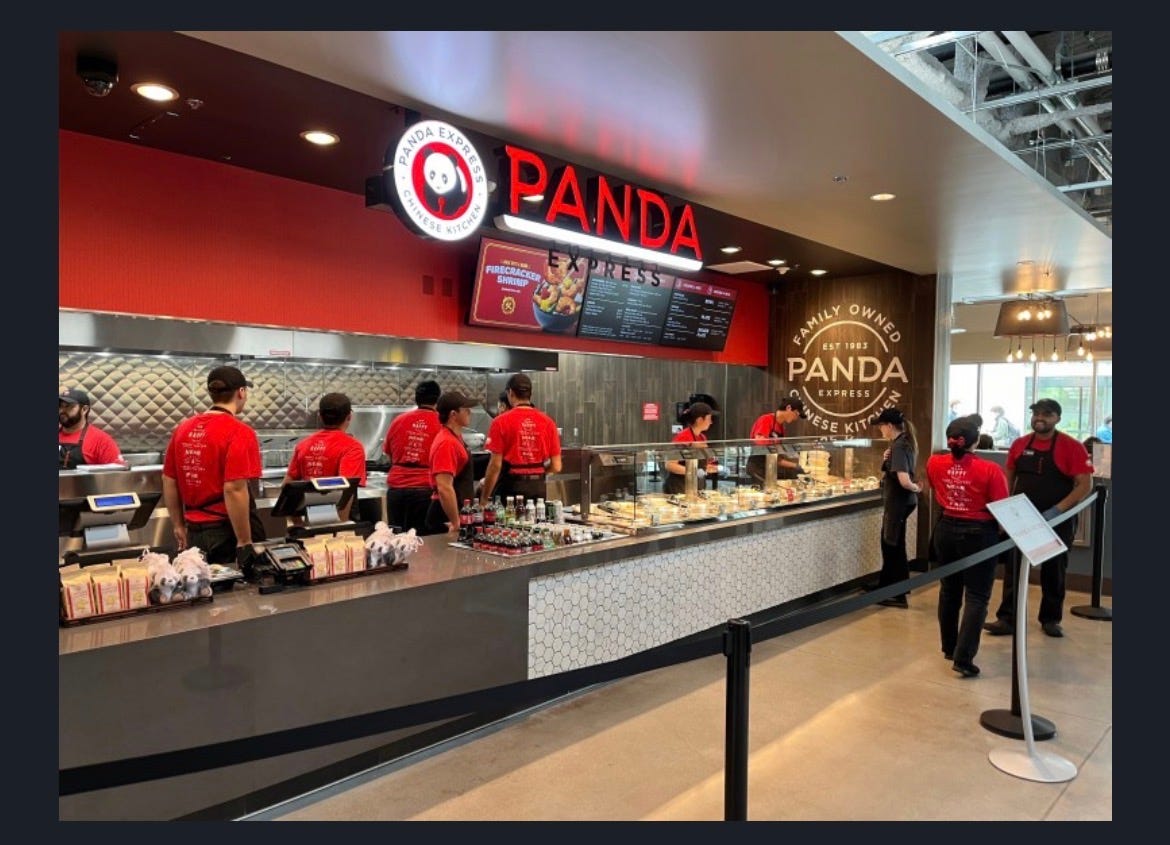
In other spaces of popular culture, you often see food erasure and appropriation in Asian spaces and Latino spaces - the Panda Express & P.F. Chang’s of the world - or the ever prevalent bastardization of Mexicans cuisines, a la Chipotle & Taco Bell. It often shows up in these spaces because of how they were introduced to society at large.
Black food history and culture, diaspora wide, often becomes appropriated or erased differently, in large part due to how the history is recorded - or not recorded, courtesy of colonization.
Fried chicken, to me, is the perfect example.
Credit, Context, and Who Gets RememberedAdrian Miller, culinary historian & author of the James Beard award winning book, Soul Food, wrote an article in 2020 for BBC about the unexpected origins of fried chicken. In it, he notes that while Southern Black Americans popularized the style of chicken that we all know and love today, the origin of the cooking style stems from Scottish settlers in the 1700s.
Now. Depending on how much of the history you know, the first documented and recognized recipe of Southern fried chicken came from Mary Randolph’s regional American cookbook, The Virginia Housewife, in 1824.
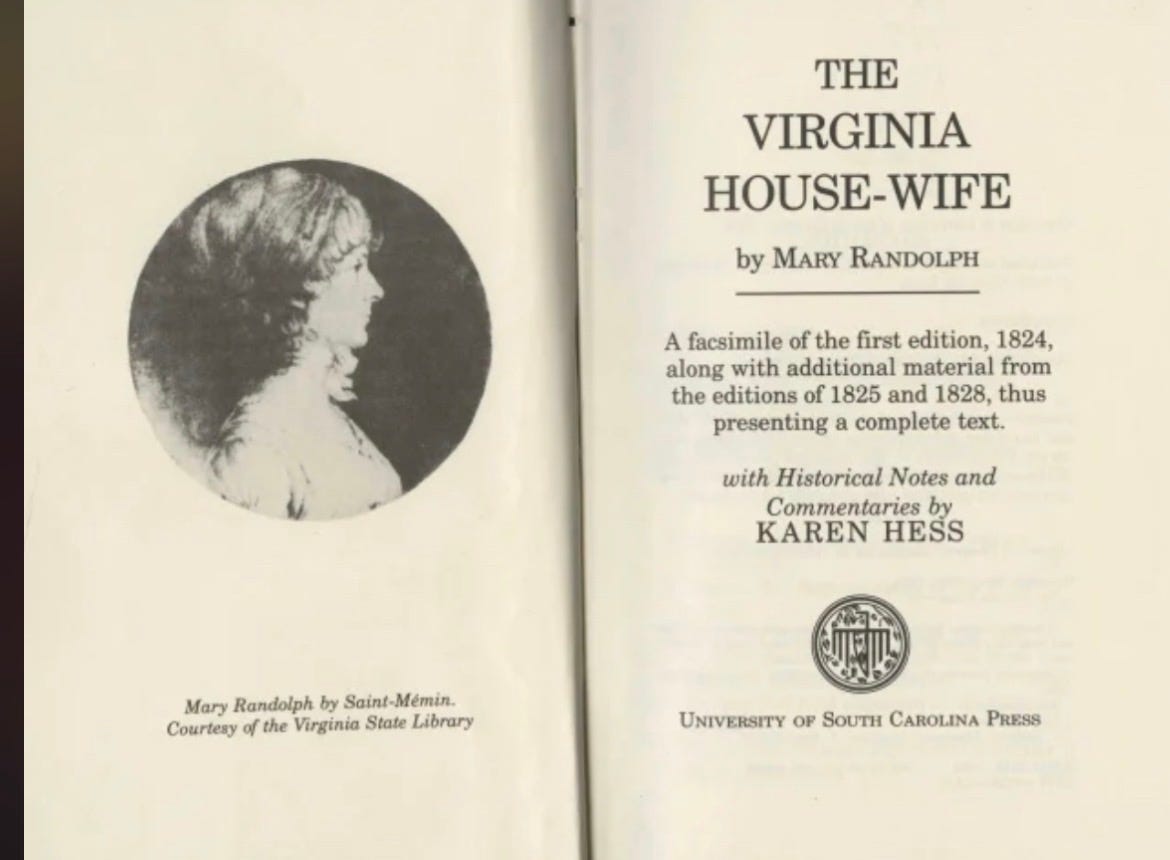
It is a well known fact that in wealthy or well to do households in the South, the enslaved Black people were mostly the ones who did the cooking. Such was the case for Randolph, who, as a distant cousin of Thomas Jefferson, and as a part of a well off family, oversaw a household with multiple enslaved Black Americans.
It is also a fact, although perhaps not as well a known one, that the Scottish played quite the role in the Atlantic Enslaved Trade, first via sugar plantations in Jamaica, before trading in crops such as cotton and indigo in North Carolina & Virginia.
Their presence creates the connection which Miller points out… …but it minimizes the Black Americans’ contribution to how the dish grew in popularity. This is not in any way a jab at Miller - he is a brilliant historian and writer who encapsulates the facts and historical context as he has it.
It simply is a spotlight on how erasure is systemic. Is it Randolph’s recipe that gained popularity? Or is it the recipe of enslaved Black people who ran her kitchens?
History suggests the latter.
Similarly, Korean fried chicken (which is delicious, for the record) originated in the 50’s, with Black American soldiers bringing the chicken dish with them to their platoon dinners, and Korean soldiers/residents picking up the mantle and proverbially running with it.
It would appear that the African diaspora, particularly Black Americans, consistently get the short end of the stick where credit is concerned - be it, simply, by acknowledging and crediting their vast contributions, or by sharing their history in a meaningful and truthful way that does not seek to minimize their impact.
There are so many instances of real time Black food erasure - from the simplicity of a viral moment of “tendernism” that turned into, as Newsone writer Stephen A. Crockett Jr. put it, “the colonization of creativity” - to the latest AI trend of having Black grandmothers sharing recipes and old school Southern tips…from a Russian based account.
And in each instance, the premise is the same: Black culture, creativity, essence, soul, is used to aid in a non-Black business’ profit - and then the originator is discarded.
How does that show up in fine dining spaces? In restaurant spaces in general?
Who Actually Profits When The Culture Grows
My ADHD-addled brain hones in immediately on a place I’ve talked about before: Bahama Breeze. Bahama Breeze is a fast casual sit down franchise concept from the Darden Restaurant Group (you know them as the same people responsible for concepts like Seasons 52 and cult classic Red Lobster).

Its main focus? Island inspired cuisine - think conch fritters, beef empanadas, and, of course, all things “jerk”.
I wrote about Bahama Breeze as a part of my SWOT analysis for my Marketing final, while in my final year of culinary school. I even mentioned some of the very concerns I had about the chain, up to and including the bastardization of a cultural ingredient, jerk, which is less an ingredient and more a deep rooted story of preservation and survival.
Declining sales for the chain over the course of the last 15 years have led to a number of closures of the restaurant with Darden noting that they are debating shutting the brand down altogether - but imagine, if you will, this: a brand that relied heavily on the culture of Black Caribbean cuisine (and Latinx cuisine) to shape their loosely interpreted menu…with a machine behind it that works so well that they were able to open multiple locations in a state like Florida, a state with a large Caribbean population, and a plethora of authentic Caribbean food.
There’s never a lack of appreciation when it comes to foods of the diaspora.
What there is, instead, is a lack of protection. Of gatekeeping the culture, if you will. It almost feels like the culinary equivalent of, “shut up and dribble”.
Our food is always celebrated when it is useful. The second it can be repackaged, renamed, scaled, and sold without accountability? Our usefulness expires.
The techniques remain. The flavors remain. The profits always remain - whether we see them, or not. But the people… the lineage, the cultural memory, the true authorship - become quietly removed from the equation.
This is what erasure looks like in real time. Not always loud or malicious, but casual. Incremental. Wrapped in language like “inspired by,” “elevated,” or “reimagined.”
The easy way out is to frame erasure as inevitable, to chalk it up as the price of influencing the culture, the ‘tax’ for being visible.
I don’t agree.
History shows us that the key to breaking a pattern is the ability to identify a negative pattern, and to course correct when the same pattern presents itself in new circumstances. If we can name the pattern, we can interrupt it.
And if we can interrupt it…then it becomes less about how our food is taken…and more about how it can be continually protected.
What would it take to keep our food (and ourselves) fully intact? I have some thoughts. I’ll share them…next time.
No posts
Comments
Nothing yet. Say the first thing.
Sign in to join the conversation.