
In one of the most recent pieces I wrote for my Substack, I mused:
“There’s an underlying thread here about seeking to be seen in spaces that both deem our culture and cuisine not worthy of elevation as they copy it for consumption & consumerism”.
The Gatekeeping That Protects Us
·
November 4, 2025
I…am a nuanced food purist.Thanks for reading At The Kitchen Table! Subscribe for free to receive new posts and support my work.
It’s something I think about a lot, if I had to be honest.
What makes something ‘fine dining’?
Why are only certain cultures elevated and considered in these spaces?
And maybe, even more importantly, at least to me: Why do cultures of the African diaspora seek to be seen in spaces where they are inherently devalued?
This one feels loaded, y’all. In fact, it took me about a month to write, the longest of any one off piece I’ve ever written - but I really have been sitting with it for a long time.
I’m going to do my best to unpack it in one piece, though I can be honest and say I’m not sure I can. There’s a bit of a journey back to get to the heart of this question - so stay with me.
Where It Started
I can’t really say with certainty where the quest for African diasporic cuisines (defined here as Black American, Caribbean, and African) to be seen as fine dining started per se. I know I can speak for myself and say that I’ve always wanted to see our cuisines in the same conversation as Michelin star restaurants and the like - so much so that it was one of the biggest talking points for me when I was in culinary school.
I know I’m not the only one.
I also talk a lot about appropriation and erasure in food spaces, in part because I’m passionate about it, and in part because it is prevalent. From the way that we speak, to the styles we put together, down to the food and drink we prepare and consume - there is no denying that people of the African diaspora often set the trends.
And yet, all my life, I’ve observed time and time again where the things that we create, either out of humor, of love, or out of necessity…are copied and then re-marketed for broader audience appeal…
…without ever crediting (or compensating) the source.
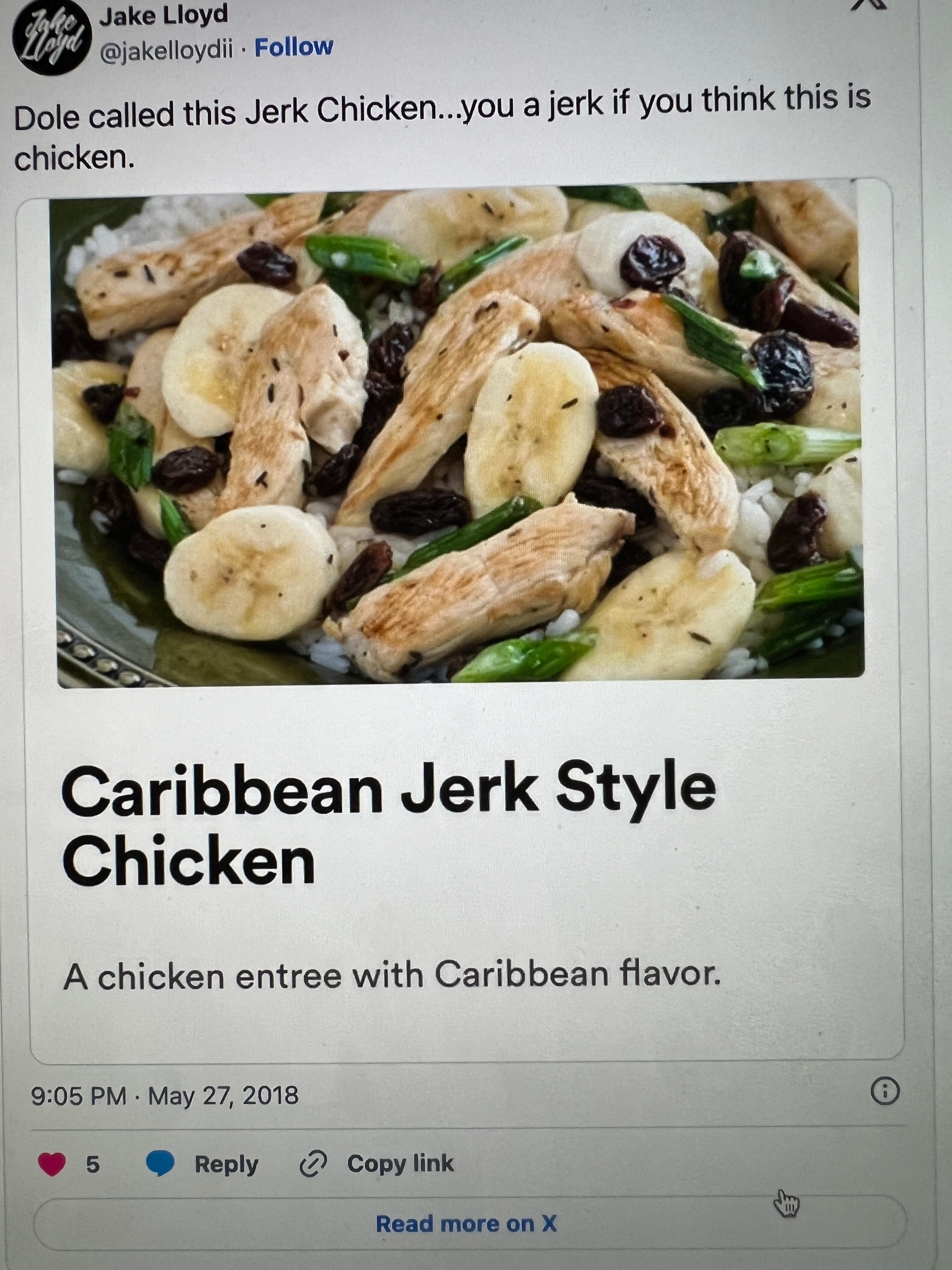
Jerk chicken, a quintessential Jamaican cuisine, turned into fodder for a Dole salad recipe with bananas and raisins.
The stark shaming of soul food from the Deep South, all while co-opting the foods, ‘elevating’ them, and repackaging them on non-ethnic menus.
Cornbread donuts to ‘celebrate Juneteenth’ by corporate brands without context.

“Creating” red velvet ice cream, packaging it, and selling it for half the price of the Black woman originated product - side by side.
And yet…we find ourselves creating in order to exist in the same spaces that “love our rhythm but not our blues” - whether intentionally, or not.
I mention more general examples in popular food culture here, but nowhere does this show up more, than in the restaurants and chefs in upscale and fine dining spaces.
But why?
Is our desire to be seen that deeply embedded in us?
Definitions and Perspective
Okay. So. When I say ‘fine dining’ - what do I mean?
Lemme run it back and start there.
I asked a few people what they felt fine dining was - some who follow me, others who are part of groups that I belong to. Some of the answers that I got range from:
“Must have the series of forks. Must be plated a certain way, too”.
“White tablecloth, multiple forks in place settings, background music…amazing food, fresh vegetables on the menu”
And, my personal favorite answer: “Something that makes me feel luxurious and lush…no grass walls lmao”.
IYKYK.
*pins grass walls restaurants’ for yet another time*
Within these answers, the talk about ‘different forks’ and ‘white tablecloths’ stood out to me - primarily because both of these things are tenements of what defines fine dining.
Cambridge Dictionary defines fine dining as “a style of eating that usually takes place in expensive restaurants, where especially good food is served to people, often in a formal way”. In culinary school, I was taught this as well - that what was considered fine dining is centered around the actual service that you receive: multiple courses, white napkins and/or tablecloths - it revolved around the idea that the dining experience was full service and elevated.
There’s also the food itself: typically centered around the French style of preparation, with the kitchen staff following the kitchen brigade system popularized by Augustus Escoffier, and the restaurant itself adhering to a specific etiquette that is solely found in higher end spaces.
One tends to think of fine dining as mostly Michelin starred restaurants - the Le Cirques of old, Per Se by Thomas Keller’s restaurant group, the Danny Meyer concept of Union Square Cafe that was anything but, pushing the boundaries cuisine wise from the 80’s on and nailing it with top tier service.
In more recent times, restaurants such as Tatiana by Kwame Onwuachi in NYC’s Lincoln Center, NYC inspired & Hollywood based LINDEN by Chef Jonathan Harris, or Top Chef star Eric Adjepong’s restaurant Dōgön in DC, tend to be the more celebrated points of reference when one considers an African diasporic fine dining restaurant.
That said, there are less than 10 Black led restaurants worldwide with a Michelin star - in fact, no one even won before 2022.
The guide itself now hosts a lengthy list of highlighted Black owned restaurants across the diaspora (originally prompted by the surge of Black Lives Matter in 2020), yet an uncomfortable fact remains: there is not a single Black owned, or Black diaspora-centered restaurant, that is the recipient of a Michelin star - the Grammys of the culinary world, if you will, and an indication of exceptional cuisine and high culinary service standards.
Which, again, begs the question: why?
When you look at the evolution of restaurants in varying spaces across the country that are conceptualized by chefs and owners of African diasporic descent, there is a decided focus on elevation - exposing our culture and cuisine to a broader audience, yet somehow making it more ‘palatable’ in a larger market’s eyes.
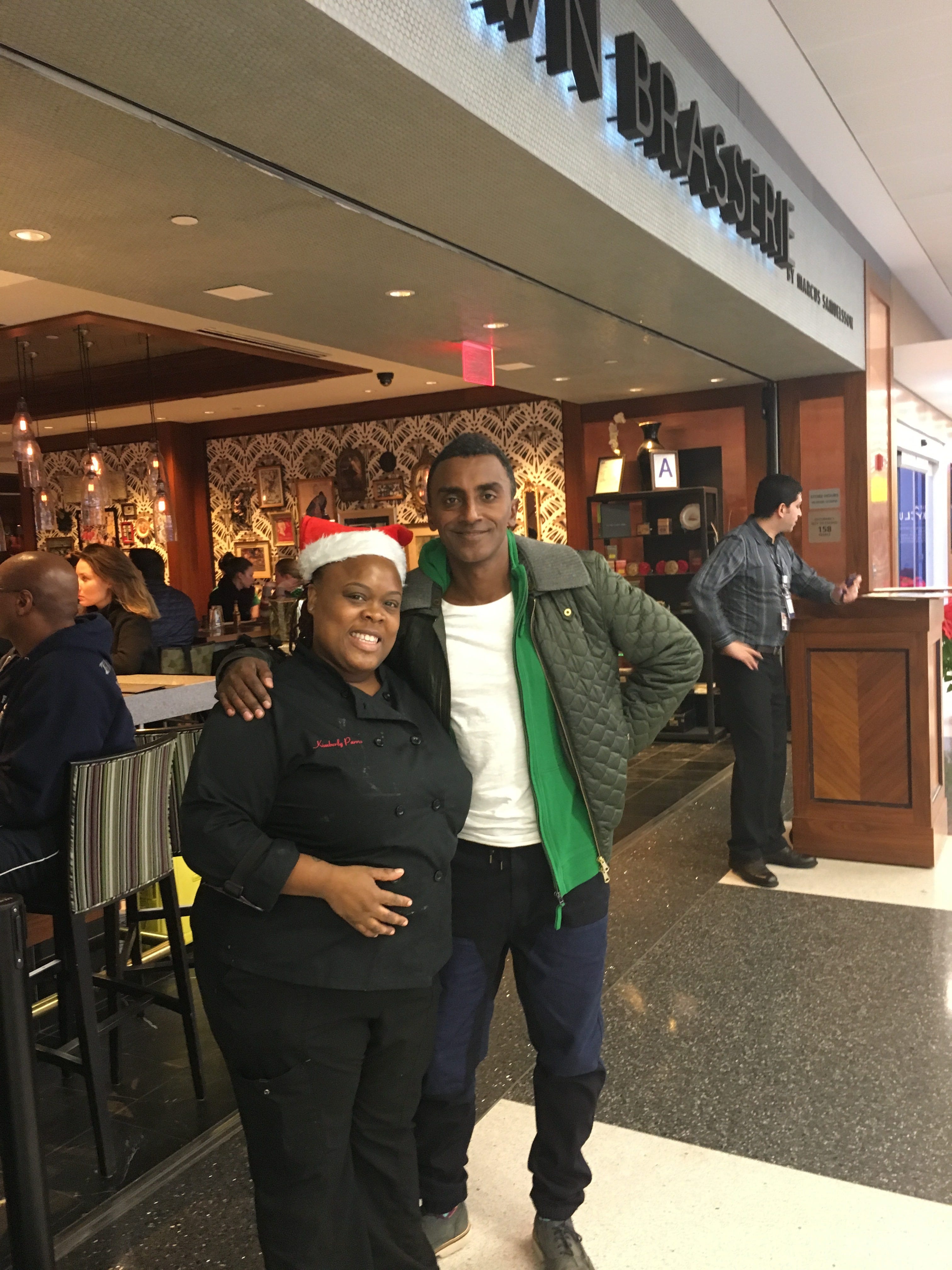
I think of my time being a sous chef at Marcus Samuelsson’s concept restaurant in JFK Airport - how enamored I was with the concept’s original menu, which was similar to Samuelsson’s flagship restaurant in Harlem, Red Rooster.
Red Rooster boasts an upscale, eclectic fusion of Chef Marcus’ Ethiopian roots & Swedish upbringing, merged with the soul food roots deeply embedded into the culture of Harlem…yet it is described as “elevated American comfort food”.
Similarly, I think about one of my all time favorite inspirations, B. Smith, the original innovator of what would be considered Black fine dining, and one of the first restaurateurs of color to own and operate a restaurant group with multiple locations. She also had a nationally syndicated talk show that I used to watch, B. Smith With Style, and a home goods collection with Bed Bath & Beyond that I still have the cup collection of. True story.

Here she was, a Black woman, rising above the misogyny and typecasting of an industry determined to only see one type of success story. Her restaurant was one of the originators of Black American/African diasporic fine dining, a landmark institution in NYC for 30 years before its doors closed in 2015 due primarily to the rising rent - but also because of Smith’s personal battle with early onset Alzheimer’s.
She sadly lost the battle in 2020.
B. Smith shattered barriers - first as a model and the second African American to appear on Mademoiselle, and then as a chef and lifestyle expert. She reimagined nouvelle cuisine on her own terms, at a time when everyone was sticking firmly to tradition - and she was wildly successful for it.
And yet, though she magnanimously created her own lane and thrived in it - she still bore the brunt of qualifiers to her success, often being compared to Martha Stewart. In her own words, she would say that Martha “has presented herself doing the things domestics and African Americans have done for years. This is the legacy I was left”.
Her success, though it spanned television, print, retail and restaurants, was seen as the exception versus the rule, but not because the food failed, or the vision failed, or even that she became ill - but because even the most polished Black excellence remains vulnerable in systems not designed to protect it.
Which begs the deeper question: what are we really chasing in our quest for legitimacy?
There is a colloquialism amongst people of the African diaspora that exists across generations and times: you have to be twice as good to get half as far. It is so deeply rooted in our lived experience that it even shows up in pop culture, most memorably in Scandal, when Olivia’s dad Eli reminds her of the cost of greatness in this skin color.
After a while, that belief becomes less caution, and more strategy.
In our cuisine, in our food, it looks like over translation, almost mimicry that doesn’t quite fit because it doesn’t seem real. It shows up as being over polished in many ways - an overt decoration to say that “I’ve arrived and I’m gourmet”, versus a minimalist approach that lets the food speak for itself.
A blue orchid on ribs, as opposed to simple seasoning and luscious sauce.
This belief that has become our tactic for survival is so pervasive, it has us subconsciously feeling as if the way that our dishes look, taste, and feel are not enough just as they are…and we often don’t even realize it.
And nowhere does this show up more than it does with B. Smith. If she could do everything “right”, yet still be seen as the exception - then the issue was never our excellence, or supposed lack thereof, as the disclusion from Michelin and other heralded spaces implies. The true issue is if we are actually seeking to prove our value, or are we simply continuing to survive in a system that never intended to see us?
When do we stop chasing excellence and stop seeking permission?
When Excellence Becomes Endurance
At some point, the pursuit of culinary legitimacy, whether accidental or purposeful, stops being about craft, and becomes about endurance.
Endurance in this industry, though? It comes with a literal price tag.
The elevated consistency that is one of the benchmarks of fine dining institutions requires access to capital: the ability to staff in accordance with real time needs, to be able to withstand slow seasons, rising rents, as well as the cost of maintaining polish over time.
The average Black-owned restaurant owner rarely enters these spaces with that kind of financial buffer, often through no fault of their own. As I’ve talked about many times before, even in this very Substack, lack of monetary access in food spaces for Black people is systemic. And so, what is often framed as a failure of longevity is, in reality, a lack of protection rooted in the system itself.
When survival itself is precarious, excellence is never allowed to simply exist. It becomes a constant battle of proving oneself. In this case, endurance looks like how much we are willing to reshape ourselves in order to be accepted by institutions that were never designed with us in mind.
And if that’s true, then the story of food across our diaspora, particularly in fine dining, isn’t just about recognition. It’s about erasure that shows up not just in theory, but on the plate itself.
I said I wasn’t sure if I was going to be able to capture it all in one piece, and I was right. Circle back for how a piece of fried chicken prompted the second half of how erasure ends up looking like foods that suddenly become “worthy” - once our cultural essence is removed from them.
No posts
Comments
Nothing yet. Say the first thing.
Sign in to join the conversation.