
Ah, summertime.
A time where salads of all kinds are plentiful, produce is abundant and delicious, and everyone is outside, basking in the glow of great warm weather.
Except…these past few weeks have been a whirlwind of fear, amidst a now 41-state outbreak of cyclosporiasis, an illness said to cause bouts of “explosive diarrhea” amongst other uncomfortable symptoms. The illness is caused by cyclospora, a microscopic parasite that is often found in water supplies that have been cross contaminated with human fecal matter. It primarily impacts produce that is watered by the contaminated water supply, such as various lettuces, berries and certain herbs. Because it is only eliminated by cooking the affected food to 158 degrees fahrenheit or more, standard produce washing doesn’t solve the problem.
It’s been…pretty devastating…to salad and fresh berry eaters everywhere.
What seems to have compounded the problem? The vast majority of the affected produce has been isolated to prepackaged salads, and leafy greens distributed in bulk to popular restaurants such as Taco Bell - all stemming from Taylor Farms, a large farm based in Salinas, California, with multiple other locations in Mexico and Texas, for starters.
Considering that the outbreak started in May and appears to show no signs of slowing down, with agencies and farms alike scrambling to place blame (and, theoretically, to fix the problem), it begs the question: What do we, the general public, do?
Do we just…not buy or eat any salads at all? Do we boycott Taylor Farms? Haven’t we boycotted enough places? It’s a bit exasperating at this point.
While I don’t, by any means, purport to have any firm answers to these questions…I do have educated thoughts as your culinary bestie and general rabble rouser of all things food. So. Let’s go through the tea first - how we got here, who Taylor Farms is, the patterns that keep emerging, and, more importantly - what all do we do now?
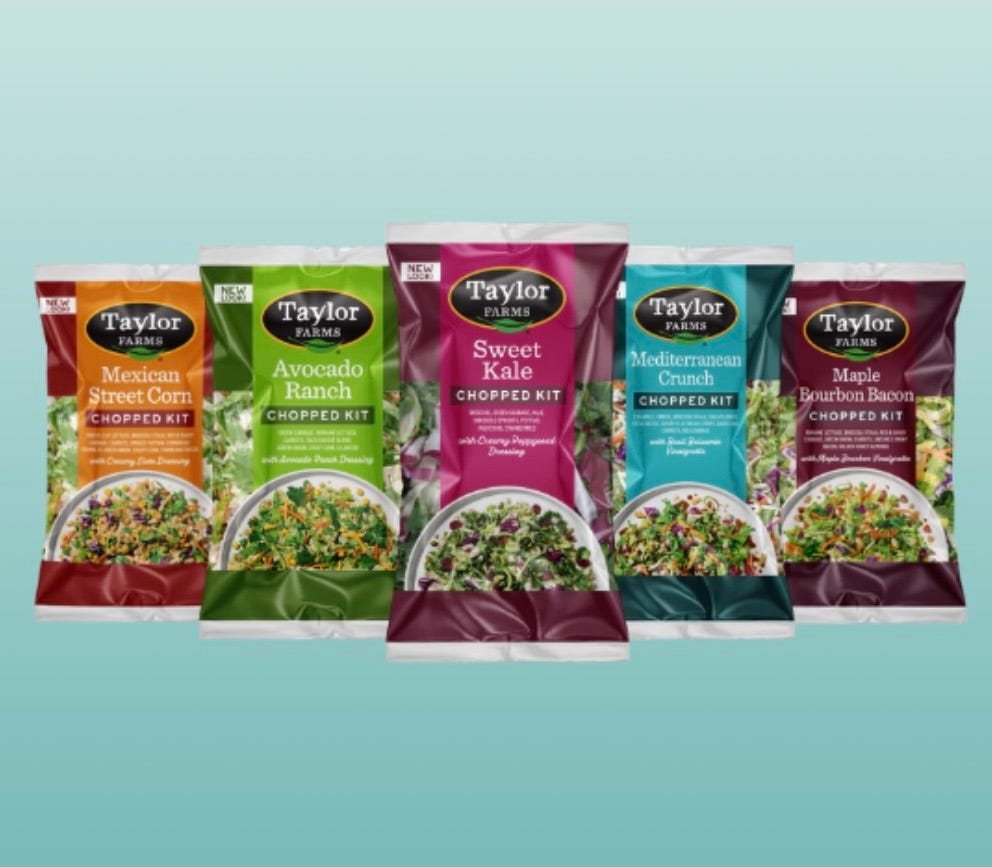
Taylor Farms and the ‘Cooties’ that Keep Happening
When I was a kid, there was this random…I guess you could call it a game…that we would play on the playground, where we’d run around, tapping people and saying they ‘had cooties’ and needed a ‘cootie shot’.
I’m a little foggy on the specifics, but I have a clear picture of it in my head.
It was silly, a thing that we as kids somehow managed to come up with — I’m not entirely sure how. I think about it now, because this specific outbreak, currently the largest cyclospora outbreak in history, makes me think of this very game - but substitute people for bags of salad. You get my drift.
At the present, there are over 11,000 confirmed cases of cyclosporiasis across 41 states – a number that may seem like a drop in the bucket for a country with a large population such as the US – but when you take into account that this number has tripled from 1,000, to 4,000, to the current number in a matter of weeks, with the source of the outbreak not yet contained, nor all the sources of the infected produce 100% identified?
It is entirely possible that this number will continue to grow.
And then there’s Taylor Farms, at the center of it all. Started as Taylor Fresh Foods by third-generation farmer Bruce Taylor in 1995, Taylor Farms has evolved over the last 30 years into a $7 billion corporation that supplies 165 million servings of produce to major retailers, quick service and casual dining restaurants across the country. Within this evolution (and similar to Sysco - I’m sure you remember them) they have acquired multiple smaller farms under their wing, such as Earthbound Farms, furthering their impact, as well as their imprint.
Every 2 out of 5 pre-packed salad options nationwide can be attributed to Taylor Farms, either directly, or via a subsidiary. At 165 million servings — that’s enough salad to feed half the country once.
Taylor Farms was identified as the source of the current outbreak by Taco Bell, one of the quick service restaurants serviced with pre-washed, pre-cut lettuce from the farm. The following week, a few interesting things happened — but first, I want to talk about what happened in March of this year first, and then take a quick trip back, before coming back to the present day.
Walk with me for a spell.
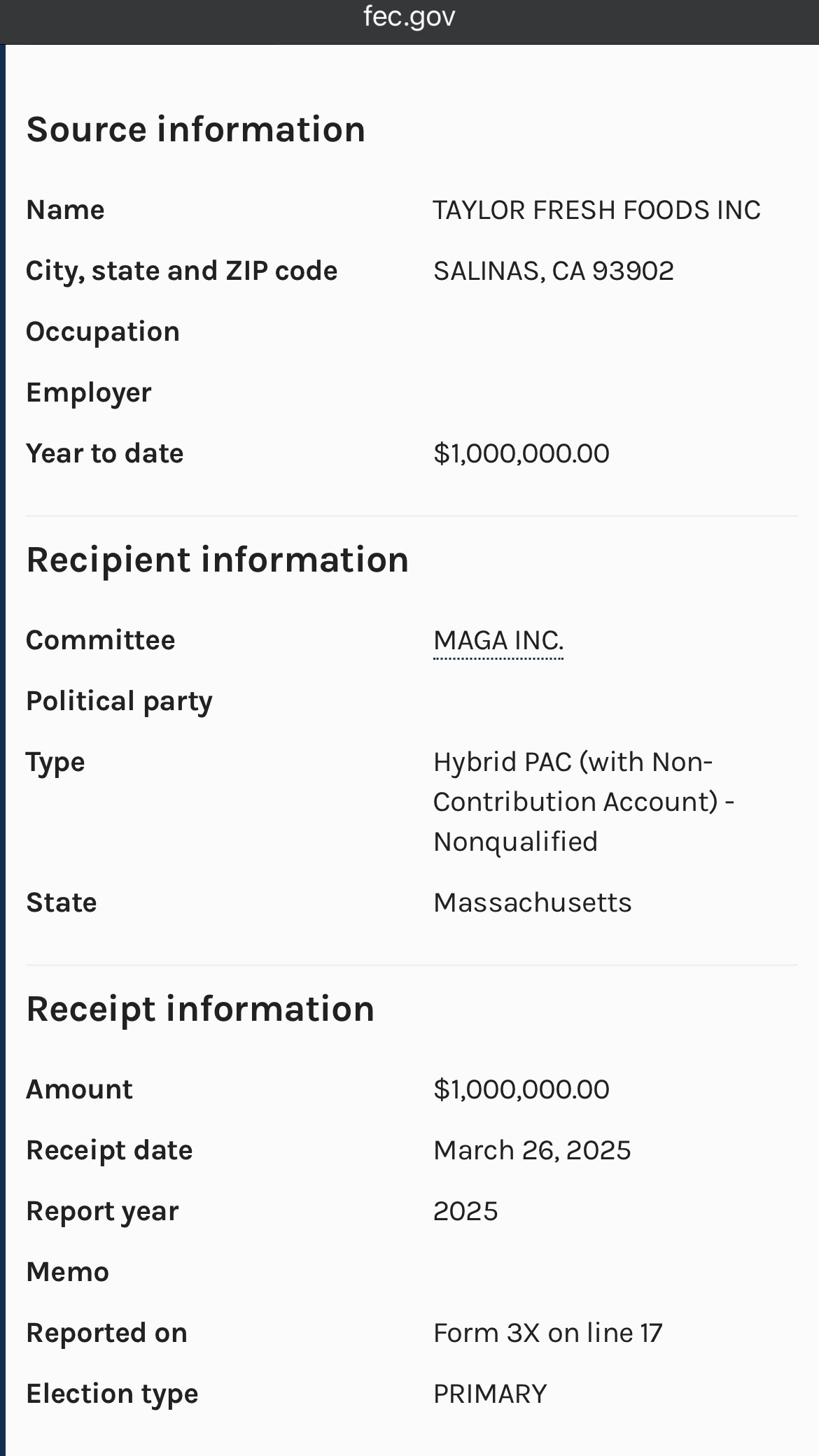
So. In March of 2026, Taylor Fresh Foods, the legal name of Taylor Farms, contributed $1 million to MAGA Inc., the super PAC behind the current President’s Make America Great Again movement. Prior to that major contribution, a number of relatively smaller contributions (less than $500,000) were made by board members of the organization between 2024 and 2026.
Now that we have that context – peep the timeline:
July 1, 2025: The Foodborne Diseases Active Surveillance Network (FoodNet), a branch of the CDC, declares reporting for all pathogens, with the exception of salmonella and STEC, to be optional. The shift was a direct result of cuts made by the Department of Government Efficiency (DOGE).
December 31, 2025: In their annual SEC filing, Taco Bell explicitly names cyclospora, as well as other food borne pathogens, as a risk factor while doing business, saying “Food or beverage-borne illnesses (that can be caused by food-borne pathogens such as E. coli, Listeria, Salmonella, Cyclospora and Trichinosis)...have occurred and may occur within our system from time to time.” They go on to add that “There is also a risk that we or our Concepts’ franchisees’ restaurants, suppliers or distributors underreport food safety incidents or system failures, which could hinder response and tracking of such risks.”
May 1, 2026: The first reported and verified case of cyclospora is reported in Indiana.
July 16, 2026: Executives from Taylor Farms meet with the FDA at the White House regarding the outbreak.
July 17, 2026: Taco Bell issues a press release, assuring that they had completed the recall of all of the iceberg lettuce at all of their facilities. Taylor Farms is their primary produce supplier. Taylor Farms issues their own press release, stating that they are voluntarily recalling their lettuce. The FDA then preliminarily declares that Taylor Farms’ iceberg lettuce is the primary source of the cyclosporiasis outbreak.
July 19, 2026: Taylor Farms issued another press release, noting that the FDA apologized for saying that they were the cause of the outbreak, calling it a “false positive”. The FDA denies this.
July 20, 2026: Taylor Farms recants their statement regarding the false positive.
Sounds like a lot in a short period of time, right? The timeline to me is fairly important, because it speaks to the potential for direct government overreach and influence – and this is not even within the context of lobbying.
Sound familiar? It almost sounds like the same issue we discussed with Sysco very recently, doesn’t it?
There’s a bit of irony here as well, as Taylor Farms is the innovator behind the same water system that may be the cause of the outbreak itself. In 2006, they founded SmartWash Solutions, a revolutionary wash-water monitoring system designed to sanitize and prevent microbial cross contamination.
(Alanis Morrissette was absolutely playing in my head when I learned this.)
That said, the water system is only as effective as the sanitation keeping it, and the facilities around it, clean. While on Instagram, I came across a post from the daughter of Raúl Fernandez, who berated Taylor Farms for firing her father as the Head of Sanitation, because he called out inappropriate cleaning practices and the lack of available and appropriate bathroom facilities for the workers – the very same issues that would precipitate a decision to ensure that the water monitoring system hadn’t been compromised.
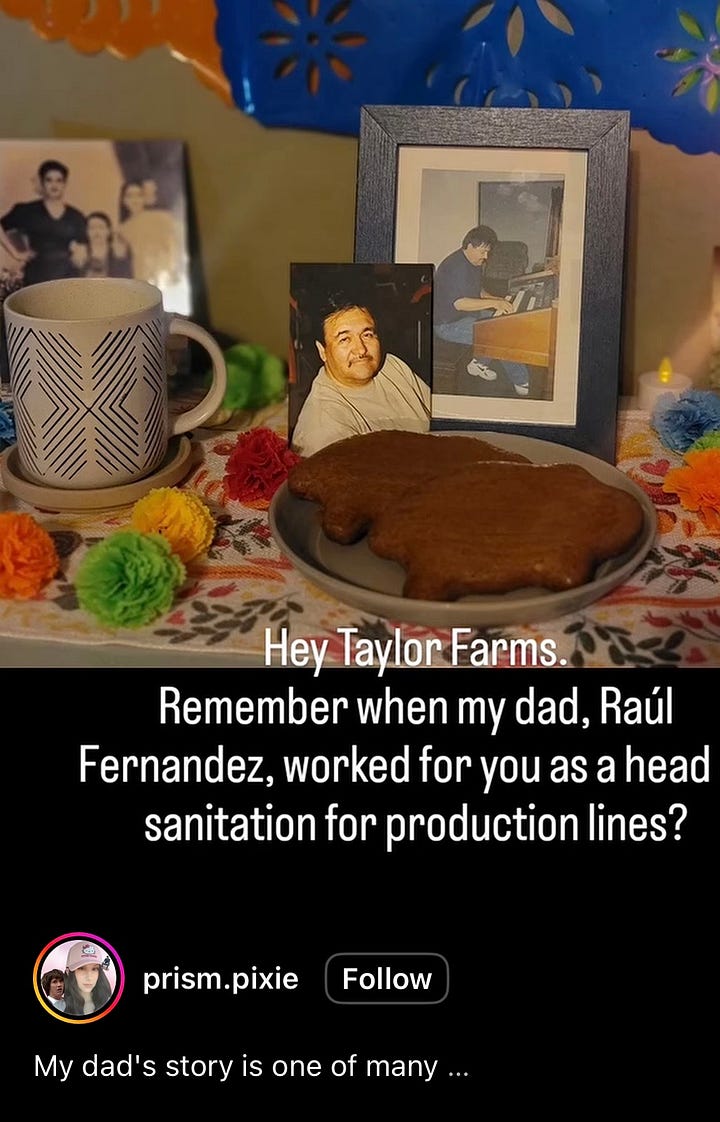
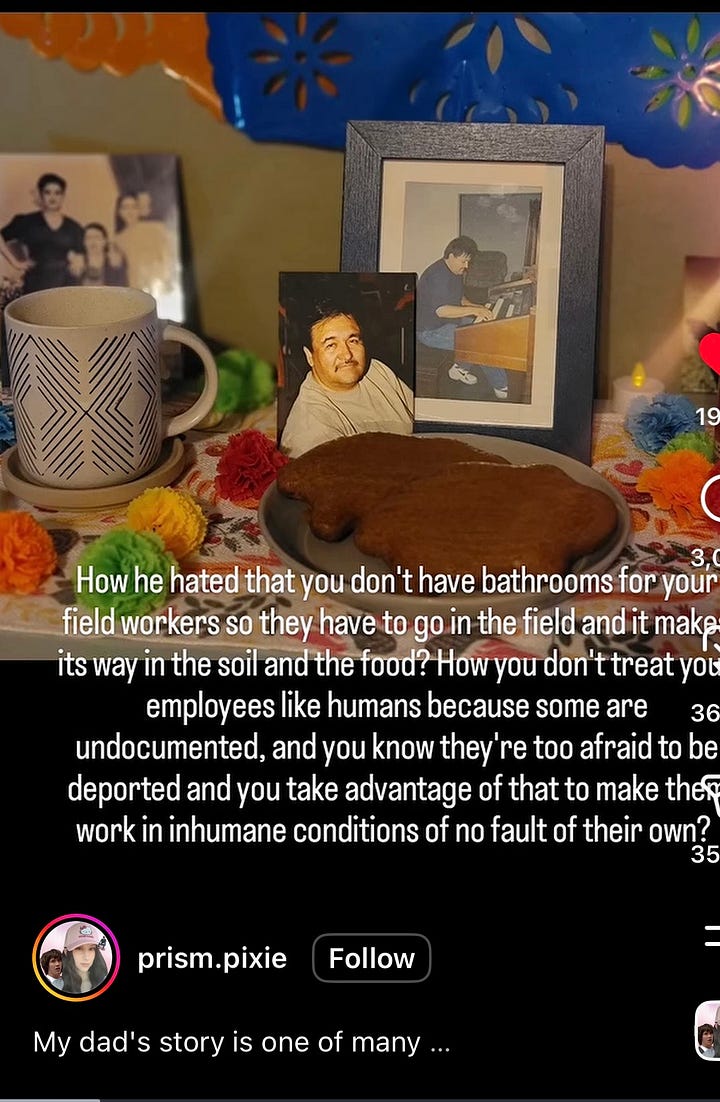
She had been honoring his legacy in a cultural and spiritual ceremony, since he’d recently passed away.
According to a LinkedIn profile I found, Fernandez was, indeed, the Sanitation Manager for Taylor Farms during the pandemic, approximately around 2022. His profile also mentioned that he’d been looking for work, as if he was actively building out his profile. I offered condolences to his daughter, stopping short of asking more questions about her father’s employment – I wanted to be sensitive to her during her time of grief.
But this is the thing about incidents like this, outbreaks like this - there’s always a trail that is somehow covered, and there’s always a real time cost, to real people like Raúl Fernandez. The reality is that I shouldn’t know his name right now in connection with a national crisis - and his daughter should be able to mourn her father without feeling abject anger at his treatment at a company he was employed with during her time of grief, simply because the company who employed him is in the news for the very same thing that he called out and was terminated for.
Yet here we are.
Patterns on Patterns on Patterns
It’s also not the first time we’ve been here with Taylor Farms. Another quick timeline for you:
February 2017: Taylor Farms recalls all chicken and pork salad products for probable listeria contamination, from farms in Dallas, TX and Tracy, CA
October 2024: Taylor Farms issued massive recall of prepacked spinach and related by-products due to E-coli outbreak and contamination
August 2025: FDA and Taylor Farms voluntarily recall Honey Balsamic Salad Kits for mislabeling of major allergens
Four different major outbreaks and issues of poor quality control in just over a decade is a lot, and it speaks to a number of things, but the major one is this: when companies are allowed to consolidate, to acquire multiple other companies in the pursuit of profit, there’s always a sacrifice – and that sacrifice is usually quality control.
Couple that with political access…and you have the definition of zero accountability.
It’s not just about accountability, either. It’s about creating a vacuum, a black hole, if you will, that sucks in innocent bystanders in its wake. In this case, the innocent bystanders are unwitting consumers – as well as Main Street businesses, like independent farms, who in theory would fill the gaps caused by an outbreak like this.
Except, in most cases, they can’t.
There’s a gap that’s not just about physical access to a product, in this case, uninfected produce — but that’s also about financial access, and daily capacity.
The average consumer is going into the grocery store, grabbing a bag of pre-cut, pre-washed salad, maybe some fresh herbs, a few berries, their yogurt of choice, probably a prepared food like a rotisserie chicken or marinated beans to offer themselves a protein – because it’s an easy choice that requires minimal effort or thought after an eight-plus hour workday. If they’re a working parent, they might’ve added some snacks to their cart for their children – but the idea is to keep it simple. They have a million other decisions to make at any given moment in time, the last thing they want is to have to make another one like figuring out what to make. They’re also not trying to spend a lot, either. Gas prices are up. Food costs are up. Student loans have doubled.
The average person doesn’t have the capacity to find a farmers’ market, or to locate an organic store that stocks independent farmers, just so they can make their easy salad.
Creating large companies like this makes the gap between accessibility and affordability so much wider for the consumer, because larger companies have a tendency to take shortcuts that smaller ones cannot afford to do, and create the illusion that lower prices are the norm, versus the designed price monopoly they’ve created. Smaller companies can’t afford a recall on their products, and they can’t compete with pricing. Larger companies have a bigger cushion.
Consumers wind up paying the price either way.
Follow the ‘Monopoly’ Brick Road
I mentioned Sysco before, especially as it pertains to the acquisition of smaller companies to expand the business, and the domino effect that it often causes in both quality, as well as consumer advantage and healthy competition for other similar businesses.
A bigger reach will always mean bigger problems.
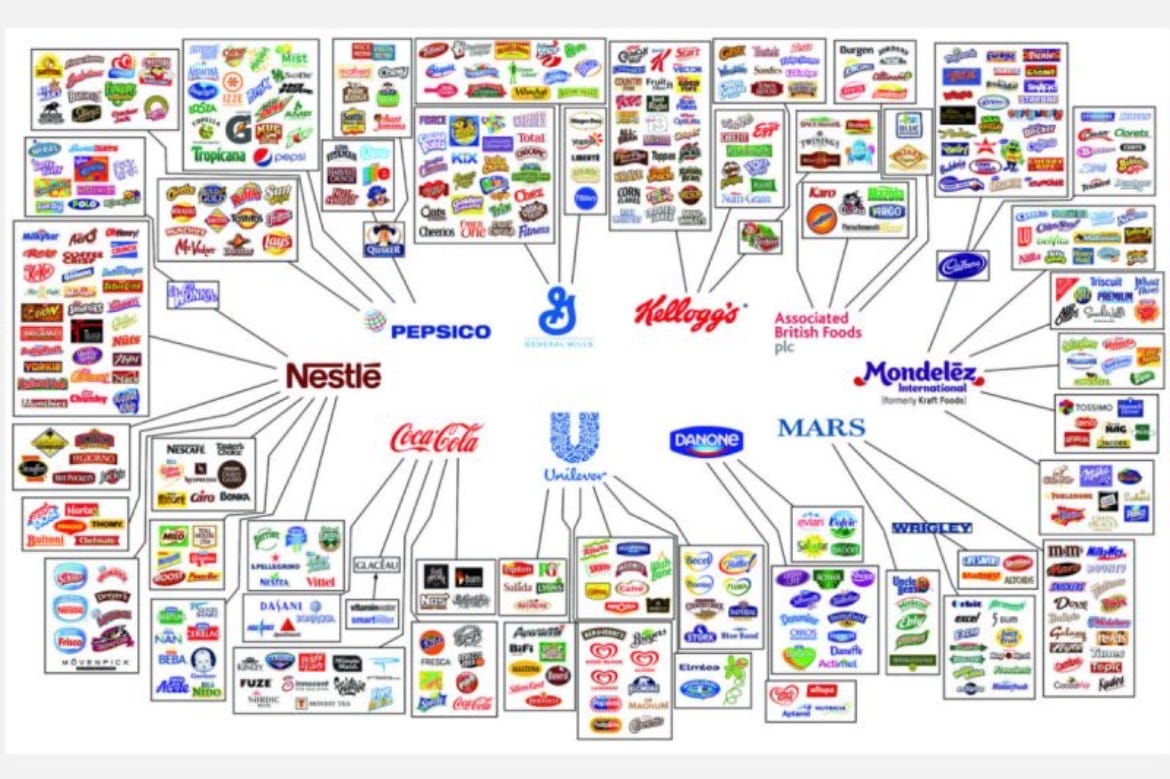
It makes me think of the same book, but a different chapter, that exists in the 10 Food Company Monopoly, as I like to call it.
Business Insider wrote an article in 2016 about the 10 companies that, in essence, control the food industry. In the article, they highlight the interconnectedness of all of the smaller brands that we know, love, and purchase, in many cases for what we assume are their autonomous nature and values – and they show how, in most, if not all cases, they are connected to a bigger corporate conglomerate.
Many of these businesses don’t start out that way - in fact, they often pride themselves on their value system and their unique or well made product. In roughly 92% of cases, though, one of three things happen:
They accept an offer to be bought out by a larger company, hoping to expand their impact (and make some money to do other things with)
They are forcibly bought out by a larger company as a way of cornering the market
They are unable to keep up with the demand and wind up closing as a result
This is not to say that smaller businesses should be discouraged from selling their company – in fact, I have distinct opinions on Black owned businesses in particular who opt to expand in this way – but more about deciding what one’s bottom line is. Is it about a larger impact? Is it about capital? Is it about freedom?
Will your values and your mission carry over with you, or is that a deal breaker?
Ben & Jerry’s immediately springs to mind.
The Vermont based iconic ice cream brand, known for its ice cream flavors with kitschy names centered around both their environment and their values, have been in a no holds barred battle for the past few years with their now parent company, Unilever. When they purchased them in 2000, the owners, Ben Cohen and Jerry Greenfield, were adamant about Unilever maintaining their values-based mission and socially conscious messaging.
Unilever agreed, and for the bulk of the 25-year acquisition, the story goes, there seemed to be no issues that couldn’t be resolved, thanks to the independent board of directors that Unilever and Ben & Jerry’s put together. That changed in 2021 when, with the escalating conflict in the West Bank region, and the despair surrounding the resulting genocide, Ben & Jerry’s board (with both Ben & Jerry’s support) opted to pull distribution of their product in Israel in protest.
The Israeli government balked, prompting Unilever to reverse the decision without Ben nor Jerry’s approval.
The proverbial hell broke loose after that.
The iconic, social justice driven ice cream brand has become a shell of itself internally. They signed up specifically to increase their outreach of both their ice cream and their mission — and have been forced into misalignment, simply because they don’t yet have the money to purchase themselves back from their parent company.
This is the bigger picture, the bigger problem with how our system works, especially when everything is so interconnected. It makes it challenging to align with your personal values and still be able to shop economically, especially when you consider that, while there are a number of Main Street brands to choose from, many independent ice cream brands to purchase from, or a number of farmers markets across the country to support instead of the bigger companies…
The odds are great that all of those companies will be less economically friendly to a consumer’s wallet, because they do not have the benefit of wholesale purchasing power that larger companies do. It’s the reason why the same bag of salad that is $2.99 at Walmart costs $6.99 in local supermarkets.
It can feel…very disempowering.
So what can a consumer do?
This Isht Is Exhausting. What Do We Do?
We’ve reached the part of my spiel where I’ve come out of the rabbit hole, laid it all bare, and now I would normally pose a philosophical question, or some form of open-ended something that would prompt you, the reader, to think about it and engage.
To be honest with you, though? I ain’t got it.
I’m tired. I’m sure you are, too.
It feels like every other week, we are being alerted to some other way in which the world around us is proverbially (or, in some cases, physically) crashing and burning. Or, somebody is calling for yet another boycott, like when Target canceled DEI.
But let’s be real: how does one boycott a company that, between all of its subsidiaries, provides lettuce to literally half of the country?
Who has the energy, the money, or the capacity for that?
Here are my thoughts instead.
You could find a way to boycott. While there is no one list of all Taylor Farms lettuce products and subsidiaries to reference, within this CNBC article are the vast majority of the brands who they provide salads, herbs, and berries. It would require a touch more intentionality for sure, but it could be done.
Look for: labels that say, “Independently owned and operated”. This is usually a good sign that the company is not part of a larger corporation. (a good example is NYC-based Gotham Greens)
Support the local farmers market in your area. If you are in a population dense area, there’s a really good chance that there is a farmers market by you that you can grab your lettuce from, and many deliver. I was working on an app for this a while back, and still am to a degree, but in the meantime, this app can help you find out what’s by you, no matter where you live.
Donate fresh, unaffected produce to food pantries in the area. Yes, it should be illegal to donate things that are expired to a food pantry – in many areas, it is. Unfortunately, those that are less fortunate often get the short end of the stick. I’ve heard a number of stories online of people donating recalled lettuce to local pantries (infuriating). Don’t donate recalled or expired produce. Give what you can, where you can – these are often people who don’t have the financial means to boycott. If you’re in Queens NY, I’ve created a list of local pantries where you can donate. If you are outside of the NYC Metro area (a more likely scenario), check out Feeding America, or check in with local religious institutions – they often either have, or know, where the pantries are.
And lastly?
Recognize that not everyone has the capacity to boycott, for any number of reasons. I stand, and continue to, stand ten toes down on the idea that boycotting is a privilege that many cannot partake in, because of their financial, emotional, or physical needs — and the system at large is specifically designed to make you feel exhausted at the idea of fighting back in any way. So do what you can, and find other ways to make your values seen and heard.
I also always say that there is more than one way to fight a battle.
This one was a lot to write, and I’m sure it may also be a lot to read…but sometimes seeing the full picture, no holds barred, can’t be abbreviated. As for what’s next for Taylor Farms and this outbreak? I’m not entirely sure, same as just about everyone – but I can assure you that the population at large has refused to take their proverbial foot off of their necks for the foreseeable future.
Now. Lemme find my way to the farmers market, because I’m not in third grade anymore. I don’t want a single cootie that requires a shot.
No posts
Comments
Nothing yet. Say the first thing.
Sign in to join the conversation.