
Hi! I’m Peter, CEO of Kickresume, and these career-related stories caught my attention this month — and might catch yours too.
Today’s story: Ghost jobs haunting your job search are now haunting the economy too.
Handpicked remote job paying in $$$: Remote roles edition!
Random piece of career advice that actually works: How to list AI skills on your resume (even if you can’t code) [video]
Surprise at the end: FREE access to Kickresume Premium for 7 days

Remember when I told you ghost jobs weren’t going anywhere?
(It’s okay if you don’t. It was a newsletter from 15 months ago, which is ancient history in internet time.)
Well, I have an update: they went somewhere. They went to Washington.
Last time, ghost jobs were your problem — a time-sink, a morale-killer, a reason to yell into a pillow.
This time they’re everyone’s problem. There are now so many of them that they’re distorting the government’s official ‘how’s the job market doing?’ numbers.
Which, unsurprisingly, is the exact moment politicians decided to care.
So, does that mean your days of applying to ghost jobs are over? Will your life get better now?
In some places, it actually might!

First, let’s do a quick recap because I respect that you have a life and did not memorize my last newsletter.
A ghost job is a job posting that’s advertising a role that isn’t really available and sometimes doesn’t exist at all.
Purely statistically speaking, you’ve definitely applied to one during your job hunt:
More than a quarter of U.S. job listings on LinkedIn (27.4%) are likely ghost jobs.
81% of recruiters admit their company posts ads for jobs that don’t exist or are already filled.
93% of HR people say they post ghost jobs at least sometimes (45% “regularly,” 48% “occasionally.”)
Last time, my verdict was basically that they’re annoying, demoralizing, and a great way to lose an afternoon.
In hindsight, I undersold it.
I just assumed the worst they could do was waste your time. But it looks like they do a lot more than that.
Here’s the fun twist:
Every month, the government counts how many jobs are open in the country and how many hires were made in a report called JOLTS (Job Openings and Labor Turnover Survey).
Nobody verifies that those openings are real, so ghost jobs get counted right alongside the real ones.
And people actually make decisions off these numbers.
The Federal Reserve uses it to judge how tight the labor market is — the same judgment that shapes what you pay on a mortgage, interests, or a credit card.
You’re probably starting to see the issue here...
If a big share of those counted openings are ghost jobs, the total comes out inflated.
And that inflated number makes everyone think the labor market is on fire. Lots of openings, employers desperate to hire, happy days.
So a bunch of jobs that were never real end up influencing decisions that are very real.
If that sounds like a conspiracy theory, I get it.
Except this time the people raising the alarm are the economists paid to trust the data.
Case in point: In late 2025 the Richmond Fed admitted, in writing, that one of their go-to measures of the job market ‘doesn’t seem to comport with reality.’
The good news, if you can call it that, is that a problem this visible finally got the attention it needed.
Even real jobs can ghost you. Usually, it’s your resume’s fault.
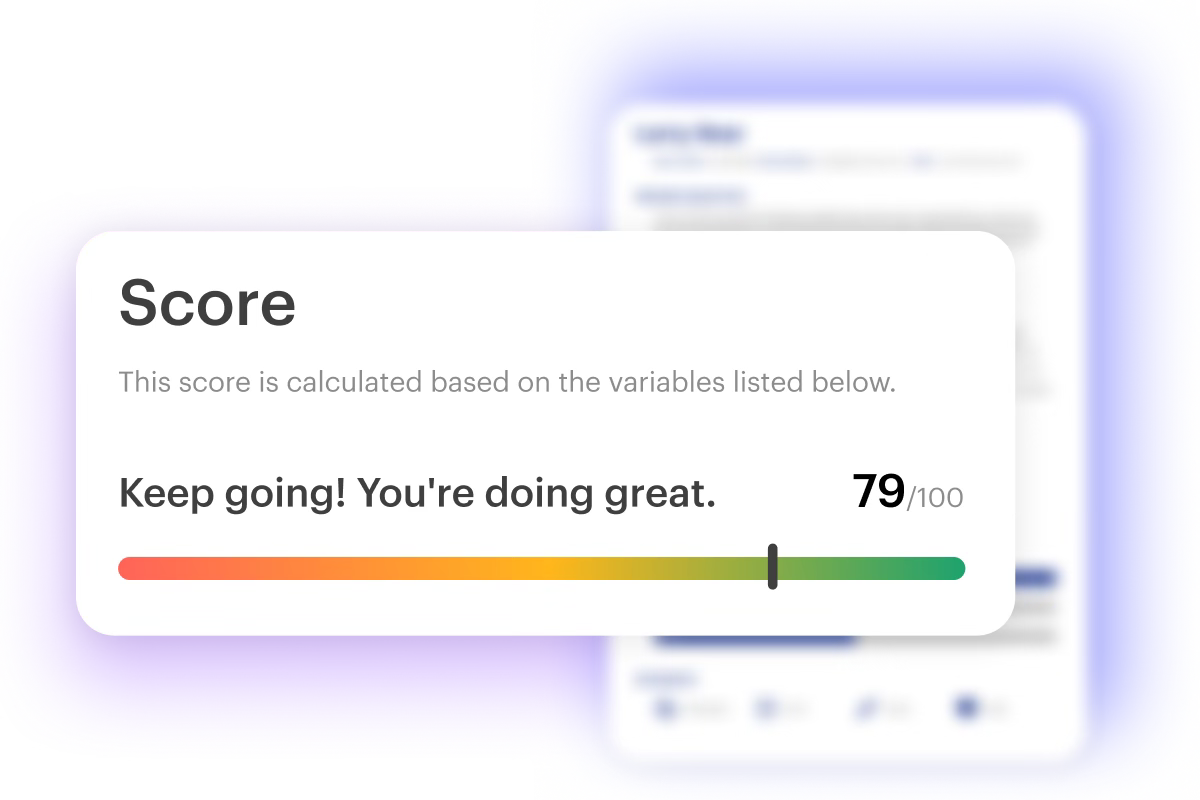
Even when a job is 100% real, you can still get ghosted, just by a different culprit.
Most companies run your resume through an ATS (applicant tracking system) that filters people out before a human sees a word.
That’s what Kickresume’s ATS Checker is for.
It runs your resume through a simulated ATS scan using 20+ criteria and flags what’s quietly getting you filtered.
So once you’ve found a real job worth your time, you actually make it past the gatekeeper.
Here comes the part I’m actually excited about!
For the first time, someone with real power finally agreed ghost jobs are a problem worth fixing.
Just last month, New York passed a bill that forces big employers to disclose whether they actually plan to fill a role.
Along with a $2,500 fine per fake listing that doubles every month the ghost ad stays up.
In March of this year, Pennsylvania proposed a bill that would ban posting nonexistent jobs, require a hiring timeline, and even require disclosing how many times a role’s been reposted in the past year.
It’s yet to be passed, but I’ll keep you updated.
New Jersey, California, and Kentucky are all working on their own versions, and there’s even a bill in Congress to make it national.
Companies that post fake jobs can now actually be penalized for it. And that’s all genuinely great news for once!
Now, realistically, this won’t wipe out ghost jobs tomorrow.
Laws are slow, full of loopholes, and only cover some states for now. But still, the fact that ghost jobs are being legislated at all is a huge win.
That said, waiting on lawmakers is a terrible job-hunting strategy.
Your job hunt is happening now, not whenever these bills become law.
So let’s talk about what you can actually control today.
In the meantime, the job of filtering out ghosts still falls on you. Unfortunately.
Resist the urge to fire off applications without checking a few things first, because that habit alone will save you more time and frustration than anything else.
So here’s what to look for:
If on LinkedIn, check the repost date. On LinkedIn, a literal “Reposted” badge is the clearest tell there is.
How long has it been up? A listing that’s been live 30+ days, or keeps getting “refreshed” with no changes, is almost always a ghost.
Cross-check the company’s own careers page. If the job is plastered across every job board but nowhere on the company’s actual site, that’s a bad sign.
Look for a salary range and a start date. If both are missing, be suspicious.
Notice if you’ve seen it before. If the same job keeps resurfacing month after month, it’s not in high demand.
Or maybe it’s finally time to make that move to New York you’ve been threatening to make for years. For legal reasons.
Not a New York person?
Pennsylvania’s working on it too. So your other option is to move to Pennsylvania on purpose, which, respect.
In another 15 months, with any luck, ghost jobs will be a solved problem and this piece will be hopelessly outdated.
Just a ghost story we tell new job seekers. ‘Back in my day, the jobs weren’t even real!’

A small but useful update to this section: these jobs now live on our own job board.
Which means you can apply directly from the Kickresume app and prepare for the interview there too.
#1 Customer Reliability Engineer at Cisco
💰$158,200 - $241,800 US base range 💰
#2 Technical Writer at Firecrawl
💰$140,000 - $185,000 US base range 💰
#3 Sales Incentive Manager at USA TODAY Co
💰$110,000 - $130,000 US base range 💰
#4 Senior Statistician at Worldwide Clinical Trials
💰$87,500 - $173,500 US base range 💰

You don’t need to code to put AI on your resume.
In fact, a 2026 Oxford study found that listing AI skills is one of the quickest routes to better pay and more interviews.
The catch is that most people do it wrong.
They either leave AI off entirely because they “aren’t engineers,” or they paste “ChatGPT” into every bullet point like GPT is doing all their thinking.
Here’s how to do it right, even if you can’t write a line of code:

If you’ve scrolled this far, you deserve something nice. How about this?
Kickresume Premium is FREE for 7 days for you!
Just click the link, sign up with any email, and your premium will be active right away.
There are hundreds of open roles at the top tech companies right now. Your resume should probably be ready for them.
Catch you later!
Peter
Comments
Nothing yet. Say the first thing.
Sign in to join the conversation.