
Hi! I’m Peter, CEO of Kickresume, and these career-related stories caught my attention this month — and might catch yours too.
Today’s story: Meta used AI to pick who to lay off. It hunted down the sick, the disabled, and the new parents.
Handpicked remote job paying in $$$: Definitely-not-Meta edition!
Random piece of career advice that actually works: 6 Best free resume builders (video)
Surprise at the end: FREE access to Kickresume Premium for 7 days

If you thought the worst thing to come out of Meta in the last couple of months were the deranged spyware glasses, you would be absolutely right.
But my least favorite humanoid, Zuck, didn’t stop there.
He managed to sneak in another genius idea — using AI to decide which people to lay off.
And sure, letting AI decide who loses their job is pretty bad on its own.
But who the AI picked is worse.
Oh, and it’s also the part that got him sued.
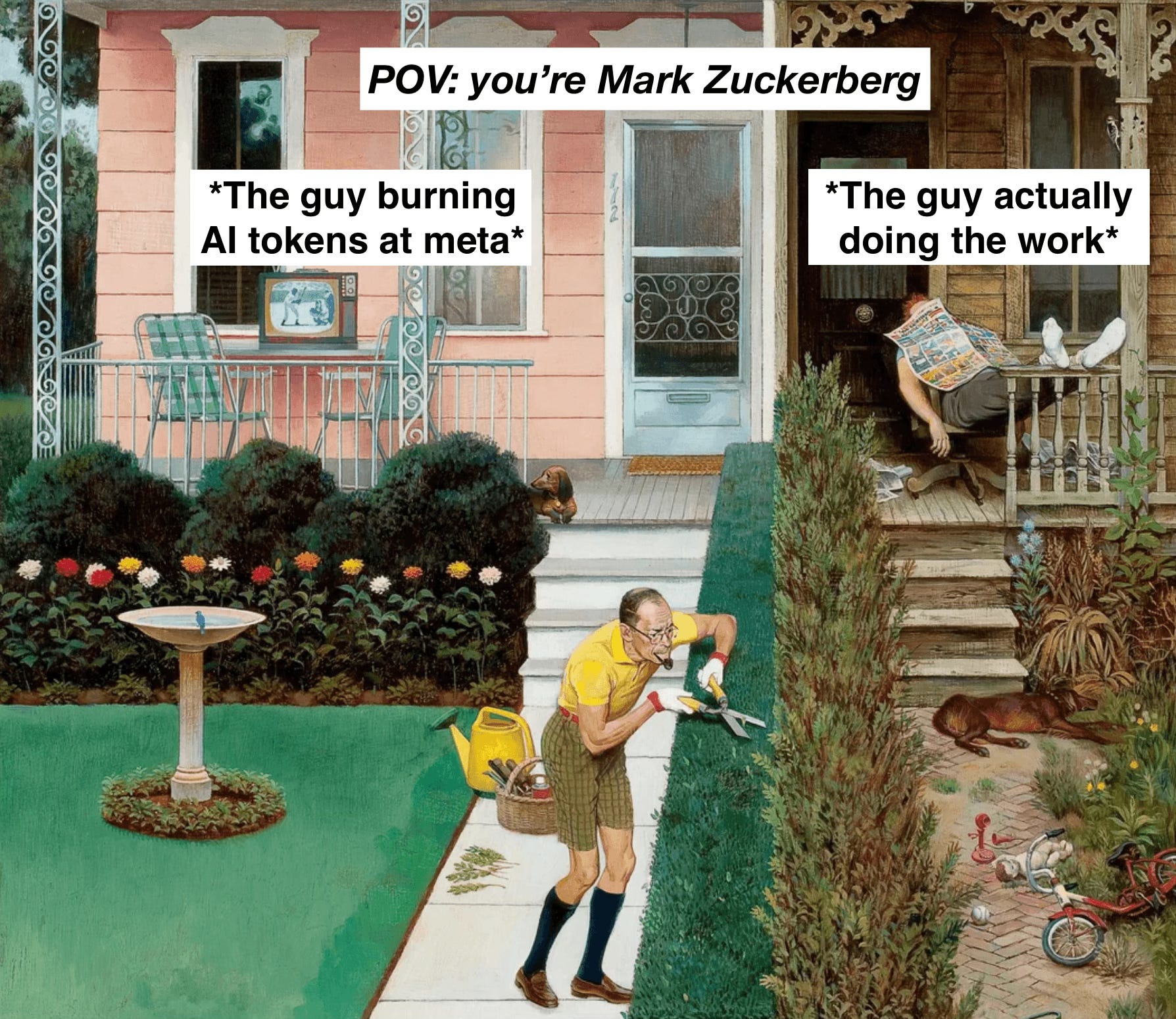
Back in May, Meta announced it was cutting around 8,000 people. That’s about 10% of the company.
Big number, but not exactly rare these days (unfortunately).
What’s rare is how Meta allegedly decided who those 8,000 would be.
You won’t believe it, but instead of asking managers, or, you know, talking to actual humans, Zuck reached for AI.
Shocking, I know.
So what did Meta’s AI actually look at? Or, to use the lawsuit’s own wording, what did this “constellation of internal artificial intelligence systems” look at?
A few things:
Keystroke and activity monitoring (basically, how much you type and click all day)
Tracking how many AI tokens each employee burned through
Algorithmically generated performance rankings, run partly through an internal tool called Metamate
(Yes, Metamate. Though whatever it did to these people, it definitely wasn’t being a mate.)
Now, if these sound like genuinely bad, borderline toxic ways to measure whether someone deserves to stay employed, well, that’s because they are.
Exhibit A, which you’ve probably already heard about: earlier this year, a leaderboard ranking employees by AI token usage appeared inside Meta.
People panicked about not looking ‘AI-native’ enough, so they left AI agents running for hours and fired off giant pointless prompts just to keep their token counts up.
Once it leaked, Meta killed it within days.
Funny in hindsight. Less funny once you realize employees already suspected this stuff could be weaponized against them.
And sure enough, weeks later, it was.
Exhibits B and C don’t come with a fun story attached, but they don’t need one.
Tracking keystrokes measures how much you type and move your mouse, not how much you think.
And I cannot be the only one who thinks that something called Metamate shouldn’t get a say in who keeps their job.
Put it all together and what Meta really built was a system to catch its ‘least productive’ people.
Except it never measured performance. It measured activity: keystrokes, clicks, tokens, hours of looking busy. Then it went looking for whoever wasn’t generating enough of it.
Unfortunately, it turned out to be a little too good at that.
Speaking of AI coming for jobs, will it come for yours?
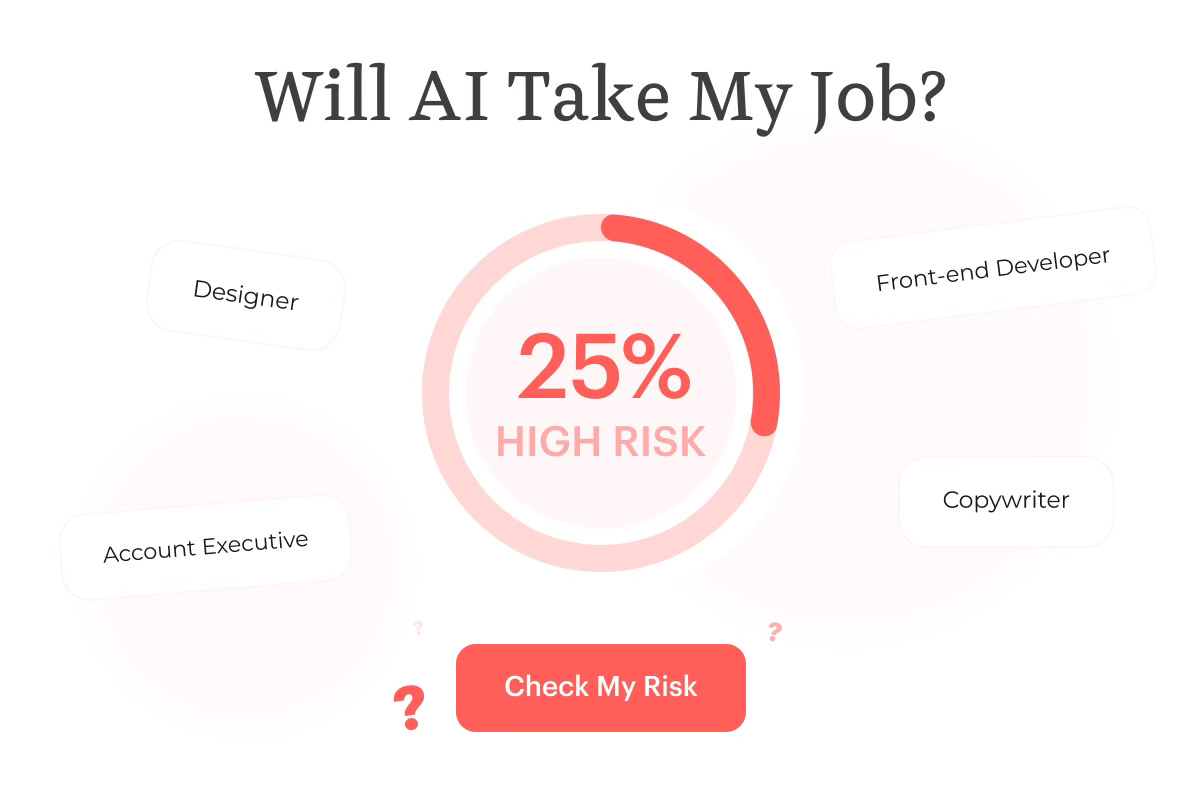
There are really two ways AI comes for your job. One is what just happened at Meta. The other is where it just gets good enough to replace you.
But only one of them lets you see the odds before it happens.
Will AI take my job? is easily the question we hear most. So we spent some after-hours time building a tool that answers it with real data.
It’s free, doesn’t ask you to log in, and can even help you figure out your next move from there.
None of us love that this is worth checking. But it is, so it’s here.
See, if you just had an operation and you take time off to recover, you’re not exactly producing many keystrokes.
When you just had a baby and start your maternity leave to take care of a newborn, you don’t have much time to burn through AI tokens.
And if you’re ill and take a few sick days, you’re not really in the mood to interact with Metamate.
You see where this is going.
The layoff list had a striking overrepresentation of people who were legally, and very reasonably, not at their desks.
Such as those who were on disability, medical, or maternity leave.
Which is exactly why 26 of them are now suing Meta.
Their claim is that Meta let an AI algorithm flag people for being pregnant, sick, or recovering, which are exactly the reasons the law says you can’t fire someone for.
Some might call that AI discrimination. The lawsuit certainly does.
Meta, naturally, sees it differently.
According to Meta, nobody was actually fired by a machine. Yes, the AI flagged, ranked, and suggested a list, but a human being made every final decision.
The technical term for this is “human-in-the-loop” and Meta would very much like you to focus on it.
Though if you ask me, being in the loop and being in charge aren’t the same thing.
If the AI builds the list, sorts it, and hands it over, and the human just says “Yep!” then who actually made the decision…?
Either way, as soon as something goes wrong, liability falls on the human who signed it.
It’s never the AI’s fault, of course.
So… why am I telling you all this?
Because I don’t think this is the last time we’ll hear the ‘human-in-the-loop’ defense.
For now, the judge has let the layoffs go ahead, but only because the case hasn’t actually been decided yet.
The real question is still very much open: whether “a human approved it’ is enough to make an AI-driven decision legal, whether that decision is about layoffs, promotions, or who gets hired.
And if the answer turns out to be yes, that’s bad news for everyone, not just Meta’s ex-employees.
I’m certainly keeping my fingers crossed that the court sees it differently.
But, what does all this mean for you right now?
Well, the obvious one is… don’t work at Meta. I don’t think I need to explain that one.
But also, if you have a hunch your company might be keeping track of a similar “productivity” metric, I’d suggest asking someone in a position to know what exactly it is they’re monitoring.
That way, you can optimize for exactly that.
If your company genuinely believes AI token usage is a great metric, then burn tokens.
It’s stupid, but so is the metric.
But you didn’t hear that from me.

A small but useful update to this section: these jobs now live on our own job board.
Which means you can apply directly from the Kickresume app and prepare for the interview there too.
💰$157,000 - $185,000 US base range 💰
#2 Senior Internal Auditor at GitLab
💰$86,400 - $146,400 US base range 💰
#3 Software Engineer - Full Stack at Stripe
💰$161,637 - $213,800 US base range 💰
#4 Partner Sales Analyst at HP
💰$112,600 - $155,000 US base range 💰

If this newsletter has you thinking you might need your resume sooner than you’d like, you’ll probably go hunting for a free resume builder.
Except free resume builders have a habit of not being all that free.
So, we tested six of the most popular ones to see which actually let you export a resume without hitting a paywall.
Now, we did make this video, and we are one of the six. But the test was honest, promise.
Fun coincidence: one of the six lets you use premium free for a whole week. Details waiting at the end.

You earned a little something for scrolling this far.
After a whole video on free builders, the least I can do is drop our own paywall for a week.
Which is why Kickresume Premium is FREE for 7 days for you!
Just click the link, sign up with any email, and your premium will be active right away.
Catch you later!
Peter
Comments
Nothing yet. Say the first thing.
Sign in to join the conversation.