
Hi! I’m Peter, CEO of Kickresume, and these career-related stories caught my attention this month — and might catch yours too.
Today’s story: A secret assessment score is following you for 330 days to every job you apply to
Handpicked remote job paying in $$$: Remote roles edition!
Random piece of career advice that actually works: How to convert your LinkedIn to a perfect resume in seconds (video)
Surprise at the end: FREE access to Kickresume Premium for 7 days

For as long as anyone can remember, job seekers have counted on two things being true:
If one company rejects you, another company provides a completely fresh opportunity.
The more you apply, the higher the chance you eventually land something.
Which are fair assumptions, and for a long time, these held true.
Sad to report, it’s not the case anymore.
Because nowadays it’s more like, in Eminem’s words: you only get one shot, one opportunity…
…once every 330 days.
And there’s also a reason why you’ve been getting rejected for months from every job you applied to (no matter how many that was), according to a new Stanford study.
The good news (and there is some!) is that there’s a way around it.

So, let’s take this one step at a time.
First, why am I saying you don’t get an independent chance with every company you apply to anymore?
Well, most companies these days use one of few available vendors to do their hiring assessments for them.
I’m pretty sure most of you have done some form of a hiring assessment at some point in your career.
They are the cognitive ability tests you have to do from time to time when applying for a job, like questionnaires, behavioral questions, or tasks you have to complete.
One of the most widely used is Pymetrics, which is exactly what that Stanford study I mentioned focused on (but we’ll get there).
Pymetrics is a set of “games” used during hiring that track candidates behavior while they play.
The idea is that how you play the games reveals something about who you are as a candidate. Like how prone you are to taking risks, how you focus, or make decisions.
It’s used by some of the biggest companies out there like EY, PwC, Accenture, JP Morgan, Mastercard, or Tesla, just to name a few…
Now, you might be thinking, “Peter, why is that a problem? Isn’t that actually a decent way to learn something about a candidate beyond what’s on their resume?”
And honestly, I agree. The assessment itself isn’t the issue.
So… what is?
Well, you’d expect to get an independent shot at the assessment each time you apply for a new job.
But you don’t.
Because as it turns out, Pymetrics stores your result. And every employer using Pymetrics has access to it whenever you apply to them.
And to make it even better, they can store it for up to 330 days.
Which means that every time you apply for a job in a company that’s using Pymetrics during those 330 days, you don’t get a new shot at it.
Your original result is what every single one of them sees.
Regardless of the fact you may have had a bad day when you first did the assessment. Or if something distracted you. Or if you spent half the time figuring out what you were even supposed to do.
And for a year, that’s the result you’re stuck with.
And the trippiest part for me is that a lot of the time, you don’t even know which jobs pull up your result.
Because, you know, you just assume that it’s a simple application with no assessment.
But okay, let’s say your result is solid. Let’s even say it’s exactly what these companies are looking for. In which case, none of this really matters, right?
Well, about that…
Your resume can outsmart this algorithm.
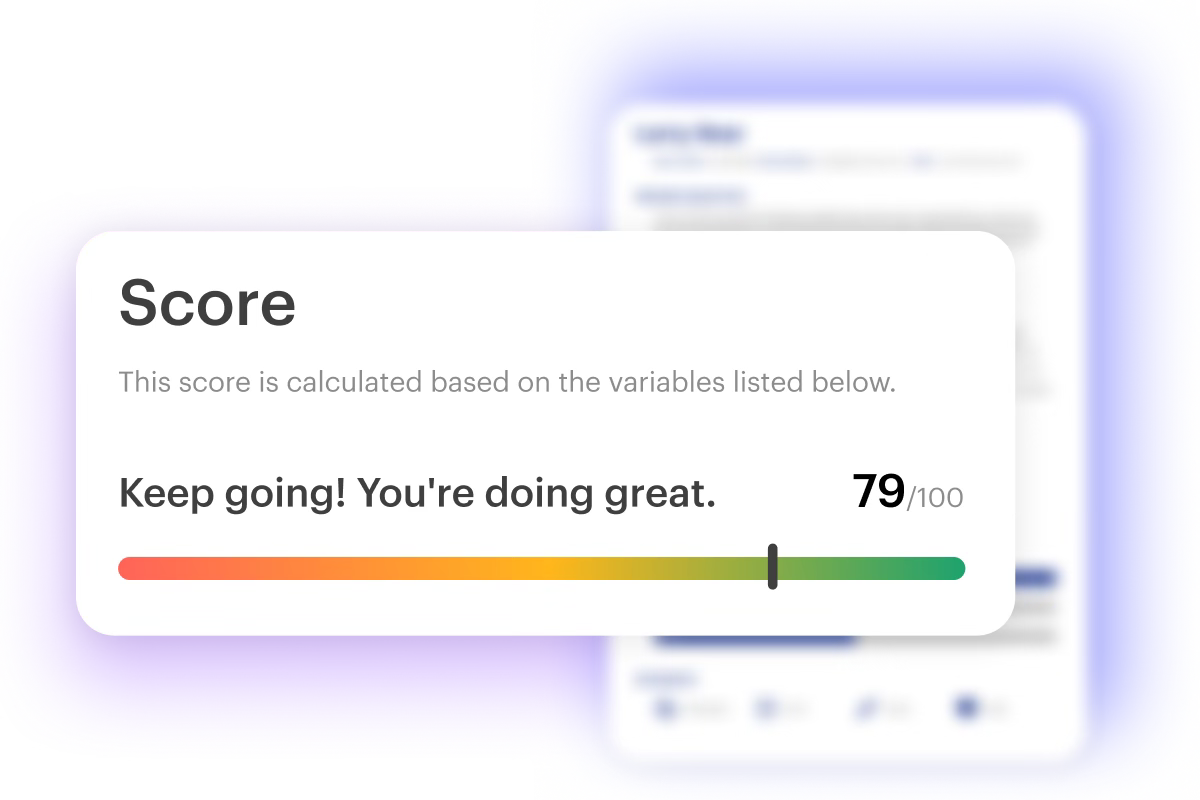
While you can’t do much about Pymetrics, there’s another hiring algorithm you can absolutely game — the ATS reading your resume.
And that’s where Kickresume’s ATS Checker comes in.
It simulates a real ATS scan to catch issues that could get you filtered out. Things like:
formatting errors
wrong layout
keyword gaps
missing contact info
Millions of users are already using it and it’s quickly becoming one of our most-loved features.
Give it a try before your next job application.
Time for that Stanford study I promised!
Researchers analyzed a massive dataset of 4 million job applications across 156 major US employers, all screened by the same vendor. Pymetrics.
One of the main findings was that simply being evaluated by the same algorithm across multiple employers makes rejections far more correlated than they should be.
If one company says no, others using the same algorithm are significantly more likely to say no too.
What that means in practice is that applying to five different companies that all use Pymetrics isn’t really five independent chances.
It’s more like one chance, submitted five times.
And the study has the numbers to prove it:
For example, among applicants who applied to 4 positions, 10% got rejected by all four, and among applicants who applied to 10 positions, 4% got rejected by every single one.
If companies were deciding independently, those numbers should be significantly lower.
Which brings us back to that second assumption: The more you apply, the higher the chance you eventually land something.
And technically, that’s still true. Though the math has changed… dramatically.
According to the study, under independent hiring, 10 applications gets you near-certain odds of at least one yes.
But with Pymetrics involved, applicants would need to submit at least 25 applications.
So, applying more does help. The study confirms it.
But the rate at which it helps is slower than it would be if companies were making independent decisions.
It’s worth saying that this study only looked at Pymetrics.
But there are other hiring algorithms out there, used just as widely, that nobody has really checked yet.
HireVue, for example, is used by over 60% of the Fortune 100 companies.
Make of that what you will.
Now, I did promise there was something you could do about it.
And there is! A couple of things, actually.
Some platforms explicitly ask for your consent to retain your test scores or use AI screening.
And I know we all hate reading terms and conditions, but in this case, opting out could save you from months of invisible rejections.
Another thing, Pymetrics tests aren’t a mystery.
There are websites and YouTube tutorials aimed at specific roles and companies that tell you exactly how to play each game to get the optimal result.
Ethically grey? Sure. But so are the companies!
Now the annoying advice: applying to more jobs still works, unfortunately. You just need to apply a lot more than you normally would… (Try 25 *wink, wink*).
And lastly, my favorite advice… you can also just skip the whole thing entirely.
Cold apply!
If there’s a company you genuinely want to work at, don’t wait for a job posting. Reach out directly, especially if you know someone there, and tell them why you like what they’re doing and why you’re the right fit.
It’s more effective than most people think. I hired a couple of people this way too.
None of this is how it should work. But until it changes, at least you know the rules.

A small but useful update to this section: these jobs now live on our own job board.
Which means you can apply directly from the Kickresume app and prepare for the interview there too.
#1 Senior Manager, Talent & Performance at PlayStation Global
💰$186,600 - $279,800 US base range 💰
#2 Editor, Branded Content at Babylist
💰$119,852 - $143,839 US base range 💰
#3 Senior Analyst, Personalization Data Science at Sephora
💰$133,952 - $205,196 US base range 💰
#4 Staff Product Designer, Developer Platform at Netflix
💰$460,000 - $710,000 US base range 💰

Here’s a career hack that has nothing to do with algorithms, assessments, or any of the above chaos.
If you’ve been keeping your LinkedIn updated, you’ve already written your resume — you just haven’t exported it yet.
And since you’re going to need one anyway, this’ll save you a lot of time.
Here’s how it works:

If you’ve scrolled this far, you deserve something nice. How about this?
Kickresume Premium is FREE for 7 days for you!
Just click the link, sign up with any email, and your premium will be active right away.
There are hundreds of open roles at the top tech companies right now. Your resume should probably be ready for them.
Catch you later!
Peter
Comments
Nothing yet. Say the first thing.
Sign in to join the conversation.