
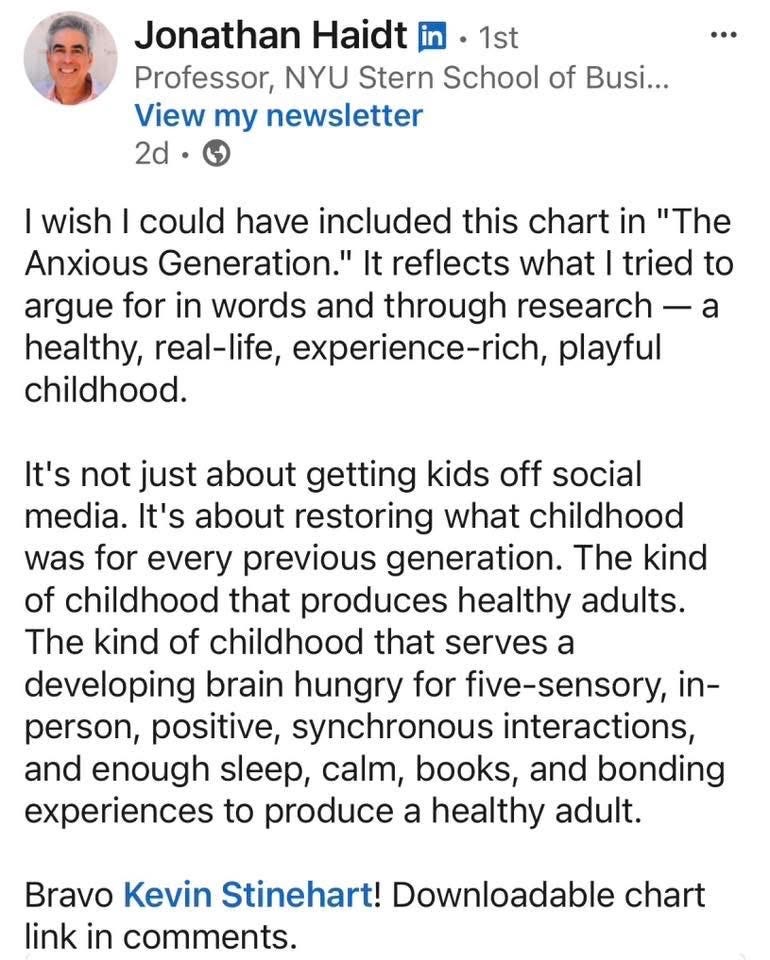
Recently Jonathan Haidt shared my Childhood Ecosystem Audit on LinkedIn and wrote something that I’ll never forget:
“I wish I could have included this chart in The Anxious Generation.”
That meant a lot, of course. I’d be lying if I pretended otherwise. But what mattered more to me was the reason he gave.
He said the chart reflects what he was trying to argue for in words and research: a healthy, real-life, experience-rich, playful childhood.
That is the center of my work.
The conversation about childhood cannot stop at getting kids off phones. That matters. Deeply. But children do not become healthy simply because we remove the bad thing. They also need the good things restored.
They need play.
They need movement.
They need boredom.
They need peers.
They need risk.
They need contribution.
They need independence.
They need real-world practice.
They need adults who trust them enough to let them become capable.
That’s why I created The Architecture of Childhood. I wanted parents, teachers, pediatricians, school leaders, and community members to have a simple map for what children are missing and what we can begin restoring.
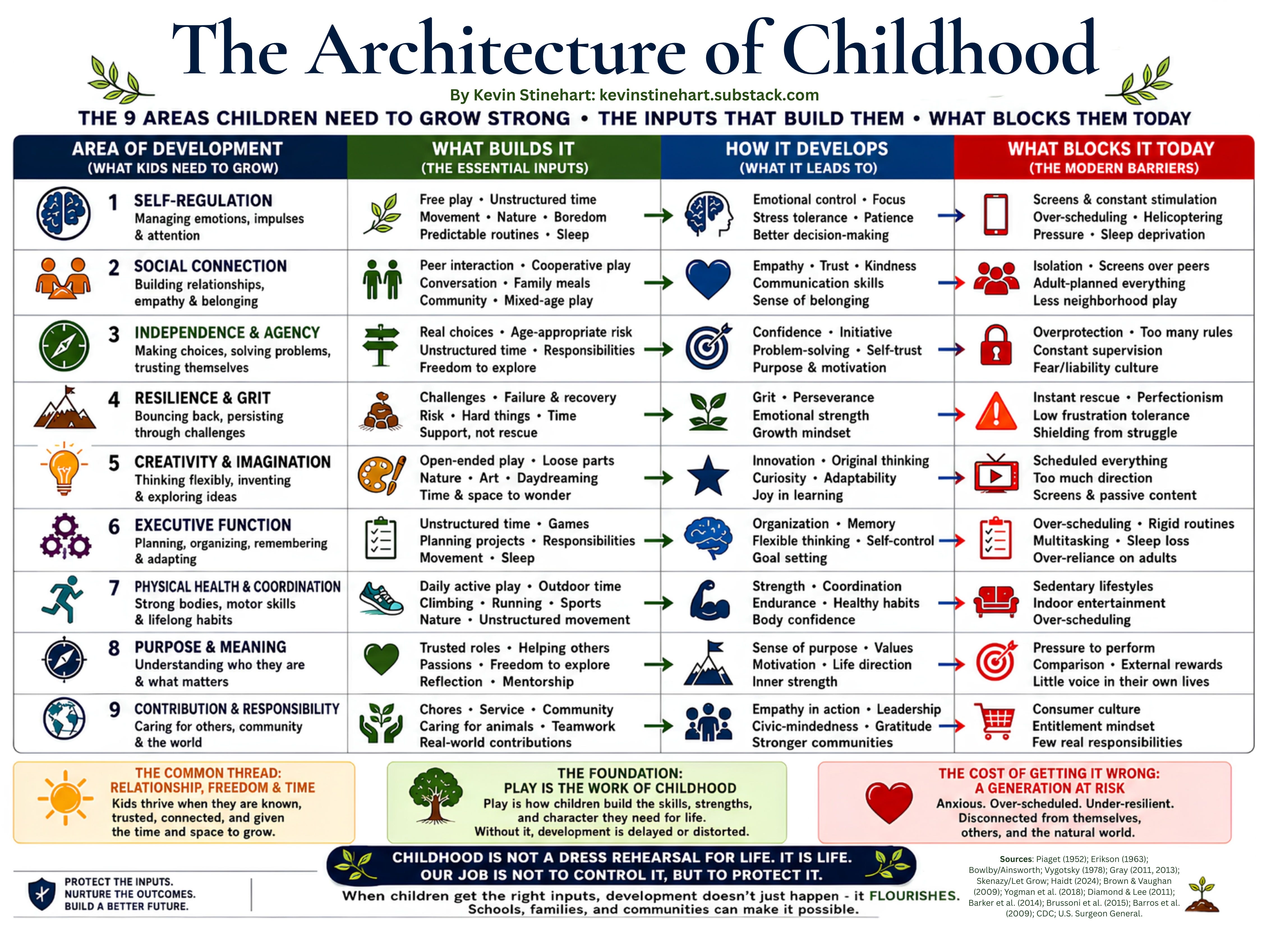
Modern children are not broken, but most are missing the developmental inputs childhood used to provide naturally.
If you missed the audit of this chart that you can use with your child, I’m sharing it again below.
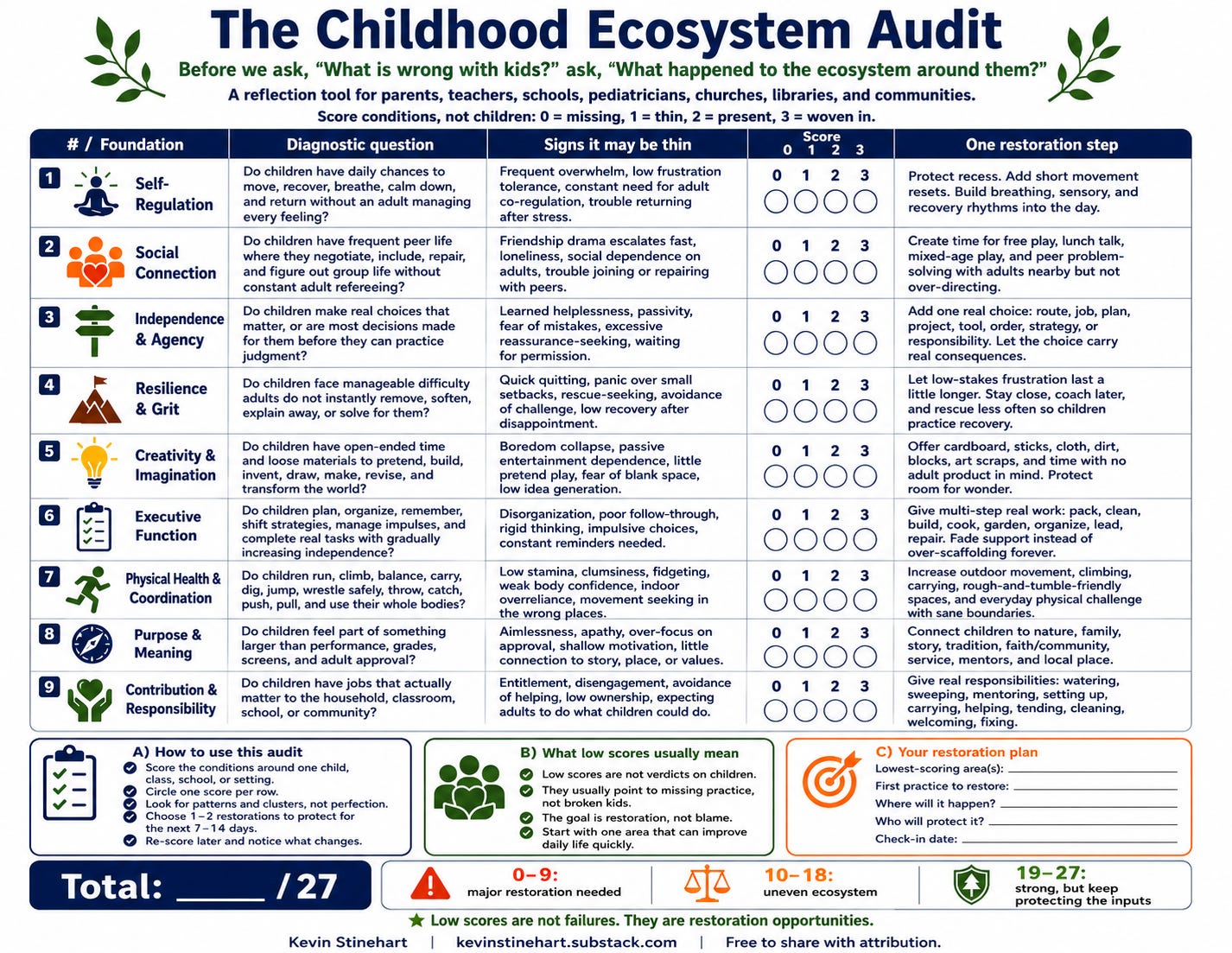
Make sure you read this for the full context and breakdown.
If this framework helps you explain what you’re seeing in modern children, please send it to one person who needs better language for the problem: a parent, teacher, principal, pediatrician, counselor, children’s pastor, coach, grandparent or school board member.
If this work has helped you put words to what you are seeing in children, please consider becoming a paid subscriber.
The core essays stay free because the mission matters too much to hide the main argument. But paid subscribers are what make the work sustainable. They fund the research, visuals, tools, essays, and resources I’m building around the inputs children need.
Paid subscribers also get access to the ever-growing Missing Inputs Resource Folder (currently containing 27 practical resources), including tool kits, audio guides, printable frameworks, slide decks, audits, workbooks, posters, and comics designed to help adults rebuild the conditions children need.
This is not just a newsletter to read. It’s a framework we’re building together so adults can stop asking, “What’s wrong with kids?” and start rebuilding the developmental conditions children need.
No posts
Comments
Nothing yet. Say the first thing.
Sign in to join the conversation.