
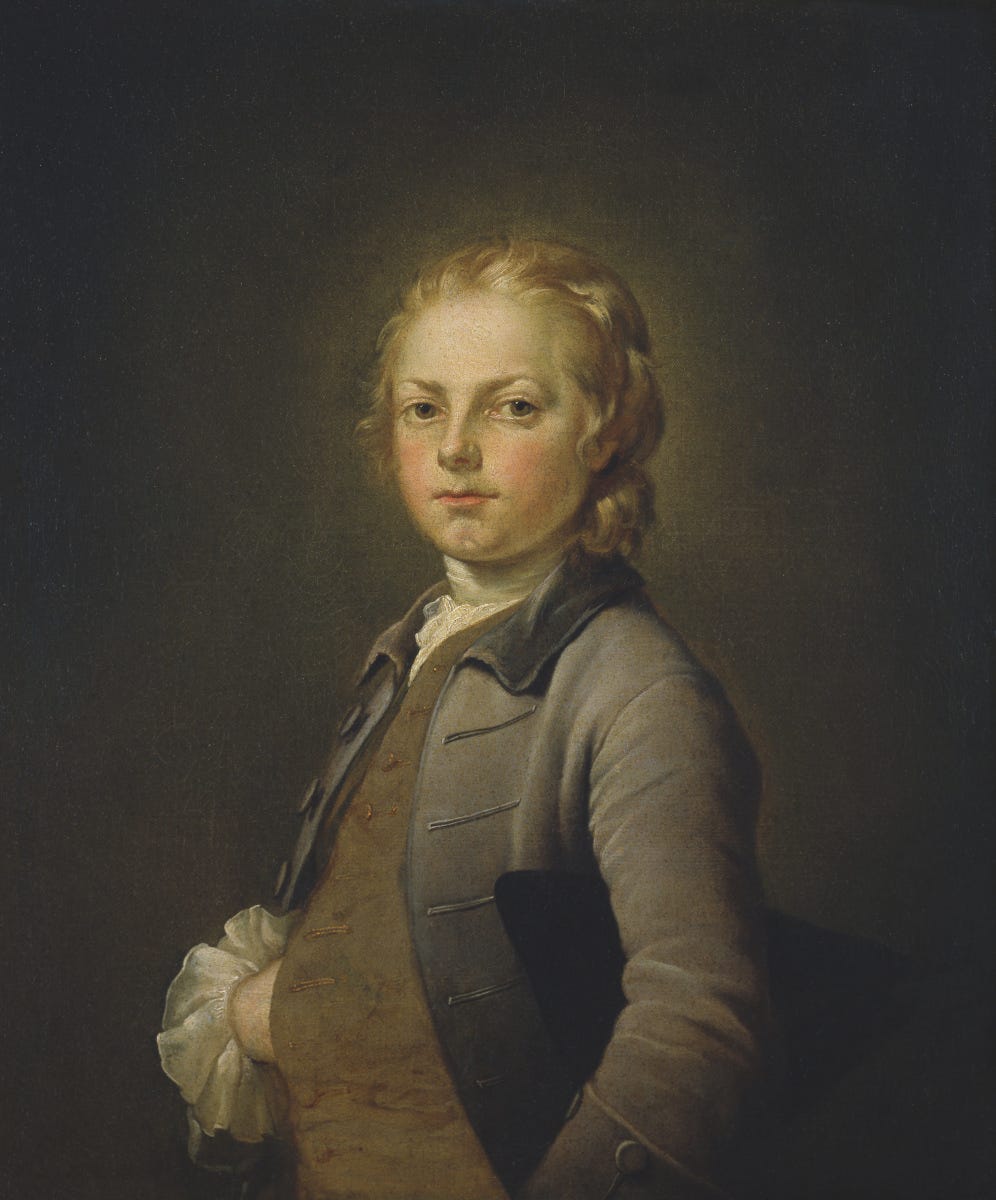
A Portrait of Thomas Nelson Jr. ca. 1750, by Mason Chamberlin.
Virginia Museum of Fine Arts.
This week’s Signer of the Declaration is the Virginia gentleman, Thomas Nelson, Jr. Nelson was born on December 26, 1738 in Yorktown, Virginia, the town that would mark the end of British rule in America. He was born into a family of Northern English cloth merchants who had moved to Virginia to expand their business. Like many of his peers, Nelson was sent to England for his education and he studied at Newcome’s School in London, some say Eton College, and then at Christ College, Cambridge, where he studied literature. He returned to Virginia in 1761 and married Lucy Grymes, with whom he would have five children. It is surmised that he was a cousin of George Washington himself. Lucy was from a prominent, old Virginia family. Lucy’s parents were Philip Ludwell Grymes and Mary Randolph Grymes, of Williamsburg, Virginia. Her maternal uncle was Peyton Randolph, the President of the First Continental Congress; her paternal aunt was the mother of “Light Horse Harry” Lee. Lucy was cousins with at least three signers, including Carter Braxton, Benjamin Harrison, and Thomas Jefferson.
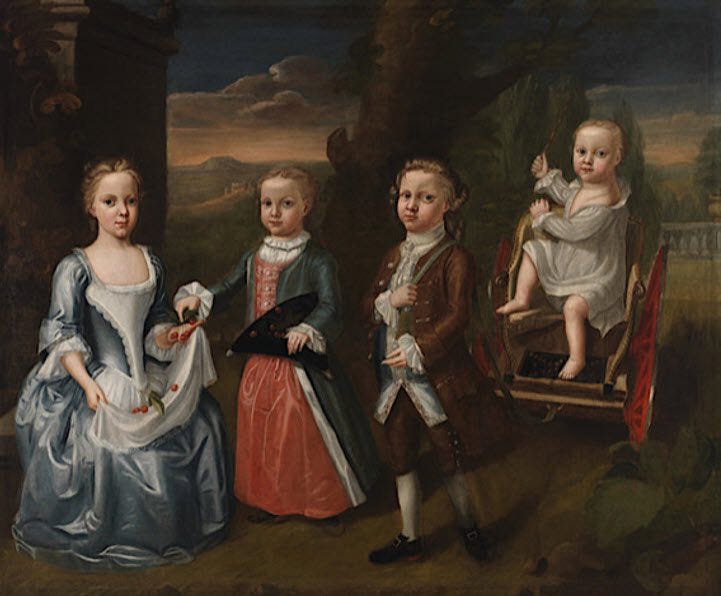
Lucy Grymes and three of her seven siblings. John Hesselius, 1751. Virginia Museum of History and Culture. She was the eldest of four boys and four girls.
Though Nelson’s main occupation was a planter, his political career launched when he was elected to the House of Burgesses in 1761, not long after his return from England. Nelson initially limited his political participation to the House of Burgesses. However, when British governance became ever more tyrannical, Nelson found himself elected to the Virginia Conventions from 1774-76 to represent York County. He strongly supported the cause of independence and put forth the motion for Virginia to establish an army to oppose the British with force if necessary. His fervent support elected him to Continental Congress where he signed the Declaration of Independence.
Nelson returned to Virginia and was made a brigadier general in the Virginia Militia. He raised troops with his own money, but Congress could not supply them for long and they were disbanded in 1779. His health troubled him throughout the war and he could only participate on and off in both his political and military affairs. He did however, fight during the Siege of Yorktown, and according to legend, gave George Washington permission to fire on his house.
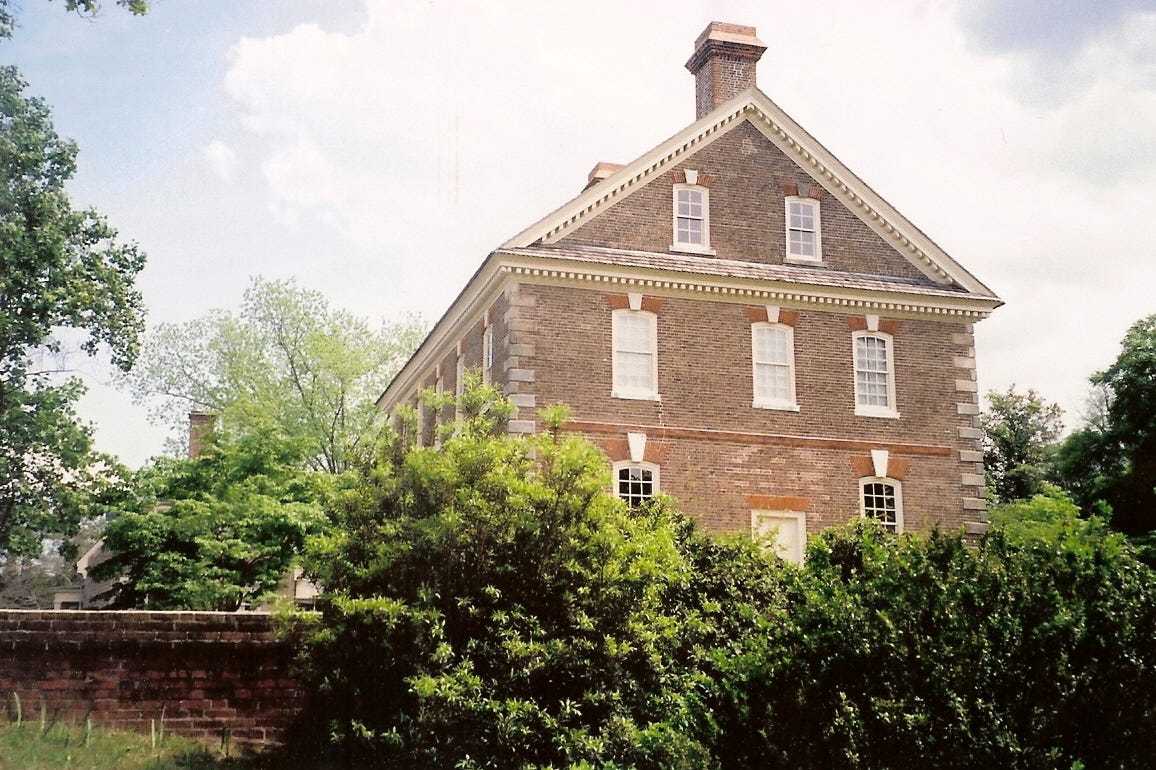
“York Hall,” The Thomas Nelson House, ca. 1730, Route 1005 & Main Street, Yorktown, Virginia.
The house was built by Thomas “Scotch Tom” Nelson, grandfather to the signer. Thomas Nelson, Jr. lived here during the Revolutionary War, though it was Lord Cornwallis’s temporary headquarters and a cannonball fired during the siege at Yorktown is lodged in its walls.
Nelson succeeded Thomas Jefferson as governor of Virginia in 1781, though once again, his health forced him to resign the office. He not only contributed his own funds for the Continental Army, but attempted to raise money to help pay for the French intervention as well. This landed him in severe debt which the United States government never repaid. He moved to a small estate in Hanover County, Virginia, and he died there on January 4, 1789 just a few days after his fiftieth birthday. Nelson Counties in both Virginia and Kentucky are named in his honor.
Thanks for reading Kent's Substack! This post is public so feel free to share it.
No posts
Comments
Nothing yet. Say the first thing.
Sign in to join the conversation.