
A Special Event
with Kent Masterson Brown
Saturday, July 18, 2026
“The American Revolution in Frontier Kentucky”
Bryan Station • Blue Licks • Bird’s War Road • Ruddell’s Station
Dear Friend of Witnessing History,
As the nation marks the 250th anniversary of American independence, we invite you to step off the page and into the landscape where that independence was truly secured. On Saturday, July 18, our fearless leader, historian, author, and documentary filmmaker Kent Masterson Brown will lead an intimate, expert-guided tour across the sites of the American Revolution on Kentucky’s frontier — the battlegrounds and war roads that determined the fate of the American West. Judge Lew Nicholls, author of several books on the Revolutionary War in frontier Kentucky, will assist with narration at these sites.
The day concludes with a bourbon-tasting and celebratory dinner catered by Trackside at the Depot at The Bourbon County Whisky House in Paris, Kentucky— where history, Kentucky heritage, and fine cuisine come together! Spaces are limited. We hope you will join us. (A more detailed itinerary is available for registrants but please note the bus departs Lexington at 8:30 am and returns at 7 pm.)
YOUR GUIDE
Kent Masterson Brown
Kent Masterson Brown is one of Kentucky’s most distinguished voices in American history. As many of you know, Kent brings rare depth and passion to every subject he explores.
He and the Witnessing History Education Foundation, Inc. — the 501(c)(3) nonprofit whose mission is to produce high-quality documentary films on all aspects of American history—are producing a film for Kentucky 250, “The American Revolution on the Kentucky Frontier.” This tour highlights many of the stories for that film.
On July 18, Kent will serve as your personal guide through the frontier sites that defined the American Revolution in Kentucky — bringing these stories to life with the clarity and energy for which he is nationally celebrated.
STOP ONE
Bryan Station
Located near present-day Lexington, Bryan Station was one of Kentucky’s most storied frontier forts. On August 15, 1782 — nearly a year after Lord Cornwallis surrendered at Yorktown — a massive combined force of British Rangers and warriors from the Shawnee, Delaware, and other Ohio nations laid siege to the fort
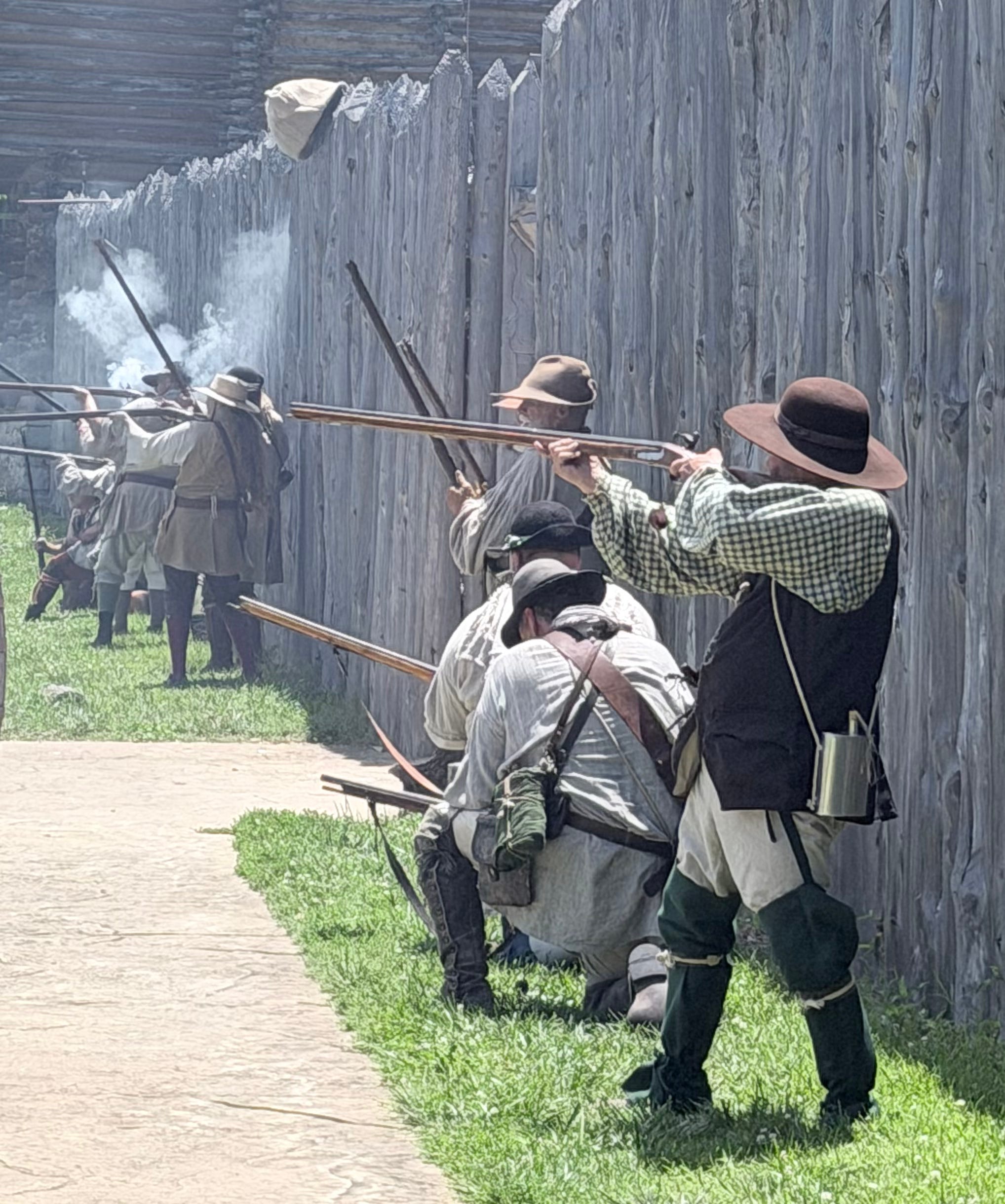
In one of the Revolution’s most celebrated acts of courage, the women of Bryan Station marched to the spring to draw water — in full view of the concealed enemy — rather than alert the garrison and forfeit their only water supply. The defenders held. The siege at Bryan Station set the stage for the catastrophic battle that followed just days later at Blue Licks.
Key Takeaway: The siege of Bryan Station exemplifies the fierce, often overlooked warfare that raged on Kentucky’s frontier long after the Eastern theater had concluded.
STOP TWO
The Battle of Blue Licks
August 19, 1782. Just four days after the siege at Bryan Station. Ten months after Lord Cornwallis surrender his British forces to General Washington at Yorktown. On a hillside above the Licking River in Robertson County, Kentucky militiamen pursuing the force that had besieged Bryan Station rode headlong into an ambush. In fifteen devastating minutes, 72 Kentuckians were killed — more than a third of their force. The British and Indian alliance lost only three men.
Today, the Battle of Blue Licks is officially recognized as the last major engagement of the American Revolutionary War. The defeat galvanized Kentuckians and prompted General George Rogers Clark to launch a retaliatory expedition into Ohio in November 1782 — effectively breaking Native American military power in the region for a generation. Now a Kentucky State Park, Blue Licks stands as a solemn memorial to those who gave everything on this ground.
Key Takeaway: Blue Licks marks the true close of the American Revolution — fought not at Yorktown but here, on Kentucky’s frontier.
STOP THREE
Colonel Henry Bird’s War Road
In June 1780, British Captain Henry Bird departed Detroit with 150 regulars and Canadian Rangers — and gathered a force of 600 to 900 Native warriors as he advanced south. Ascending the Licking River in bateaux and canoes, Bird’s men cut a road through the Kentucky wilderness, hauling the first artillery ever brought against the log forts of the frontier.
This road — now marked by the Kentucky Historical Society near Falmouth — traces the route along which a thousand-man army of British regulars, Tories, and warriors marched. It was a road built for conquest that permanently changed the character of the Kentucky frontier.
Key Takeaway: Bird’s War Road represents the most organized British military incursion into Kentucky — a deliberate campaign to destroy the frontier settlements and reclaim the West.
STOP FOUR
Ruddell’s Station
On June 24, 1780, Bird’s forces arrived at Ruddell’s Station — a stockaded log fort near present-day Cynthiana, Kentucky, housing approximately 350 men, women, and children. When a British cannon shot tore through the fort’s wall, Captain Isaac Ruddell had no choice but to surrender, negotiating terms that would place his people under British protection.
But once the gates were opened, Bird lost control of his Native allies. Nearly 470 captives — men, women, and children — were taken prisoner and forced to march 600 miles to Detroit. The British would never again mount such a large expedition into Kentucky, nor would they bring cannon against the frontier. The surrender of Ruddell’s Station stands as one of the Revolution’s most heartbreaking chapters.
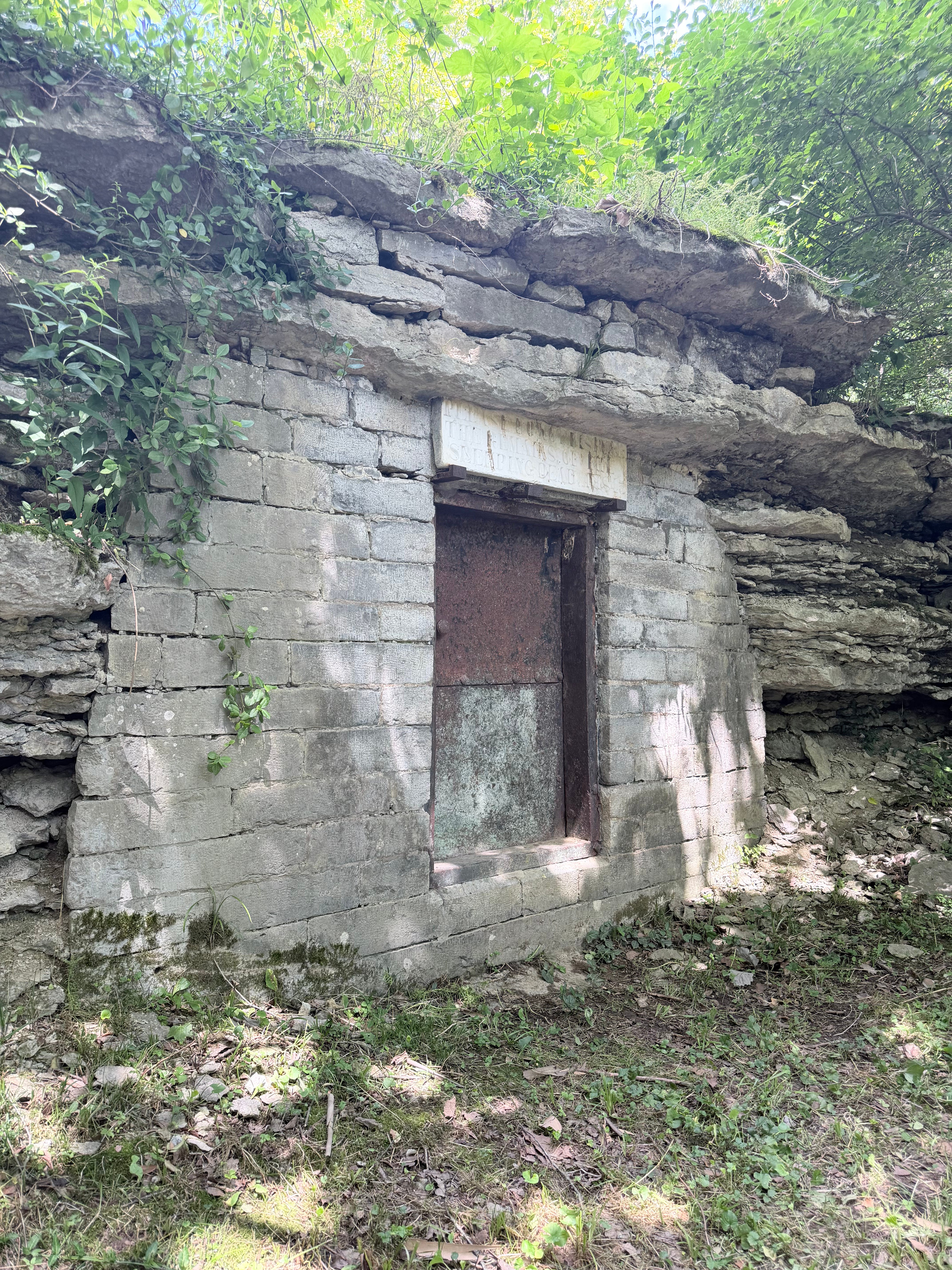
The tomb of the Ruddell’s Station massacre victims
On the way back to Paris for the evening event, we will stop briefly at the site of Martin’s Station, a fortified station in Bourbon Cunty that was attacked by the same forces that forced the surrender of Ruddles Station. Like the people in Ruddles Station, those at Martin’s Station joined the 600 mile Kentucky Death March to Detroit.
Key Takeaway: Ruddell’s Station demonstrated both the vulnerability of Kentucky’s frontier forts to artillery and the tragic human cost exacted on the families who settled the West.
MIDDAY
Lunch at Biancke’s in Cynthiana
No stop on today’s journey would be more fitting for a midday meal than Biancke’s Restaurant — a landmark of downtown Cynthiana that has been welcoming guests since 1894. Situated at 102 South Main Street, just steps from the sites connected to Colonel Henry Bird’s 1780 invasion and the frontier struggle we explore today, Biancke’s is one of Kentucky’s oldest continuously operating restaurants.
Biancke’s offers an ideal opportunity to rest, reflect on the morning’s history, and prepare for the afternoon’s journey to Blue Licks and the close of the American Revolution on Kentucky soil.
EVENING
Dinner at The Bourbon County Whiskey House
The day concludes with dinner at The Bourbon County Whisky House — a fitting tribute to Kentucky heritage. Named after Old Bourbon County, the original county whose boundaries encompassed much of the land we will have walked that day, the evening offers a chance to reflect on the stories, the landscapes, and the remarkable people who secured this Commonwealth for the nation.
Guests will enjoy Dottie Spears’s Kentucky-inspired cuisine from Trackside at the Depot, a celebrated bourbon selection, and the continued company of one another in a setting that honors the same Kentucky heritage we explored throughout the day.
RESERVE YOUR PLACE
Saturday, July 18, 2026
Space on this tour is strictly limited. To reserve your place or for more information, please contact the Witnessing History Education Foundation.
Thanks for reading Kent's Substack! This post is public so feel free to share it.
No posts
Comments
Nothing yet. Say the first thing.
Sign in to join the conversation.