
This week’s Founding Father is the English merchant and statesman, Robert Morris. Morris was born in near Liverpool, England, on January 20, 1734. He was raised mostly by his grandmother. His father became quite successful in the tobacco trade, and thus moved his family to Oxford, Maryland. Morris was sent to Philadelphia to learn the mercantile trade and was made an apprentice to a prominent merchant named Charles Willing. At only fifteen years old, Morris was orphaned when his father was accidentally killed by a merchant ship captain whose pistol discharged unexpectedly. Morris remained in the care of Charles Willing, learning the business of The Willing Company. Morris was associated with this company for more than 40 years; it had its own ships and its own banking business, while importing British goods and exporting American goods. After the French and Indian War, British laws complicated the business. Willing was elected mayor of Philadelphia in 1754, and Robert Morris took over the management of the business, becoming a full partner in Morris, Willing, and Company.
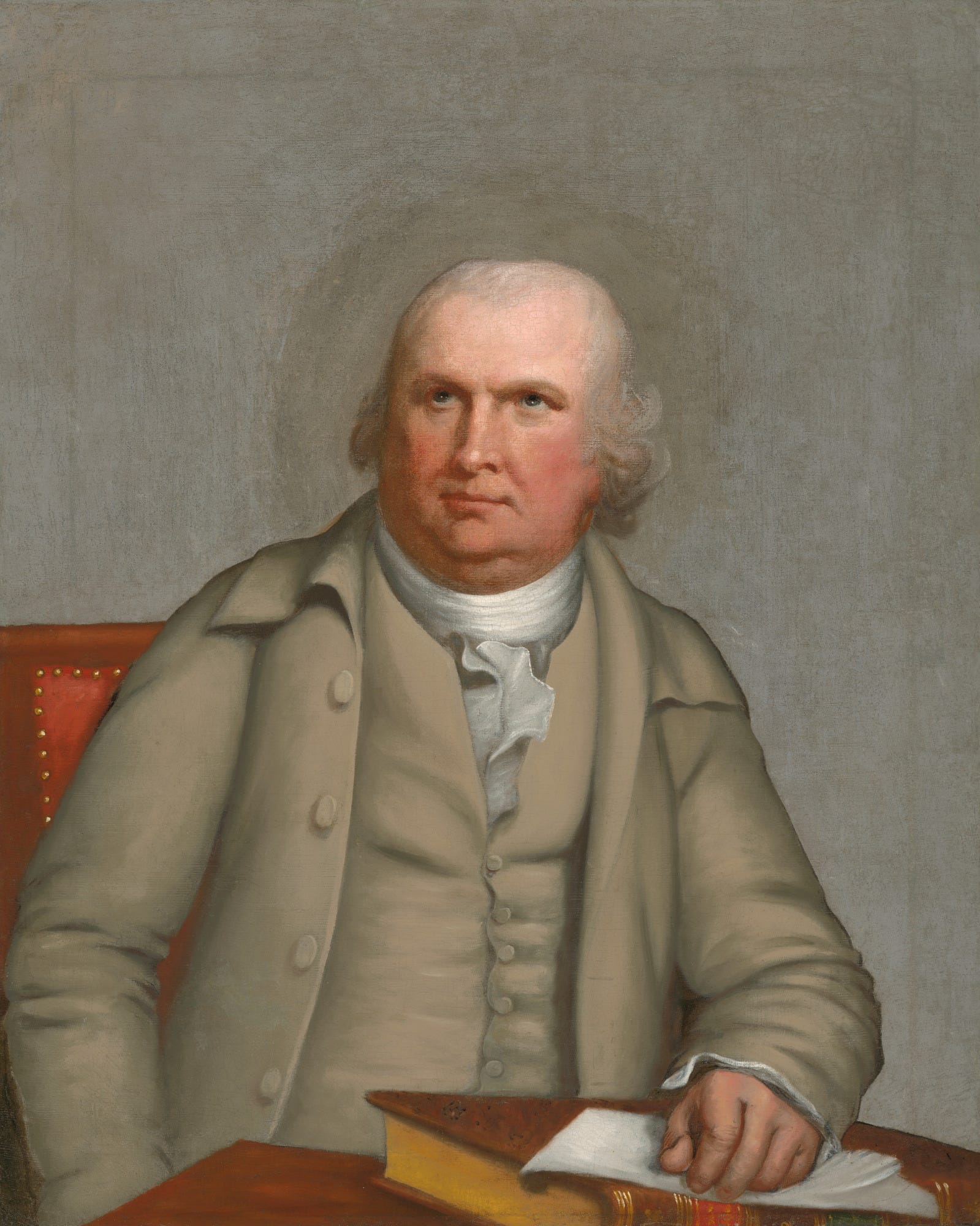
Robert Morris. Portrait by Robert Edge Pine, 1785.
In 1769, Morris married Mary White and they would have seven children. She was well-educated and from a prominent Philadelphia society family. Her character and devotion to her husband and to the cause of liberty were notable; she suffered and triumphed at his side throughout his life.
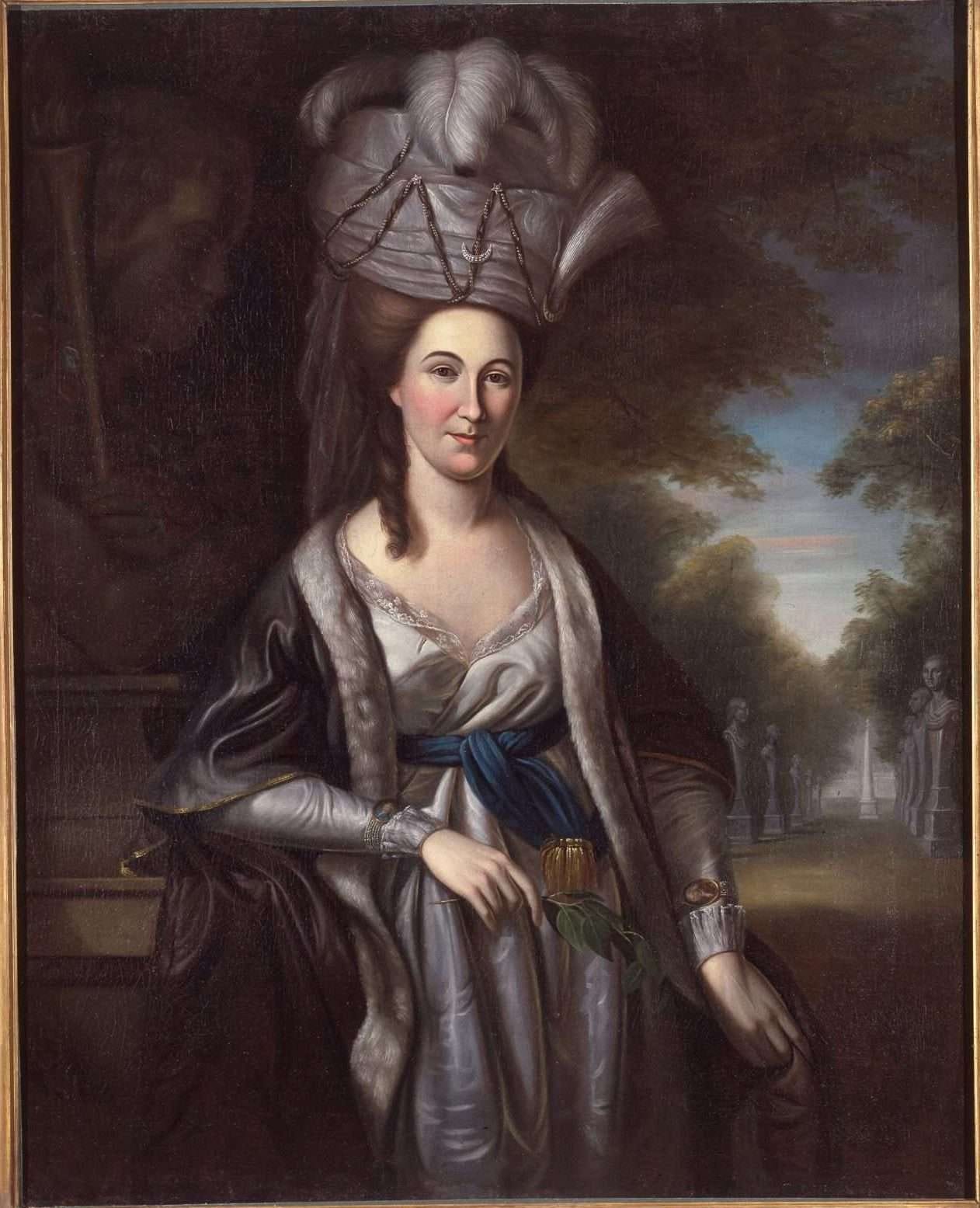
Mary White Morris (1749-1827). Portrait by Charles Willson Peale, 1782.
When Great Britain imposed the Stamp Act of 1765 on the American colonies, Morris, being a merchant, was naturally affected by it. Despite being a native of England, Morris found himself sympathizing with the Americans on this issue. Morris largely refused to participate in politics, but he spoke critically of Britian’s treatment of the colonies among his peers. When war finally broke out at Lexington and Concord, Morris was made a member of the Committee of Safety and was tasked with smuggling gunpowder and arms into the colonies. At that point, he was fully involved in the cause of independence. He was elected to the Pennsylvania Provincial Assembly in 1775 and from there, elected to Congress. Though he supported the cause, Morris abstained from voting for independence along with John Dickenson. He signed the Declaration at a later date. Morris was made a member of the Marine Committee and was also charged with the grueling task of supplying the Continental Army which was a constant problem throughout the war.
Morris spent most of the war trying to secure supplies and weapons for the army. These attempts were often frustrated as the British would capture American trade vessels in Europe and the Caribbean. In spite of this, Morris worked tirelessly on supplying American forces. He was credited with supplying Washington’s army well enough for the victory at Trenton. Morris requested a leave of absence from Congress in 1778 to focus on his trade business. This resulted in false accusations against him for using his position in Congress for financial gain. He would deal with these accusations for the rest of the war.
From 1781 to 1784, Morris was named the Superintendent of Finance. He oversaw much of America’s myriad financial problems which resulted in the establishment of the Bank of North America. He helped fund the final offensive of the war that culminated at Yorktown, raising an astounding $1,400,000 on his own. When the war had ended, Morris simply wanted to return to his mercantile business, but he was called to attend the Constitutional Convention in 1789. He also served in the United States Senate during these years.
Roger Sherman and Robert Morris share the distinction of being the only two Signers of the Declaration who also signed the Articles of Confederation and the United States Constitution.
Morris eventually left his political career, but found himself in massive debt, He had lost on land investments and had funded the war effort out of his own pocket. He lived in debtors’ prison for over three years and was released in 1801. Gouvernor Morris, of Morrisania, provided Robert Morris with an annuity for the rest of his life. His health broken by prison life, he died five years after being released, on May 8, 1806.
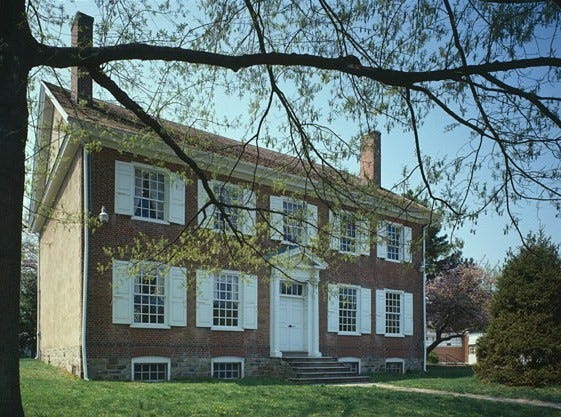
Summerseat, the home Signer Robert Morris purchased after the war, and later, owned by Signer George Clymer. Located at the corner of Clymer Street and Morris Avenue, Morrisville, Bucks County, Pennsylvania. George Washington headquartered here at the end of 1776, during the days of the New York and New Jersey campaign.
Thanks for reading Kent's Substack! This post is public so feel free to share it.
No posts
Comments
Nothing yet. Say the first thing.
Sign in to join the conversation.