
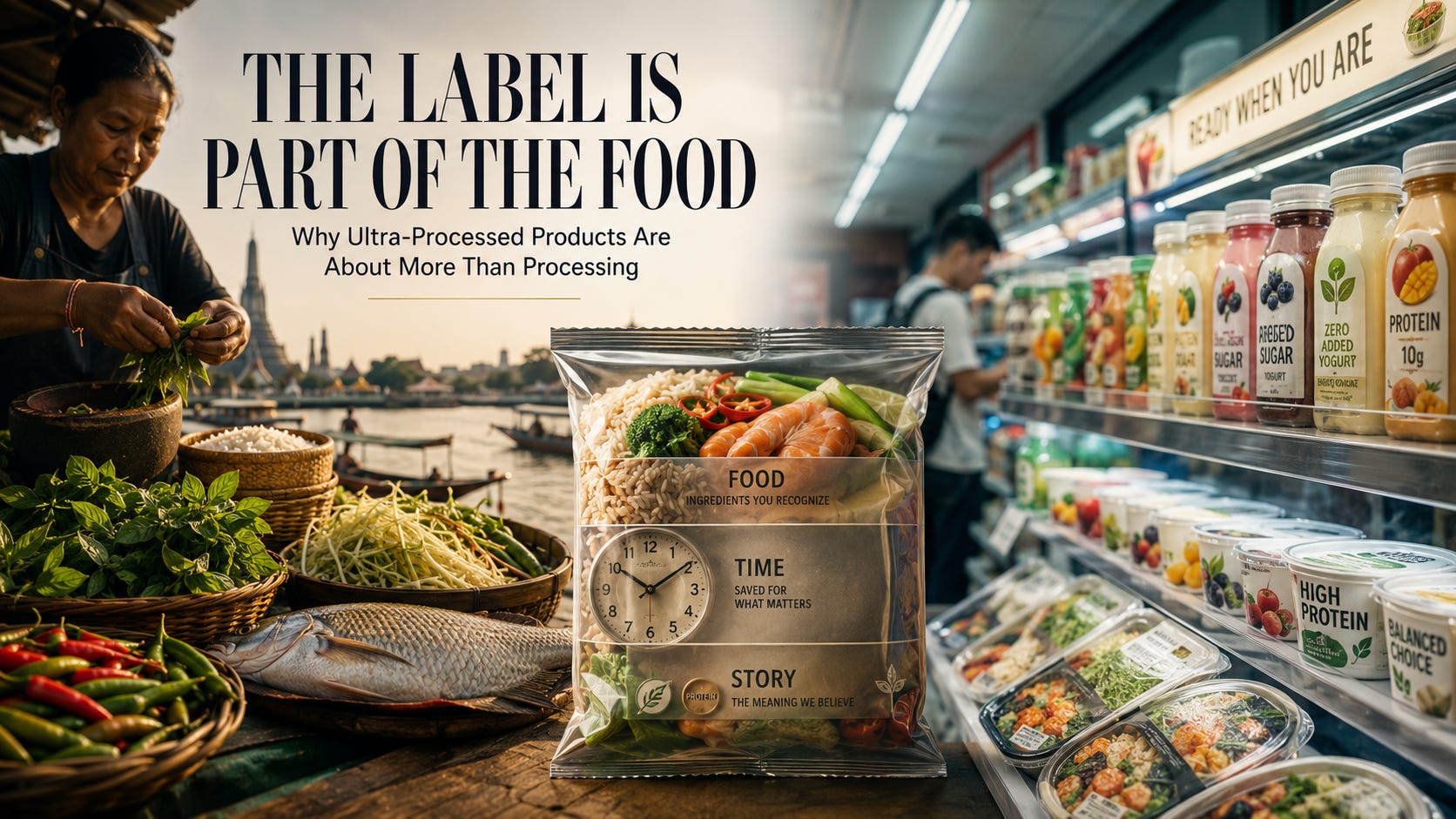
We have become obsessed with whether food is processed. The deeper problem is that formulation, convenience, nutrition signals, and marketing have fused into a single consumer object. A packaged product is no longer just food. It’s food plus saved time plus story.
In Bangkok the fusion is easy to see in a short walk. At a riverside market stall, the ingredients are clearly visible: a vendor bruising Thai basil, limes split open, whole fish waiting for the grill, green papaya, and chilies. The food announces itself. Ten minutes later, under fluorescent lights in a convenience store, the same basic materials reappear as packaged rice dishes, flavored yogurts, and drinks whose front panels speak in soft colors, protein claims, and leaf icons. The ingredients have not vanished. They have been joined by formulation and story.
The obvious lesson would be to trust the first scene and distrust the second. The evidence refuses to cooperate so neatly.
There is something reassuring about food that does not require interpretation. A grilled fish looks like the animal it was. Som tam does not hide its papaya. A mango isn’t mango-flavored. A basket of morning glory has made no attempt to establish a brand identity.
Thailand makes the contrast unusually sharp because the two systems sit almost on top of each other. One is improvisational and legible. The other is frictionless. The product may still contain rice, milk, fruit, or chicken, but those ingredients now travel with formulation and marketing.
It’s tempting to call the first system healthy and the second unhealthy. This is where the problem begins.
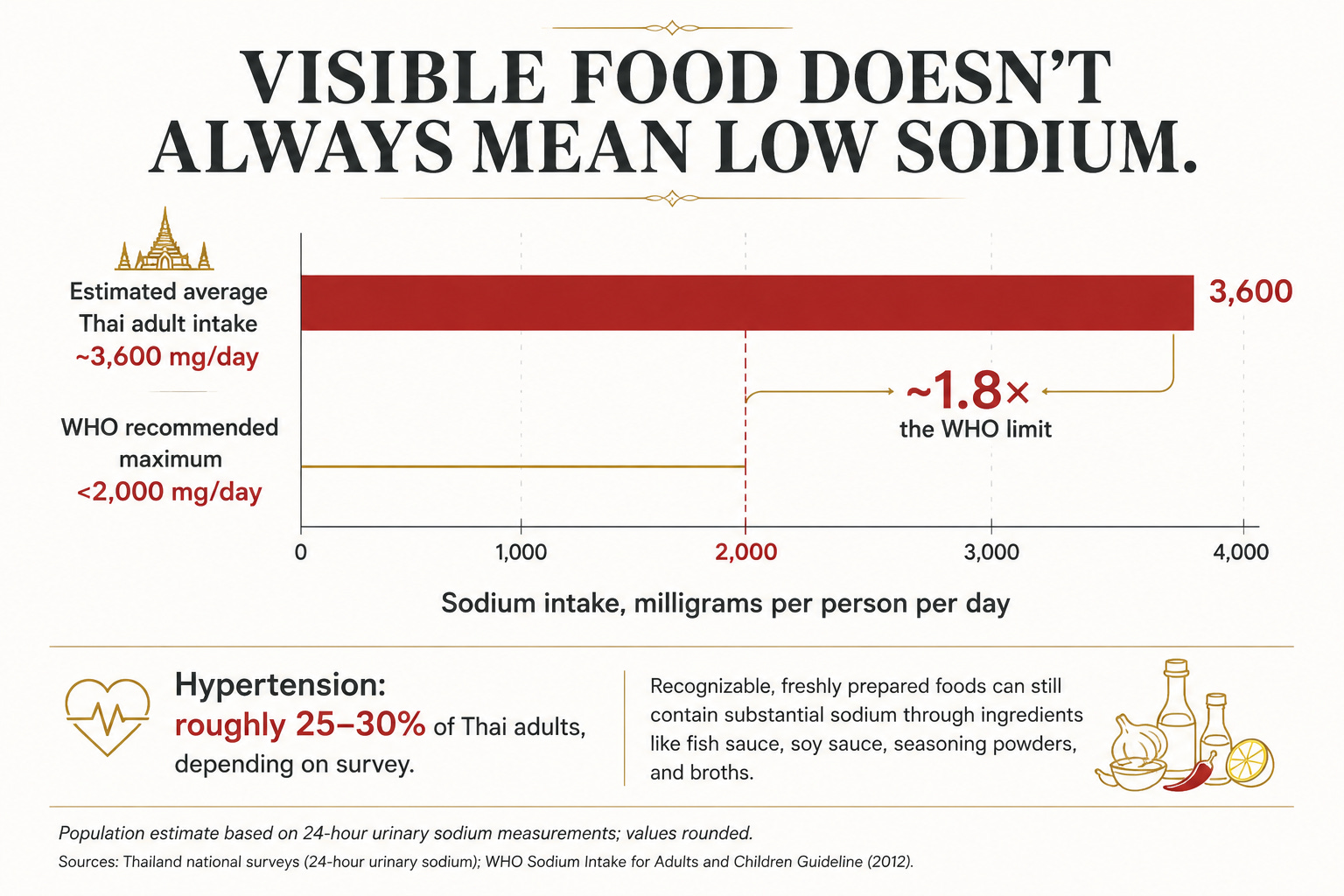
National surveys using 24-hour urine collections have estimated average sodium intake among Thai adults at roughly 3,600 mg per day, nearly twice the WHO recommendation of less than 2,000 mg. Hypertension affects roughly one in four to nearly three in ten adults depending on the survey. Freshly cooked food carries a considerable sodium load through fish sauce, soy sauce, seasoning powders, and broths without ever passing through an industrial factory. Noncommunicable diseases account for the large majority of deaths in the country. Fresh does not settle the matter. Processed does not settle on it either.
If visual legibility cannot reliably distinguish healthy from unhealthy food, what measurable property of processing actually matters?
In 2019 Kevin Hall and colleagues at the National Institutes of Health conducted one of the few tightly controlled tests of the question. Twenty adults lived at an NIH research facility for a month in a randomized crossover design. For two weeks they received an ultra-processed diet. For two weeks they received an unprocessed diet. Meals were matched as closely as possible for calories, macronutrients, sugar, sodium, and fiber. Participants could eat as much as they wanted.
On the ultra-processed diet they consumed roughly 500 extra calories a day and gained weight. On the unprocessed diet they lost weight. Hall’s participants could not wander off for a cheeseburger. Something about the ultra-processed dietary condition encouraged greater energy intake.
The study was small and short, and it was conducted in a highly controlled inpatient setting. It demonstrated a clear difference in intake under the tested conditions. It did not isolate the exact mechanism. Energy density, eating rate, texture, the disruption of the food matrix, and palatability have all been proposed. The result was powerful because it was hard to dismiss as pure confounding. It was incomplete because the mechanism remained open.
The harsh reality of ultra processed food - with Chris Van Tulleken
By 2024, the observational literature had grown considerably. A BMJ umbrella review of 45 pooled analyses covering nearly 10 million people found higher consumption of ultra-processed foods associated with adverse outcomes across 32 of the 45 health measures examined. The same paper applied the GRADE framework and rated most of the evidence low or very low quality. Observational data can identify consistent population patterns, but they generally cannot by themselves establish that ultra-processed food exposure caused the outcome.
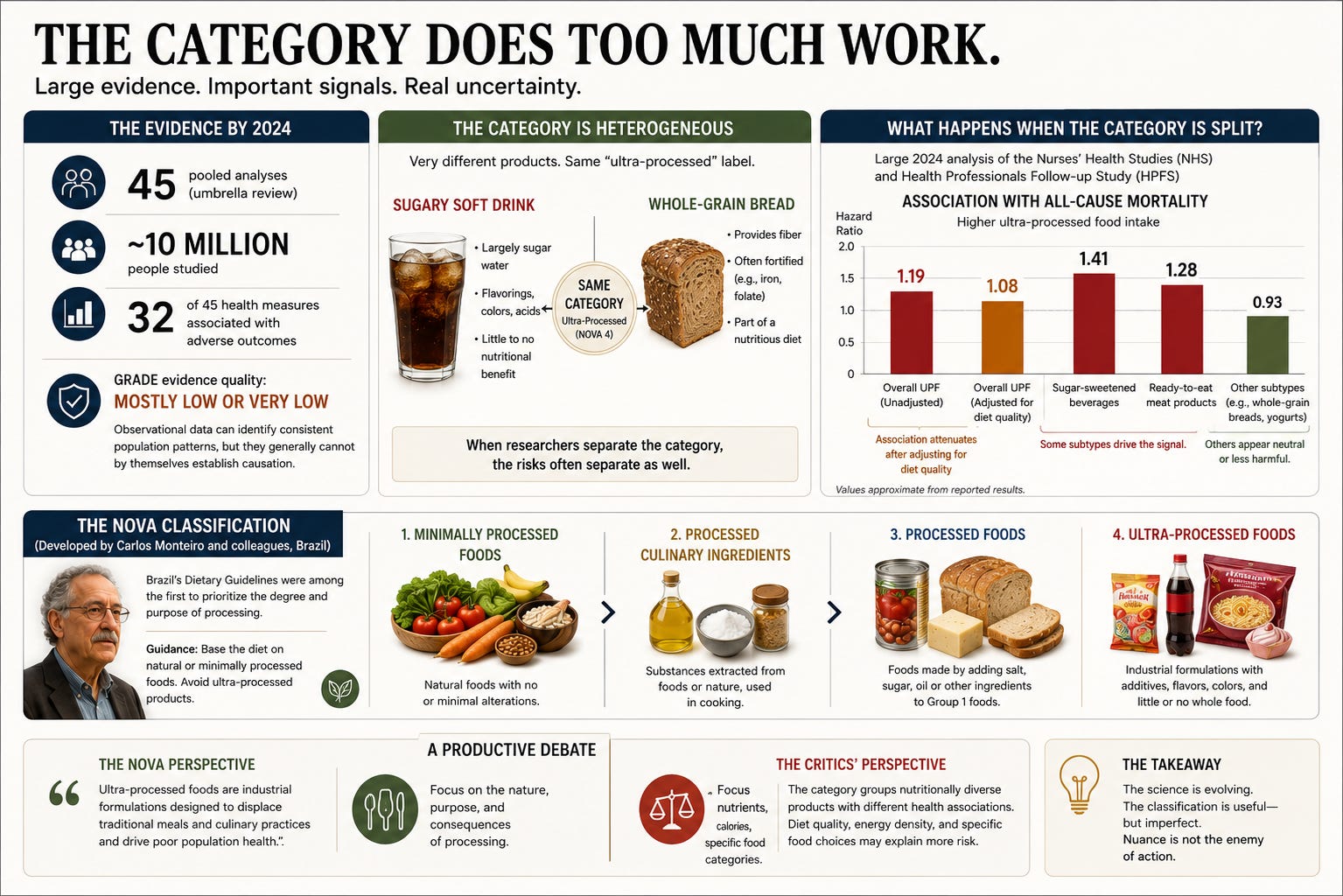
The category itself does heavy lifting. A sugary soft drink and a mass-produced whole-grain bread can both fall under the same ultra-processed heading. One is largely sugar water with flavorings. The other may deliver fiber and fortification. When researchers separate the category, the risks often separate as well. In a large 2024 analysis of the Nurses’ Health Studies and Health Professionals Follow-up Study, the overall mortality association with higher ultra-processed intake was modest and attenuated after adjustment for diet quality. Sugar-sweetened beverages and certain ready-to-eat meat products drove much of the signal. Some other subtypes looked neutral or less harmful.
Carlos Monteiro and colleagues in Brazil developed the NOVA classification that underpins much of this work. Brazil’s official dietary guidelines were among the first to center the degree of processing rather than isolated nutrients. They recommended that the diet be based on natural or minimally processed foods and that people avoid ultra-processed products. Monteiro has long argued that ultra-processed foods are industrial formulations designed to displace traditional meals and culinary practices. Critics who focus on diet quality and energy density, including researchers such as Arne Astrup, counter that the classification groups products whose nutritional profiles and health associations differ substantially and that conventional nutrient metrics or specific food categories may explain more of the observed risk than the processing category alone.
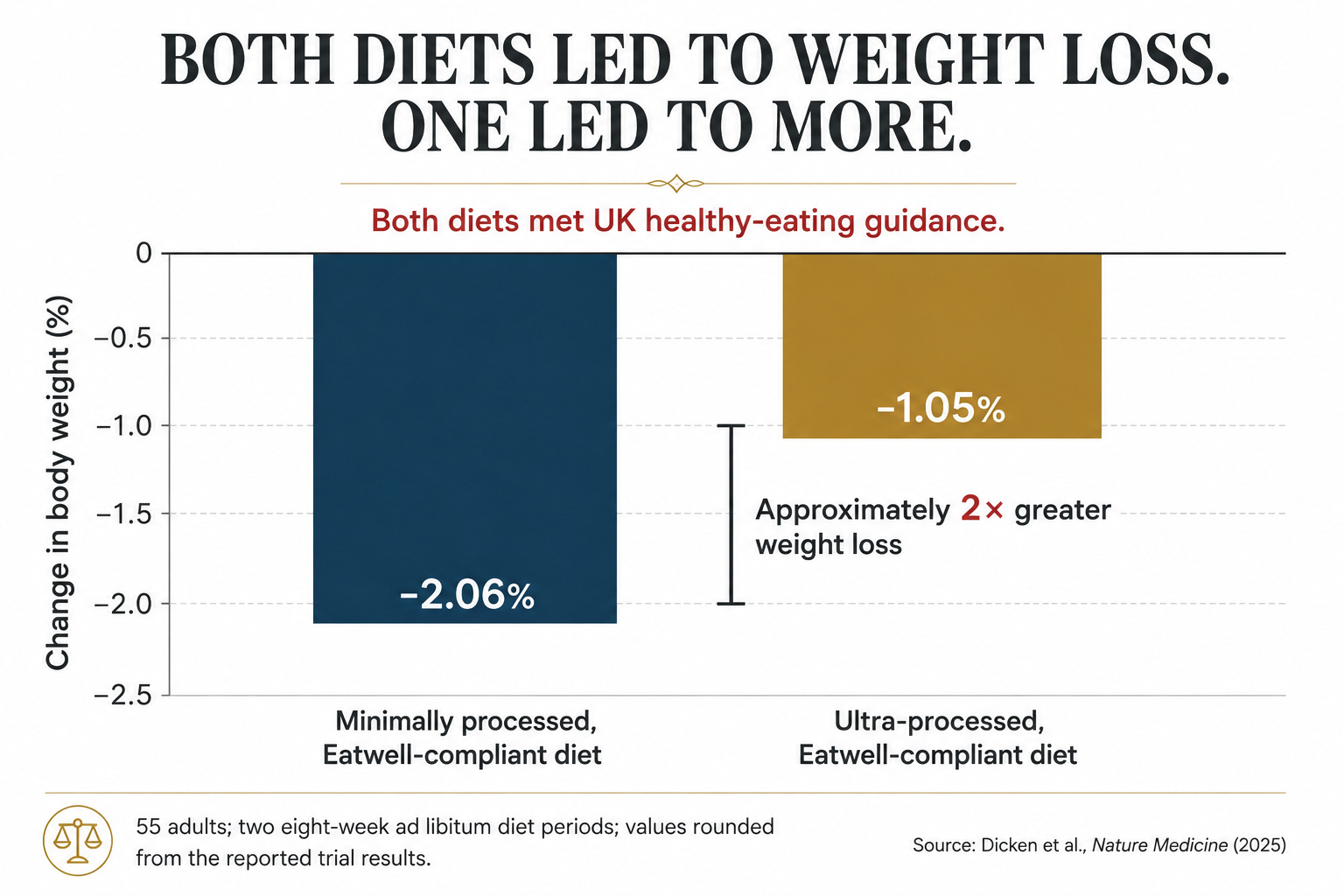
In August 2025 a Nature Medicine paper by Samuel Dicken and colleagues at University College London tested a sharper version of the question. Fifty-five adults in England whose habitual diets were already high in ultra-processed food received two eight-week ad libitum diets. Both were constructed to comply with the UK’s Eatwell Guide. One was minimally processed. The other was ultra-processed. This wasn’t broccoli versus doughnuts. Both diets were intended to satisfy conventional healthy-eating guidance.
Participants lost weight on both. They lost more on the minimally processed diet: about 2.06% of body weight versus 1.05% on the ultra-processed diet. Processing appeared to matter even when nutrient guidance was held roughly constant. At the same time, people lost weight on the ultra-processed diet rather than gaining. The result sits awkwardly for both camps.
Institutions began acting on the accumulating evidence. The United States Dietary Guidelines for Americans, 2025–2030, released in early 2026, tell Americans to prioritize whole foods and limit highly processed foods, added sugars, and refined carbohydrates. The consumer message is unusually plain: Eat real food. Yet the country still lacks a uniform federal definition of ultra-processed food. In July 2025 the FDA and USDA issued a formal request for information to help develop one. Estimates circulating at the time suggested roughly 70% of the packaged food supply falls into categories commonly treated as ultra-processed, while children obtain more than 60% of their calories from them.
WHO began assembling experts to develop guidance on ultra-processed-food consumption, acknowledging both the growing evidence of associations and the unfinished work of isolating what processing itself contributes. Public health often proceeds this way. The epidemiological pattern becomes visible before the taxonomy is settled.
Treating processing as inherently suspect collides with some of its quiet successes. Iodizing salt prevents iodine-deficiency disorders. Fortifying flour and other staples addresses micronutrient gaps. In the United States, mandatory folic-acid fortification of enriched grain products began in 1998. CDC surveillance data later showed an approximate 28% reduction in neural tube defect prevalence and roughly 1,300 such defects prevented each year.
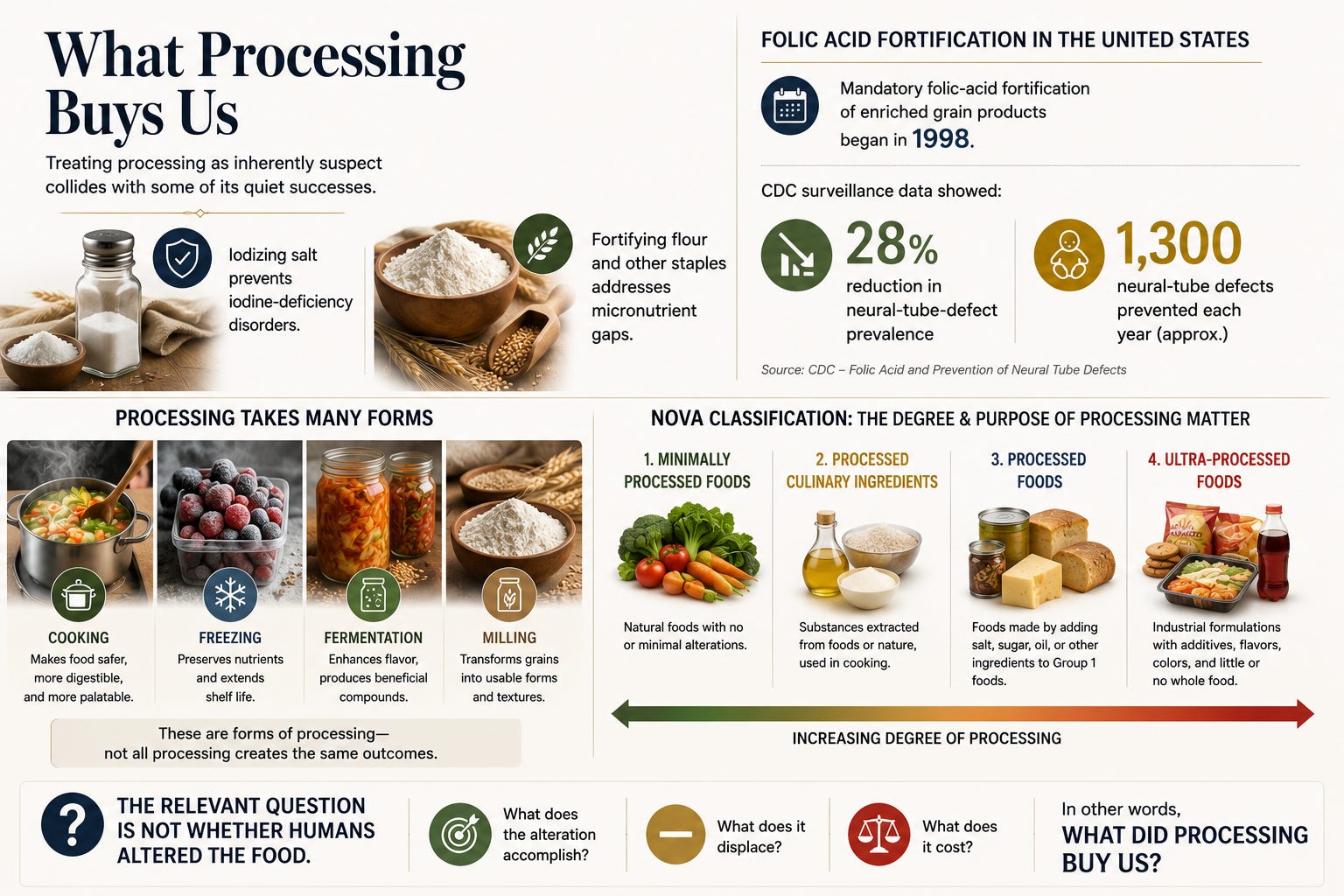
Cooking, freezing, fermentation, and milling are all forms of processing. NOVA itself distinguishes among minimally processed, processed, and ultra-processed foods. The relevant question isn’t whether humans altered the food. It’s what the alteration accomplishes, what it displaces, and what it costs. In other words, what did processing buy us?
A package of food contains another ingredient that never appears on its label: time. Or more precisely, time the buyer did not have to spend.
Convenience research consistently defines the concept as the reduction of demands on planning, physical effort, mental effort, skill, storage, preparation, and cleanup. A frozen dinner sells twenty minutes. A breakfast bar sells the ability to leave home without a plate. Delivery sells the disappearance of shopping, chopping, and washing dishes.
The instruction to cook more assumes someone possesses the time, equipment, skill, and energy to do so. Time scarcity isn’t a character flaw. It’s a constraint. Modeling exercises that compare menus of differing processing levels have shown that a carefully designed higher-processed menu can approach the diet-quality scores of a minimally processed one while carrying lower modeled cost and less food waste. The numbers are sensitive to assumptions, but the trade-off is real.
The Disturbing Reality Of Ultra-Processed Food
UNICEF reporting has documented a substantial rise in processed-food sales per person in Thailand over fifteen years and a sharp increase in online food delivery. Over the same period, overweight and obesity among children aged 6 to 14 roughly doubled. Among adolescents, the figure is near 14%.
An audit of commercial infant and toddler foods found a majority classified as ultra-processed, with a high share containing added free sugars. Among snacks and finger foods, the ultra-processed share was even higher.
Parents are busy. Children like sweet things. Convenience stores are convenient. Delivery works. Consider a parent finishing a late shift: the phone is already in hand, the app remembers previous orders, and dinner can be at the door in thirty minutes. Food companies respond to demand while also shaping it through marketing that has become faster and more personalized. Consumers choose the food environment. The food environment also chooses back.
Junk Food Kids: Who’s To Blame | Obesity Documentary
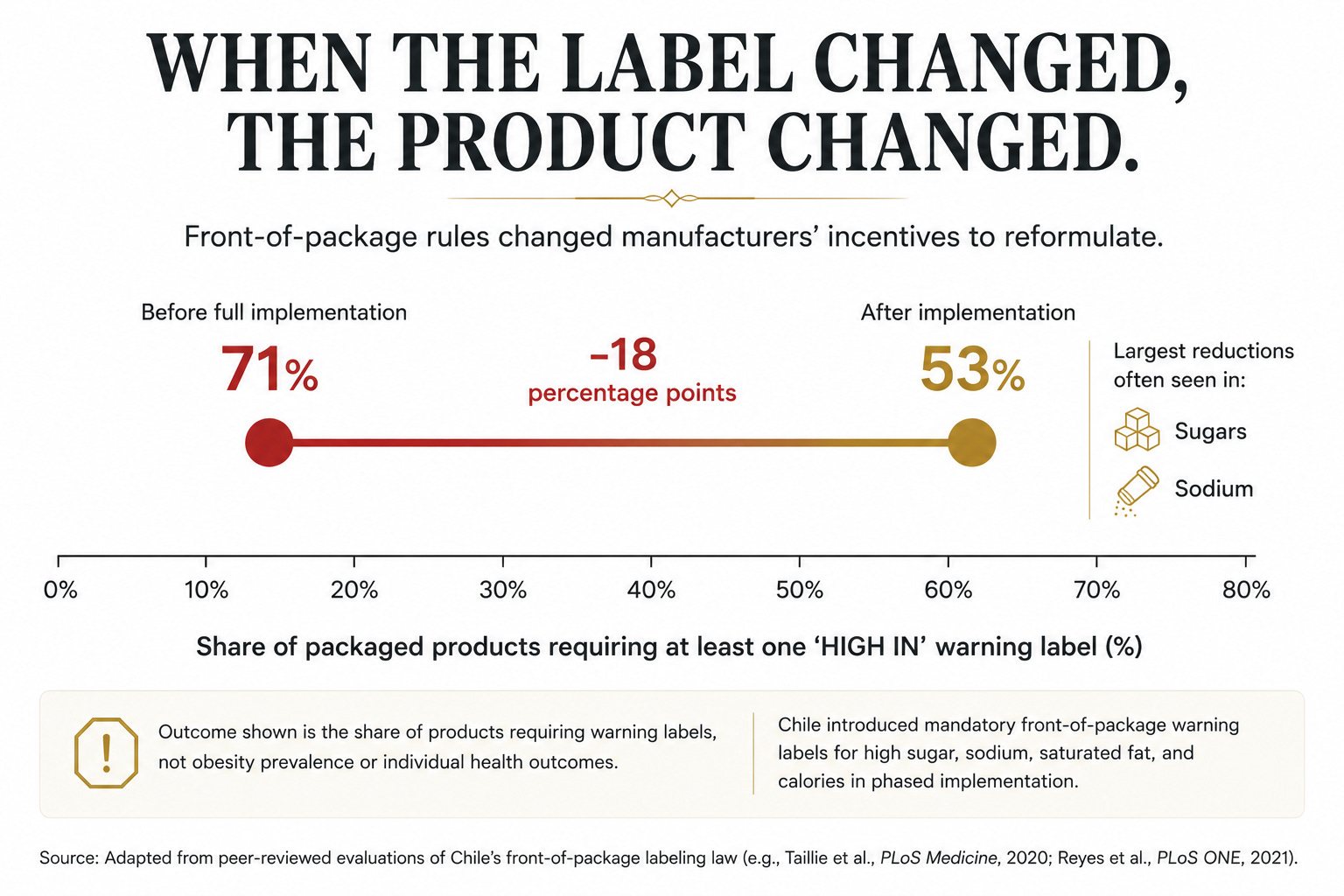
Chile offers a parallel lesson on the power of information architecture. Its mandatory front-of-package warning labels for high sugar, sodium, saturated fat, and calories prompted measurable reformulation. Peer-reviewed evaluations found the proportion of products requiring “high in” labels fell from roughly 71% before full implementation to about 53% afterward, with the largest reductions often in sugars and sodium. Changing what the package says also changed what the package contains.
Packaged food isn’t merely an edible formulation inside a wrapper. It’s a communication system. The photograph of berries, the word “natural,” the protein claim, the leaf icon, and the beige package that implies a farmer’s approval are part of the product experience. The ingredient list, which in the United States generally appears in descending order by weight, is useful and usually on the back. The front has already spoken.
FDA updates to the voluntary healthy claim and proposals for front-of-package labeling of saturated fat, sodium, and added sugars rest on the same recognition. Change the information architecture and manufacturers may reformulate even without a formal mandate. Thailand’s tiered tax on sugar-sweetened beverages produced a similar effect. Average sugar content declined, and lower-sugar products proliferated. The reformulation did not require every consumer to acquire more willpower. The default changed.
Reading the first few ingredients can puncture an illusion quickly. A product wrapped in fruit imagery may begin with syrup. A premium oil may be mostly just oil. A formed crisp may contain potato alongside starches and oils. The list reveals architecture where the front turns into a story.
It still has limits. It does not report exact quantities of every component, eating rate, satiety effects, or how the product fits an overall diet. An unfamiliar chemical name isn’t evidence of danger. “Can I pronounce it?” is a sticky heuristic, not a scientific one.
The practical question isn’t whether the food is ultra-processed in isolation. A simpler lens is enough.
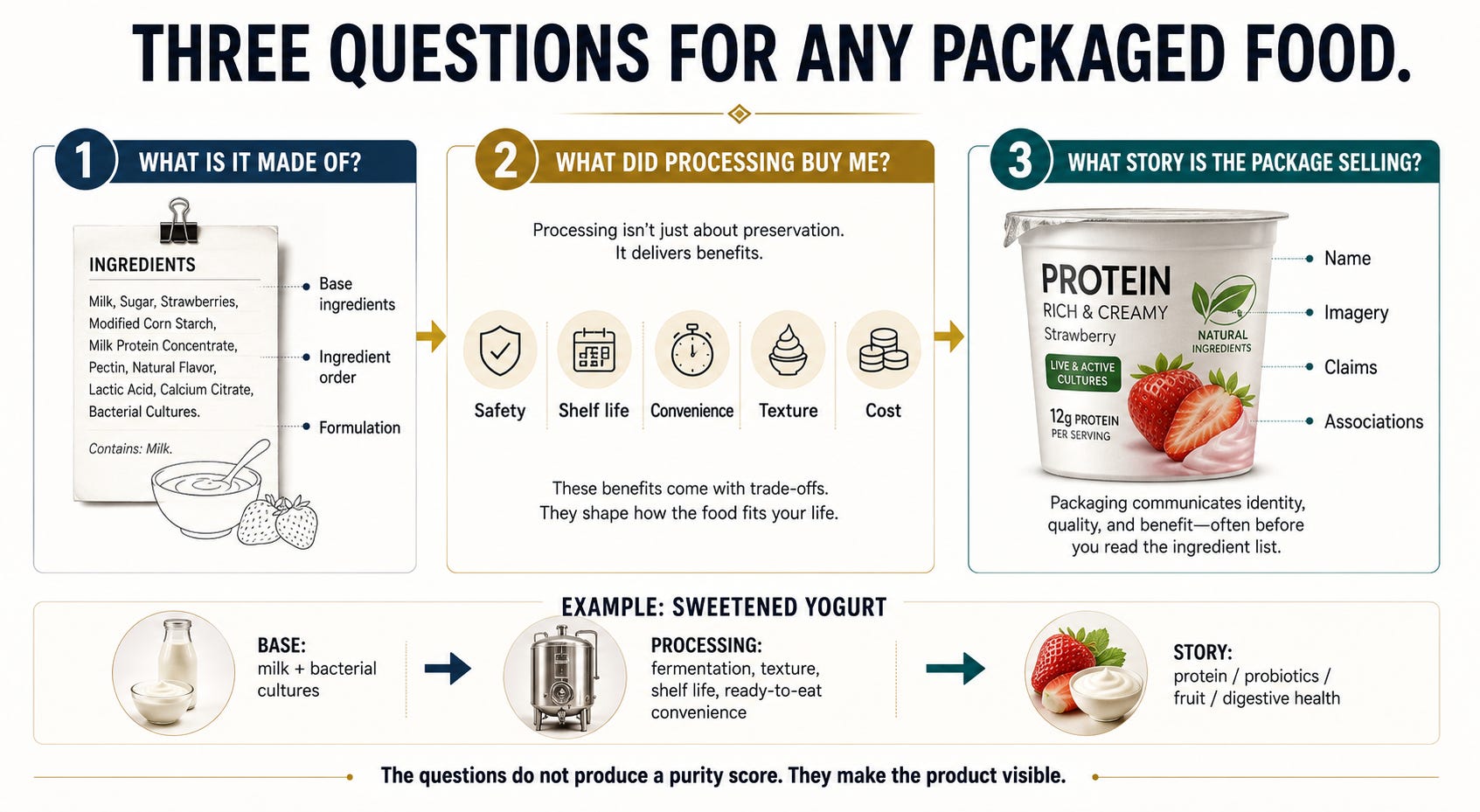
What is it made of? What did processing buy me: safety, shelf life, convenience, texture, or cost? What story is the package asking me to believe?
Take a common sweetened yogurt. The base is milk, fermented with bacterial cultures. Processing may have brought a smoother texture, longer shelf life, and the convenience of a ready-to-eat portion. The package may ask you to believe the product is primarily about protein, probiotics, fruit, or digestive health, even when added sugar appears high on the ingredient list. The three questions do not produce a purity score. They make the fused product visible.
Modern food is difficult to understand, not simply because it’s processed. It’s difficult because formulation, convenience, nutrition claims, and marketing have been engineered into one object. The time we save and the story we tell are now part of what we consume.
The label isn’t the food. The difficulty is that, for most of us, the label is now the only part we can see.
Comments
Nothing yet. Say the first thing.
Sign in to join the conversation.