
First, Dr Narut said that he was referring to two types of combat readiness unit: the ordinary commando unit and also to [U.S.] naval men inserted into embassies abroad under cover ready to kill. Dr Narut also said, in the presence of Dr Zitani, that men were being sought from military prisons to act as assassins in the overseas embassies. Dr Zitani clearly realized the sensational nature of Dr Narut’s claims. His comment to me was: ‘Does that guy realize what he has just said?’
— From Peter Watson, War on the Mind (Basic Books, 1978), pg. 248, material in brackets added; note British use of punctuation.
Almost 200 years ago, the Romantic English poet Percy Bysshe Shelley wrote, “War is the statesman’s game, the priest’s delight, the lawyer’s jest, the hired assassin’s trade.” Assassination was a topic I always hoped I could put aside. It is such a dark subject. But the use of political murder as state policy haunts the world even today. Among its chief proponents are Israel and the United States
As Michael Rubner wrote in a 2018 review of Ronen Bergman’s book, Rise and Kill First: The Secret History of Israel’s Targeted Assassinations, “Since its establishment in 1948, Israel has carried out more targeted assassinations — the killing of identified individuals, mostly civilians, in order to attain specific political objectives — than any other country in the Western world.”
The U.S. must be number two when it comes to political murder, and if you factor in the Vietnamese and Indonesian experiences, as discussed below, arguably the Americans should hold the macabre laurel wreath of first in assassinations. In any case, this essay will concentrate on U.S. assassination history, and I will leave aside for a future article an examination of Israel’s extreme embrace of political murder, as important as that subject obviously is.
On February 28, 2026, relying on intelligence provided by the U.S. Central Intelligence Agency, Israel assassinated Ayatollah Ali Khamenei, Iran’s Supreme Leader. He died in a bombing that also killed a number of top Iranian military officers, “including Mohammad Pakpour, the commander in chief of the Islamic Revolutionary Guards Corps; Aziz Nasirzadeh, the minister of defense; Adm. Ali Shamkhani, the head of the Military Council; Seyyed Majid Mousavi, the commander of the Islamic Revolutionary Guards Corps Aerospace Force; Mohammad Shirazi, the deputy intelligence minister; and others.”
This attempt to decapitate the leadership of Iran was meant to bring about the political collapse of Iran’s Islamic Republic. Subsequent events have proven how mistaken that strategy turned out to be. Even so, the emphasis on assassination of the leaders of countries the U.S. considers enemies is also seen in the ongoing practice of conducting “decapitation drills” against Democratic People’s Republic of Korea leader Kim Jong Un and other top DPRK officials.
As recently as January 2024, the Republic of Korea’s (ROK) Defense Minister told the U.S.-funded Middle East Broadcasting Networks that U.S. and ROK special forces have trained together as a “decapitation unit” to infiltrate the DPRK and assassinate DPRK leaders.
The history of U.S. use of assassination of foreign leaders or political opponents goes back many decades now, and was a major subject of the 1970s U.S. Congressional investigations into CIA and military crimes. Much of this history has been minimized over the years, but the kidnapping of Venezuelan President Nicholas Maduro and the assassination of Khamenei argue that this history needs to be brought to the fore of public attention again.
I recently wrote about Operation Ohio, the early Cold War program where U.S. military intelligence agencies participated in assassinations committed by the Bandera wing of the Organization of Ukrainian Nationalists. The killings took place in the displaced persons camps of post-World War II Germany. Ultimately, the program was brought under the bureaucratic control of the CIA and can be considered part of the latter’s larger Operation Bloodstone campaign to recruit Soviet emigrés as spies or penetration agents against the Soviet Union. Bloodstone activities included “recruiting defectors, smuggling refugees out from behind the Iron Curtain, and assassinations.”
There is also the fact that the U.S. CIA, or elements of the same, were involved in or masterminded the assassination of U.S. president John Kennedy. Not too long ago I took up the issue of how the CIA penetrated the Warren Commission’s secret meetings that sought to establish a motive for putative JFK assassin, Lee Harvey Oswald. This was a blatant example of how the CIA gamed the Warren Commission process, with the obvious purpose of narrative control over the post-assassination cover-up. I consider my work on that story a modest but real contribution to the case against the CIA in the matter of JFK’s assassination.
The story of the JFK assassination is also linked to the CIA plots to assassinate Fidel Castro, part of the CIA’s Operation Mongoose program to overthrow the Castro regime and restore capitalism to Cuba. The program ran during the first years of the Kennedy administration. While Mongoose was phased out by January 1963, CIA-led attempts to infiltrate Cuba considered up to and beyond JFK’s death. Lately, Donald Trump has taken up the U.S. ruling class’s dream of destroying the Cuban socialist regime.
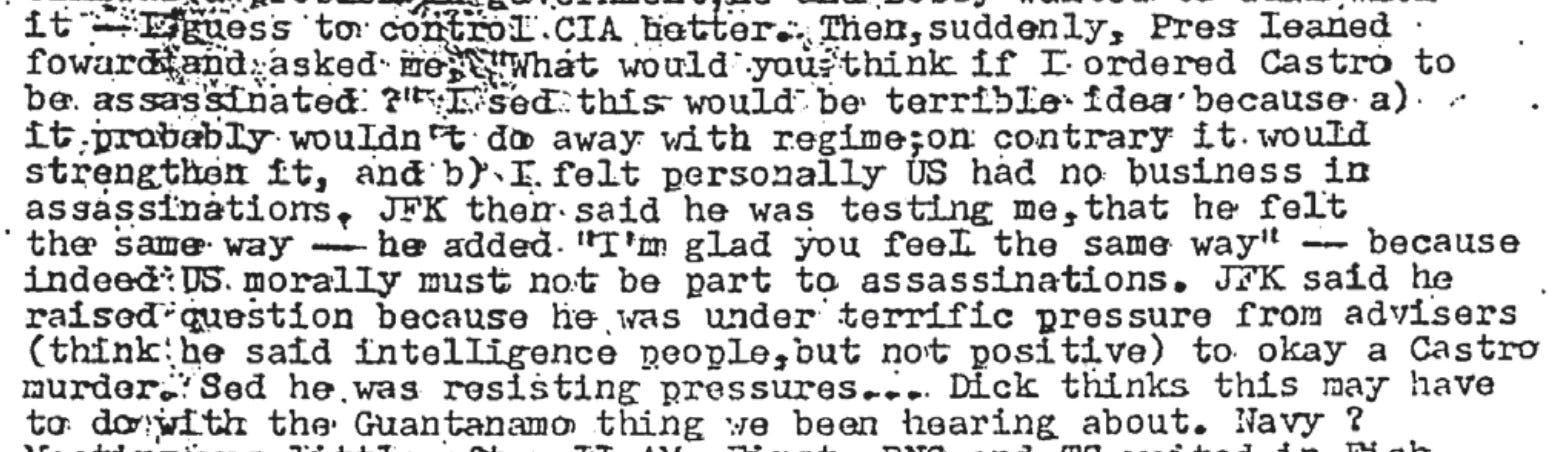
The topic of assassinations came up at a secret meeting between journalist Tad Szulc and John Kennedy in November 1961, some six months after the failed Bay of Pigs invasion. According to the notes from Szulc’s version of the meeting, Kennedy was opposed to a state policy of assassinations. He didn’t tell Szulc that the CIA had been trying to kill Castro. What Kennedy did tell the journalist was that he was getting “terrific pressure” from “intelligence people” to “okay a Castro murder.”
Leaving aside the issue of assassinations between the end of World War II and the murder of JFK, not to mention Obama and Trump’s use of such “targeted killings,” today I turn to the subject of foreign assassinations as it arose during the Nixon and Ford presidencies, specifically charges that the U.S. allegedly sought out and profiled potential assassins, trained them, and placed them in U.S. embassies in foreign countries, “ready to kill in those countries should the need arise.”
This is a story that is rarely referenced today, yet it couldn’t be more timely.
It was a bit over fifteen years ago, when I was still a young man in my fifties, that I first wrote about the Thomas Narut scandal. Before launching into the details about that story, it’s important to briefly understand the context of the time period of the Narut revelations.
In November 1975, the U.S. Senate’s Church Committee released a 285-page interim report, Alleged Assassination Plots Involving Foreign Leaders. The report stated, “The evidence establishes that the United States was implicated in several assassination plots. The Committee believes that, short of war, assassination is incompatible with American principles, international order, and morality. It should be rejected as a tool of foreign policy” (pg. 1).
The National Security Archive recently described the aftermath of the report’s release:
The impact of the Alleged Assassination Plots report was immediate and consequential. Public outrage forced the CIA and the White House to retreat on the use of assassination as a tool of covert operations. In response to the report, on February 18, 1976, President Ford signed Executive Order 11905, which stated: “No employee of the United States Government shall engage in, or conspire to engage in, political assassination.” Successive presidents have issued similar executive orders.
The report on “Alleged Assassination Plots” was not the end of Congressional investigations into U.S. covert use of assassination. The Church Committee, aka the Senate Select Committee to Study Governmental Operations with Respect to Intelligence Activities, wouldn’t issue its final report until April 1976.
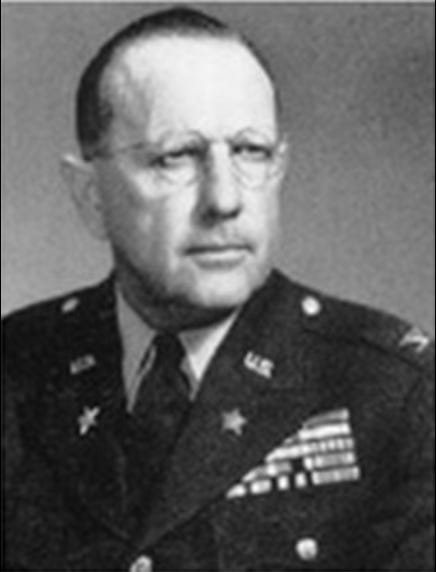
Three months earlier, in January, the Committee interviewed CIA officers Boris Pash, E. Howard Hunt and Aristides “Artie” Lazarus about allegations the U.S. had run assassinations out of a unit inside CIA known as PB/7. Pash had been counterintelligence chief for the Manhattan Project (as portrayed in the recent film, Oppenheimer), as well as the leader of the ALSOS Project, the U.S. Army Counter-Intelligence Corps’ WWII search for Nazi and Japanese weapons of mass destruction in the final year of the war.. He had also been the supposed chief of CIA’s PB/7. (Pash died in May 1995, aged 94.)
I’m not going to go fully into the PB/7 story; I want to save that for a future article, where it can get a full airing. But below are some telling excerpts from the Congressional testimonies of Hunt and Pash. Their interrogator is Church Committee staffer, Frederick Baron. While the revelations represent a limited hangout of U.S. assassination practices, they are still an admission that the CIA ran its own assassination bureau. (It is likely that it still does.)
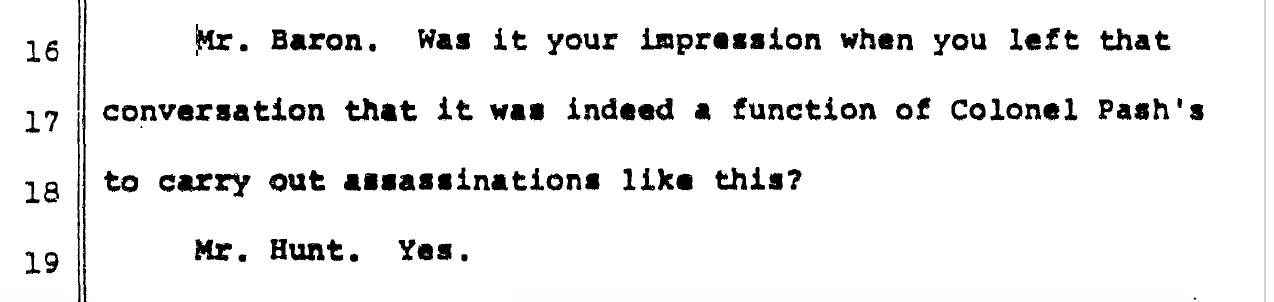
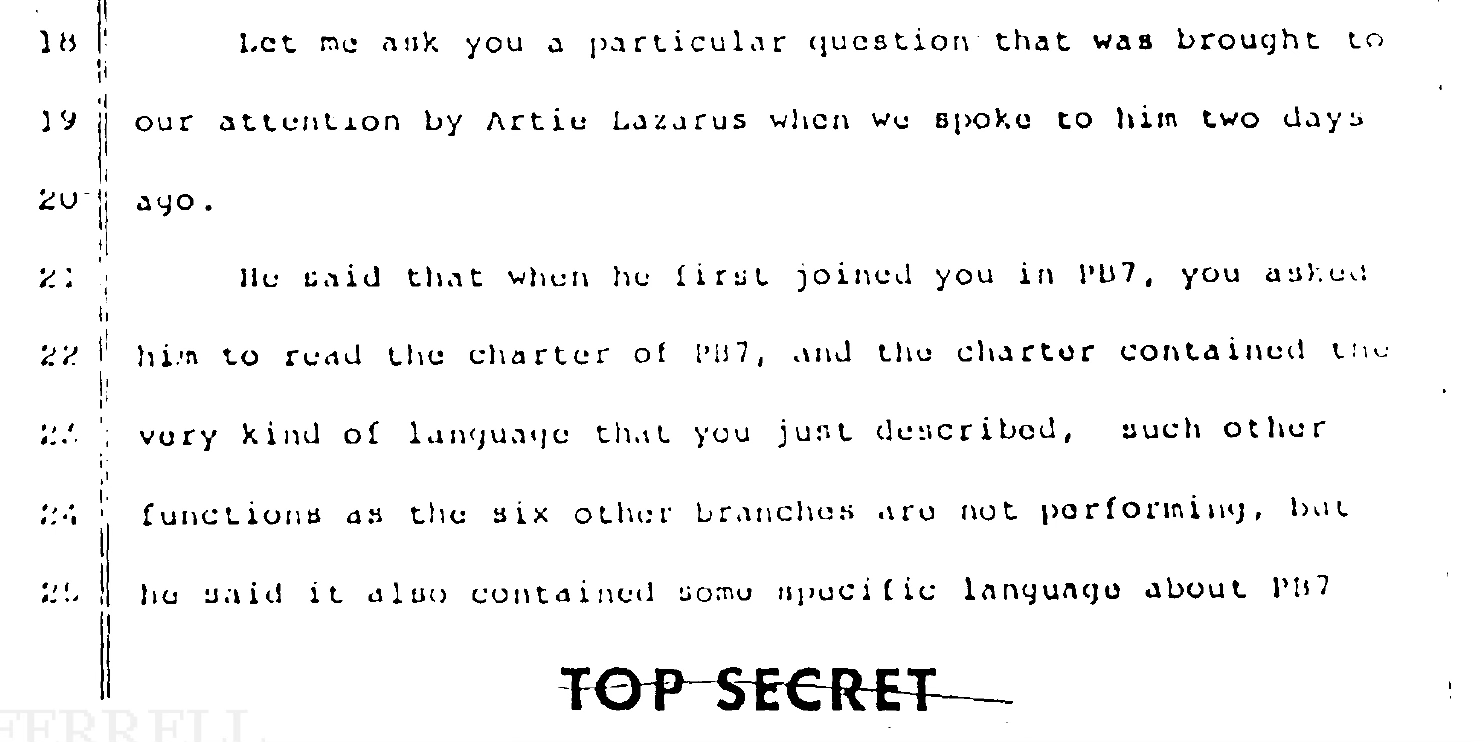
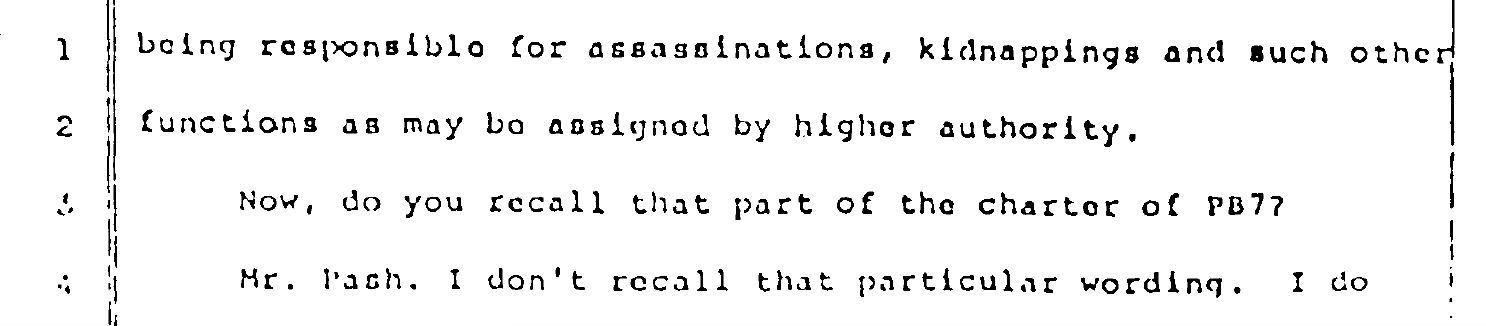
It goes without saying that today the U.S. has abandoned its policy of eschewing the assassination of world leaders. The policy of abstention from use of assassinations was put into place after the 1970s revelations about CIA-run assassinations, of which the Church Committee revelations played a key role. (Interested readers should check out the latest article at Substack’s The Memory Hole, “Chasing a CIA Ghost,” which is a long, fascinating essay about the CIA and the 1960 assassination of Patrice Lumumba, first Prime Minister of the Democratic Republic of the Congo.)
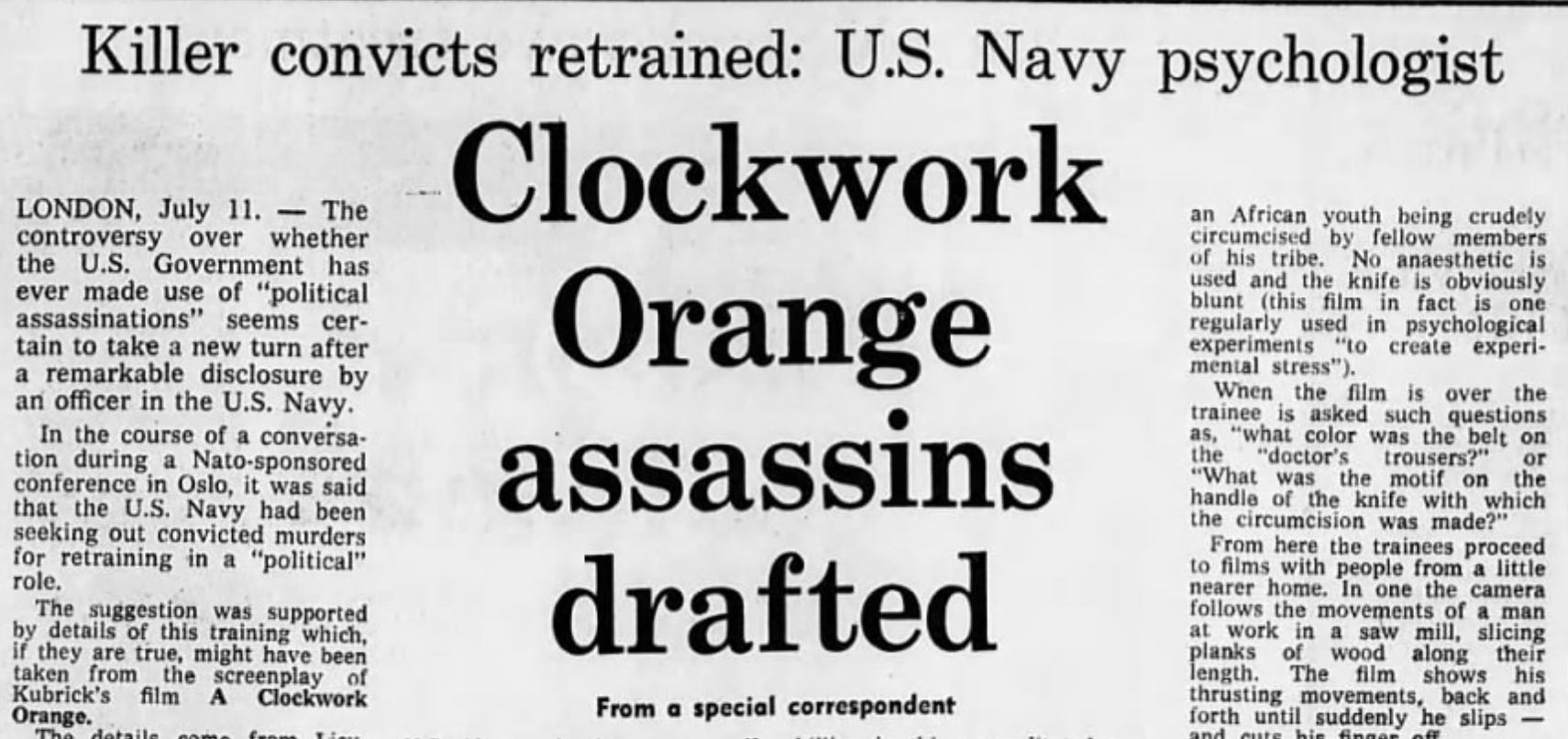
However, not all the stories about CIA assassinations came via Congressional investigations. Journalists did their bit, too. One amazing revelation appeared in the July 6, 1975 Sunday Times (London) in the guise of an article by journalist Peter Watson,“The strange tale of Commander Narut.”
The Narut story appeared only one month after the release of the Rockefeller Commission Report on CIA Activities Within the United States. While the Rockefeller Report was, as the Assassination Archives & Research Center has stated, “seen by many as a ‘whitewash,’ and was certainly superseded by the Church Committee's work in scope and depth,” its revelations about CIA mail opening programs and surveillance of U.S. protest groups primed the pump for further revelations. For the U.S. Navy, it was a perfect storm.
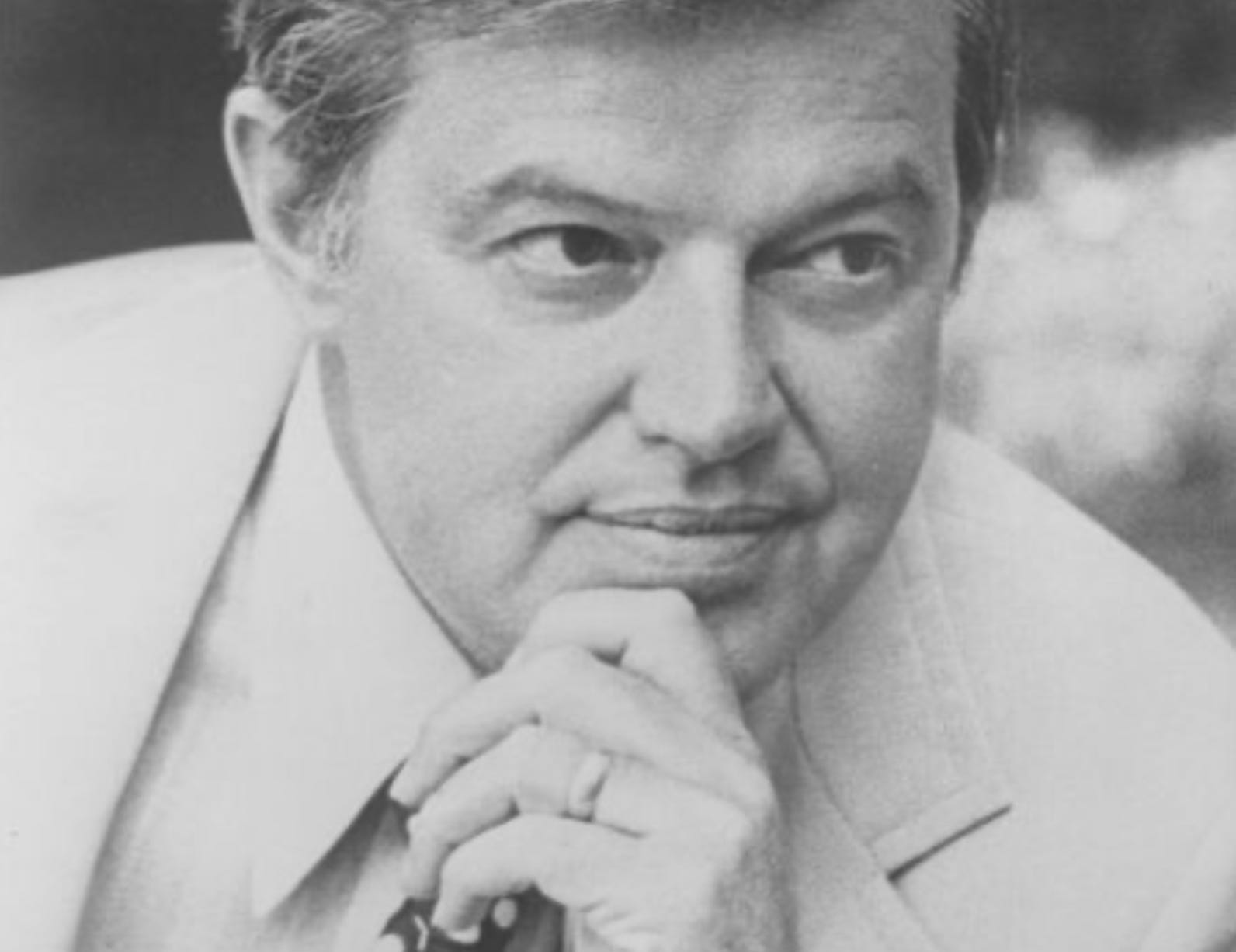
In 1976, journalist Peter Watson was at a NATO-sponsored conference of psychological researchers held in Oslo when a U.S. Navy psychologist, Dr. Thomas Narut from the U.S. Naval Hospital in Naples, told Watson and New Jersey psychologist Dr. Alfred Zitani, that the Navy had been recruiting men to train as assassins in overseas embassies.1
I have not been able to find a copy of the London Sunday Times article online. Instead, I will refer to other contemporary articles that adhered to Watson’s reporting, such as a July 12, 1975 article by the Australian newspaper, The Age, written by an anonymous “special correspondent.” Comparison of the text in this article with Watson’s own published account in his 1978 book, War on the Mind: The Military Uses and Abuses of Psychology (Basic Books), proves that The Age’s “special correspondent” was Watson himself! His book is out of print now, but can be read at the Internet Archive.
Dr. Narut’s presentation at the NATO-sponsored conference was titled, “The Use of a Symbolic Model and Verbal Intervention in Inducing and Reducing Stress.”2 According to to an account in Walter Bowart’s 1978 book, Operation Mind Control (Dell Publishing), Narut began his talk with effusive praise of the Navy as a site for research, not least because of its plentiful access to human subject material.
In the navy, Narut bragged, there were plenty of captive personnel who could be used as guinea pigs. In the navy there was a computerized record of each man’s background and psychological profile, so that a quick selection of men with suitable psychological inclinations for experiments could be made. Navy psychologists not only had access to computerized records, but also to psychological tests and background data on a large number of people. In the navy, Narut said, funds were plentiful, and there were no problems with transporting subjects for study to nearly any place in the world. Narut stated proudly that the U.S. Navy provided scientists with the most advanced research facilities in the world. [Bowart, pg. 82]
In the article from The Age, Dr. Narut’s naval work was said to involve “establishing how to induce servicemen who may not be naturally inclined to kill, to do so under certain conditions.”
Both the article in The Age and Watson’s own subsequent book massaged the story somewhat. Unfortunately, I don’t have the original Sunday Times article for reference, but the highly respected, now shuttered, Long Island newspaper Newsday quoted the Times as saying Narut specifically used the term “hit men” when describing the U.S. servicemen trained for killing. This was left out of various accounts.
Newsday reported in its July 7, 1975 Nassau edition:
In his talk, Narut said he taught “combat readiness units” to cope with the stress of killing, the [London Sunday Times] newspaper said.... “he explained this included men for commando-type operations and for insertion into U.S. embassies under cover, ready to kill in those countries should the need arise,” the newspaper said. “Dr. Narut used the words ‘hit men’ and ‘assassin’ of those men.”
According to the account in The Age, Narut’s doctoral thesis described showing “certain films [that] could provoke anxiety and whether forcing a man to do tasks irrelevant to the film while watching it might help him cope with such anxiety (a technique described in Clockwork Orange)” (material in parenthesis inside quotes is from the original text, while the text in brackets is added).
The anxiety desensitization sessions, undertaken via exposure to various disturbing films, as described below, were quite specific in intent.
The method, according to Dr. Narut, was to show films specially designed to show people being killed and injured in violent ways, by being acclimatised through these films, the men eventually became able to dissociate any feelings from such a situation. Dr. Narut also added that U.S. naval psychologists specially selected men for these commando tasks, from submarine crews, paratroops, and some were convicted murderers from military prisons.
Asked whether he was suggesting that murderers were being released from prisons to become assassins, he replied: “It’s happened more than once.”
That prisoners were used in government programs that utilized intense behavioral modification techniques was not science fiction, nor the fevered dream of Clockwork Orange author Anthony Burgess or director Stanley Kubrick, who turned Burgess’s book into an award-winning film. In February 1977, Synapse, the student newspaper at the University of California, San Francisco — a major medical and research institution — decried “‘innovative’ behavioral modification programs instituted in many prisons which include the use of electro-shock or drugs with unpleasant effects such as aversive conditioning, reinforcement techniques, etc.”3
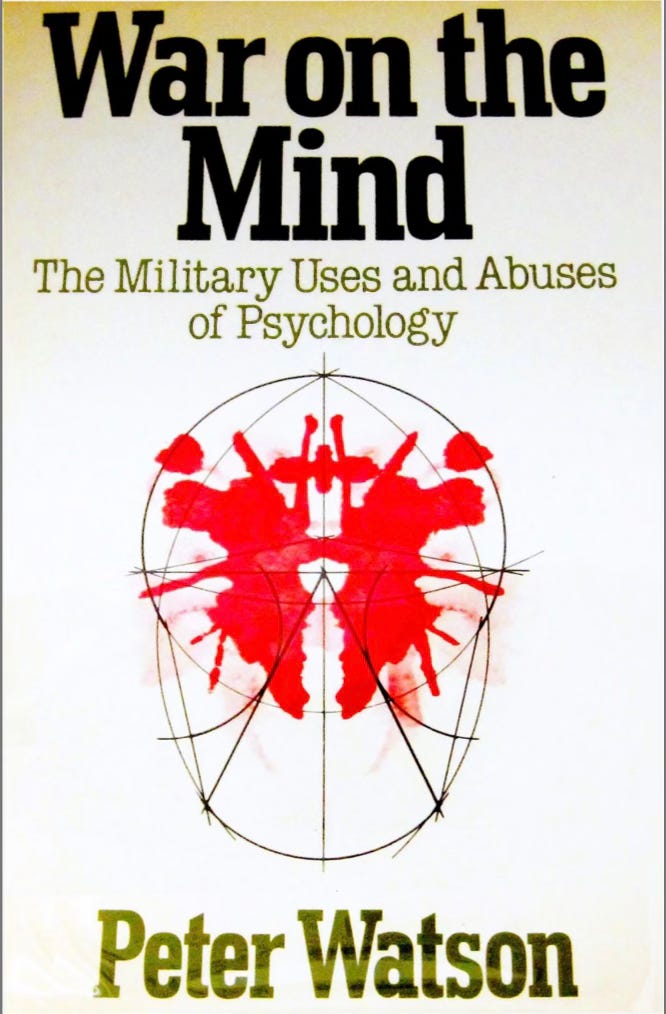
Narut’s discussions with Watson were quite detailed. He discussed how the men were selected. “[T[he best killers are men with ‘passive-aggressive’ personalities,” Narut said. Among the psychological tests used to select the Navy’s assassins were the Minnesota Multiphasic Personality Inventory, or MMPI, a highly-regarded and much used “objective” psychological testing instrument. Also utilized was the famous Rorschach Ink Blot test, a “subjective” test that examines a subject’s response to vague but suggestive visual stimuli.
After the initial selection process, the prospective government assassins, according to The Age account, were “brought to either the navy’s neuropsychiatric laboratory in San Diego, California (which also trains spies in techniques to counter interrogation) or to the laboratory, where Narut works in the U.S. naval medical centre in Naples.”
They are first taught to shoot, and then the ‘Clockwork Orange’ training begins in earnest, to rid them of any qualms they may have about killing....4
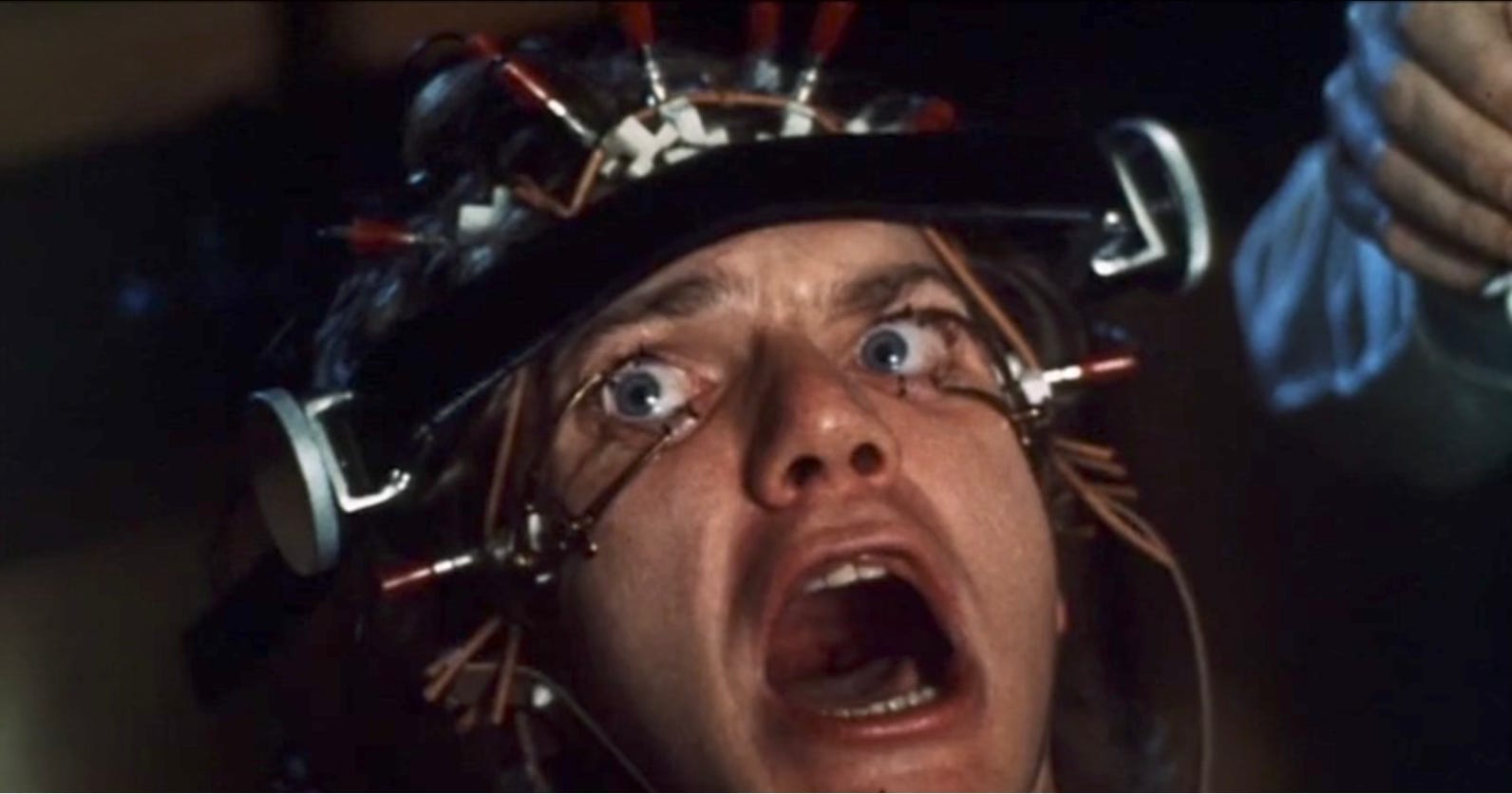
The films are gruesome and as the training proceeds they get progressively more horrific. Even so the trainee is forced to watch. His head is bolted into a clamp so that he cannot turn away and a special mechanism also ensures that he cannot close his eyelids.
In the film, “A Clockwork Orange,” Stanley Kubrick was able to capture the moral horror of such psychological “interventions,” as the photo at the head of this essay shows.
The Navy films included scenes of an “African youth being crudely circumcised” without anesthesia, and a saw mill worker getting a finger sliced off. In War on the Mind, Watson reported that Narut explained that “physiological measures” were recorded during exposure to the film “to ensure that the men really do learn to remain calm while watching” (pg. 250).
The final phase of the killers’ training involved “Dehumanization of the enemy.” This training took “a few weeks,” and consisted of “lectures and films which portray personalities and customs in foreign countries whose interests may go against the USA. The films are biased to present the enemy as less than human….” (Ibid.).
As it turned out, many of the assassin candidates could not adjust to the desensitization training, and flunked out of the program. I guess they had an unfortunate surfeit of humanity within them. Still, an unspecified amount of subjects did graduate from the Navy’s assassination desensitization program.
According to The Age article, Narut wouldn’t tell Watson where the men who graduated from the Navy’s program were sent, “arguing that he did not have the necessary security clearance.” Watson continued (text in brackets added):
However, at one point in our conversation [Narut] used the Athens Embassy as an example [of where such men had been sent] and he also said that his busiest time, when the largest batch of men went through this training, was towards the end of 1973, at the time of the Yom Kippur War.5
Was the Navy program as described by Narut connected with contemporary accusations of CIA involvement in an assassination attempt against Greece’s then leader? Let’s examine that possibility for a moment.
Although there was nothing in Watson’s article that connected the Navy program to the CIA, it is worth pointing out that the CIA, which was heavily involved in use of assassination, had a long history of hiding its programs under military auspices. At other times, the CIA and Navy worked together on similar research programs.
Along those lines, Chapter Three of John Marks’ 1979 book, The Search for the Manchurian Candidate: The CIA and Mind Control (Times Books), describes a joint CIA/Artichoke series of experiments with the Navy’s own mind control program, Project Chatter. The subject makes sobering reading, as both CIA and Navy medical officers plied unwitting prisoners with cocktails of depressant and stimulant drugs, laced with THC or other mind-altering substances, sometimes mixed with hypnosis and periods of deep drug-induced sleep.
I recently discussed the CIA-Navy link in my article on the CIA’s MK-DECOY program, which involved creating a device to produce concussions at a distance. The aim was to produce amnesias in agents, assets and double agents, as necessary. The program began in the U.S. Navy’s Office of Naval Research, but was absorbed, if not initially sponsored, by the CIA.

One possible application of the Navy (or CIA’s) training that fits Narut’s timeline and alleged use of the Athens embassy was the October 1973 assassination attempt on the life of Cyprus President Archbishop Makarios. The assassination attempt was made at the time of the Yom Kippur War. According to an essay in the October 2021 edition of the journal Religions (Vol. 12, No. 11), Makarios “was a close friend and a trustworthy regional partner of Egyptian leader Gamal Abdel Nasser (Kıralp 2019) and a symbol of resistance against oppression in the eyes of Palestinian Arabs (Assos 2018).” That would have made Makarios an unfortunate political actor in the region from the standpoint of the Zionists and their U.S. allies, and a possible target for elimination one way or another.
Makarios was also an obstacle to U.S. plans for a settlement on Cyprus, which was then a source of Greek-Turkish competition, one that threatened the legitimacy of the U.S.-backed Greek military junta then in power, not to mention the very existence of NATO in the alliance’s southern rim. A suspect was arrested for the crime, but given what Narut revealed, one wonders if U.S.-trained assassins didn’t have a hand in either planning or implementing the failed assassination. Later, in February 1977, charges that the CIA had tried to assassinate Makarios surfaced at The Washington Post.
U.S. military officials were quick to deny the Narut revelations. A July 6, 1975 Reuters report published in The New York Times stated, “A United States Navy spokesman categorically denied today a London newspaper report of a program in which the Navy allegedly prepared convicted murderers to carry out assassinations.”
The denial was strangely specific. The Navy spokesman “checked with the Naples and San Diego facilities and had ‘talked to 40 people,’” after which he announced “that he could make a categorical denial that men had ever been trained as assassins at either center.”
He never said such training had never taken place. But a stronger denial of Narut’s statements came out a day later, as quoted here in Victoria, British Columbia’s paper, the Times Colonist (pg. 23). A US Navy spokesman clarified:
*The navy categorically denies that it is or has been engaged in psychological or any other type of training of personnel as assassins. No such training has taken place.”
By July 9, Narut himself had issued a retraction.
“The assertion attributed to me that convicted murderers have been assigned to embassies as assassins is totally and blatantly false and absurd,” Narut said, according to an Associated Press account.
The AP story indicated that Narut had been immediately summoned to London to discuss the London Sunday Times report with Admiral Thomas Engen, U.S. Navy Chief of Staff in Europe. The retraction followed.
In the flurry of controversy, Watson stuck by his story. “I stand by every word.... It’s true we carried on talking while he got ready for dinner, but we talked nonstop for 1-1/2 hours,” he told the press.
According to the July 10 AP report, Watson also said there were “three or four other conference participants [who] had heard Narut discuss the recruitment of convicted murderers from military prisons for training as assassins, and their insertion into foreign embassies under cover.” We know Dr. Zitani was one of those doctors, but I don’t know who the other witnesses were.
A few years after he met Dr. Narut and published the latter’s astonishing tale, Watson said in a footnote to War on the Mind that he was of “two minds as to what credence to attach to Dr Narut’s tale.”
He continued, in what seemed like a corroboration of the original report:
A few weeks after the episode I received a letter from a psychologist working in the area near San Diego where the Neuropsychiatric Center is located. In it the psychologist said that he had seen the syndicated article and the US Navy’s denial and he thought I might be interested to know that, six months previously, psychologists at the San Diego outfit had borrowed from him one of the films — that on circumcision — which Dr Narut had mentioned to me. [Watson, pg. 250]
Neither the Sunday Times or Watson ever retracted the Narut story.6

While the Pentagon denied the assassin accusations, it also wouldn’t allow Watson access to interview personnel at the U.S. Navy Medical Neuropsychiatric Research Unit in San Diego, where the training supposedly took place. ( The facility was opened in June 1959. By 1974, the name of the center had changed to the Naval Health Research Center.)
The whole tale might seem fantastic, unless one remembers that only a few years earlier the U.S.-sponsored Phoenix Program in Vietnam, overseen by the CIA, was responsible for the assassination of thousands of Viet Cong sympathizers, and tens of thousands more civilians who may have had nothing to do with the Viet Cong.
According to the most important book documenting Phoenix, Douglas Valentine’s The Phoenix Program: America’s Use of Terror in Vietnam (Open Road Media, originally published by William Morrow and Co. in 1990), “Developed in 1967 by the Central Intelligence Agency (CIA), Phoenix combined existing counterinsurgency programs in a concerted effort to ‘neutralize’ the Vietcong infrastructure (VCI). The euphemism ‘neutralize’ means to kill, capture, or make to defect…. Central to Phoenix is the fact that it targeted civilians, not soldiers’ (Valentine, pg. 25, Kindle edition).
The U.S. had also supplied assassination lists to the Indonesian government during the bloody 1965 coup that slaughtered half a million people.
Journalist Kathy Kadane broke the latter story back in 1990:
For the first time, U.S. officials acknowledge that in 1965 they systematically compiled comprehensive lists of Communist operatives, from top echelons down to village cadres. As many as 5,000 names were furnished to the Indonesian army, and the Americans later checked off the names of those who had been killed or captured, according to the U.S. officials. [Kathy Kadane, South Carolina’s Herald-Journal, May 19, 1990]
The Indonesian mass murder program was based in part on experiences gleaned earlier by the CIA in the Philippines. “US military advisers of the Joint US Military Advisory Group (JUSMAG) and the CIA station in Manila designed and led the bloody suppression of the nationalist Hukbong Mapagpalaya ng Bayan,” wrote Roland G. Simbulan in Covert Operations and the CIA’s Hidden History in the Philippines.
In his 2020 book on the Indonesian murders, The Jakarta Method: Washington’s Anticommunist Crusade and the Mass Murder Program That Shaped Our World (PublicAffairs/Perseus Books), Vincent Bevins includes a map marking 22 different “Anticommunist Extermination Programs” around the world since the end of World War II (see Appendix 5). Truly the use of assassinations and extrajudicial killings, in combination with genocides, such as in Gaza today, mark our period as one of the bloodiest in human history. Only against the massive bloodletting of World War II does the contemporary world look even remotely peaceful.
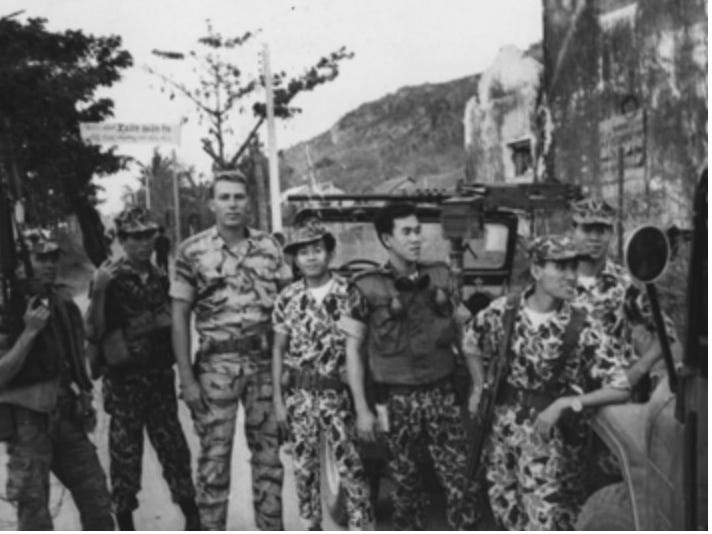
Lt. Commander Narut died on April 19, 1994, and was buried in Orlando, Florida. He was 59 years old. An obituary for the longtime psychologist — he had been “past president of Central Florida Chapter of Florida Psychological Association” — stated he died “of injuries sustained in an automobile accident.” (See here for alternate link.) I have been unable to dig out any further information about his death, which came one year to the day after the FBI’s fiery siege of the Branch Davidian compound at Waco, Texas.
In 1976, in the wake of the many revelations about U.S. government crimes, including assassinations, President Gerald Ford issued a presidential directive (EO 11905) banning assassinations, a directive whose basic premises lies in shreds after twenty-five years of Bush/Obama/Trump rule. Many see Barack Obama as a key player in the overturn of U.S. post-Ford assassination policy. It was the position of the Obama administration in the case of the “targeted killing” of U.S. citizen Anwar Al-Awlaqi that the President has “unreviewable authority to kill Americans.” (See this link for the legal documents in this case, as posted by ACLU.)
(As a personal aside, it is aggravating how the discussion about the legal consequences of using assassination as state policy is now subsumed under the euphemism of “targeted killings.” This Orwellian turn of phrase is not unique to the term “assassination,” but is perhaps most egregious in this context, bested only, perhaps, by the substitution of the phrase “enhanced interrogation” for torture.)
In case you didn’t already know it, the Obama Administration won its case on the Awlaqi murder in federal court. But that case was about the assassination of a U.S. citizen by U.S. authorities. There is no U.S. statute that forbids assassination of foreign leaders, though presumably Ford’s EO and a later one by President Ronald Reagan (EO 12333) remain in effect. Still, that didn’t stop Donald Trump from ordering in January 2020 the assassination of Iranian General Qassem Soleimani.
Such assassinations do, however, violate international law (although some have questioned this conclusion).7 In July 2020, the UN's special rapporteur on extrajudicial killings ruled that Trump’s murder of Soleimani was unlawful, and that “the US had not provided sufficient evidence of an imminent threat to life to justify the attack.” As Trump’s later murder of Ayatollah Ali Khamenei shows, the UN’s condemnation had little practical effect on the U.S. or its allies when it comes to use of assassination as state policy.
It is worth mentioning as well how the U.S. has also wriggled out of other war crimes accusations, particularly those concerning torture. Torture and assassination are intimately connected, and many political killings have occurred in the context of state torture. Examples include the torture-murder of Gul Rahman at the CIA’s Salt Pit prison in Afghanistan; the torture death of Muammar Gaddafi; the death by torture of numerous prisoners held in U.S. ally Israel’s prisons, etc.
Revelations in the Iraq logs Wikileaks cache of documents, released over 15 years ago, suggests that the U.S. helped form torture squads, and perhaps death squads in Iraq. In any case, U.S. military units certainly turned thousands of prisoners over to Iraqi forces they knew from hundreds of observations were torturing prisoners, often to death. This deliberate war crime, a direct violation of the Convention Against Torture treaty, was conducted under both the Bush and Obama administrations. But where in our society was the outrage? U.S. society cannot seem to pick itself up out of the muck of celebrity trivia and standard party politics and cable TV scandal-mongering to effectively deal with state crimes.
Most Americans have been ignoring news about torture and assassinations on behalf of the ruling elite for decades now. I don’t know what it will take to turn such a historical situation around, short of social revolution. Young people could do worse than take up the banner that was once Percy Shelley’s: free love, communism, hatred of tyrannies, including — if not especially — the tyranny of one’s own state, and equality of all sexes and peoples, freedom of religious practice (including atheism), and add to it the wisdom of the long-time struggle through the 19th, 20th and 21st centuries for economic justice and against the exploiters of mankind.8
Dr. Alfred M. Zitani died on February 16, 2009 in Englewood, New Jersey, “after a lingering illness,” an obituary stated. Dr. Zitani had graduated from Georgetown University Medical School, and was “Director of Surgery at St. Mary's Hospital in Hoboken. He was a physician for 55 years….” He served in a MASH unit during the Korean War. So far as I know, Dr. Zitani never retracted that he heard Dr. Narut discuss the subject of Navy-trained “hit men” and assassins placed in U.S. embassies.
Savvy readers may recognize some resemblance between the title of Narut’s essay and the fictional IPCRESS from the eponymous 1962 novel, The IPCRESS File by Len Deighton. “IPCRESS” was an acronym standing for "Induction of Psycho-neuroses by Conditioned Reflex with Stress,” a technique that was meant to create the conditions for psychologically inducing spies and scientists to adopt fealty to a country or cause of a scientist’s choosing. In the film, The IPCRESS File, it is suggested that the IPCRESS behavioral technique could induce amnesias.
Another Cold War novel turned into a movie, The Manchurian Candidate, posited that brainwashing techniques could be used to create programmed assassins. The latter, as it turns out, was a goal of the CIA’s MKULTRA and Artichoke programs, as discussed in Watson’s 1978 book, War on the Mind, and also in John Marks’ 1979 book, The Search for the Manchurian Candidate. The latter book, which had a great deal of new information on the CIA’s and Navy’s mind control programs, should not be confused with the 1959 novel, The Manchurian Candidate, which was written by Richard Condon. It was made into a movie in 1962 and 2004.
For more information about psychiatric abuses in the guise of behavioral modification programs in U.S. prisons back in the 1960s and 1970s, see Arpiar G. Saunders, Jr., “Behavior Therapy in Prisons: Waldon II or Clockwork Orange?” “Paper presented at the Annual Meeting of the Association for Advancement of Behavior Therapy (8th, Chicago, Illinois, November 1974).”
The form of aversion therapy portrayed in the film “A Clockwork Orange” was called the Ludovico Technique both in the movie and in the Anthony Burgess novel upon which it is based. For a discussion of the various behavioral scientific models behind the use of techniques to produce or repress violence using both classical Pavlovian and operant Skinnerian conditioning techniques, see Ziona Elizabeth Mathai and M. Nagalakshmi, “A Psychological Study on the Novel, A Clockwork Orange,” Humanities & Social Sciences Reviews, Vol 8, No 1, 2020, pp 610-617.
It is not germane to the primary subject of this current essay, but much of Watson’s book concerns the workings and effects of psychological warfare techniques. “The most sophisticated military public opinion machinery of any kind now exists in Israel,” Watson wrote. “It was set up after the Yom Kippur War in 1973 and is now primed and ready for any repeat performance” (pg. 179). Chilling words when read today!
While I find Watson’s work to be generally reliable, like any author, his work is not error-free. I have not done a thorough assessment of all assertions made in War on the Mind. But I did notice that Watson wrongly stated that U.S. Marine Colonel Frank Schwable “who confessed to using germ warfare [in the Korean War]… along with many others was sentenced to a long term of imprisonment for these actions….” [page 294]. As a matter of fact, Schwable never was sentenced for anything, and never spent any time in prison. See my article, “‘False’ Confessions Cover-up: U.S. Told Airmen Who Admitted Germ War in Korea They Could Reveal Information If Captured.” It looks like Watson picked up the claim in an article at the time by a right-wing, UK-government connected author.
Sadly, the relationship between U.S. domestic law and international law is especially murky when it comes to executive actions, such as assassination, by the U.S. government. Talia Abed’s 2023 essay, The Role of International Law in Targeted Killings: from the Bush Administration to the Biden Administration, 46 Fordham Int'l L.J. 533 (2023), describes the ambivalence regarding international law and how it is interpreted inside the U.S. political and legal worlds.
Regarding international agreements such as the Geneva Conventions, countries that violate the Conventions “can be held accountable for charges of war crimes.”72 However, the United States can technically reinterpret parts of the Geneva Conventions under American law.73 US courts have final authority to interpret the meaning of an international agreement when applied to national matters.74 Due to the President’s role in international affairs, much weight is given to the executive branch’s interpretation of such applications.75 However, the Supreme Court has declined to follow the executive branch’s interpretation on some occasions;76 particularly relevant to this Note is the way the Supreme Court interpreted Article 3 of the Geneva Conventions differently than the executive branch.77 In sum, “issues concerning the status of international law in the US legal system have never been fully resolved.”78 [pg. 543]
Karl Marx’s daughter, Eleanor, once quoted her father’s opinion about Shelley as a revolutionist:
As Marx, who understood the poets as well as he understood the philosophers and economists, was wont to say: “The real difference between Byron and Shelley is this: those who understand them and love them rejoice that Byron died at thirty-six, because if he had lived he would have become a reactionary bourgeois; they grieve that Shelley died at twenty-nine, because he was essentially a revolutionist, and he would always have been one of the advanced guard of Socialism.” [Source: “Shelley and Socialism,” by Edward and Eleanor Marx-Aveling, To-Day, April 1888, pp. 103-116;
Transcribed: by Ted Crawford.]
Comments
Nothing yet. Say the first thing.
Sign in to join the conversation.