
If you take a look at all the articles I’ve written on here so far, you won’t be surprised by seeing that quite a few dealt with UFO mysteries. That’s because I’m fascinated with anything the science world has a tough time explaining. You’ll also notice that I’m a sceptic, taking everything even remotely “supernatural” with a grain of salt. The fascinating thing about today’s article is that it’s not your classic UFO mystery that continues baffling people to this day; instead, it’s a prime example of how war increases paranoia like nothing else could.
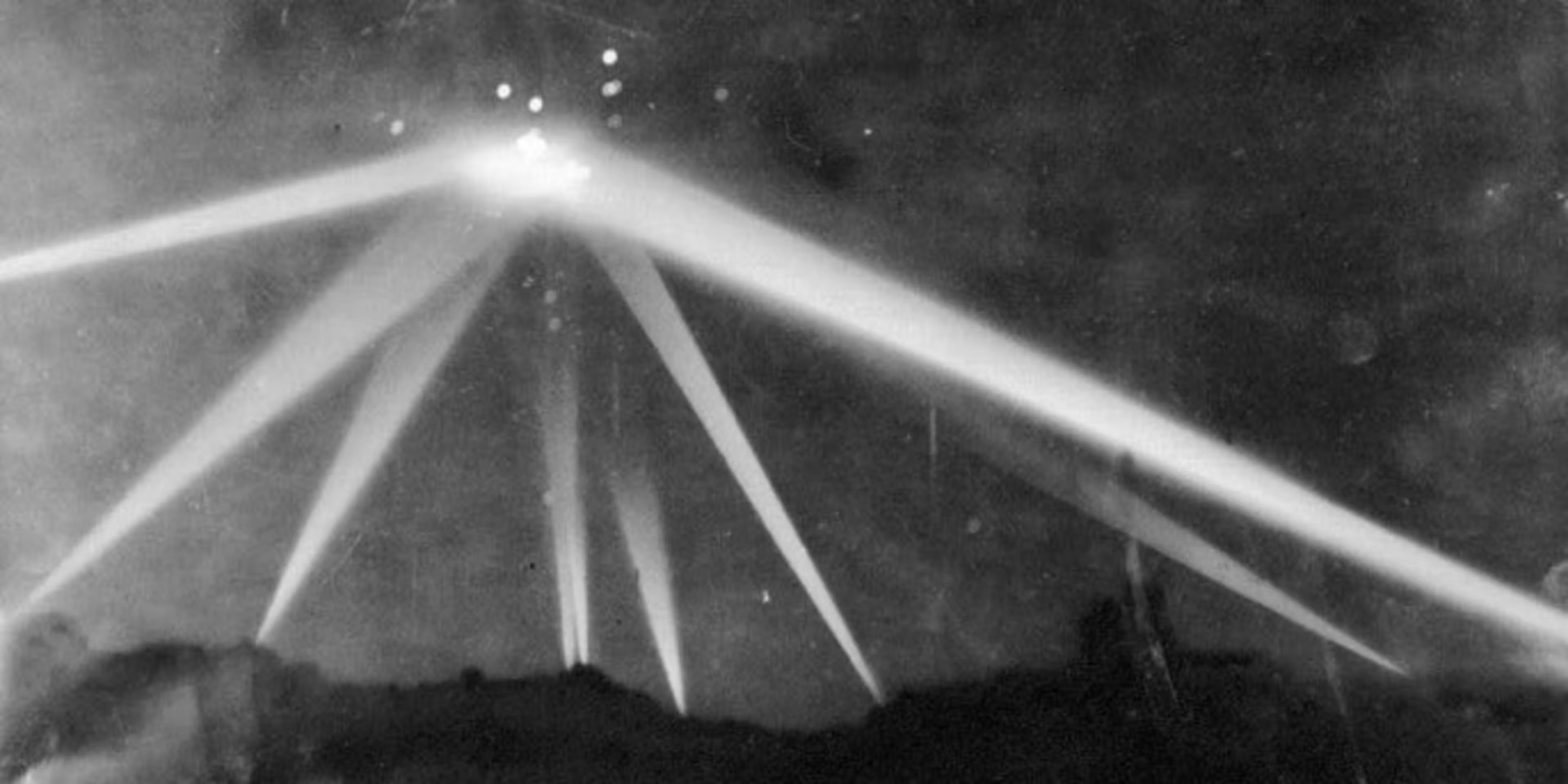
Although there are still many that believe UFOs visited Los Angeles in late February 1942, the story of the Battle of Los Angeles is far more fascinating for what it really was. Just a little over two months after the Japanese attacked Pearl Harbor and physically involved the United States in World War II, a series of mysterious lights in the night sky over L.A. transformed into a serious cause for concern. The Battle of Los Angeles isn’t only an example of what fearing for your life looks like. It’s also proof that wartime paranoia makes you react to the smallest of things in the biggest of ways.
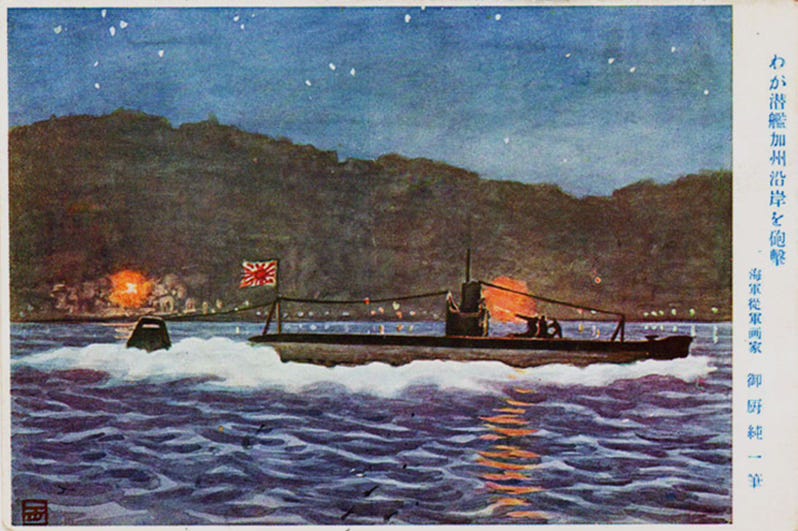
Ever since 2,403 Americans died following the attack on Pearl Harbor on December 7, 1941, the U.S. government and civilians all across the nation feared a new attack would occur again sometime soon. In fact, just a day before the Battle of Los Angeles took place, the Bombardment of Ellwood that happened on February 23, 1942, when a Japanese submarine attacked U.S. coastal targets near Santa Barbara, CA, was a great cause for concern.1 So, Californians and every other American lived in fear for their lives.
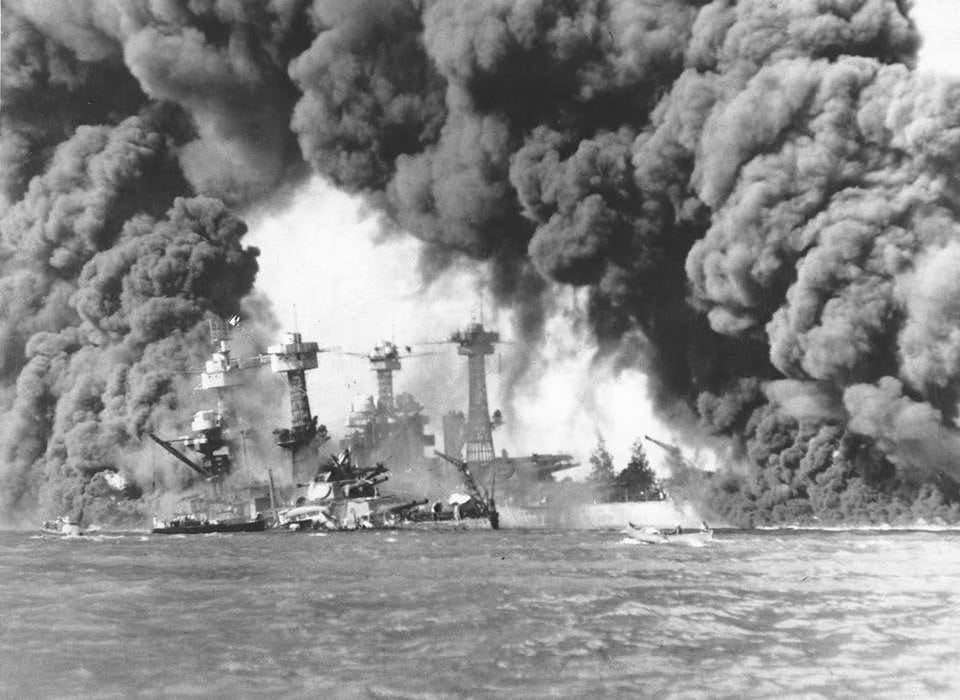
In fact, until the end of the war in September 1945, Japanese forces were quite creative when it came to ways of attacking the United States. Besides the perilous attack on Pearl Harbor in late 1941 and the submarine attack in February 1942, the Japanese were keen on using incendiary bombs to attack their enemies, the best known examples being the Bombardment of Fort Stevens and the Lookout Air Raids in June and September 1942 in Oregon.2 Still, the creation of the Japanese Fu-Go balloon bomb and the consequent death of six people in Bly, OR, in May 1945, was the true stuff of nightmares.3
So, when a series of unidentified lights appeared over L.A. just a day after the Bombardment of Ellwood, all alarm bells were going off. In fact, on February 24, 1942, the day of the Battle, the Office of Naval Intelligence warned that an attack on mainland California could take place within the next ten hours. Although something did happen within those ten hours, it wasn’t the Japanese this time. And, plot twist, it wasn't the aliens either.
The Great Los Angeles Air Raid, as the Battle is also known, began in the early morning hours of February 25. After air raid sirens went off at 2:25 am, a total blackout throughout Los Angeles County was ordered and at 3:16 am the 37th Coast Artillery Brigade responded by firing .50-caliber machine guns and 12.8-pound anti-aircraft shells into the night sky at what were believed to be enemy aircrafts.4 The raid ended at 7:21 am, but by that point, five civilians were killed as a result of anti-aircraft fire, two lost their lives in car crashes due to the sheer chaos, and two died of heart attacks.5
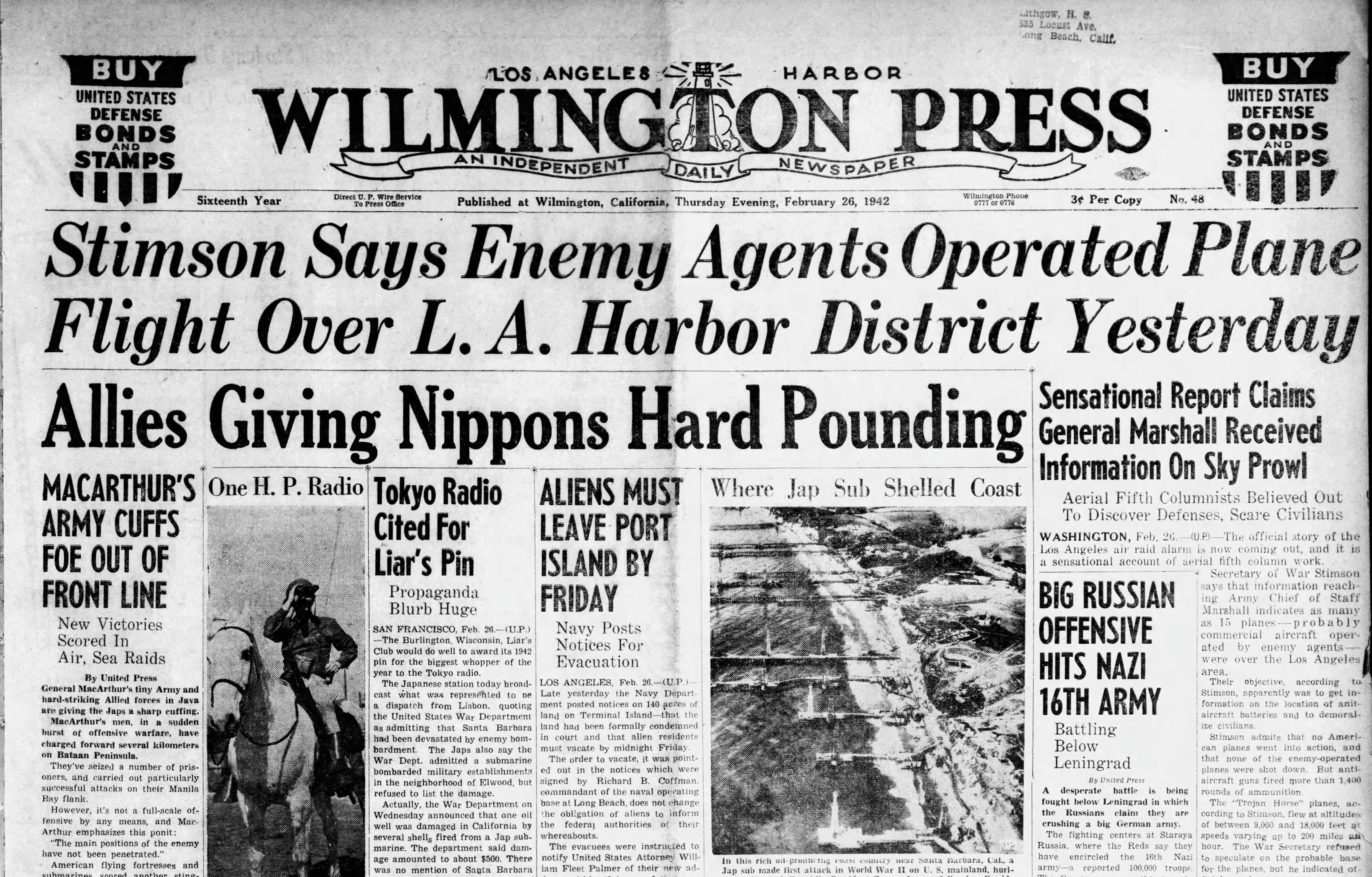
By midday on February 25, the story was front-page news all across the nation. Due to ongoing paranoia and demands of civilians to know more of the air raid that utterly horrified not only the residents of L.A. but every other American, too, Secretary of the Navy Frank Knox held a press conference. Knox ultimately admitted that the raid was a false alarm due to “war nerves” and severe anxiety, believed to be further influenced by attempts of physiological warfare to generate extreme paranoia among the people.6
So, what was the 37th Coast Artillery Brigade actually firing against? After the Japanese declared they had no airplanes over L.A. during the war, the U.S. Office of Air Force History concluded in 1983 that the strange lights above Los Angeles on February 25, 1942, were likely due to a meteorological balloon sent aloft at 1.00 am.7 Talk about a false alarm.
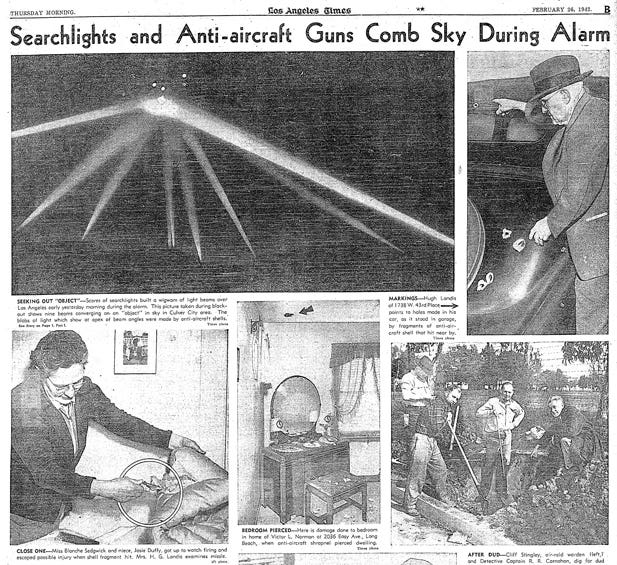
Once photographs of the raid were published in the Los Angeles Times on February 26, however, a plethora of conspiracy theories began emerging. Besides the theory that the U.S. government was hiding the truth to avoid causing further panic by admitting they fought against the Japanese, rumours of a possible UFO visit started gaining prominence. Although readers of the newspaper claimed searchlights were aimed at an UFO spacecraft, it was later discovered that the published images were tampered with and were significantly retouched prior to publishing.8
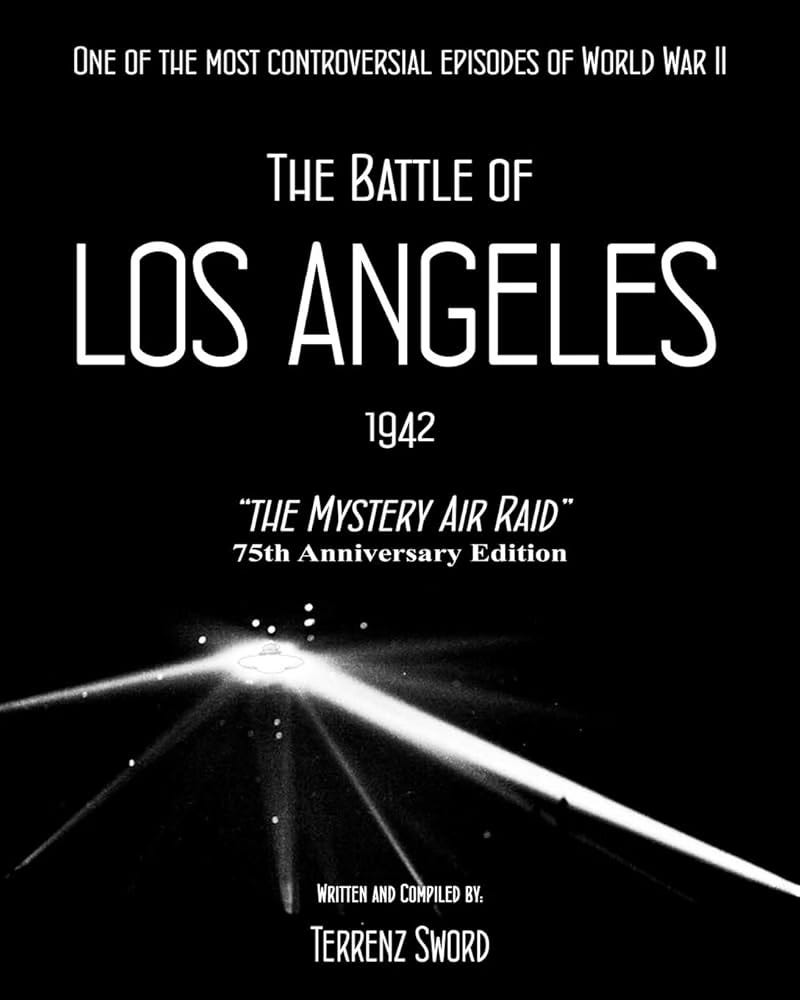
Nowadays, the Battle of Los Angeles is mostly remembered as a prime example of what overreacting gets you: an air raid against a meteorological balloon and nine people dead. In fact, even the name of the event, both of them to be exact, has been given to it derisively by newspapers and media outlets. Still, it’s a sad reminder of how powerful wartime fear and paranoia can influence decision-making in seemingly crucial moments.
The overall reaction of the U.S. military to a supposed attack is not actually farfetched. Having experienced tremendous loss less than three months before due to a, predominately, air attack, the U.S. military was well aware that a densely populated city like Los Angeles might be an attractive target to Japanese forces. So, when Santa Barbara was attacked just a day before, the appearance of strange lights in the sky was a proper cause for concern.
In hindsight, it might seem silly they pulled out the big guns (literally!) to fight against a meteorological balloon that wasn’t attacking in the first place. In the early morning hours of February 25, 1942, however, that reaction was a perceived matter of life or death. For all anyone knew, the Japanese were attacking again and this time 1.5 million people were potentially in grave danger.
Fear, especially when justified by previous negative experiences, is a serious thing. It can make us do the most just to prevent the thing we fear from happening. In wartime America, fear was overwhelming, permeating every aspect of everyday life and contributing to the overall paranoia felt by most. We oftentimes like to think we would’ve reacted differently in a certain situation, but as one Croatian saying states, “lako je biti general nakon bitke”, “it’s easy to be the general after the battle.”
Craven & Cate 1983, pp. 277-286.
Comments
Nothing yet. Say the first thing.
Sign in to join the conversation.