
A few weeks ago, I covered the fascinating pirate conflict of the early 19th century that helped build and develop the U.S. Navy only twenty-five years following the Declaration of Independence. Although incredibly relevant for establishing the young United States as a force to be reckoned with, the Barbary Wars weren’t the only conflict of the era that completely changed the way the U.S. was perceived by other world powers. Enter: the mostly overlooked but seriously relevant Quasi-War.
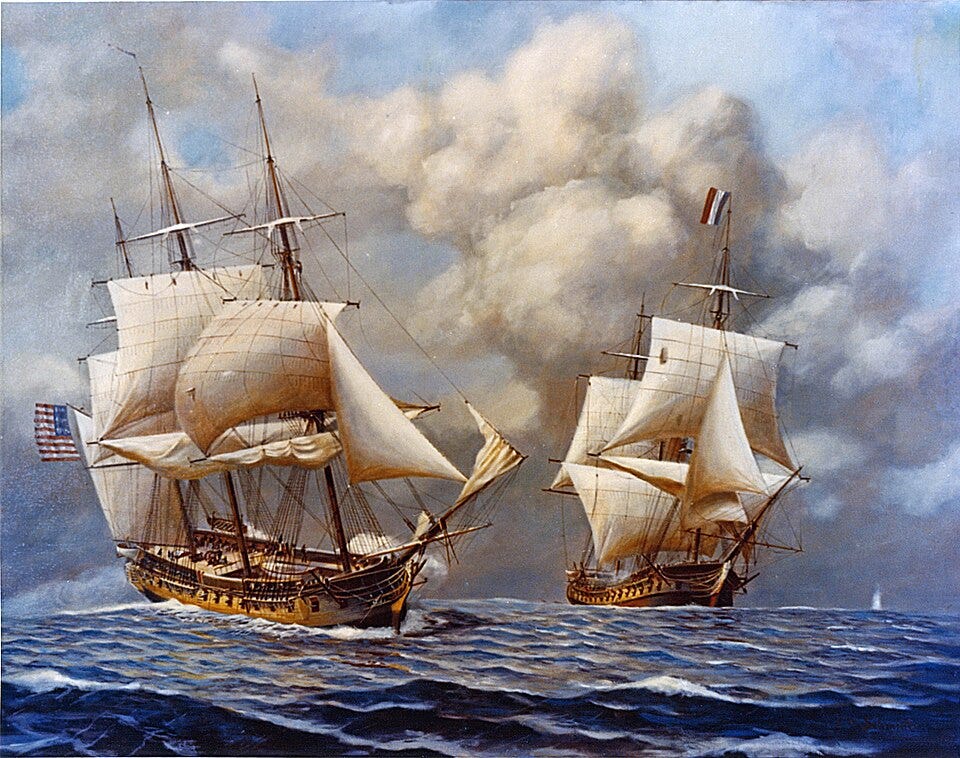
In fact, the Quasi-War, named as such considering it was never an official conflict but rather an undeclared one, began three years before the U.S. ever got involved with the Barbary states, making it the first official foreign conflict the young nation participated in. In effect, the Quasi-War laid the foundation for all future naval battles, including the Barbary Wars. Lest I forget, the Quasi-War is an undeniably captivating part of early American history also because it briefly fought the most famous Frenchman of the 19th century, Napoleon himself.
Okay, the last sentence might be slightly exaggerated but you can’t say it didn’t catch your attention. So, how did the U.S. even find itself in an undeclared war against Revolutionary France? Well, it all started with the American Revolution in which France helped quite a bit. In fact, given the French enthusiasm for revolutions and overthrowing monarchies, they were some of the biggest supporters of the American fight for independence. But this later came at a price.
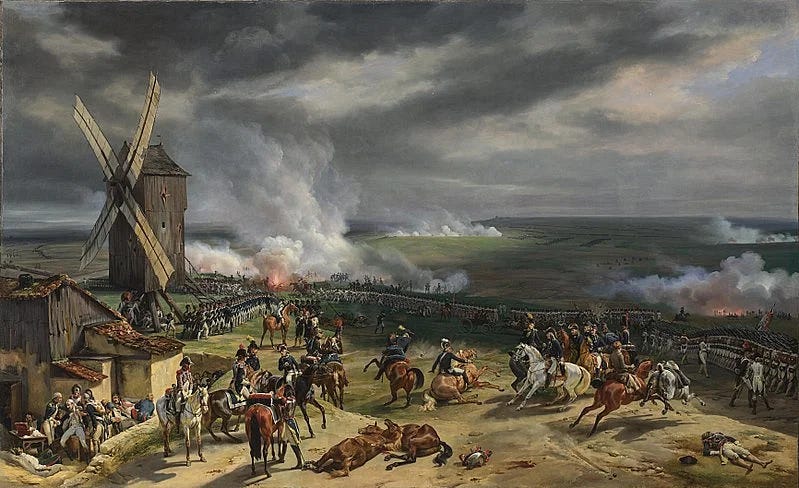
Between 1792 and 1797, France was in the midst of the War of the First Coalition against a number of European states, including Great Britain and the Dutch Republic. Based on the 1778 Treaty of Alliance, the U.S. was to militarily protect the French West Indies, where France and Great Britain fervently fought during the War of the First Coalition, if a foreign power was to attack them in exchange for the French support in the American Revolution.1 Problems arose in 1793 when President George Washington issued the Proclamation of Neutrality, declaring the U.S. would not involve itself in European conflicts.2 And this is when things started spiralling.
Still, it wasn’t reason enough to go to an outright war, declared or otherwise. But when the U.S. signed the Jay Treaty with Great Britain in November 1794 which resolved some leftover issues between the two from the American Revolution and improved the overall trade between the two countries, tripling American exports to Britain between 1794 and 1801, things went from bad to worse.3 To say France, who was at war with Britain, was furious would be a serious understatement.
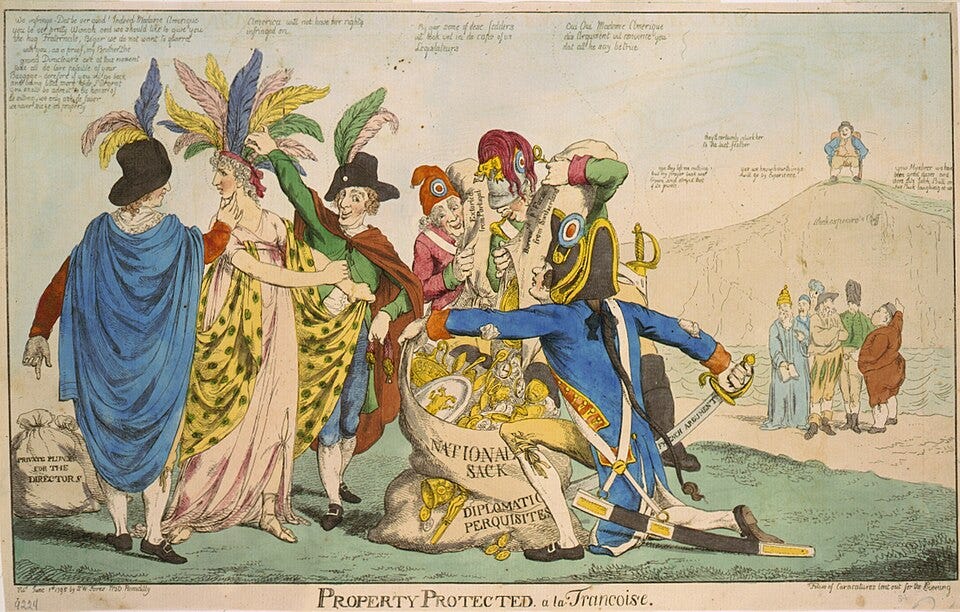
As retaliation, beginning in late 1796, France started seizing American ships that traded with the British. Considering the U.S. had only a small fleet and almost no Navy ships, the French successfully seized six percent of the entire American merchant fleet, causing losses of up to $15 million ($700 million today).4 In an attempt to stop the growing conflict, the newly-elected President John Adams sent three envoys to negotiate with the French in what would later become known as the XYZ affair. In essence, French officials demanded a bribe before they would even begin negotiating and once news reached the U.S., outraged and bewildered, the Adams administration replaced the names of the French intermediaries with the letters X, Y, and Z when publishing the reports, giving the scandal its name.5
The XYZ Affair was the final nail in the coffin that led Congress to authorise the use of force against the French in American waters, but no further. And it’s exactly 228 years ago today, on July 7, 1798, that the Quasi-War “officially” commenced. Still, the conflict remained undeclared and even contributed to an intensification of the rivalry between the Federalist Party, calling for more definitive military action against France, and the Democratic-Republican Party, generally more sympathetic towards the French and against the “militarisation of government.”6
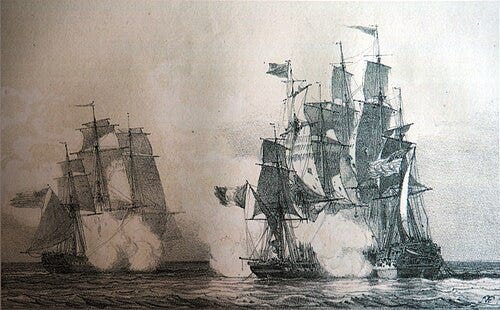
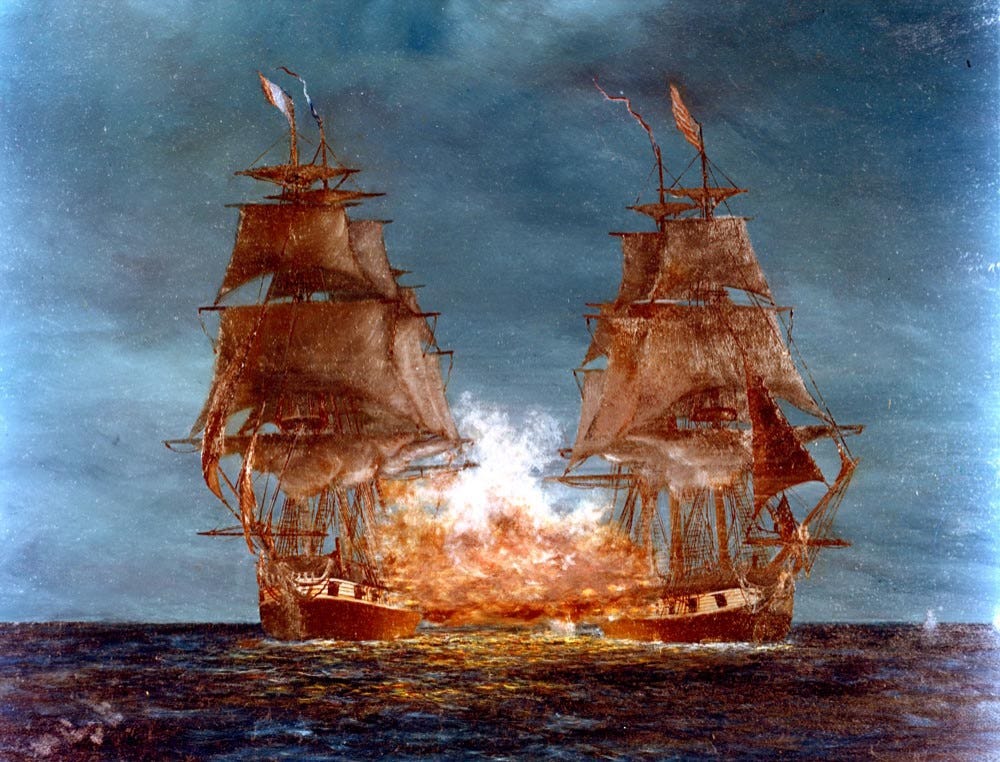
Fought mostly in the Caribbean and off the east coast of the U.S. where the British Royal Navy sometimes operated, Americans formed an unofficial alliance with the British by fighting a common enemy. Alongside six large frigates built for the conflict, the U.S. Navy, established in 1794, enjoyed the help of the so-called “subscription ships”, i.e. privately funded vessels provided by individual cities.7 The first two years of the war were mostly spent in active combat by capturing merchant ships on both sides and an intensification of the conflict in the Caribbean primarily due to trade routes.
It wasn't until Napoleon appeared, however, that the end of the war was on the horizon. Uninterested in continuing undeclared wars overseas and focused on strengthening France’s position in Europe, Napoleon was resolved on putting an end to the Quasi-War as soon as possible. In fact, less than a year after becoming the First Consul, in September 1800, Napoleon’s government signed the Convention of 1800, also known as the Treaty of Mortefontaine, which ended the war and officially dissolved the Franco-American alliance of 1778.8
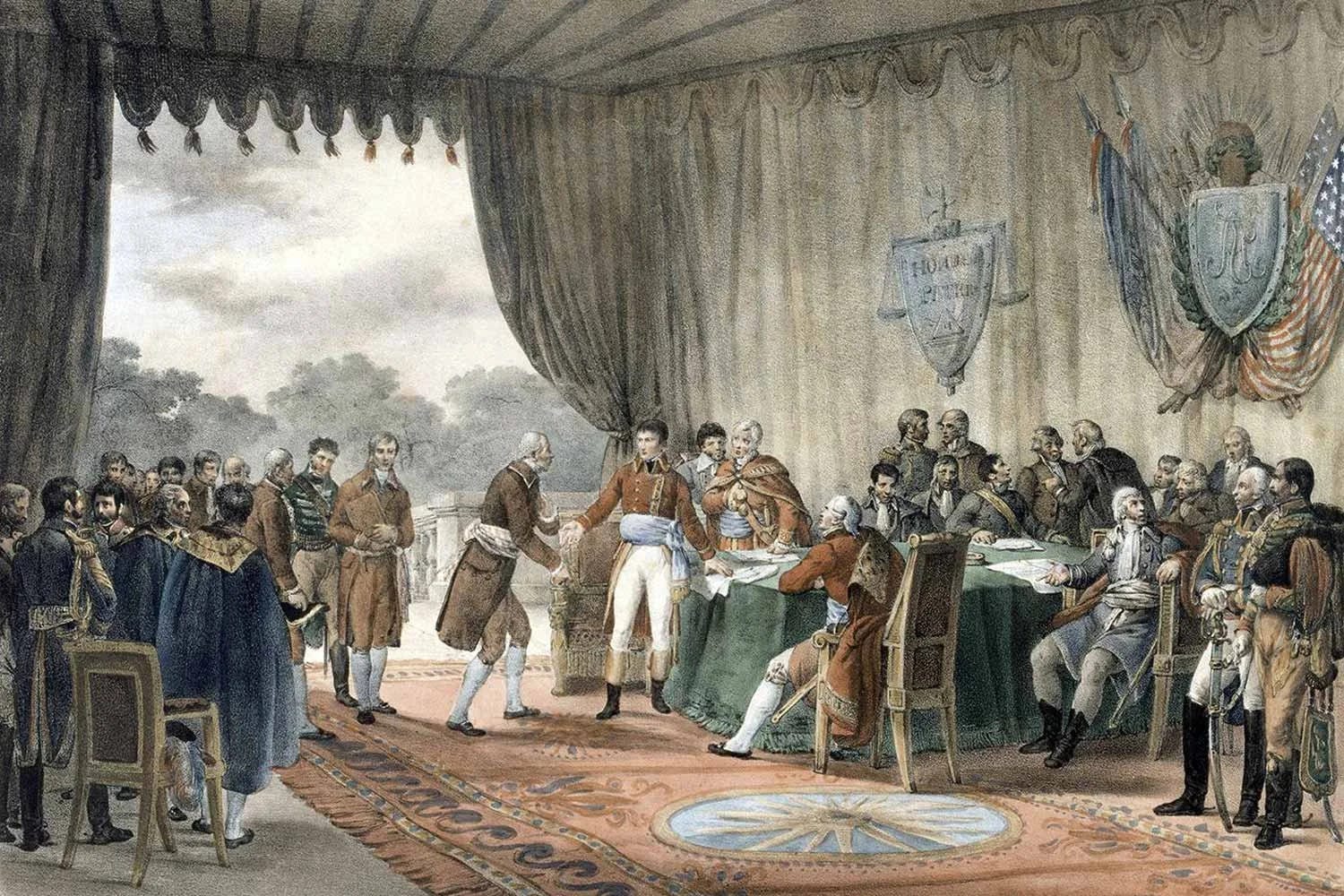
Less than a year later, America would get involved in the Barbary Wars and, in a span of fourteen years, showcase its naval power and capabilities. However, if it weren’t for the Quasi-War, it’s likely that America’s grand campaigns in the Barbary Wars wouldn’t have been as effective and powerful. The invaluable experience the nascent U.S. Navy gained through the Quasi-War was, arguably, the most valuable experience of its early existence, proving the United States were a respectable adversary, even at such an early stage of their life.
A fascinating conflict that combined Revolutionary France, early American history and even Napoleon is, nowadays, just a small footnote in both countries’ histories. Far more relevant for the Americans, the Quasi-War was almost a test for the Barbary Wars and the War of 1812, establishing the U.S. Navy as a formidable force that would only grow as time went on. In a now-or-never situation, the U.S. government went out on a limb and, ultimately, made the right decision by choosing to stand up to the bully that chose to mess with the wrong kid.
There’s something about early American history that’s undeniably fascinating to me. The sheer courage, determination and resolution to act in, sometimes, impossible situations is what helped build the United States we know and love today. It’s the perfect example of the legendary Sir Francis Drake’s quote: “Greatness from small beginnings.” It doesn’t matter how and where you start; it only matters where you finish.
Fehlings 2000, pp. 101–102.
Comments
Nothing yet. Say the first thing.
Sign in to join the conversation.