
A fun fact about me is that I'm fascinated by anything relating to pirate history. It’s likely that my gaming choices influenced this passion. Most notably, Ubisoft’s 2013 Assassins’s Creed: Black Flag and Naughty Dog’s 2016 video game Uncharted 4: A Thief’s End have completely captured me when I played them for the first time. Although real pirate history is rarely as romantic and glamorous as visual media often tends to depict it, the history of these sea raiders lends itself to thrilling tales that still capture the imagination of many.
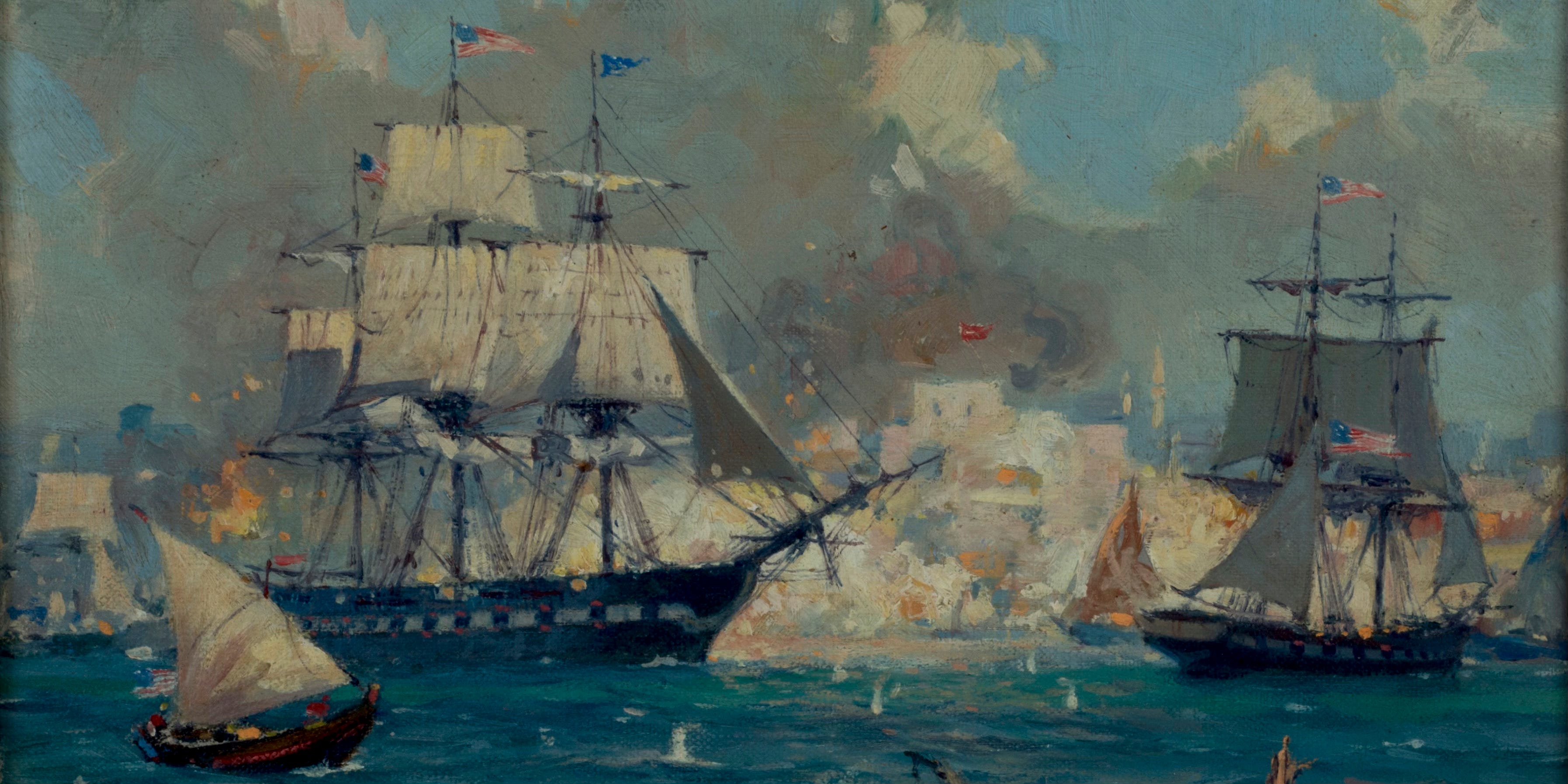
The Barbary Wars, especially the first one, are a prime example of this. A conflict that started out as a military intervention by the U.S. Navy to protect American ships from pirate attacks of the Barbary states turned into a four-year war that transformed the country’s naval warfare. As a recently independent country whose navy was still relatively small and evolving, America’s participation in this conflict brought the country precious experience in foreign combat that shaped their future escapades significantly.
First and foremost, what were the Barbary states? So, between the 16th and 19th century, coastal areas of north and west Africa, primarily the Maghreb area and Ottoman borderlands, were known as Barbary states. The name is derived from an exonym for the Berbers, an ethnic group indigenous to North Africa. Known also as “Barbary corsairs” for their remarkable naval capabilities, the Barbary states were notorious for their slave trade. Most captives were non-Muslims captured during various sea raids that weren’t only happening in the Mediterranean, but also on the Atlantic, as far as Iceland.1
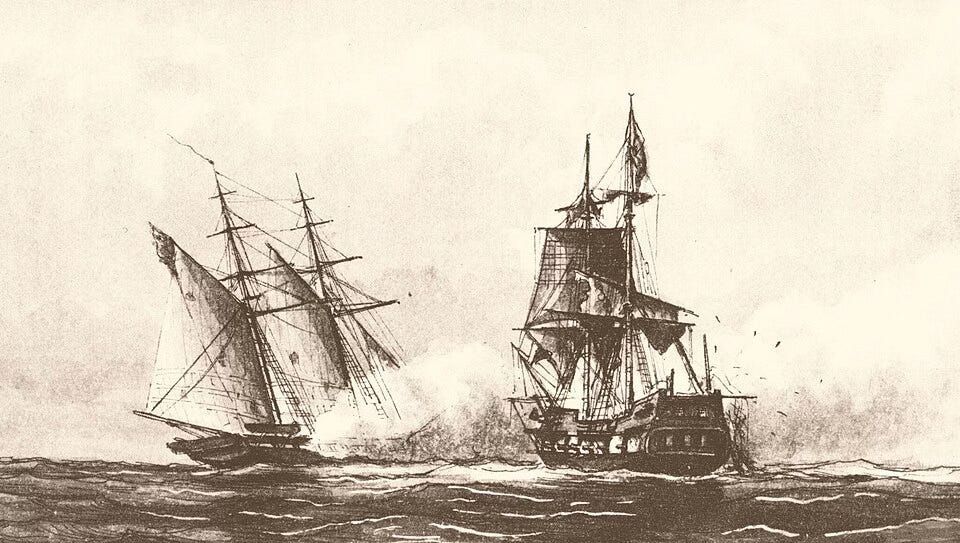
The slave trade is one of the primary reasons why the Barbary wars even took place. By capturing Christians that would be sold into the slave market in North Africa, the Barbary corsairs made many enemies in Europe and, eventually, beyond the continent.2 In fact, Sweden had been fighting against the corsairs since 1800, but it wasn’t until the U.S. joined the conflict on May 10, 1801, that this strife turned into a proper war.
Although the U.S. joined the war only in 1801, America’s relationship with the Barbary states was tumultuous since the end of the American Revolution. Considering American ships were no longer protected by the British Royal Navy following the end of the Revolution, Barbary corsairs soon started attacking American vessels and taking prisoners for the slave trade. This prompted President Washington to authorise the establishment of the United States Navy in 1794 in hopes it would stop the attacks.3 But it wasn’t that simple.
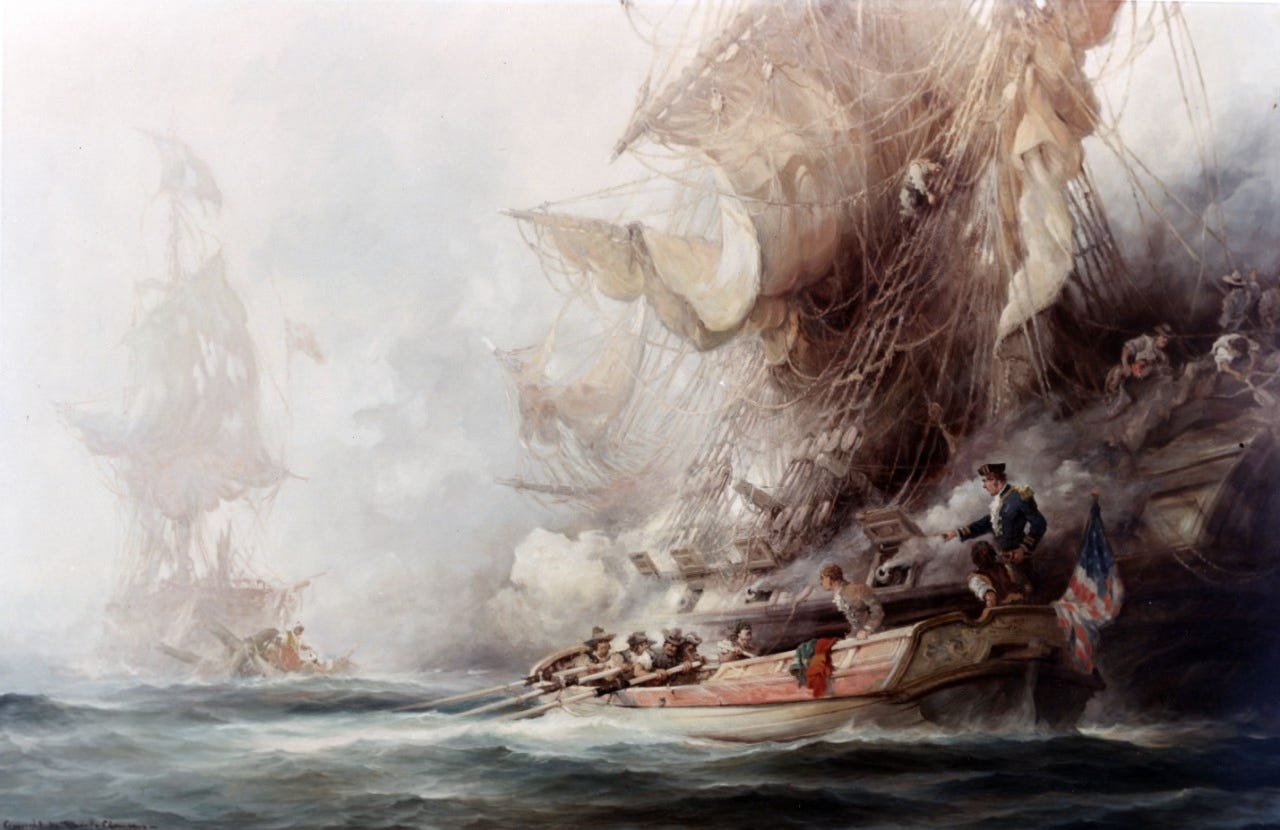
Instead of immediately resorting to a military intervention, for over fourteen years, the U.S. government paid tribute to the Barbary states to leave American vessels in the Mediterranean alone. By 1797, $1.25 million ($32 million today) was paid to the corsairs, but that still didn’t completely stop the attacks.4 With rising domestic pressure for more immediate action, the newly elected President Thomas Jefferson refused to pay further tribute and pushed for naval action. And this is when things began slowly unraveling.
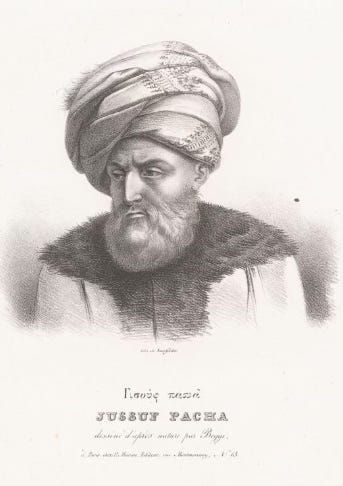
On the day of Jefferson’s inauguration, Yusuf Karamanli, the Pasha of Tripoli, one of the Barbary states, demanded the U.S. pay $225.000 ($4.4 million today) for “consular gifts” - the long-standing tradition of paying tribute to a state to maintain peace once a change in administration takes place.5 Jefferson refused, and this led to Karamanli declaring war on the U.S. on May 10, 1801. Before even knowing the war was declared, Jefferson had already sent three frigates and one schooner to the Aegean Sea. The first battles were well on their way.
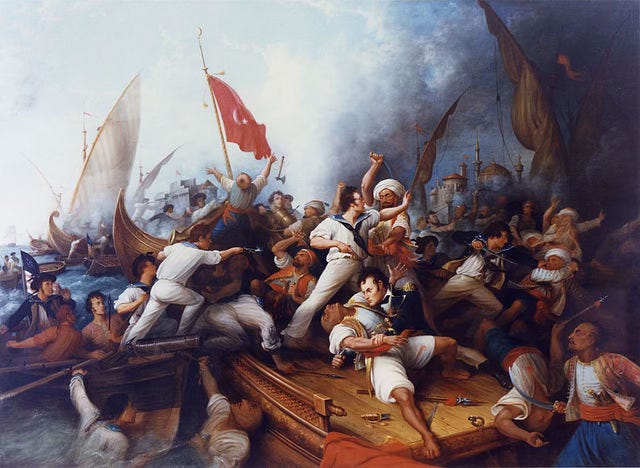
Although there were only a few hundred soldiers at all times in the Mediterranean, the U.S. Navy was already showcasing its strength. Thanks to the help of King Ferdinand IV of the Kingdom of Naples that supplied the Americans with gunboats, manpower and supplies, the American schooner Enterprise defeated the fourteen-gun Tripolitan ship on August 1, 1801.6 Once Congress passed a law in 1802 that officially allowed U.S. ships to attack and capture enemy ships and their goods, twelve more ships joined the Mediterranean fleet.
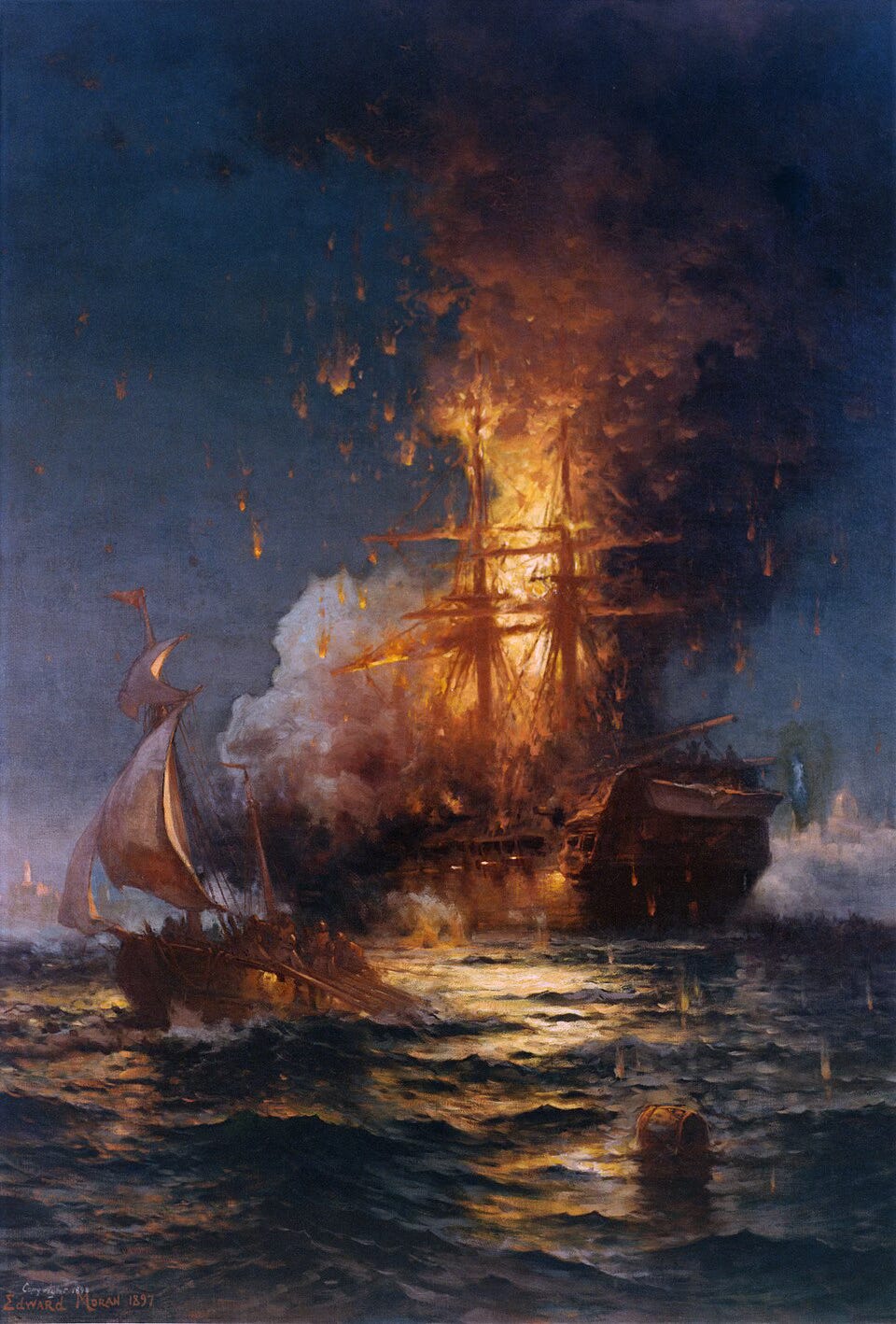
Still, this isn’t to say there weren’t any setback for the U.S. Navy. The most significant one happened in October 1803 when USS Philadelphia was captured and later destroyed by U.S. forces to prevent the enemies from using it as a floating battery for harbour defense.7 Over three hundred U.S. soldiers were taken prisoners, and were only released nineteen months later, following the end of the war. For many historians, the loss of USS Philadelphia was the most significant single defeat for the U.S. in the war.
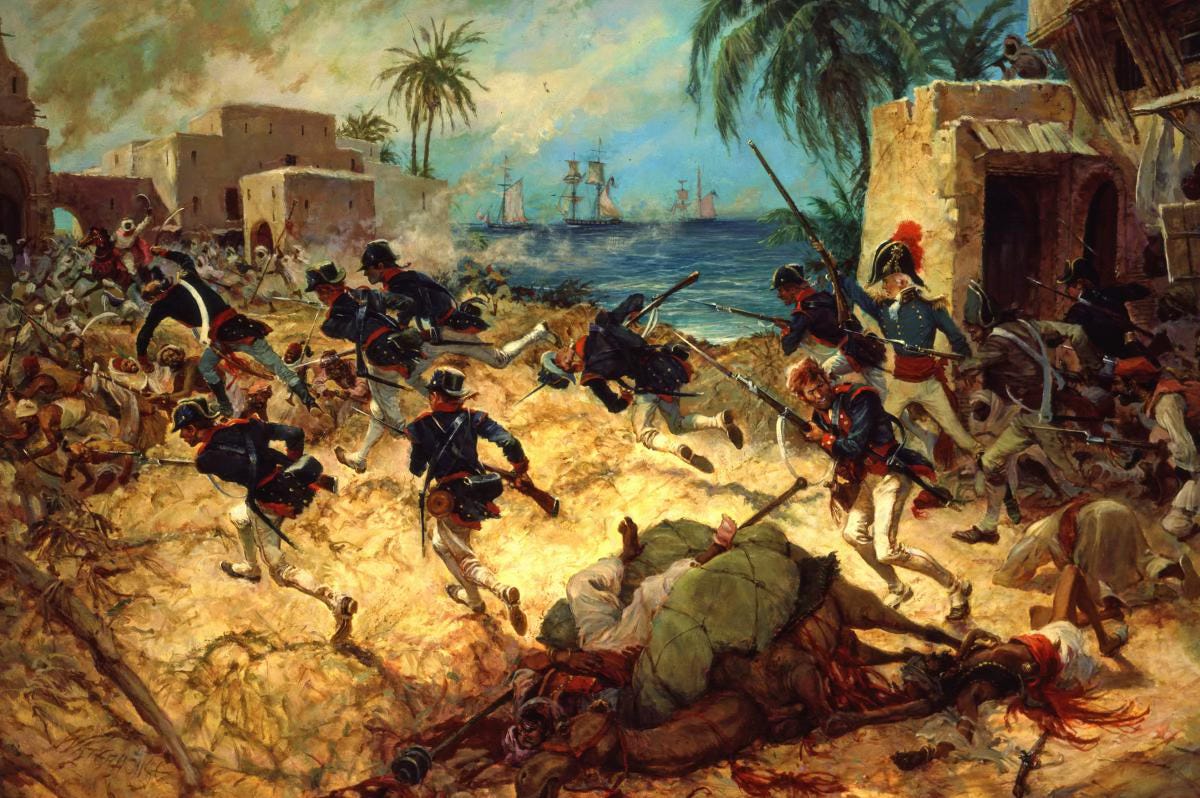
After three years of fighting, the Battle of Derna would come as a hard blow for the Barbary states. General William Eaton and Marine Corps 1st Lieutenant Presley O’Bannon led eight Marines and 500 mercenaries on a march from Alexandria, Egypt to Derna in Tripoli. After a siege and fighting supported by U.S. naval bombardment, Derna fell in May 1804, and the Americans raised a flag for the first time on foreign soil.8
Yusuf Karamanli signed the Treaty of Tripoli on June 10, 1805, signalling the end of the war. Tripoli released American prisoners, the U.S. refused to resume paying tribute to the Barbary states and the two kept things civil until 1815 when Algiers restarted attacking American ships and demanding tribute. The Second Barbary War lasted only two days and resulted in a definitive victory for the United States.9
Besides it being the first foreign war the U.S. participated in, the First Barbary War helped establish the United States as a powerful and capable country that wasn’t afraid of defending its interests abroad. For a 25-year-old nation that was only building its military power, the decision to participate in a naval conflict when the U.S. Navy was only seven years old was certainly not something many others would’ve done.
The Barbary states were a source of fear and dread for centuries. Many powerful European navies tried and failed to defeat them. Until the U.S. arrived and put an end to their terror by 1815. Although they gradually dissolved with the emergence of European colonisation throughout the 19th century, the Barbary states were never again as powerful as they were prior to the Barbary Wars.
Two wars that helped establish the U.S. as a force to be reckoned with are, nowadays, mostly forgotten. Situated temporally between the end of the American Revolution and the War of 1812, the Barbary Wars don’t receive the attention they deserve, especially since their impact on shaping the U.S. into what it eventually came to be was massive. They remain this niche part of American history that sounds almost unreal. You go “wait, the U.S. fought a pirate war in the Mediterranean? No way!” Yes way, in fact. So much so that historians like myself still think and write about them. Gosh, I love my job!
Fremont-Barnes 2006, p. 33.
Comments
Nothing yet. Say the first thing.
Sign in to join the conversation.