
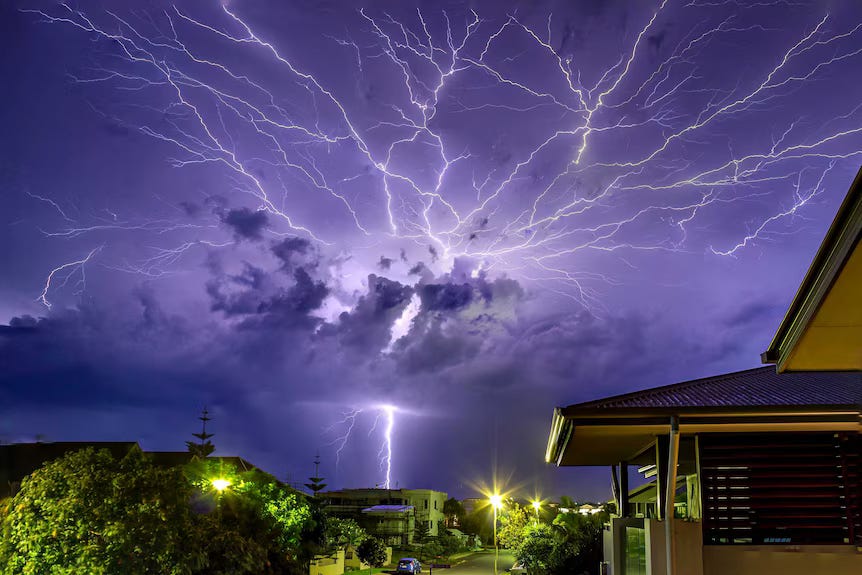
Anyone who knows me is well aware that I’m terrified of thunderstorms. That’s just one of many reasons why summer is my most dreaded season of the year. Besides the unbearably hot weather, mosquitoes and an abundance of cyclists that turn our roads into cycling trails, late-night thunderstorms are something I never look forward to. The thunder never fails to wake me up and disrupt my already feeble sleeping schedule, but I must admit that lightning is a pretty cool thing. For a brief moment, the entire night sky lights up, revealing things you’re only able to see in broad daylight, and this fascination with such a brief and untouchable phenomenon goes back to the very beginning of the human race.
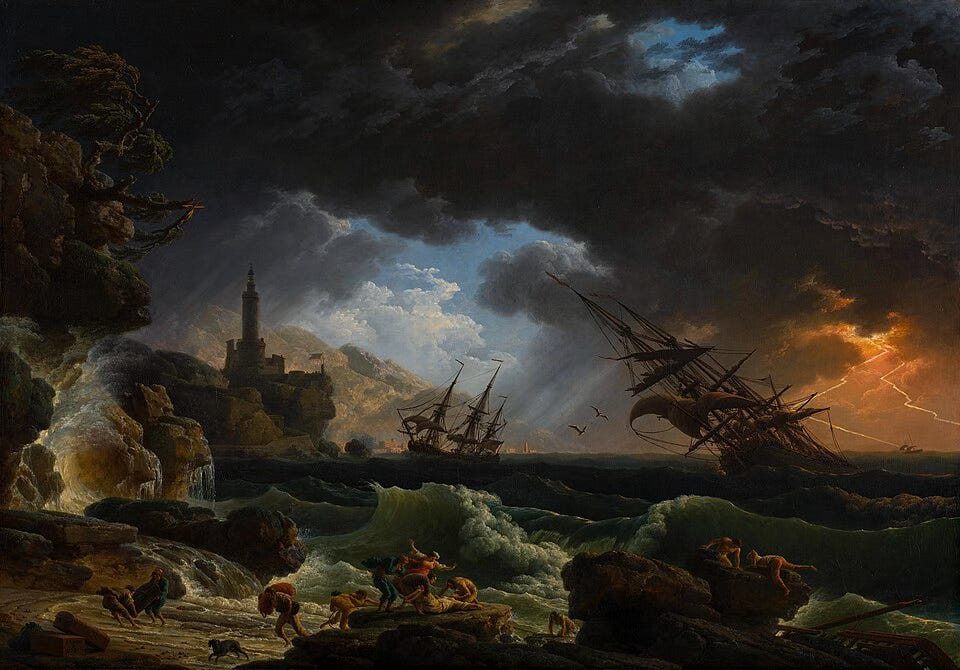
People living during the Early Bronze Age in Mesopotamia, between 3000 and 2000 BCE, were already depicting lightning, and the infatuation with this natural rarity continued throughout history. Leonardo da Vinci, John Constable and Fredric Edwin Church are just some of the artists that attempted to scientifically understand this riveting occurrence by painting it. But it wasn't until an American photographer Thomas Martin Easterly captured the first ever daguerreotype of a lightning strike that the world would finally start understanding a phenomenon that captured the human imagination since the very beginning.
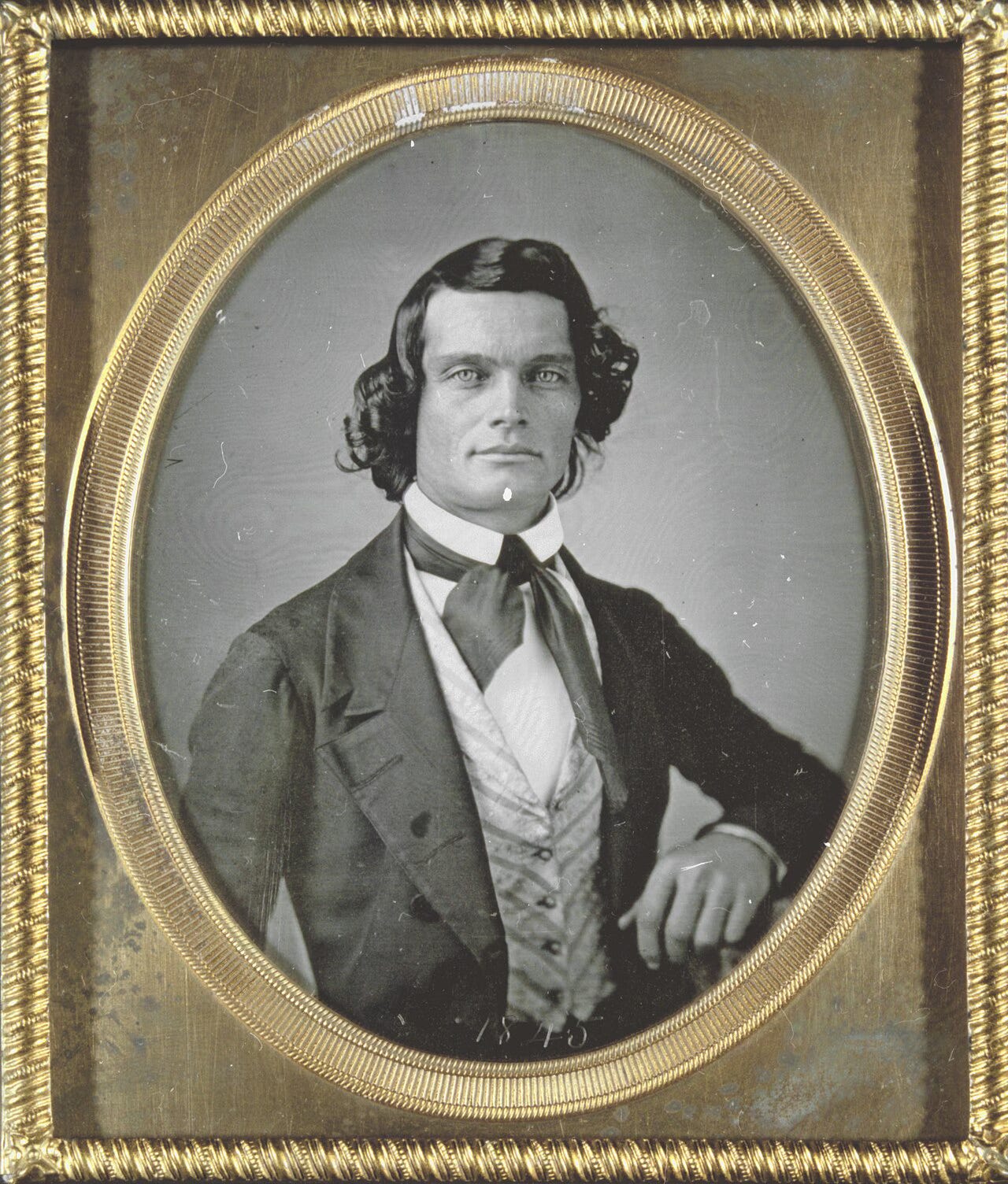
Born in Guilford, VT, in October 1809, Easterly’s artistic tendencies were strong from a young age. He worked as a calligrapher and penmanship teacher in the 1830s, before beginning to practice outdoor photography of Vermont’s most beautiful buildings and sites. By the mid-1840s, the daguerrotype, the first publicly available and commercially successful photographic process, was introduced worldwide by Louis Daguerre, the French inventor.1 Easterly was slowly but surely making his way through the Midwest, gradually establishing himself as one of the most important and influential daguerreotypists of the region in the 1850s.
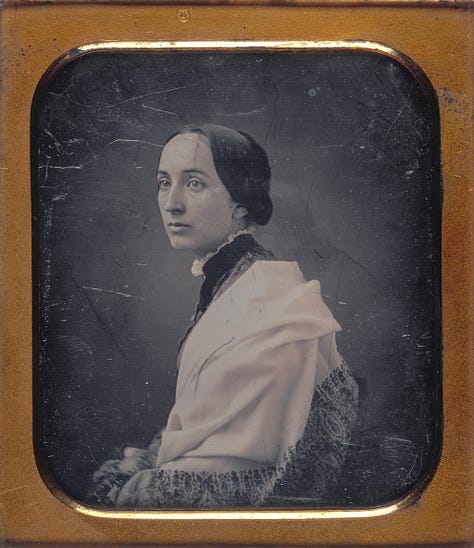
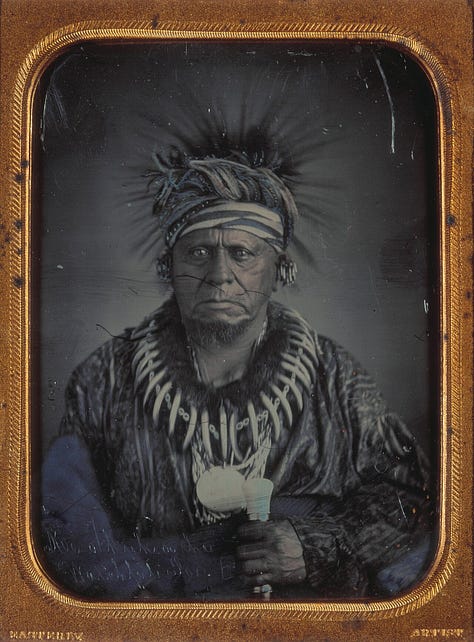
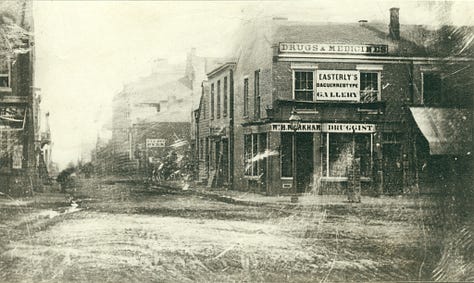
By capturing his family members, various buildings and historical sites throughout the Midwest, Easterly would eventually create one of the biggest collections of daguerrotypes by a single photographer in the U.S. Even before capturing the photo he’d become known for, Easterly built a respectable career and established himself as a prolific artist who had a knack for capturing people and moments. When he, however, made a daguerrotype of a lightning strike during a storm on June 18, 1847, in St. Louis, MO, his place in history books was guaranteed.2
Here’s the thing, though. Technically, Easterly is the first person to ever capture lightning in a photograph, but he tends to be somewhat forgotten thanks to the fact that the original photograph was lost and we’re only left with a copy of the daguerreotype. So, though his June 1847 daguerreotype of a lightning strike changed the way science studied and understood lightning, most people remember William Nicholson Jennings as the author of the first photo of a lightning, taken in September 1885.3
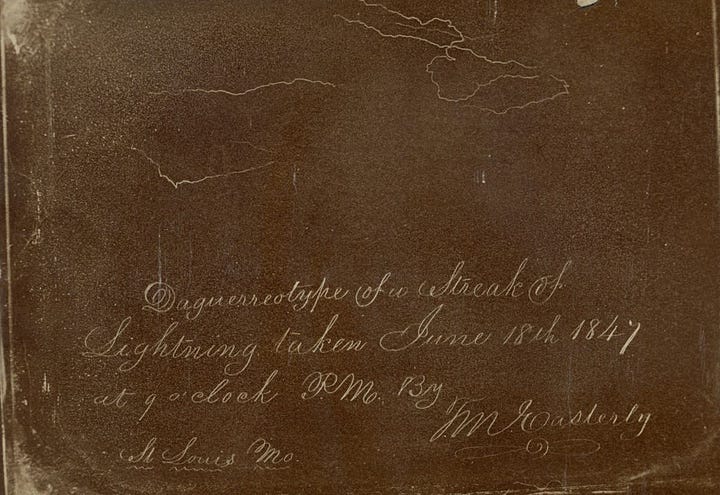
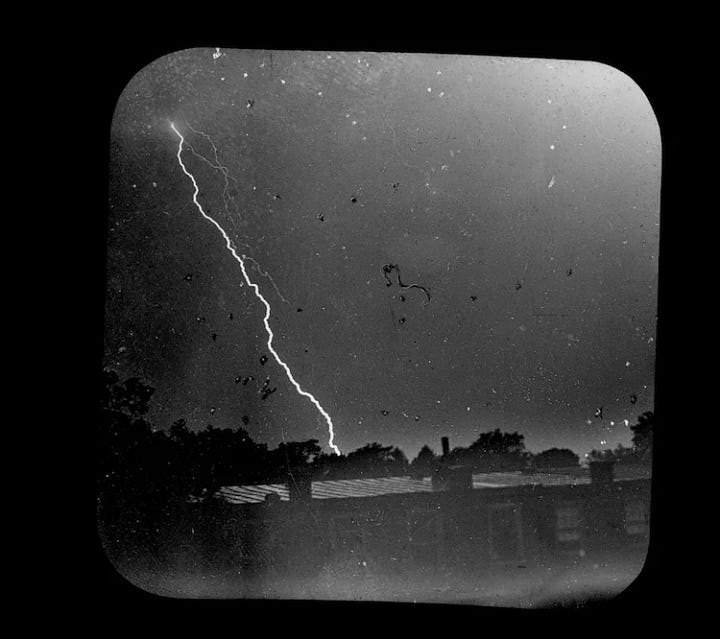
The important difference between the two is the fact that the photographs were taken in different ways, almost forty years apart. Easterly produced a daguerrotype; as one of the most difficult and cumbersome photographic processes of the 19th century, the photograph was made by exposing a polished silver-coated copper plate to light in a camera, then developing the image with mercury vapour and permanently fixing it with chemicals.4 Jennings, on the other hand, set up a camera with long exposure pointed at the sky and waited for a lightning strike, before he developed the image chemically from the glass negative.5
Although Easterly is, nowadays, mostly an obscure part of American history, his extraordinary achievement directly influenced Jennings who, technically, did the same thing forty years later with a more advanced camera. But Easterly’s photograph isn’t only groundbreaking technologically. His lightning daguerreotype was proof that America was moving fast with the times. A country that was yet to face the horrors of the Civil War was already achieving something scientists had been dreaming of. The era of understanding nature’s magic was before them.
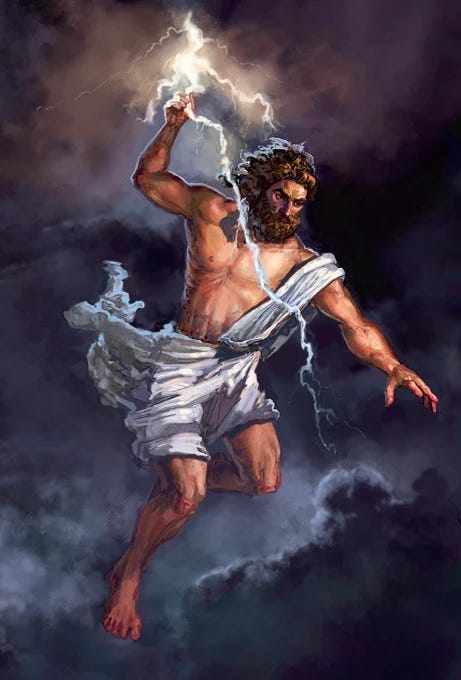
Easterly’s snapshot also changed the relationship between humans and nature. Since the beginning of time, lightning was considered, by many, a sign of a deity or a deity in and of itself. In fact, Greek, Slavic, Norse, Finnish and Incan mythologies all possess deities associated with lightning. In Greek mythology, Zeus was gifted a lightning bolt (also thunderbolt), considered to be the most powerful weapon, by the Cyclopes as a sign of his supremacy.6 For ancient Etruscans and different African tribes, lightning was a sign of god’s anger and a way to interpret events or predict future. This is usually known as ceraunoscopy, a divination technique that uses lightning to interpret specific occurrences.7
In a way, Easterly put an end to the mystery behind lightning. His photograph didn’t eradicate previously established beliefs in general, but it did transform this fascinating natural phenomenon into something that is scientifically and meteorologically measurable and explainable. The powerful, swift and impressionable anomaly that fascinated people for thousands of years turned into nothing more than a result of atmospheric conditions, now captured on film.
Thomas Martin Easterly is also proof how history remembers some, but forgets others. A man whose astounding achievement inspired generations of photographers, scientists and artists is now almost fully forgotten, save for some niche-loving historian on Substack that’s attempting to do his work and legacy justice. And by god do I hope I did so.
In all seriousness, as someone who has taken many photos of a brewing thunderstorm over the years, I’m ashamed to admit I never thought twice about learning more about the person who first did what I do every three to five business days every summer. It’s funny to think about it, but something that both fascinates me and terrifies me at the same time, AKA lightning and the ensuing thunder, had been having the exact same effect on billions throughout history, including Easterly, obviously.
Thanks to people like Easterly and Jennings, science and our overall understanding of atmospheric phenomena has evolved immensely, and yet, we still marvel at the same things that a Greek scholar might have marvelled at while Plato walked the streets of Athens. All of that to say that we move with the times, but the human ability to find beauty and wonder in something that’s been here far longer than we have is nothing short of magical.
Gomes & Gomes 2014, pp. 1909-1918.
Comments
Nothing yet. Say the first thing.
Sign in to join the conversation.