
This week, the AI search story got more practical and a lot less shiny.
People are using AI more. They are also trusting it less. For local businesses, that means the goal is not to abandon Google or chase every new AI trick. The goal is to become easier to verify everywhere a prospect might look before they call.
Why Google is still the default for local searches, even as AI usage rises
What ChatGPT, Claude, Bing, and Google are teaching us about AI visibility
How local SEO is changing after Google I/O
Why one Reddit PPC thread should scare anyone running ads without call tracking
Quick wins on agentic search, AI sentiment, competitor gaps, Meta campaigns, ranking volatility, and content quality
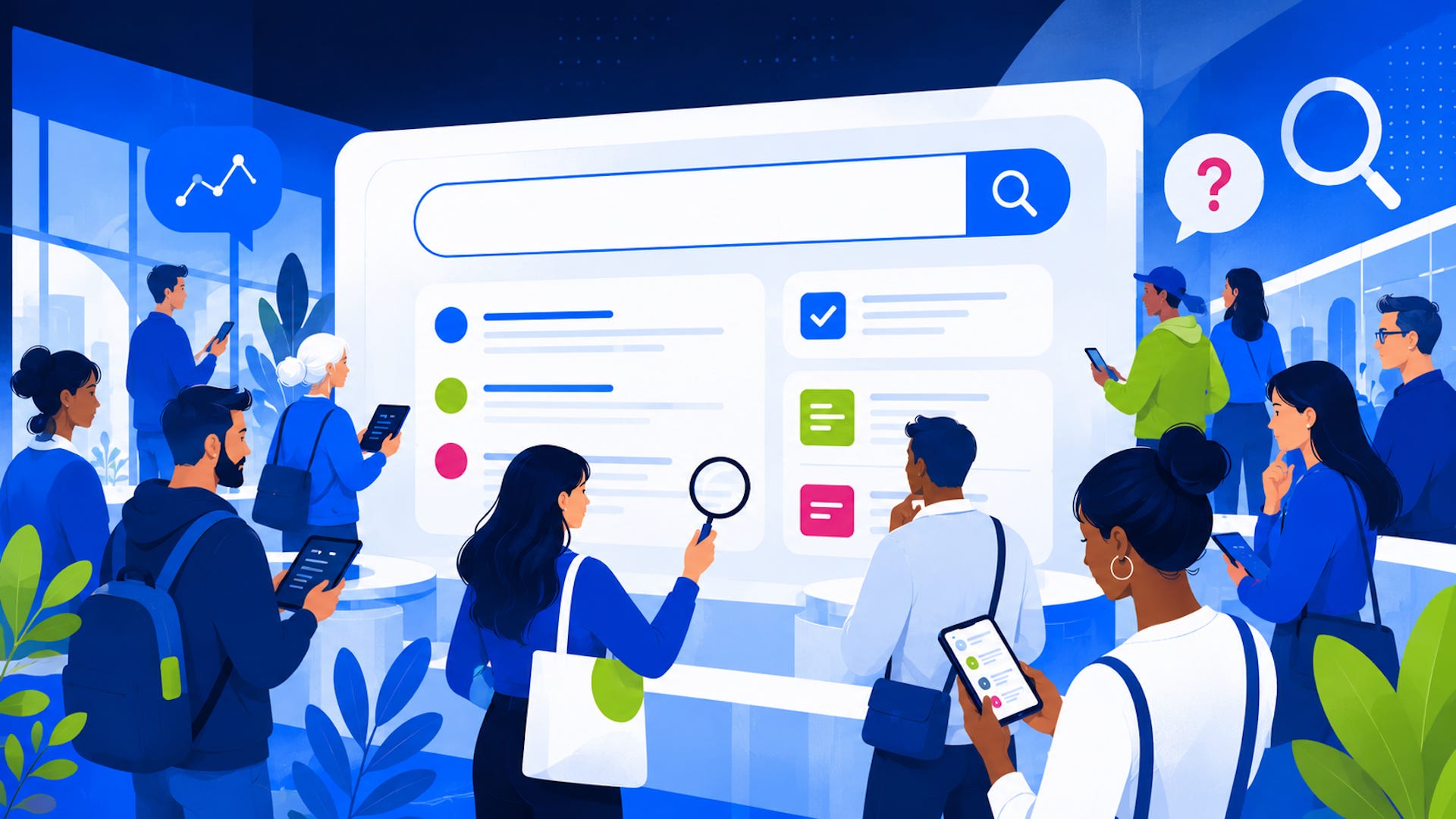
Search Engine Land reported that 70% of consumers are using AI tools for search more than they did last year. That sounds like the whole story until you see the trust side. A year ago, 82% of consumers said AI-powered search was more helpful than traditional search. In 2026, that dropped to 54%.
That is the part local businesses need to sit with.
AI is becoming a discovery layer, but it has not replaced the places people already trust. In the same study, Google remained the first stop for local business searches at 74%. For health questions, Google was also first at 55%, while ChatGPT had become the second-most-used option at 26%.
So the customer journey is not “Google versus AI.” It is Google, AI, reviews, Reddit, YouTube, maps, your website, and whatever else the prospect checks before they decide who feels safest to call.
The Real Reason This Matters:
Local customers still use Google when the decision has real stakes.
AI tools are shaping opinions before some visitors ever reach your site.
Trust signals now have to be consistent across your website, Google Business Profile, reviews, directory listings, social profiles, and third-party mentions.
Key Takeaway: AI search is not killing local SEO. It is making trust more distributed.
Action Step: Search your business category in Google, ChatGPT, Gemini, and Perplexity. Ask the same question a prospect would ask, like “best med spa near me for acne scars” or “primary care open now in [city].” Track who appears, what proof gets cited, and what each platform seems to trust.

Search Engine Land’s breakdown of seven AI search shifts had one takeaway that matters for local businesses: there is no single AI visibility playbook.
The article cites Profound data showing ChatGPT and Claude share only about 8% of their citations for the same queries. ChatGPT leans harder into community content like Reddit, Quora, and forums. Claude leans more into listicles, opinion content, and pages that already show up in traditional Google results.
That means a business can be visible in one AI engine and almost invisible in another.
The Real Reason This Matters:
If your only strategy is ranking service pages in Google, you may miss ChatGPT-style community discovery.
If your only strategy is Reddit mentions, you may miss engines that still lean on traditional search results.
Local visibility is becoming a portfolio of signals, not a single ranking.
Key Takeaway: “AI visibility” is not one channel. Track it by engine and by query type.
Action Step: Pick your five most profitable services. For each one, check whether you appear in Google, ChatGPT, Claude, Gemini, and Perplexity. Note which sources each tool uses when it recommends competitors.

Search Engine Journal covered three Google Ads bidding and budgeting updates: Smart Bidding Exploration is now global, Promotion mode is entering beta, and Google is changing backend optimization for budget-limited campaigns starting August 17.
The common thread is simple. Google wants more flexibility to find incremental volume and smooth performance when budgets change.
That can be useful. It can also get expensive if your account treats every form fill and phone tap as a win.
The Real Reason This Matters:
Smart bidding works best when the conversion signal reflects real business value.
Budget increases can trigger short-term recalibration and reporting noise.
Local accounts need offline conversions, qualified-call rules, and clear lead stages before scaling automation.
Key Takeaway: More flexible bidding is not the same thing as better leads.
Action Step: Before raising budgets, define what counts as a qualified conversion. Use call duration, booked appointment data, CRM stage, or offline conversion imports wherever possible.
BrightLocal’s Google I/O 2026 SEO recap is worth reading because it brings the AI search conversation back to practical SEO work.
For local businesses, the important shift is not that every search result suddenly changes overnight. It is that Google’s AI features keep pulling from a wider mix of structured pages, business data, reviews, helpful content, and entity signals.
That raises the bar for boring fundamentals.
The Real Reason This Matters:
Thin service pages give AI systems less useful context.
Incomplete Google Business Profiles create trust gaps.
Reviews, FAQs, services, hours, photos, and local proof all help machines understand who you serve.
Key Takeaway: The AI search future still runs on local SEO basics, but the basics need to be cleaner.
Action Step: Pick one high-value service page this week. Add clearer service details, local proof, FAQs, internal links, and a direct path to call or book.
Spicy Take
🌶 Automation Without Tracking Is Just Faster Waste
A fresh r/PPC thread about a broken Google Ads setup for a trade-based service client should be required reading for local advertisers.
The account was running multiple location campaigns, broad match, Maximize Conversions, and no tracking pixel. One campaign had 2,500 impressions and 3 phone calls. Another spent nearly $200 on 5 clicks. A third campaign would not serve because conversion tracking was incomplete.
The comments all circled the same problem: the bidding strategy was being asked to optimize without a real signal.
The spicy take: most local ad waste is not caused by Google being mysterious. It is caused by businesses giving Google vague goals and then acting surprised when the machine finds cheap, messy activity instead of qualified demand.
Key Takeaway: Before you test broader match types, AI Max, PMax, or bigger budgets, fix conversion tracking. Calls, forms, booked appointments, and junk leads need to be separated.
Search Engine Land covered a study showing ChatGPT product recommendations changed 80.2% when search was turned on. The local version: what AI says about you may change depending on whether it is pulling fresh web sources.
Semrush published a guide to optimizing for the agentic web. Service businesses should pay attention to crawlability, clear offers, forms, booking paths, and structured information.
Semrush also updated its guide to finding competitor keywords and visibility gaps. The useful takeaway is to look beyond keyword tools and inspect where competitors are mentioned in AI answers, forums, reviews, and comparison content.
Semrush’s AI sentiment analysis guide makes a practical point: AI platforms can repeat inaccurate or negative narratives about a brand. For local businesses, reviews and third-party mentions are part of reputation management now.
Jon Loomer asked how many Meta Ads campaigns you should run. The short version: do not split campaigns because the account looks more organized. Split only when budget, objective, audience, or learning needs justify it.
Search Engine Journal argued that publishing more content can hurt SEO when it creates overlap and weak semantic focus. Local businesses usually need better service and location coverage, not a pile of generic blog posts.Get Ahead of the AI Shift
This week’s issue has one clear thread: visibility is spreading across more surfaces, but trust is still the deciding factor.
If your calls are hard to track, your reviews are thin, your service pages are vague, or your Google Business Profile is incomplete, AI will not magically fix that. It will just make the weak spots easier to notice.
“Help Me Get More Leads” Call with Justin: In 15 minutes, Justin will give you a practical, no-pressure assessment of what is helping or hurting your lead flow and what to fix next.
👉 Book Your "Help Me Get More Leads" Call
Thanks for reading Local Marketing Minute! This post is public so feel free to share it.
Comments
Nothing yet. Say the first thing.
Sign in to join the conversation.