
This is a really interesting read, especially in the context of OpenAI’s reported proposal to hand the U.S. government a 5% equity stake.
This time last year I was in Paris for a few days and you couldn’t swing a cat for all the American tourists. This time around, there is almost too much space for cat-swinging. Maybe it is the World Cup in North America, maybe it is sentiment driving it, or maybe the heatwave in Europe, combined with the notable absence of air conditioning units, is enough of a deterrent to dissuade visitors. Either way, it suits me. I have plenty of aforementioned cat-swinging to get done, although the lack of air conditioning does mean I operate under a persistent glaze of sweat for all of it.
One excuse not garnering much airtime this go-round is the exchange rate. And why would it? EUR/USD, at roughly 1.15, sits almost exactly where it did this time last year, despite a cacophony of noise surrounding the potential for the dollar’s demise. I still firmly sit on that bandwagon, but for all intents and purposes, the euro has been consolidating in a prolonged 1.13–1.20 range for the best part of a year and a half now, with little headway made in either direction.
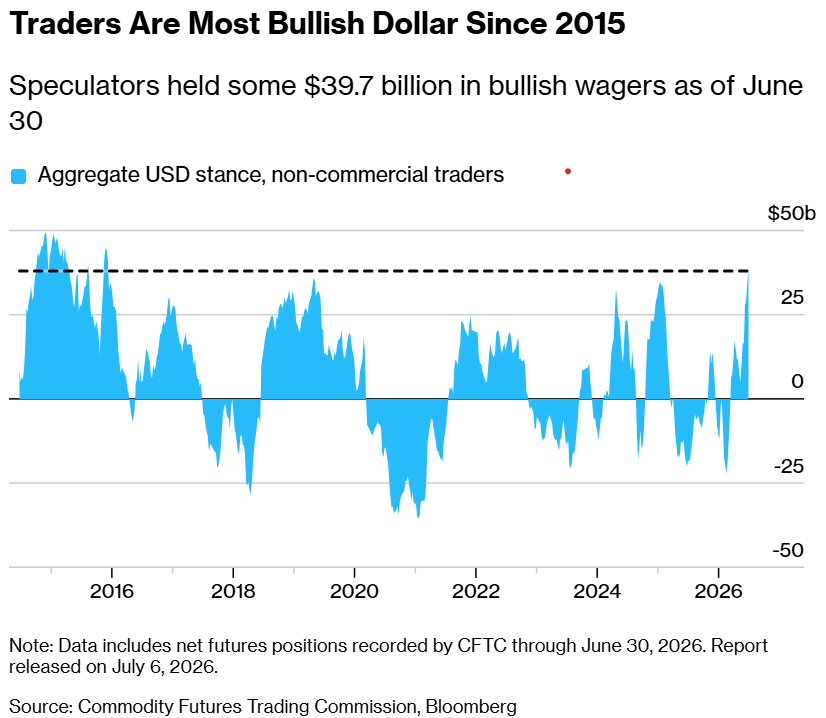
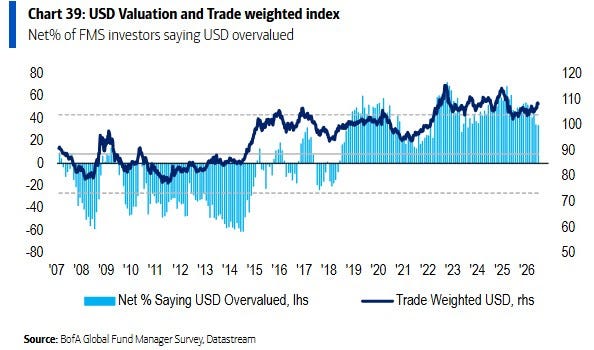
Short positioning never got that stretched in aggregate dollar terms, but the market was certainly quite long euros earlier this year when the hype surrounding the end of the dollar’s hegemony was at its loudest. That has recently flipped, as higher inflation, combined with the ongoing resilience of the U.S. economy, has led the market to begin pricing interest-rate hikes from the Fed in the coming months. Bets on a stronger dollar at the end of June were among the most stretched in years, and all this despite the Bank of America fund manager survey indicating a consensus view that the currency is “overvalued,” whatever that might mean.
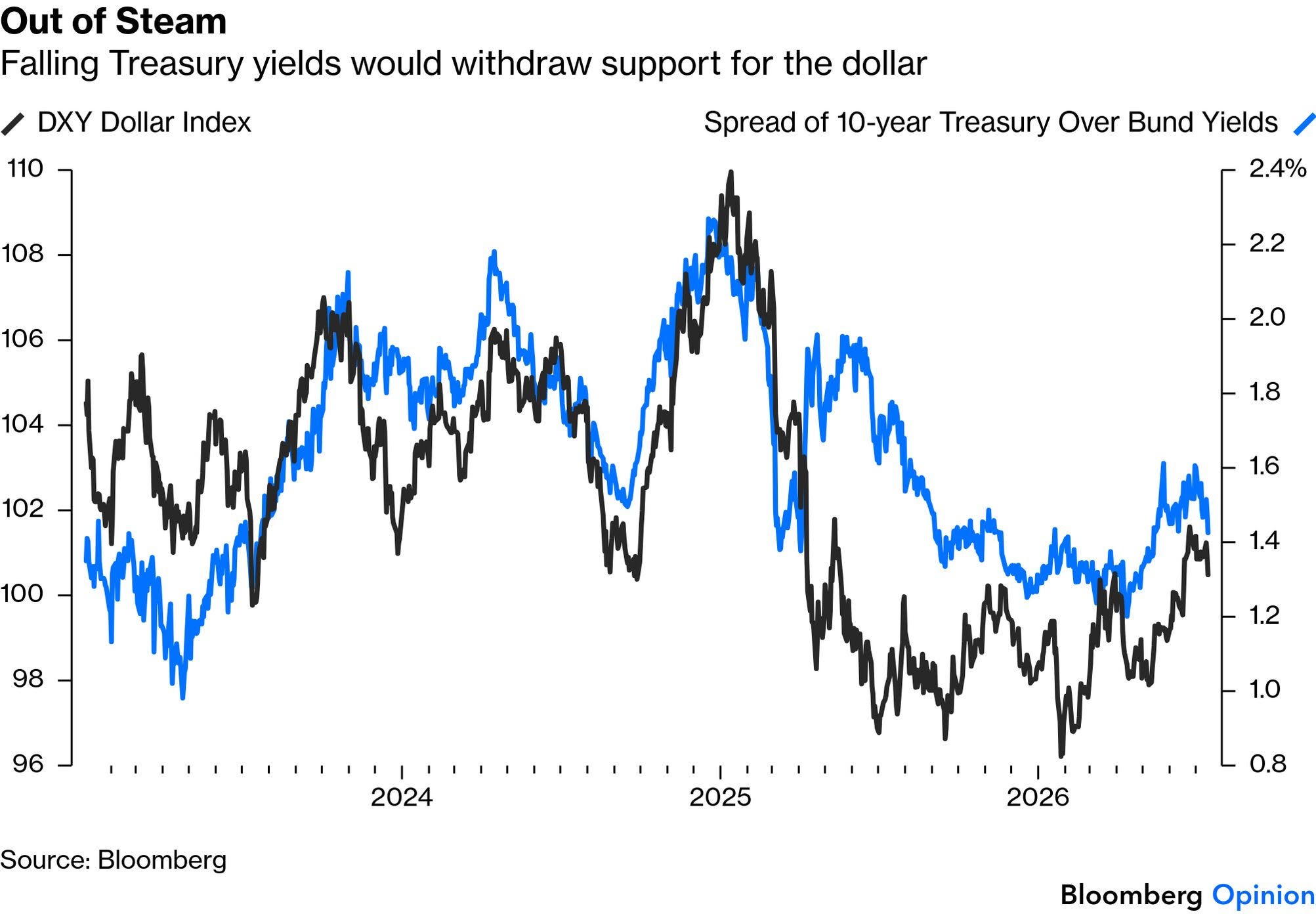
As we discussed a few weeks ago, I think the overly hawkish read into Kevin Warsh’s first FOMC announcement has been exaggerated, and I firmly believe any excuse for him to flip back dovish will be seized upon swiftly, if only to appease and avoid the ire of his boss. This week’s inflation print was an opportunity to do just that, and it led to a meaningful move lower in both the dollar and U.S. interest-rate expectations. The issue going forward is that, with tensions flaring up once more in the Strait of Hormuz, elevated oil prices will likely keep inflation readings higher than they would otherwise be and limit the Fed’s ability to become overly dovish. I don’t necessarily think rate cuts are imminent; the point is more that hikes (in my opinion) are not happening, and most definitely not before the midterm elections in November. With this in mind, positioning still long dollars, and the euro at the low end of the range, it is starting to look like there is a trade down here.
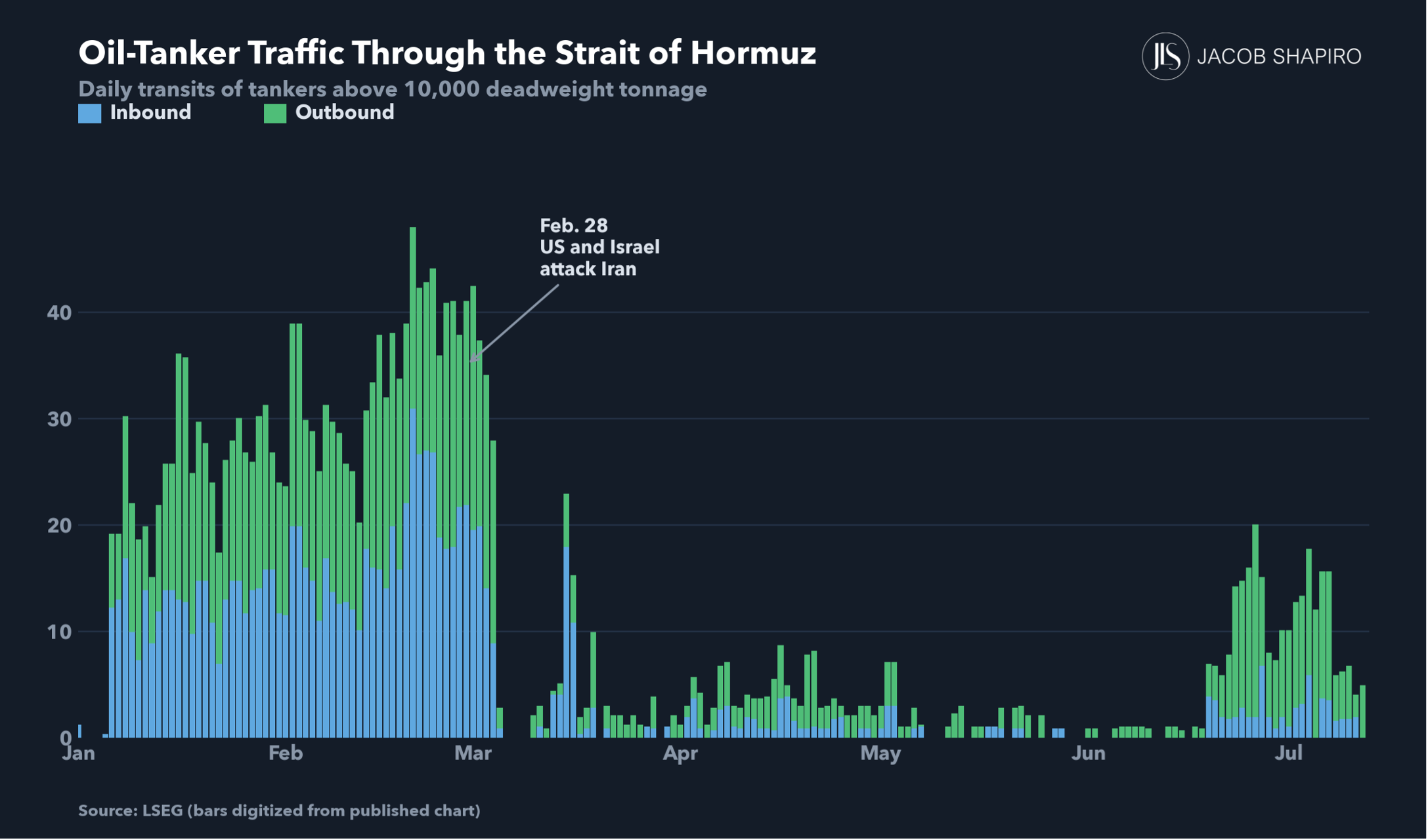
Back in March, everything became an oil trade of sorts, and while idiosyncrasies have re-emerged, there is still something to be said for the overwhelming influence oil has across markets because of its feed-through into inflation and the resulting policy implications. I encountered an interesting take on the state of play in the Middle East which I think tends to make a lot of sense. It is arguably reductive, but generally this suits me. The idea is that tensions, escalations, de-escalations, and the persistent tit-for-tat can essentially be predicted by movements in the oil price. If we are sitting down in the $60s or low $70s, both sides are “happy,” to a certain extent, to resume the stone throwing. As soon as oil starts to make its way back toward $100, the likelihood of de-escalation increases as inflationary pressure pick back up and the squeeze on the consumer the world over intensifies.
Much of the support for the dollar has come from the incredible inflows into U.S. equities, despite all the de-dollarisation talk. Over the 12-month period ending in mid-2026, net foreign purchases of U.S. equities reached $909 billion, and in May 2026 alone, overseas buyers picked up a net $134 billion in U.S. stocks. Compare this with roughly $304 billion for all of 2024 and the corresponding figure for 2025 of roughly $720 billion. In the 1990s, foreigners owned little more than maybe 7% of U.S. equities. Today, that figure stands closer to 18% of the entire market. The reality is that, outside of a few less straightforward, less liquid, or more domestically idiosyncratic markets, such as Korea, if you want access to the AI trade, the U.S. equity market is still the only game in town.
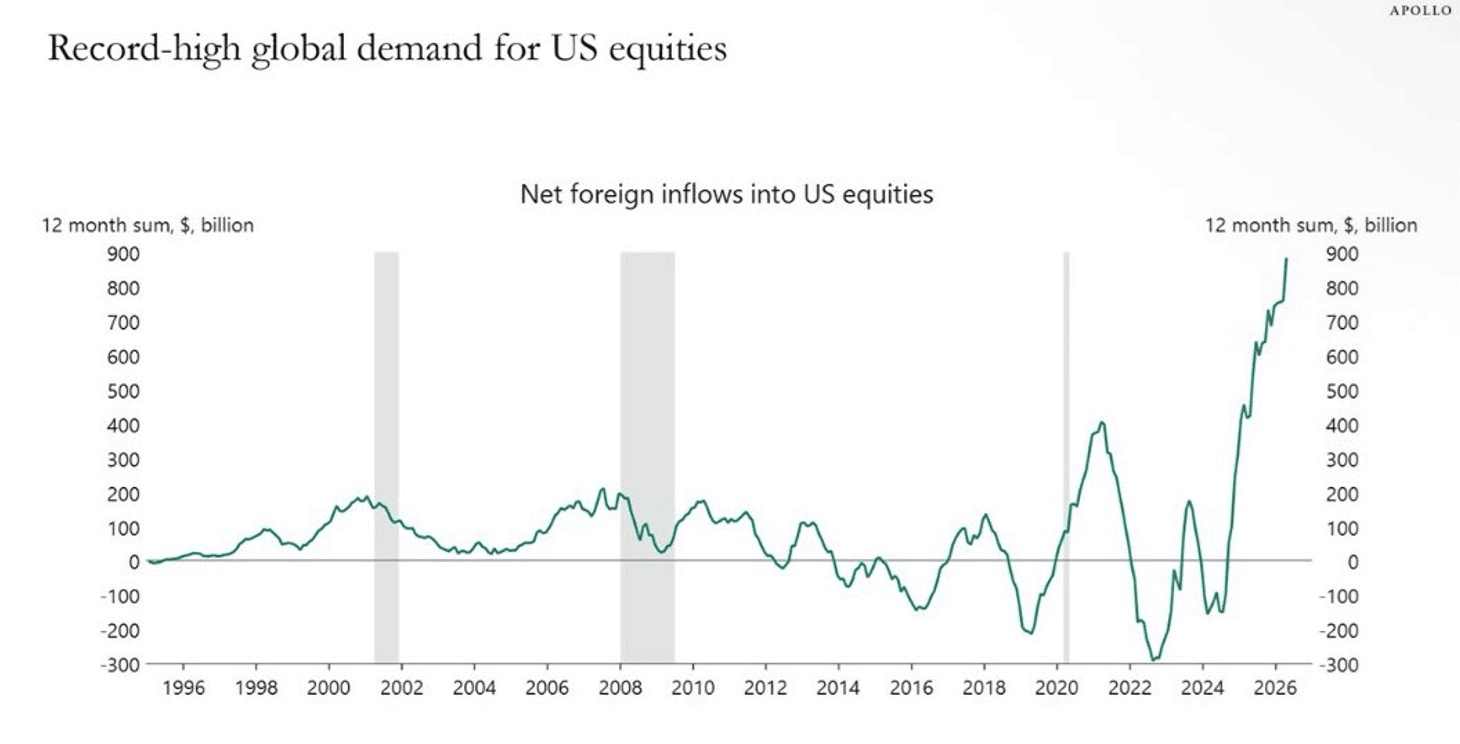
That the euro sits around 1.15 despite huge flows into U.S. equities and a lacklustre European economy suggests that some of that dollar exposure may be hedged, or at least offset elsewhere. De-dollarisation lite, perhaps. The Korean market has rolled over. This could be the proverbial canary in the coal mine. Should the AI trade in the U.S. run out of steam, much of that support for the dollar will start to erode.
Now, if you haven’t read the article I posted at the top, it really is worth the read.
Keep the replies coming.
Donal
A bit of sports pyschology.
Comments
Nothing yet. Say the first thing.
Sign in to join the conversation.