
I was called out for not writing anything last week. My ability to deliver any sort of ramblings was hindered by the desire/need/urge to destroy brain cells in Ibiza. Rest assured, I succeeded with flying colours, most likely knocking a few years off the back end in the process. I could barely speak, let alone type semi-coherent sentences pertaining to financial markets. And I would do it all again in a heartbeat. Maybe we should consider holding an annual JHM symposium in Ibiza every July. Just humour the idea…
Quite a bit has happened in the last couple of weeks. The Korean stock market has completely lost the plot, and is starting to look a bit like the lads on a Monday comedown rather than the preceding Friday, when spirits were much higher. The Kospi Index fell almost 35% in just over a month before bouncing a cool 18% Friday. These sorts of wild moves typically do not happen in the midst of a sustainable bull market. A fella by the name of Didier Sornette wrote a book called “Why Stock Markets Crash” back in the early 2000s, building on a number of pieces of academic work done in the years prior.
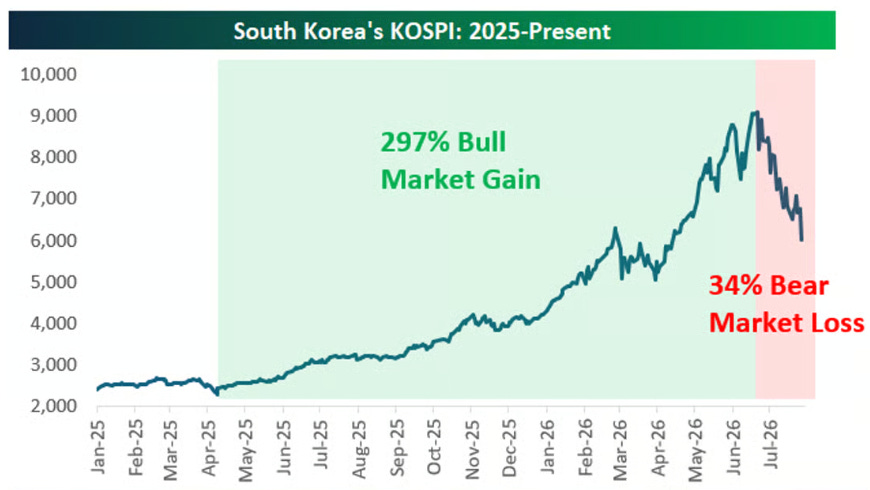
The simple idea embedded in the book is that market bubbles mirror each other with common characteristics. Investors herd, creating positive feedback loops that culminate in exponential growth, which eventually implodes. The rallies and sell-offs arrive in waves whose spacing becomes progressively shorter, which results in the market moves becoming faster and more unstable as confidence, leverage, and imitation reinforce one another. This is currently ongoing in Korea and I am convinced we are well into the implosion phase.
On Kalshi, the contract on whether the Kospi reaches a new high of 9,400 this year is currently priced at roughly a 35% probability. I am a seller of this. For me, the blowoff has happened, and we are not seeing new highs any time soon. The current price action, +18% in a day, only reinforces this. I have been trying to play the short Korea trade through the EEM ETF because it is a cheaper vehicle for buying puts. 45%+ of the portfolio is combined Korea and Taiwan, so you can short the AI complex and be (maybe slightly) less likely to get carted out by the wild swings happening in the Kospi.
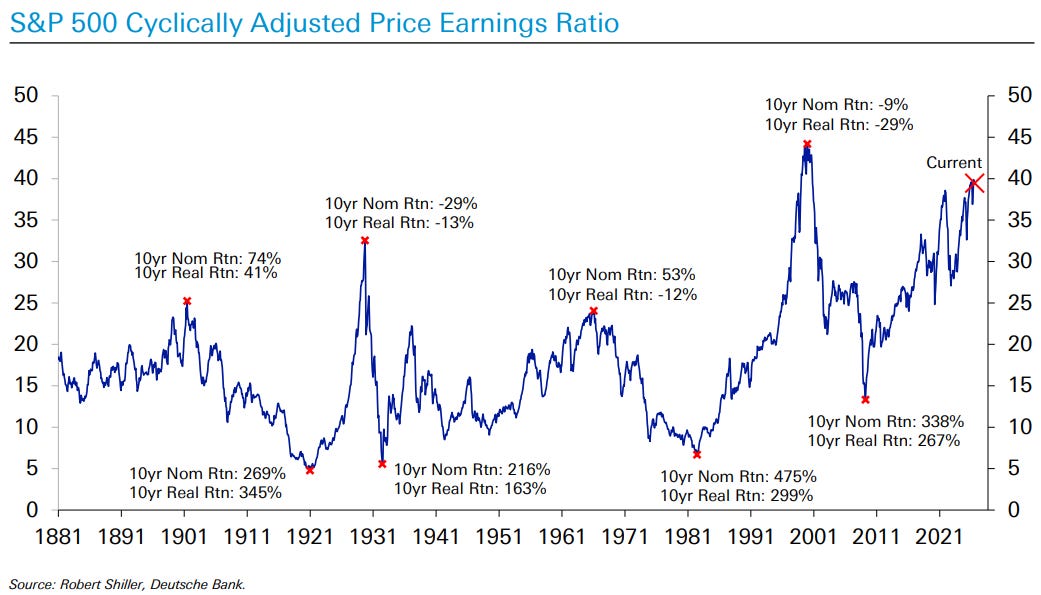
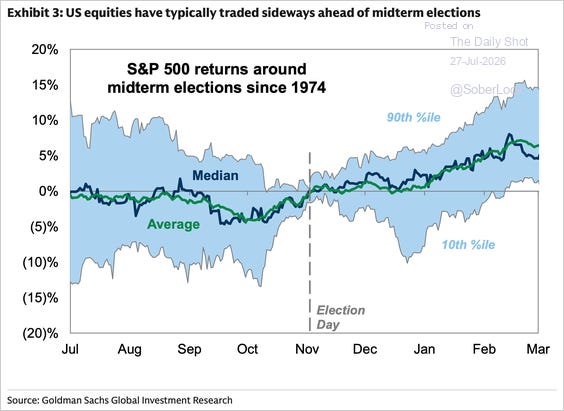
The idea I proposed here a couple weeks back that hawkish rhetoric and accompanying actions in the Middle East are a function of the price of oil is playing out. Oil at $70, Sturm und Drang, bluster and threats; oil at $100 and talks of a deal rapidly re-emerge. Lather, rinse, repeat going forward. What it increasingly means is that the developments in the Middle East will slide from the front pages and markets will be desensitized to further escalation. There remain a few commodity experts warning of the potential of an exponential rise in oil prices should the conflict persist, but you’d think at this point they would have learned their lesson. If prices started tipping into the territory that is problematic for the global economy, there will be a halt to hostilities, especially this close to the midterm elections! Americans’ only tangible repercussion from the war is the price at the pump.
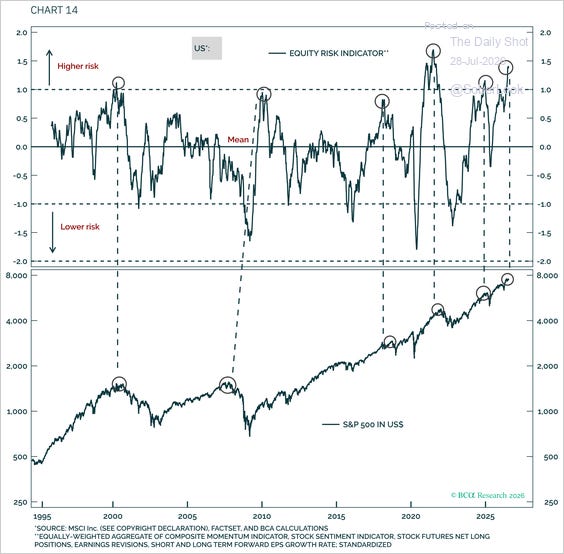
Last, but by no means least, we come to the latest interest rate announcement from the Federal Reserve and new Chair Kevin Warsh. Much has been made about his desire for the Fed and members of the committee to stop hand-holding markets at every moment, and the volatility that will follow. Boo hoo. I refer readers to Nassim Taleb’s book “Antifragile” which I am quite sure I have referenced here in the past alongside his other works. Taleb’s argument is that by repeatedly suppressing small disturbances (in any aspect of life but in markets specifically) it allows for hidden leverage, complacency and one-way positioning to build. Antifragile systems actually become stronger through exposure to manageable stress. Muscles need resistance, immune systems need exposure and markets need occasional losses, uncertainty and failed trades.
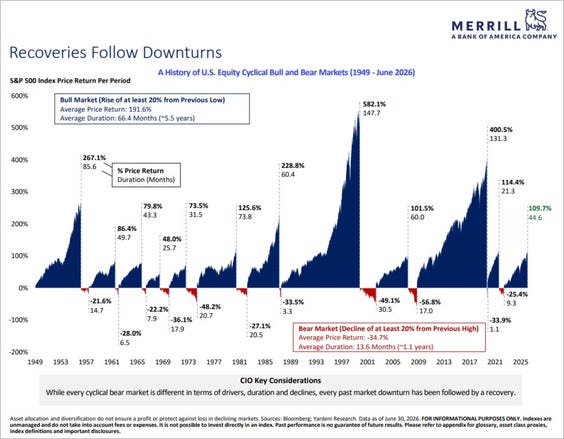
I have been somewhat surprised at the negative sentiment in the financial media directed at Warsh following this week’s press conference. Granted he can be seen as somewhat dismissive of reporters’ comments, but that is likely a stylistic problem more than anything. I am sure the Fed is not trying to deliberately confuse markets, nor do I think clear communication is undesirable. There is an important difference between explaining the reaction function and underwriting asset prices. Markets should understand what the Fed is trying to achieve; they should not expect to be told in advance precisely how, when and at what price they will be rescued.
Remove every small stressor and you do not create stability; you create the appearance of stability while fragility quietly accumulates underneath. A few bumps and bruises in rugby training along the way are necessary to prepare for when you get chopped in half on a blindside hit after a hospital pass from one of your mates.
Keep the replies coming.
Donal
With a lead in line like that, how can you not listen?
Comments
Nothing yet. Say the first thing.
Sign in to join the conversation.