
“I keep thinking about the heroic overproduction of nonfiction on Substack and Twitter and everywhere else. Everyone is explaining everything. Everyone has a framework. Everyone has a grand unified theory of why the world feels thin, fake, accelerated, lonely, decadent, captured, infantilized, financialized, feminized, masculinized, secularized, re-enchanted, atomized, tribalized, automated, bureaucratized, deranged, or just tired. Some of these theories are brilliant. Some are deranged. But taken together they form something like a low-frequency hum, buzzing like a fridge. Like a detuned radio.” - Brent Donnelly, worth the read.
I am not trying to provide a grand unified theory. I write because it helps me compile my thoughts and at the same time I view it as getting the reps in for whatever comes down the line. It might sometimes be slop, but it will always be my own slop, and not that generated by A.I. Or as Gennaro Gattuso would put it:
It is unclear whether interventions ever actually work, whether in currency markets or in real life. “Gentle” nudges to push parents toward potentially healthier futures are often met with fierce resistance. What could we children possibly know that they don’t? Much the same could be said about efforts by Japanese authorities to intervene in currency markets. The phrase “pushing on a string” has come to mind in the past. I have another analogy, but it is not appropriate for this setting.
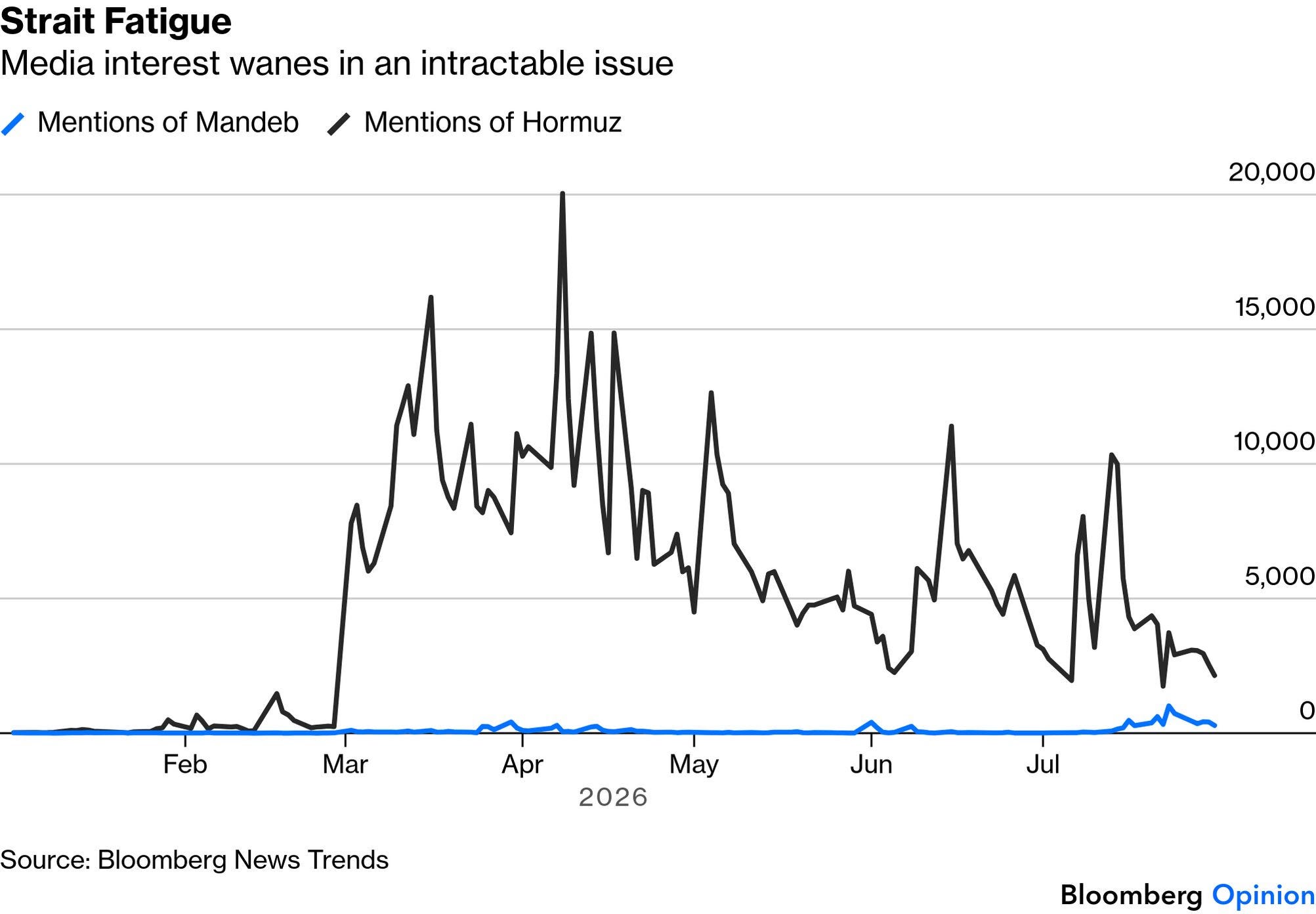
We have talked about Japan here a number of times. It is very rarely the most interesting thing in financial markets, but with the waning interest in the Middle East now palpable, attention has shifted back to Tokyo. See the chart below.
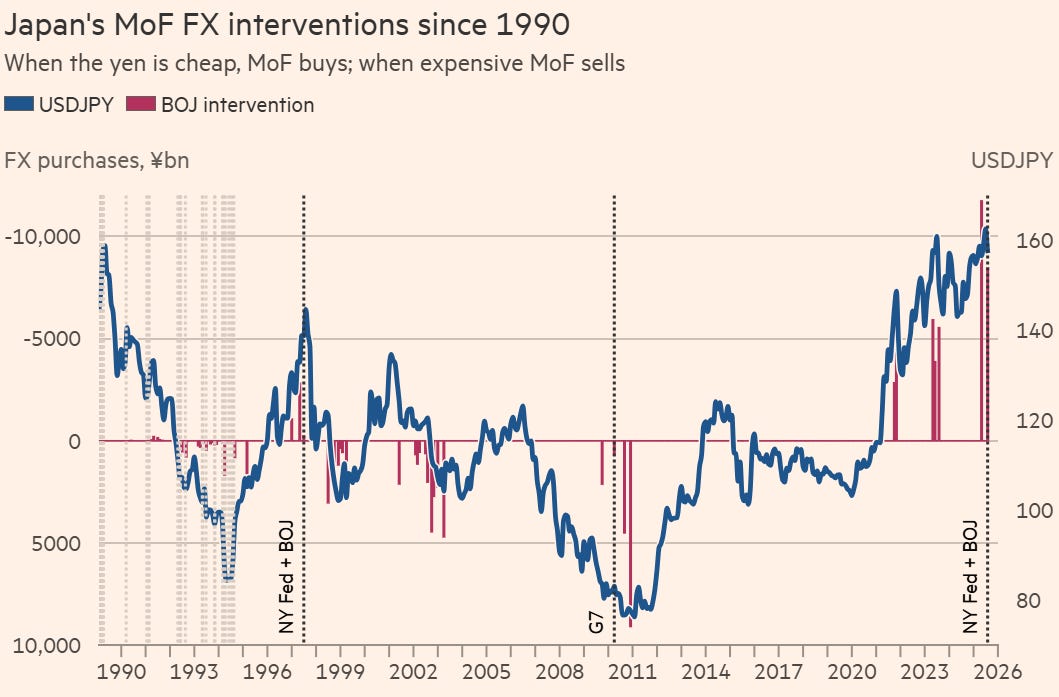
The concerted effort by the U.S. Treasury and Japanese authorities to stem the weakness in the yen signals a more dramatic development than anything we have experienced in the FX space of late. Depending on how we define it, this was the first U.S.-Japan joint yen-buying intervention since 1998, and the first concerted yen intervention since 2011, though that earlier episode was in the opposite direction. It might inspire the most dangerous words in markets: “this time is different.”
The odd “rate check,” where the relevant central bank or Treasury calls one of its broker-dealers to ask where USD/JPY is trading, leads to a fleeting dip that has become increasingly diminished in effect. And so the currency pair has continued its steady grind higher toward 165 until last week’s intervention. The President’s indication that the U.S. was willing to get involved due to the “financial benefit” does not really speak to the broader concerns likely impacting markets.
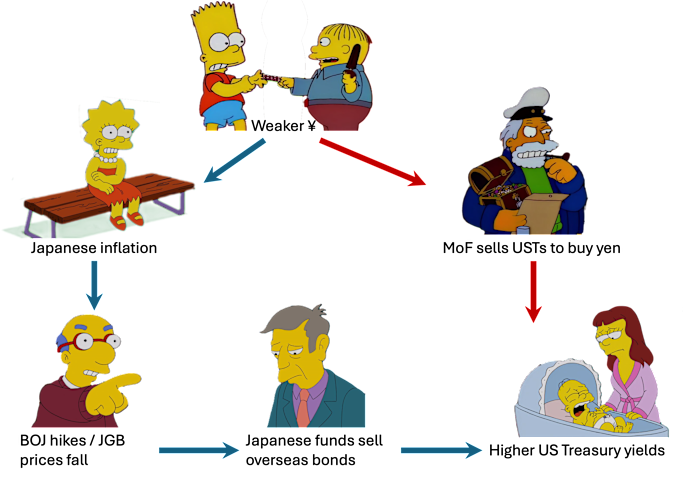
In order to stem weakness in the yen, Japan needs to sell foreign currency and buy yen. While at risk of oversimplifying the story, that means selling dollars, some of which are held in the form of U.S. Treasuries. Selling Treasuries risks increasing borrowing costs, primarily in the U.S., but also the world over.
It was reported that anywhere between $50 and $88 billion dollars were sold last week, which is a decent chunk of the Japanese Treasury stash. The latter figure may include the $20 billion or so worth of Yen that the Treasury bought while selling down its holdings of Euros. The $50 billion number may not seem like a particularly large number given the FX market average daily trading volume is just shy of $10 trillion, but I remember you could make quite a splash with just $1 billion, let alone $88, so this to me seems like an outsized figure unless a whole lot has changed in the four years since I left the bank.
Who am I to criticise the trading of the Bank of Japan? They bought a boatload of dollars and sold yen back when USD/JPY was trading around 80. The last large instance of yen selling was around 2011, when the authorities sold upwards of $100 billion worth. There was an article in the FT this week conjecturing that the total profits the BoJ has made from its interventions are somewhere in the region of $350 billion. Pretty solid trade that.
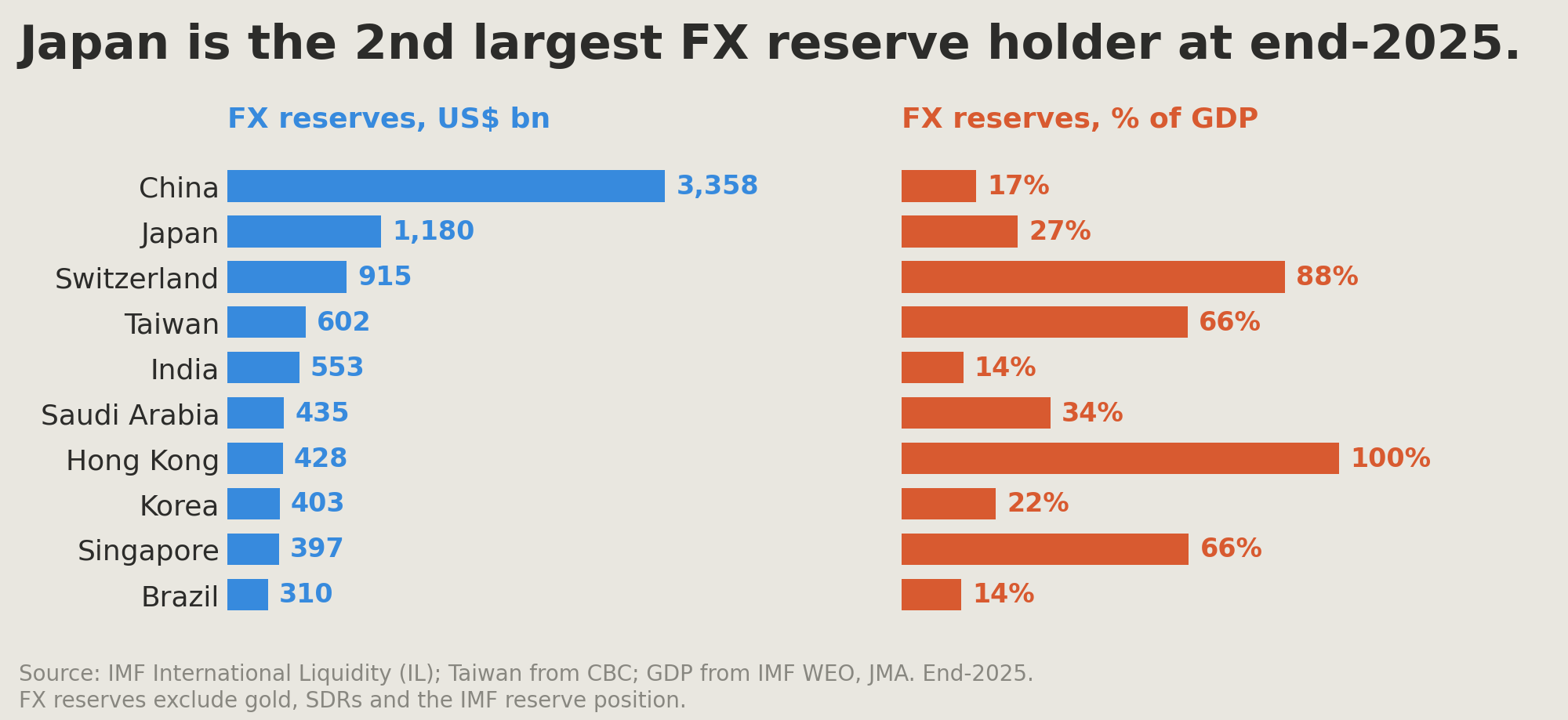
If the yen is stronger, there is less reason to intervene, less reason to sell Treasuries, and potentially even more reason to re-accumulate Treasuries for reserves, thus keeping a lid on borrowing costs for the United States. The concern for Japanese authorities is that, in the absence of any structural changes to local policy, they are going to struggle to encourage a durable move higher in the currency.
There have been shifts in recent weeks pointing to some potential structural change, such as the government encouraging the country’s pension funds to increase domestic asset investment. This should, in theory, motivate some selling of foreign assets and reallocation back to Japan, providing support for the currency. Combine this shift with U.S. support for the intervention and it begins to look a little more sustainable, but it still most likely needs higher domestic interest rates.
The issue with raising rates is that it could trigger another, potentially even larger unwind of the carry trade - borrow cheaply in yen, buy NVDA - than that which we saw almost exactly two years ago to the day. That little “kerfuffle” caused a 12% drop in the Nikkei and saw volatility spike ever so briefly. The absence of further rate increases then was likely sufficient to calm markets and ensure the carry trade could continue.
“The bottom line is that Washington, fearing the consequences for US financial markets, is reluctant to see foreign central banks use their dollar reserves. This is telling us that the dollar is not the attractive reserve currency it once was. When this message sinks in, other countries will redouble their search for more attractive, readily usable alternatives. Reserve diversification is apt to gather steam.” — Barry Eichengreen, the FT.
I am not entirely sure I buy the idea that this signals “the dollar is not the attractive reserve currency it once was,” as much as it supports my bias. Selling Treasuries can become a necessity when a country is trying to stem currency weakness; it does not necessarily mean that country no longer believes in the dollar’s reserve status. Either way, for me, it indicates the U.S. desires not to let the dollar appreciate significantly, and not to allow foreign reserve management to become a source of stress in the Treasury market. That lends support to the argument I have beaten to death here: long term, we are better off in non-dollar assets, and gold is worth revisiting.
Keep the replies coming.
Donal
Please send me good listens.
Comments
Nothing yet. Say the first thing.
Sign in to join the conversation.