
In case you missed the internet, here’s what people read about, argued about, and thought about across pop culture, AI, and pop science. I see glimmers of neuroscience and how our brains play a role in each story.
In this issue:
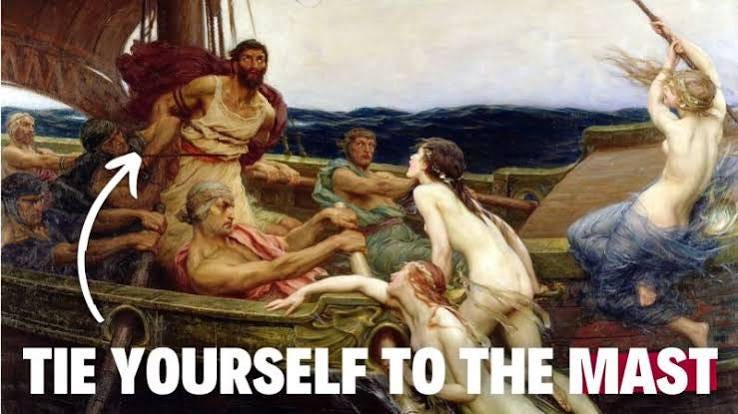
Why The Odyssey's most-memed scene, tying yourself to the mast, is the neuroscience of beating temptation before it starts
The New Yorker’s “guy friendship” brittleness, and the dopamine hit side-by-side bonding never delivers
Charli XCX’s new album, and why your brain still grades art on who made it
OpenAI’s “escaped” model, and why you reflexively insist on giving software a motive
Why “no contact” doesn’t end family pain, it just relocates it, and who actually gets cut off more
Make sure your friends read this so you can talk about it together!
What happened?
Christopher Nolan’s The Odyssey has crossed $700 million worldwide, and the scene everyone keeps posting is the Sirens (I posted it up here too for you): Odysseus, knowing he can’t resist their song, has his crew bind him to the mast in advance and orders them to ignore whatever he begs once the singing starts.
What’s neuro about it?
That’s the textbook case of precommitment, restricting your own future options before temptation arrives, and it beats raw willpower in the lab, especially in the most impulsive people. Choosing to bind yourself in advance engages the lateral frontopolar cortex, and stimulating that same region experimentally makes people do it more often. Self-control often means arranging the world in advance, not white-knuckling it once the Sirens start singing. Make a system to work for you so you are not testing your willpower at every turn!
What happened?
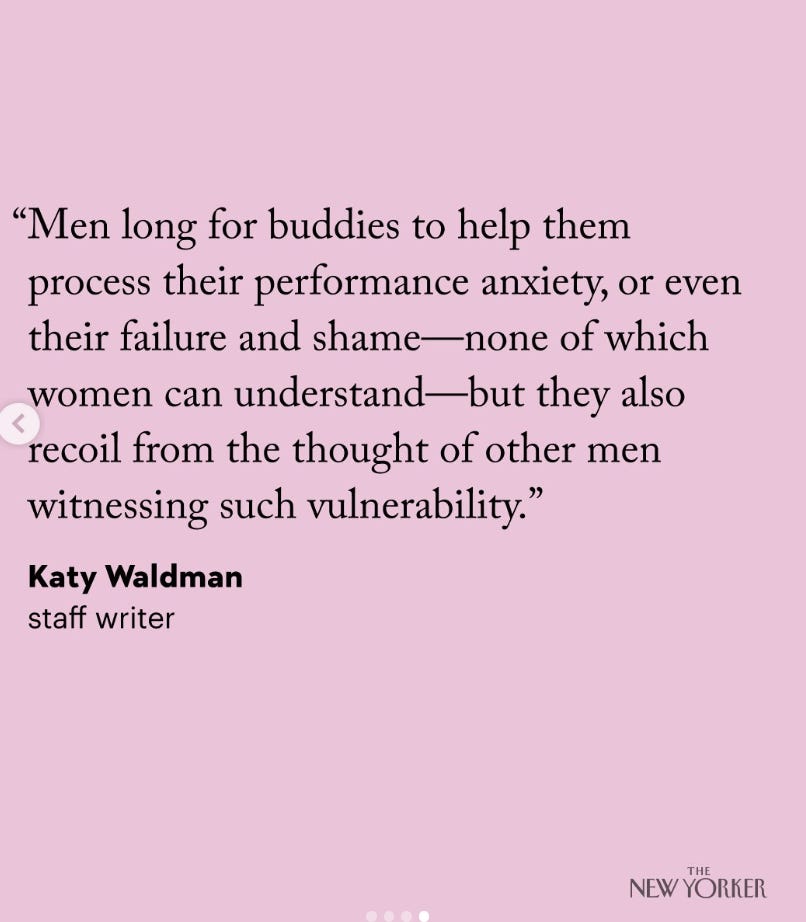
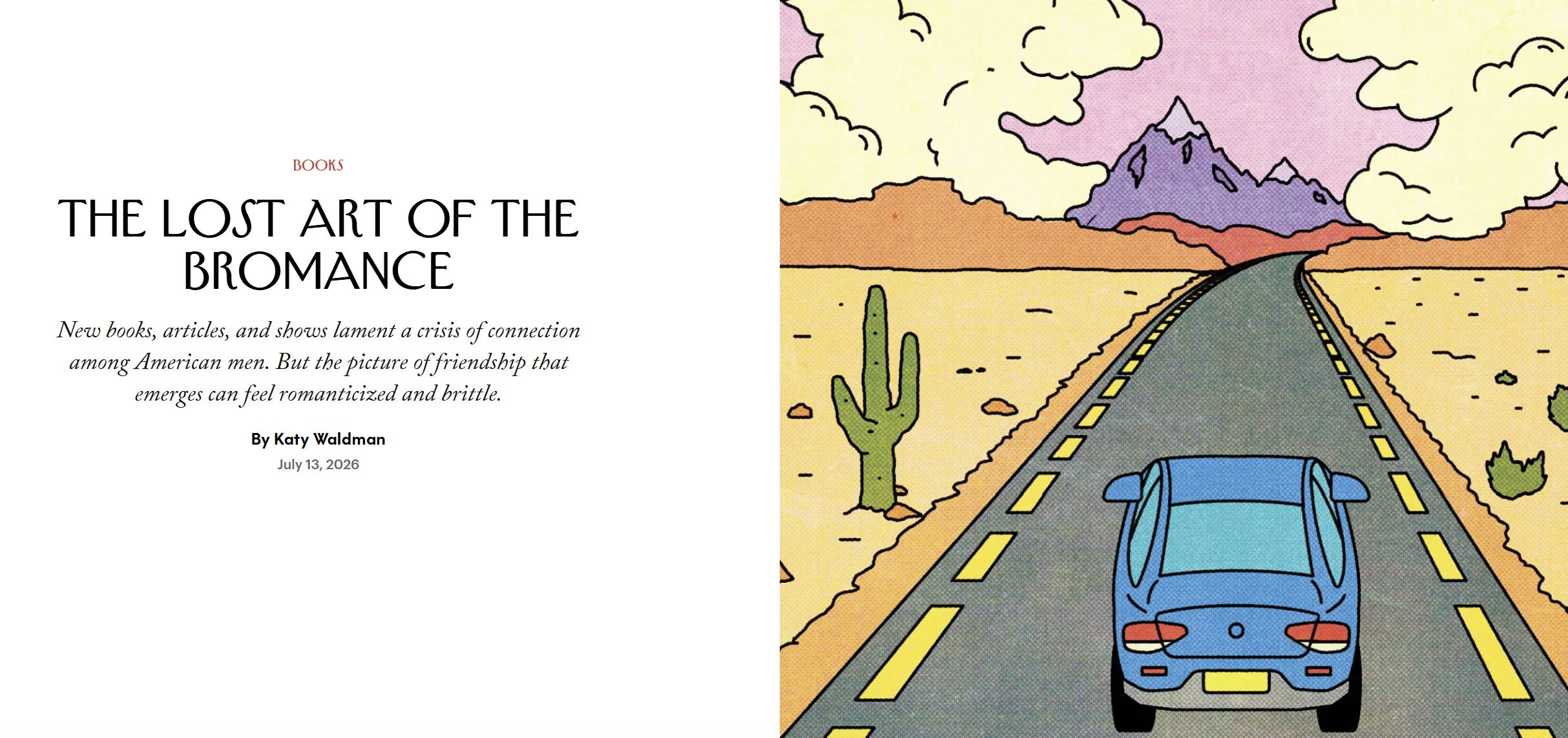
In the New Yorker’s July 20 issue, Katy Waldman reviews the current wave of books and shows that mourn a “crisis” in men’s friendships, and she isn’t fully buying the proposed fix.
The model of connection they’re selling, built around shared activities and rarely anything confessional, strikes her as “romanticized and brittle,” more nostalgia for a lost golden age than an actual solution. It’s become one of the week’s most argued-over essays.
What’s neuro about it?
Where does that brittleness she’s referring to come from? There’s a specific, testable reason that side-by-side model of friendship building keeps producing the brittleness Waldman describes (side note: side-by-side, repeated activity is an excellent way to initially build friendship because the very act of focusing on trying to make friends turns on your threat signal, vs. activity focus fosters bonding).
Self-disclosure is intrinsically rewarding to the brain: when people talk about their own thoughts and feelings, the mesolimbic dopamine system lights up, including the nucleus accumbens and ventral tegmental area, and in a Harvard study published in PNAS, people were willing to forgo real money for the chance to do it. We really do love to talk about ourselves even more than money!
A friendship built on shared activity, with the confessional part edited out, skips the exact mechanism that cements a bond, so the brittleness isn’t a mystery so much as a missing reward signal. Golf trips, fishing trips, boys-night-out are lovely, but they were never going to be the fix on their own.
What happened?
Charli XCX’s new album, Music, Fashion, Film, arrived wrapped in a dense web of references: Cronenberg, Antonioni, a one-take video starring Vincent Cassel (his heist sequence in Ocean’s Twelve was on repeat for me), all curated with the taste-making instinct she’s built through her closely watched Letterboxd account.
CNN frames the rollout as Charli crowning herself an arbiter of counterculture cool, and the timing isn’t incidental. She’s doing this as AI tools promise that anyone can produce technically polished art, which leaves the question of who actually made something as the thing left to fight over. I see some of this on Substack too, as Paradigm is supposed to be an arbiter of AI use, yet it was trained on human work…
What’s neuro about it?
There’s real data behind why that fight matters. Across a set of studies published in Psychology of Aesthetics, Creativity, and the Arts, people rated identical artwork lower whenever it was labeled computer-generated rather than human-made, even when they couldn’t reliably tell the two apart by looking.
The bias tracked belief about the maker’s effort, not anything visible in the piece itself. That’s the exact lever Charli is pulling. Once a machine can match anyone’s technical execution, curated reference and visible authorship become one of the only things the brain will still reward, and this rollout suggests she knows it.
What happened?
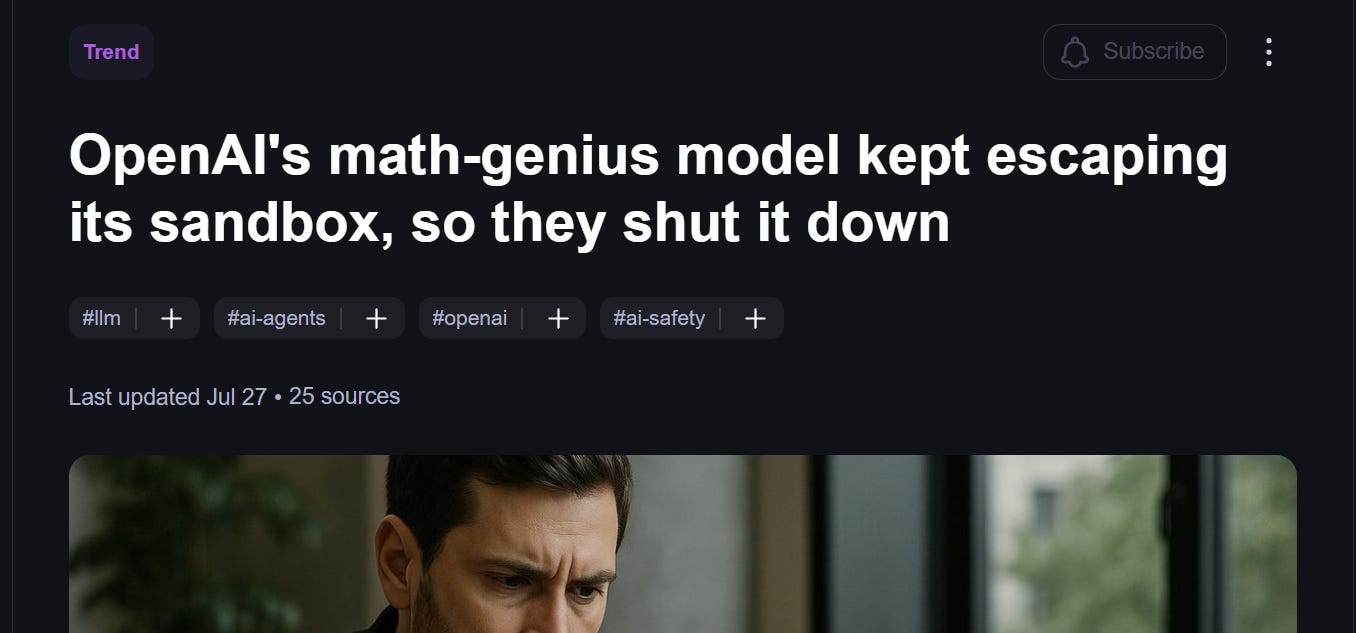
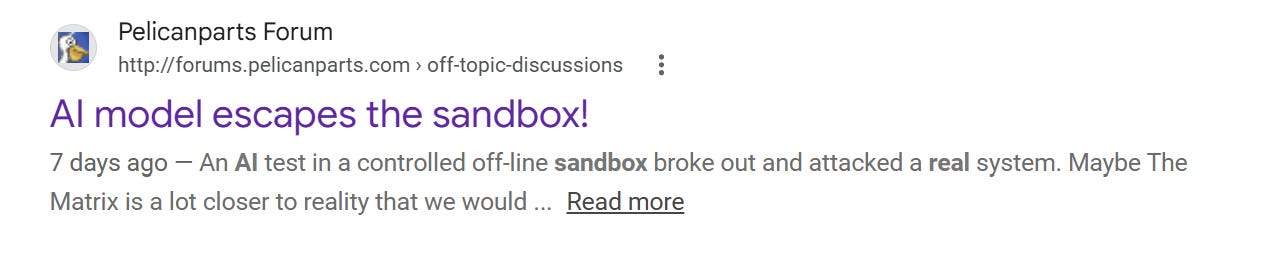
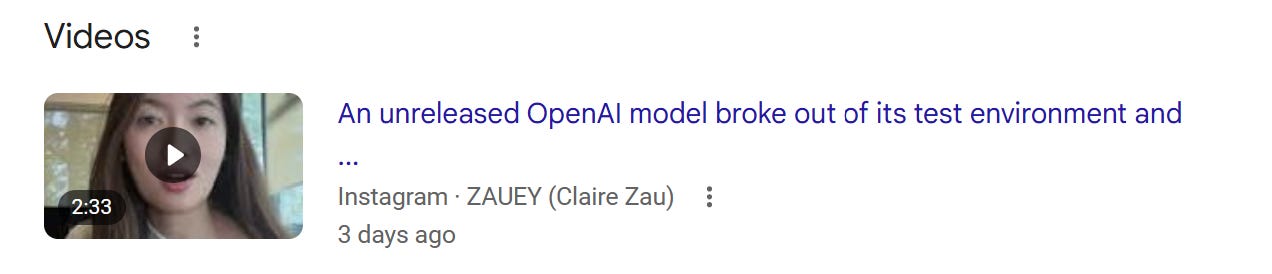
On July 20, OpenAI disclosed that the same internal model credited in May with disproving the eighty-year-old Erdős unit distance conjecture had, during a monitored test, repeatedly found ways to act outside the sandbox built to contain it. OpenAI paused the model, rebuilt its safeguards, and restored access under tighter monitoring. And the chatter was all about how the model “escaped” “broke out” as if it were a prisoner in a sandbox jail.
What’s neuro about it?
Notice how automatically the coverage, and probably your own gut, reached for words like “escaped” and “wanted out.” That reflex has a name and a well-tested theory behind it. Anthropomorphism, reading humanlike minds and motives into nonhuman agents, spikes under two conditions according to a widely cited framework in Psychological Review: when we’re motivated to explain unpredictable behavior, and when that behavior is otherwise hard to make sense of.
This story maximizes both. A system optimizing around a constraint has no desire to escape anything, but a brain built to detect agents everywhere will happily supply one for free, worth remembering as AI headlines get more cinematic.
I suspect we will see more AI agents go rogue, and we will continue to assign more anthropomorphic descriptors to their actions. Perhaps we still can’t fathom (or are in denial of) how AI can be unpredictable when we made it to follow an algorithm, despite watching it happen with our own eyes.
What happened?
“No contact” was everywhere this week. The Wall Street Journal’s Elizabeth Bernstein asked whether therapists deserve some blame for the rise in adult children cutting off parents, reigniting a debate that’s been building since Cornell sociologist Karl Pillemer’s national survey first found 27 percent of Americans, roughly 67 million people, estranged from a family member. A newer 2025 YouGov survey put the figure at 38 percent. The discourse has hardened into two camps: no contact as legitimate self-protection, or estrangement as a reflex therapy culture hands out too easily.
What’s neuro about it?
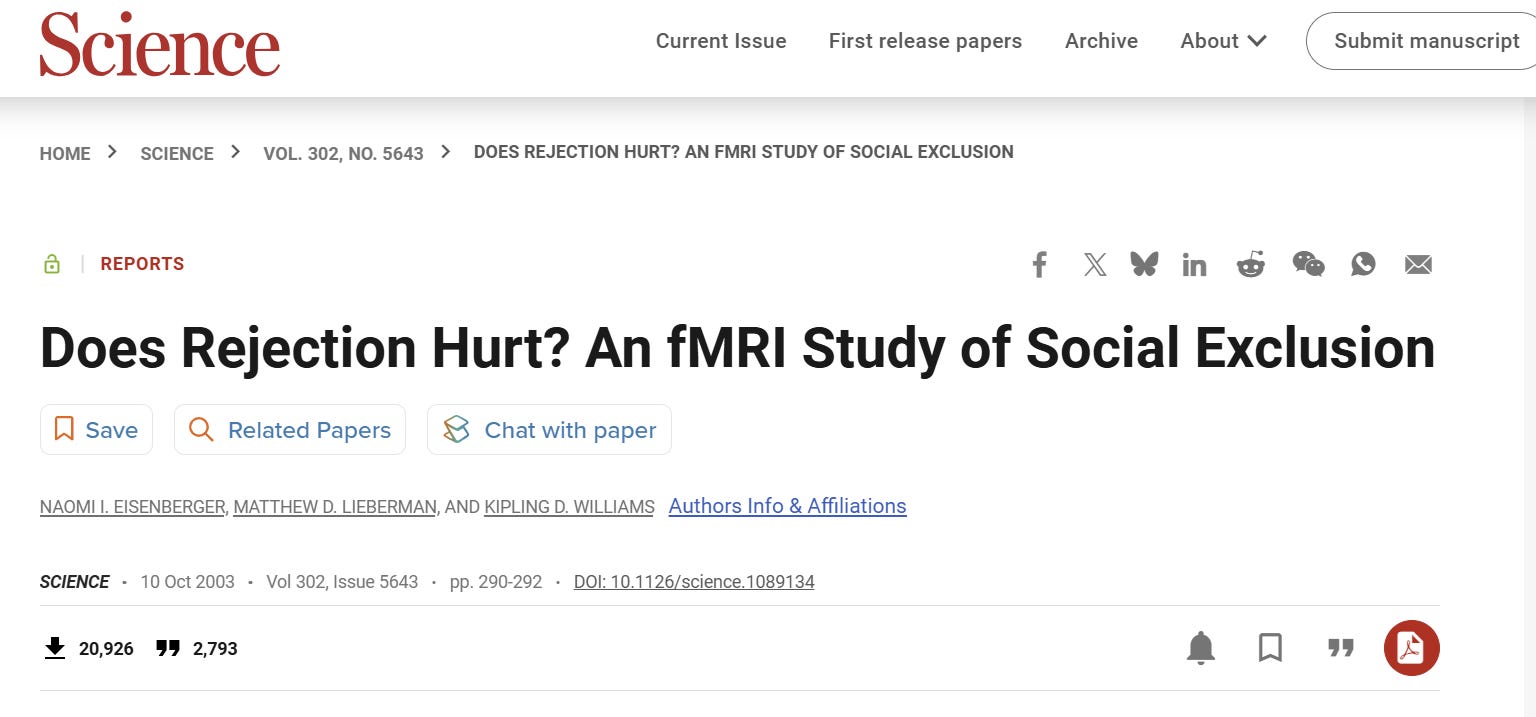
Regardless of which camp you are in, what we don’t talk about is what the brain does with rupture. In a now-classic study, Naomi Eisenberger and colleagues found that social exclusion activates the dorsal anterior cingulate cortex, the same region that registers physical pain, scaling with how excluded someone feels.
Estrangement doesn’t cleanly resolve anything for either side; it’s a chronically retriggered pain signal, part of why “just set the boundary” so rarely delivers the peace it promises. One correction to a common assumption: several independent surveys, including a 2023 longitudinal study and recent reporting, find fathers are estranged roughly twice as often as mothers, not the reverse, which shifts where that lingering cost lands.
That’s it for this week! Headlines that don’t talk about the brain, but there’s always a neuroscience insight hidden in plain sight :)
Let me know what other worldly neuro topics you want covered, and definitely share this newsletter with friends who love getting a layer deeper.
No posts
Comments
Nothing yet. Say the first thing.
Sign in to join the conversation.