
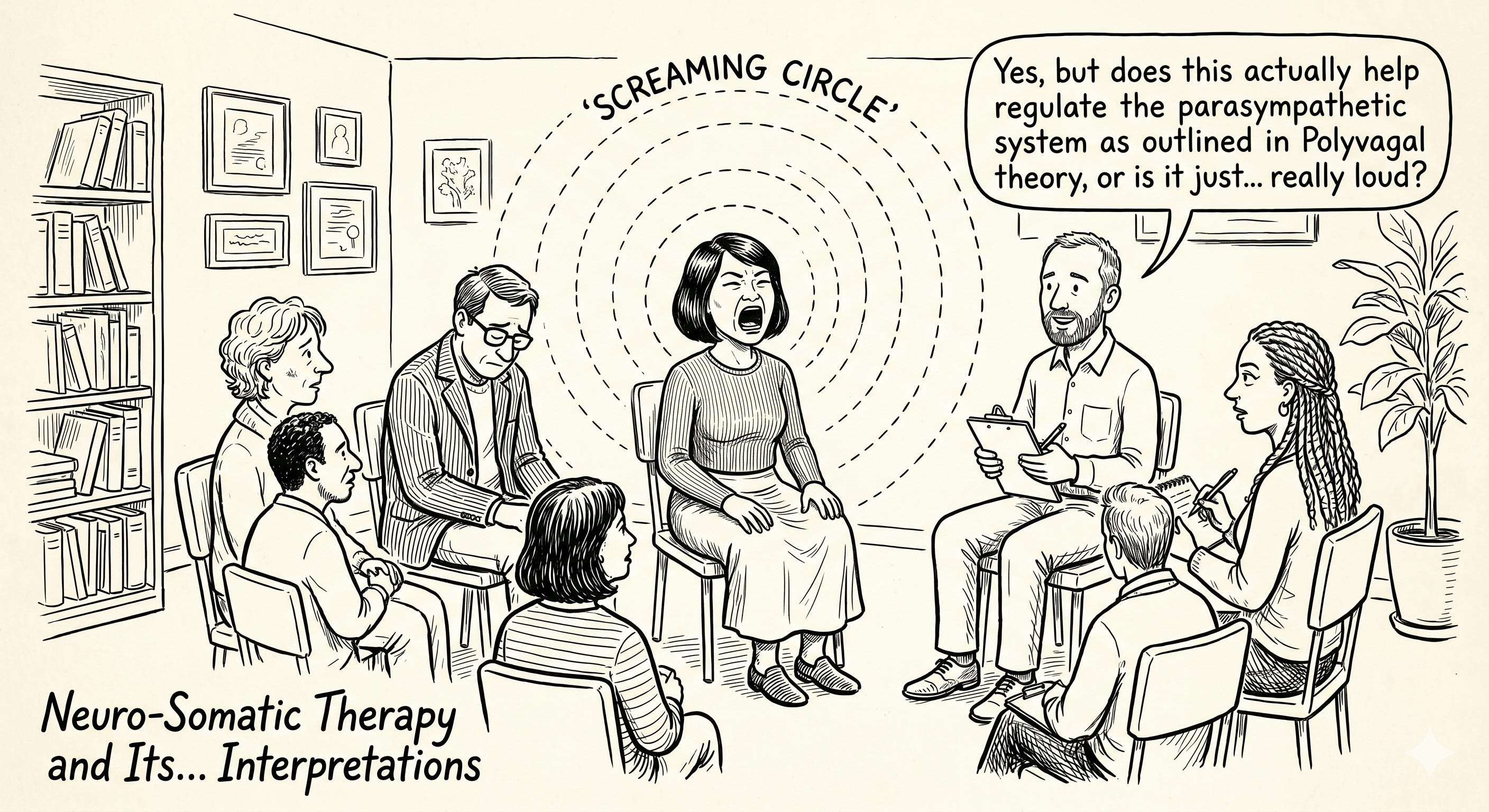
In about 18 months, somatic wellness went from a niche therapy to a corporate offsite.
Personally, I can’t imagine trauma dumping and screaming it out with my colleagues, no matter what you tell me, the benefits are.
The pitch is the same everywhere: the body holds trauma, and if you shake it, scream it, or breathe it out, you discharge it.
Some of that is real physiology. A surprising amount is a metaphor dressed up as settled science. This newsletter sorts one from the other.
If you must impatiently know the answer, scroll to the bottom for a neat table.
The agenda:
What people are buying, and how much money is moving.
Where the science is solid, the effects you can take to the bank.
Where it is unsettled or absent, the claims run ahead of the evidence.
Where consumers get it wrong, including one popular practice that backfires.
A clear recommendation on where your time and money should go.
Neurowellness was named one of 2026’s biggest wellness trends, and the menu now filling gyms and HR-sponsored offsites includes scream circles and shaking, ecstatic movement, Tension Releasing Exercises (TRE), and somatic breathwork.
People aren’t really buying a class. They’re buying a promise: a physical route out of stress and old pain that skips the slow work of talk therapy and lets you feel something shift in a single session.
That promise sells. Consider the scale:
Breathwork alone was worth about 1.3 billion dollars in 2025 and is on track to reach 3.4 billion by 2033.
The broader somatic-therapy market sits in the same multibillion-dollar range, growing at double digits a year.
Add memberships, certifications, retreats, and corporate contracts, and you have a category that scaled far faster than its evidence.
The near-universal justification you’ll hear is polyvagal theory, Stephen Porges’s model of how the vagus nerve governs our sense of safety and threat. Hold that name. The gap between how confidently it gets cited and how settled it actually is turns out to be the whole story.
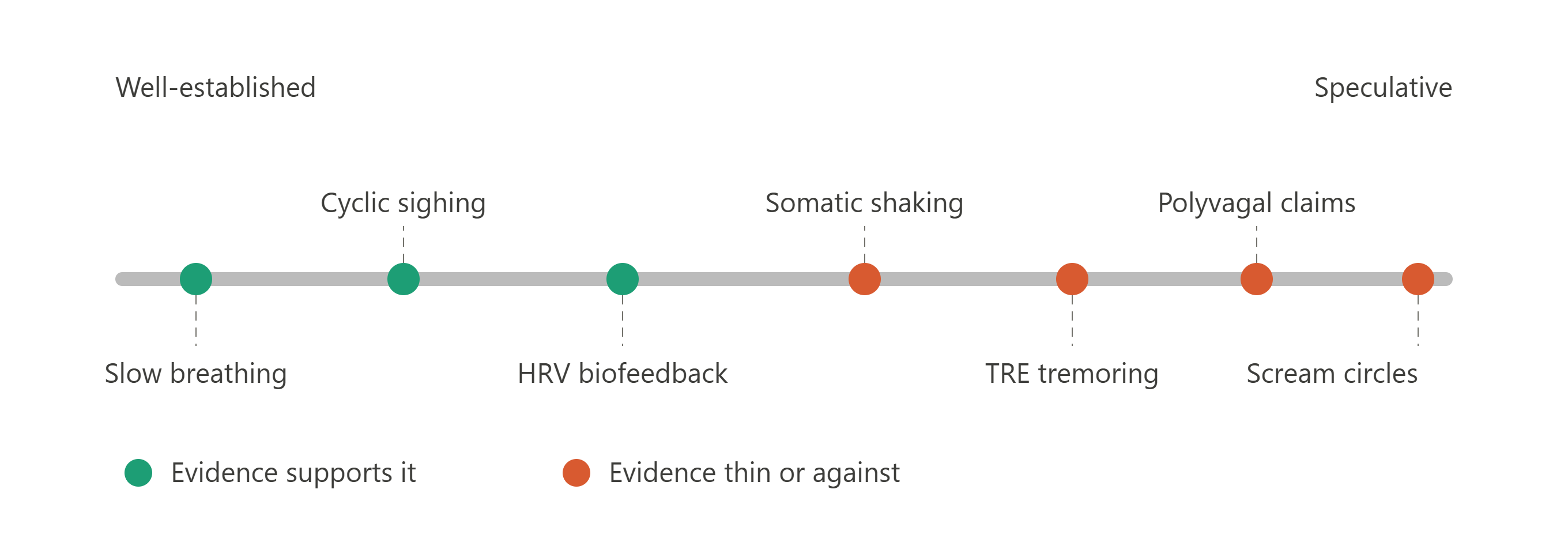
Slow, deliberate breathing genuinely calms the nervous system. This is the strongest claim in the category.
The premise that breath can change an emotional state is not fluff. It is well-documented physiology, and three findings support it:
Diaphragmatic breathing lowers cortisol and anxiety while improving attention, because slow exhalation recruits the parasympathetic system through vagal pathways and pulls you out of fight-or-flight.
Five minutes a day of cyclic sighing, a double inhale and a long exhale, improved mood the most in a Stanford trial, beating meditation. The effect is small, and the study is short. The intervention is free.
Pooled across a dozen trials, breathwork shows a modest but real drop in stress, and HRV biofeedback, essentially slow breathing with a monitor, can ease depressive symptoms too.
None of this is miraculous. The honest label is “reliable, low-cost tool,” not “cure.” But it is genuinely supported, and it’s the floor everything else is built on. The trouble starts when the industry builds a much taller, much shakier building on top.
Trauma stored in muscle, discharged by shaking, is a metaphor, not a finding.
The image is evocative, and it may capture something real about how chronic stress shows up in the body. The mechanistic version, that a tremor “discharges” stored trauma, has very little behind it.
The evidence for TRE rests mostly on small pilots and case reports, not the controlled trials that would separate a real effect from the simpler relief of moving, breathing, and spending an hour in a calm room with attentive people. Those things help. We just can’t yet credit the tremor itself.
Polyvagal theory, the anchor for most of these practices, is genuinely contested.
Here’s the part the marketing leaves out. A detailed critique in Biological Psychology argues that several of the theory’s core anatomical and evolutionary premises may not survive scrutiny, and the debate has only sharpened since, with a large group of physiologists publishing a formal evaluation and Porges publishing a rebuttal.
Contested, not debunked.
Plenty of clinicians still find it useful as a way to talk about safety and regulation. The point is narrower: when a studio cites “polyvagal” like it’s the periodic table, it is borrowing more certainty than the science has to lend.
So the honest position is layered:
The breathing works.
The general logic of bottom-up regulation has support.
The specific, marketable claims about stored trauma are ahead of the evidence, and the theory underwriting them is still being argued over.
The most cathartic-feeling practice is the one the evidence most directly contradicts.
If you take one correction from this newsletter, take this. The scream circle rests on catharsis theory, the intuition that you have to let it out to be rid of it.
A 2024 meta-analysis of 154 studies and more than ten thousand participants found that arousal-raising activities like venting do not reduce anger and can intensify it, while arousal-lowering ones like slow breathing, mindfulness, and progressive muscle relaxation reliably cool it down.
Screaming feels productive. That good feeling is the problem, because it reinforces the very arousal you came to release. The practice sold as the most powerful release is, by the best evidence, working against you.
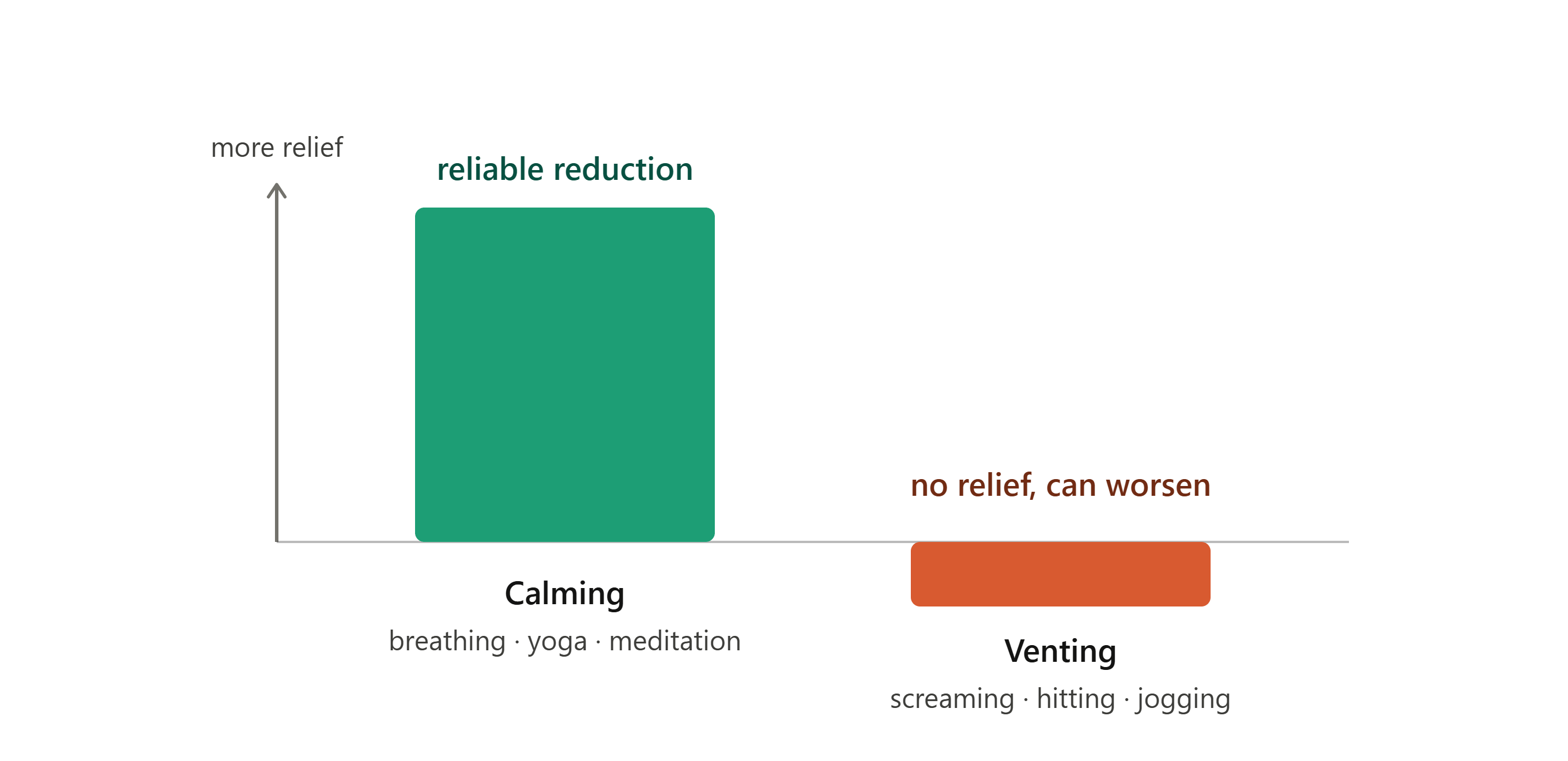
The broader error is simple: people pay a premium for the speculative layer and ignore that the proven layer is free. The breath is the active ingredient. The screaming, the branding, and the certification are mostly packaging, and in one popular case, the packaging works against you.
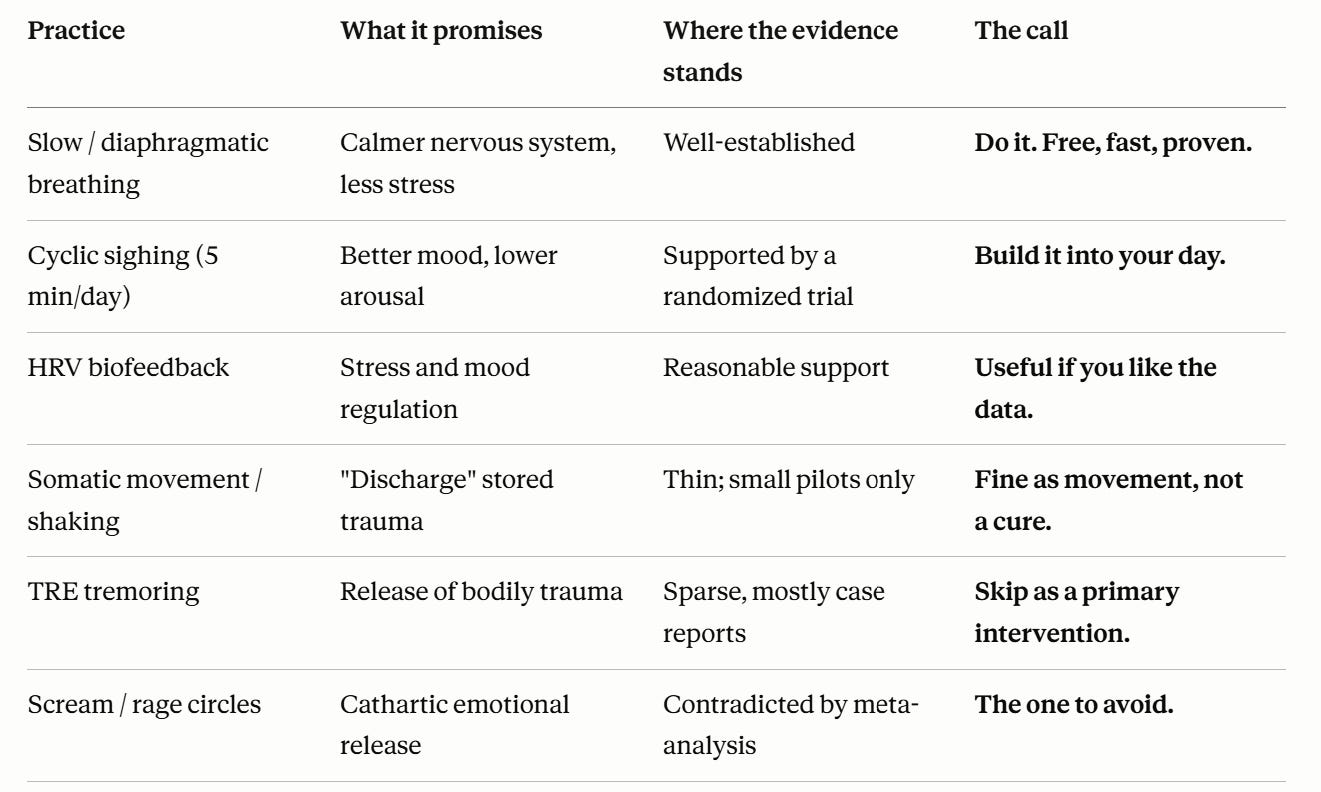
So how should you destress, decompress, and release? The recommendation is straightforward:
Spend your effort on the cheapest, best-evidenced practice here: slow, exhale-weighted breathing for a few minutes a day, ideally cyclic sighing or any pace near six breaths per minute.
Spend a little money only where it buys consistency, like a wearable or biofeedback app you’ll actually use.
Enjoy, don’t over-invest in shaking and movement classes. They are gentle exercise, plus community, plus deep breathing. All good. None of it needs the trauma-discharge story to work.
Be most skeptical of anything built on screaming, the one place where the popular practice and the published evidence point in opposite directions.
Taking the body seriously and taking the evidence seriously are not in conflict. The body really is a route to a calmer mind. You just want the route the science has actually mapped, not the one the marketing drew.
Nothing here is medical advice. The breathing techniques above pair with, and do not replace, care from a licensed professional.
Mave Health, a startup founded in 2023, raised $2.1M in seed funding in March 2026 to launch a non-invasive wearable headset that delivers transcranial direct current stimulation (tDCS) to the prefrontal cortex in 20-minute sessions at 1–2 mA intensity.
The device costs $495 and targets focus, mood, and stress regulation. Their beta testing claims: 80% of users reported productivity improvements exceeding 60%; 77% reported better mood; 75% reported stress reduction exceeding 50%.
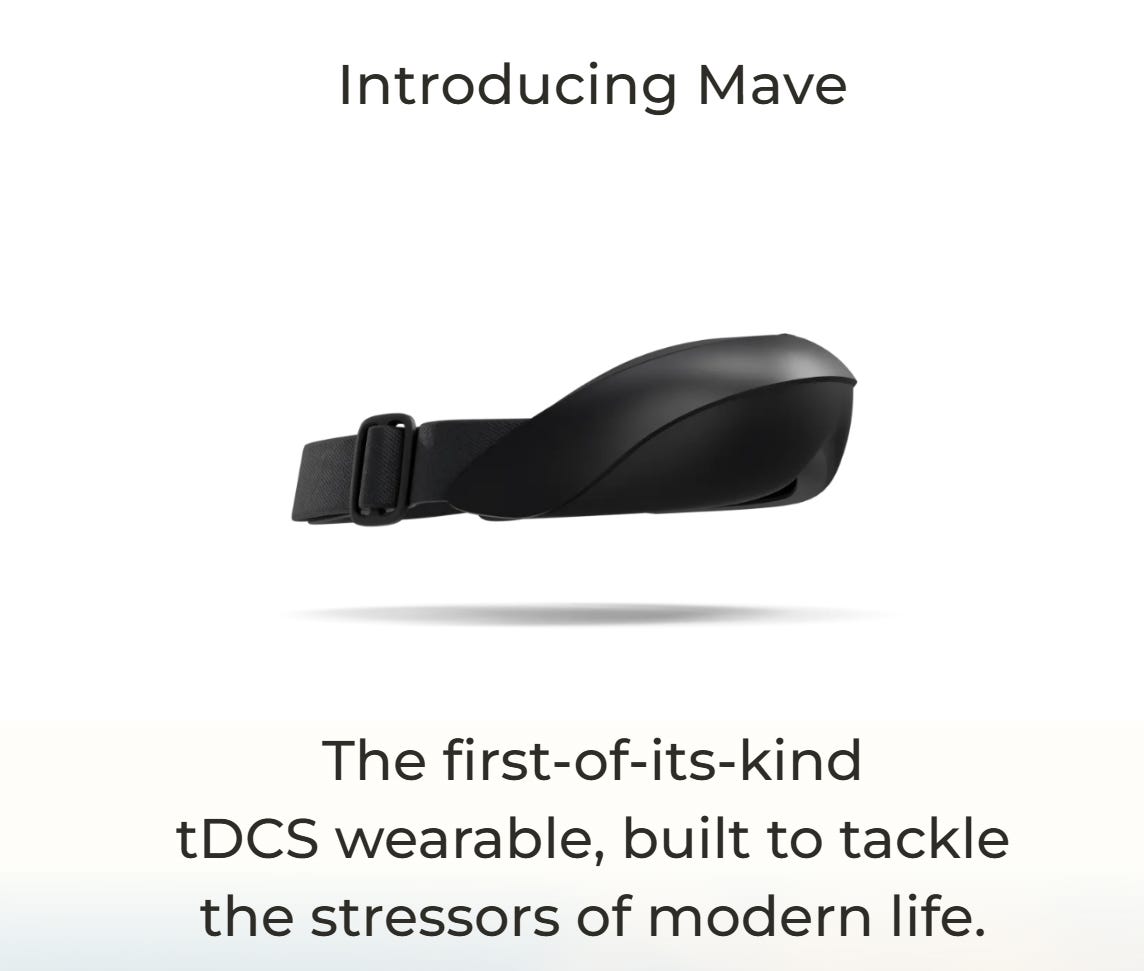
The tDCS technology itself is legitimate and worth watching, and for individuals dealing with attention difficulties or mood dysregulation, there may be real clinical utility as the evidence develops.
But the specific claims Mave is making for healthy users at the effect sizes they’re reporting are not supported by the controlled literature — and at $495, consumers deserve to know that “tDCS has 25 years of research” does not mean “this specific device in healthy people does what we say it does.” These are not the same claim.
Verdict: Foundational Science, valid; Product Claims, TBD
Share with friends, colleagues, and strangers who need to know the real science!
No posts
Comments
Nothing yet. Say the first thing.
Sign in to join the conversation.