
Who’s idea was it to begin a new year in the depths of winter anyway? Who thought it would be real cool to have a big, ambitious fresh start just as we all embark on a rather languid Big Stretch after ten-ish days of not doing very much at all? January 1st is rude, in my opinion, prematurely jump-starting us into doing things again — we were only just getting used to the novel idea of ‘having a rest.’ Ruder, still, is that January 1st is followed shortly after by January 6th, the deadline that marks the official end of Christmas. Yesterday — the 6th January aka 12th Night aka Epiphany — was the day when we must pack away decorations, including Christmas trees or risk terrible luck for the year, which, in this economy is not something that I’m willing to fuck with. So, we oblige, we take down the tinsel and put the Christmas tree lights away horribly so that they can never be unravelled again and, at some point over the next couple of weeks (we will invariably leave this job until the dreariest, greyest and most depressing day of January), we will drag the 5ft Christmas tree (that we bought from the shop that sometimes sells fireworks and vapes apart from in December when it sells, for some reason, literal trees) across the floor of our living rooms, leaving a trail of crispy, brown needles that won’t be successfully hoovered up until some time in late September. Then, we try and stuff said tree into our council-allocated dustbin only to find that, fahrrrrkkk, it doesn’t quite fit, so we’ll have to sling the thing over our shoulders, take it to the nearest street corner and dispose of it swiftly, hoping nobody sees.
Apart from, we all saw because we’re all doing the exact same thing, adding our own dry, dusty Christmas tree to the manmade mountain of dead trees. ‘There has got to be a better way of doing this,’ we think to ourselves every year. Then we forget to find a better way until the following January 6th when we have the same thought again and so on and so on.
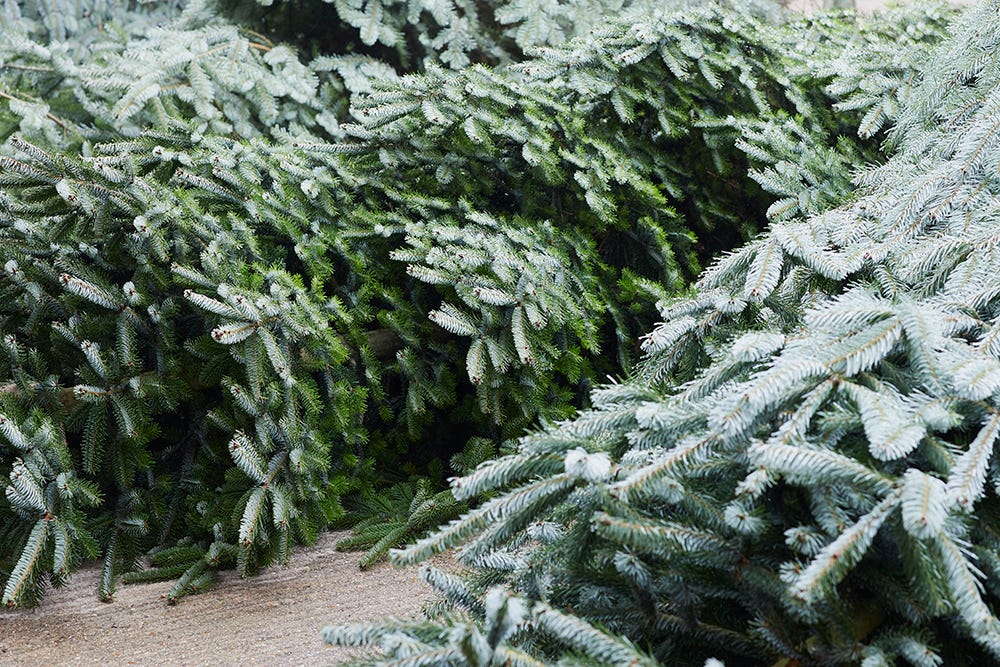
Some people who have had thoughts about better ways to discard a tree, however, happen to be journalists who get paid to explore the answers to these sorts of questions and so, for the last decade, sometime between the Christmas Gooch and the middle of January, The Press (literally all of the global press and I’m not over exaggerating here) give little-old-me a call, because I happen to be the unlikely guy who’s had, perhaps, the most thoughts about how to chuck away a Christmas tree ‘more sustainably.’
As I have explained many times, ten years ago when I started to think about a potential solution to the Christmas tree problem, I decided that eating them was a good idea — I ran a successful supper club and wrote a well-received cookbook ‘How to eat your Christmas tree’ based on this entire premise. After a few years of running my supper club, I thought I better formalise some of the reasoning as to why I decided to eat trees in the first place — it was such a weird project that I needed to justify what I was doing. I looked into every inch of the Christmas tree industry and though it all started as a very silly and novel way of having a discussion about waste, ten years of taking a good hard look at the life of a Christmas tree from cradle to grave has shown me that there is really only one very stark solution to the problem — it is not buying Christmas trees at all. It is boycotting the entire industry and running the practice into the ground.
I will now proceed to tell you some things to back up this very unpopular opinion, although, to be honest over the course of ‘How to eat your Christmas tree’s’ existence, I have expressed these views loudly and at every opportunity, but they either never make it into the edits of whatever radio programme or podcast or article I appeared in or nobody really listened because I sound a bit shouty and everyone just wants to focus on the idea of eating Christmas trees for lols.
First of all, I would like to tell you about a very important concept called: CLIMATE CHANGE (only joking, I’m not going to explain this to you, you already know that this is real… right?). Trees are an important part of our armoury against environmental collapse for a number of reasons — mainly, they absorb the carbon emissions that we overproduce, but they also protect us from other challenges caused by global warming. In countries like the UK which are now considerably more at risk from floods as temperatures and sea levels rise, trees, in particular the root systems of older trees and forests, absorb water into their roots, slow down the flow of water and also provide protection from soil erosion that can make the impact of flooding worse. What’s more, in the current epoch that some refer to as ‘the pyrocene,’ or the Fire Age due to the increased amount of human-caused wildfires across the globe, forests can also help (counterintuitively) act as natural fire breaks (I don’t include certain types of trees like pine and eucalyptus in this as they are both highly flammable), which could help prevent fire related damage in the future. Underground, trees and forests of all shapes and sizes provide nutrients, support and communication channels for other plants, animals and fungi through their root system known as the mycorrhizal network. The mycorrhizal network is a Big Ecological Deal and contributes positively to the health of the earth’s soil, 90% of which is on track to be degraded by 2050 according to scientists. Poor soil health could eventually cause the collapse of many ecosystems and our own inability to grow nutritionally dense food (BAAAD news). Basically, keeping trees in the ground is a really, really good idea.
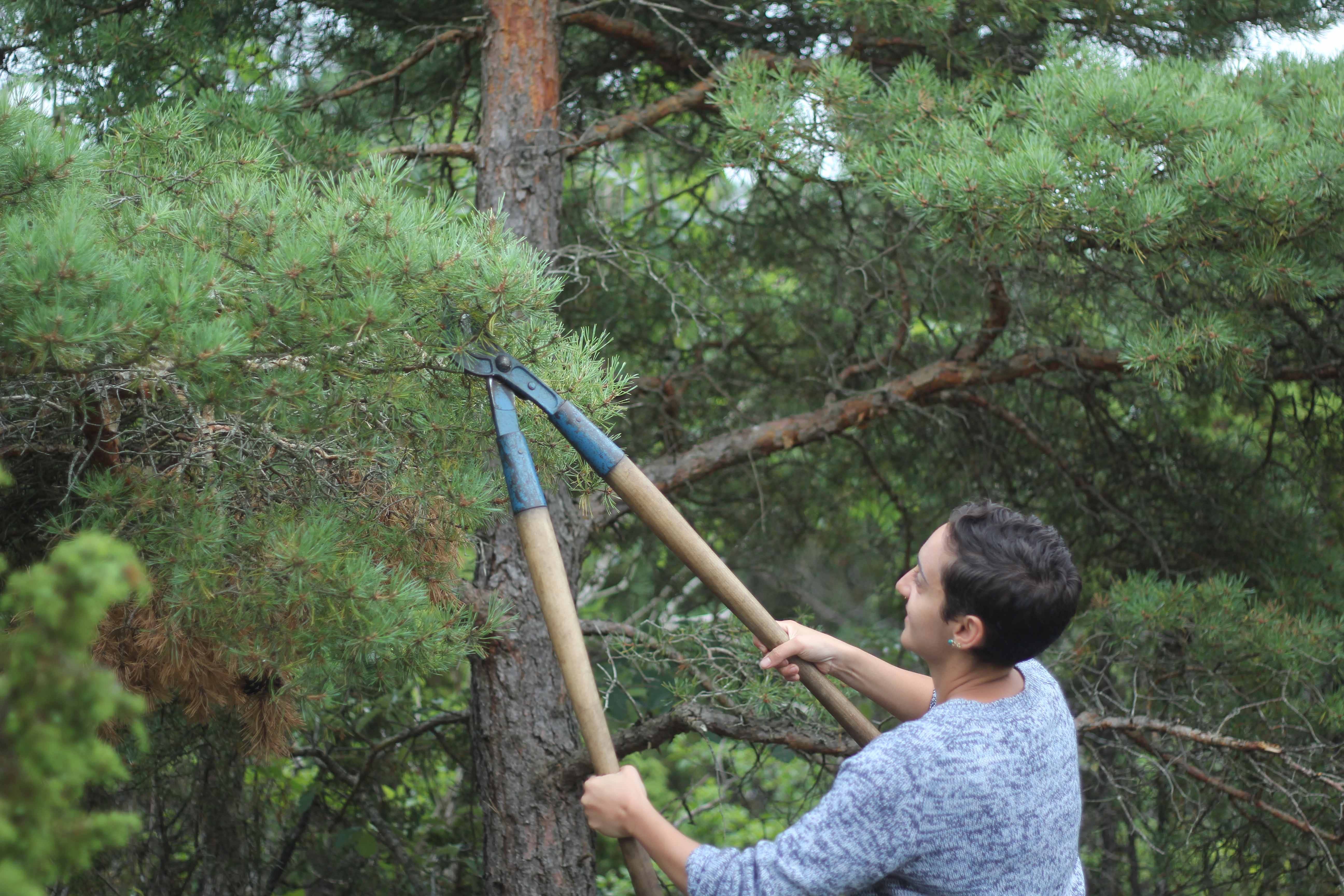
I’m really ashamed to say this, but prior to my research on Christmas trees and trees in general, as someone who has only ever lived in cities, I had no real clue of all the things that trees give us. They provide shelter, resources, food, they control ecosystems, weather, they were here on earth millions of years before we were as stewards of the land. In the days before capitalism, colonialism and industrialisation, we respected trees. We worshipped them, gave thanks for them, we managed forests and planted what we took so that we would never be without them. But today, this connection has been broken. In fact, the only tree that many of us in the West might interact with all year is our Christmas tree and this has been reduced into nothing more than a commodity of Christmas. The consumer-to-Christmas-tree relationship is not based on reverence, but on purchasing power — we buy these trees to hold them hostage in our living rooms and then coldly discard them when Christmas is done and dusted. Call me a Scrooge! Call me un-festive! But, I can no longer understand why engaging in this sort of behaviour would give any sense of Festive Joy.
It is estimated that there are roughly 3 trillion trees on earth and 170 billion of them are at risk of being destroyed. In the UK and USA alone, an average of 40 million Christmas trees are cut down and sold each year, which doesn’t sound like that many when compared to a trillion, but according to the National Christmas Tree Association, there are currently 350 million more trees currently being grown in the USA, ready for felling over the next 15 years. Again, in comparison to 170 billion, this is a relatively small number, but let’s investigate what conifers could do for the planet if we left just ONE cohort of trees from JUST the USA and UK in the ground to live out their natural life span (FYI the reason that I have focused on these two countries is because I found it quite difficult to verify Christmas tree sale numbers from Canada and Europe). The forester Peter Wohlleben calculated that an average tree lives for about 400 years and that one tree will sequester approximately 22 tonnes of carbon dioxide throughout its lifetime. With this in mind, we can multiply 22 tonnes by 40 million, leaving us with 880 million tonnes of CO2 — the approximate amount of carbon that could be stored not chopping down just one year’s harvest of Christmas trees in the UK and USA. To put this into perspective, in 2023, the global aviation industry generated 882 million tonnes of CO2. Obviously, we’re comparing one year’s worth of carbon emissions to carbon captured over 400 years which is a bit mad, but if we stopped cutting trees down for, say, 20 years, then the amount of carbon captured is no longer an insignificant number — plus remember all those other benefits to keeping trees in the soil that I mentioned earlier? Those benefits improve with age, the older the tree, the better it is at adapting itself to climate change. In the last couple of years, I have been met with the debate that planting Christmas trees if only for between 10 - 15 years, is still beneficial to the planet. No shit, Sherlock, are you trying to tell me that planting SOME trees is better than planting NO trees? I’ll take 10 years of growing 40 million Christmas trees over zero, but actually if we’re only growing them for a matter of decades, wouldn’t it be better to just grow something else, for efficiency’s sake seeing as spruce, pine and fir, the trees we typically use for Christmas trees, take quite literally HUNDREDS of years to get to adulthood and it takes them a decade to get to a piddly five feet? Have you ever seen an enormous 30 ft tree used in posh hotels or in the middle of town centres? Welp, those have probably taken DECADES to get that big, only to be cut down and stuck on a roundabout in the middle of some depressing British suburb. The oldest tree on Earth is a Great Basin bristlecone pine tree named Methuselah that is somewhere between 4,800 and 5000 years old — for all intents and purposes, Methuselah is a Christmas tree! What if, instead of trees that grow incredibly slowly for a really long time, we used, for example, bamboo as our alternative Christmas tree? Bamboo, in parts of Asia, has the same cultural significance as the Christmas tree in the West. The pine, the fir and the spruce all have connotations of hope and everlasting life — bamboo also carries symbolism of resilience, immortality and hope, but it has an average life of 5 - 10 years and grows incredibly quickly.
On the subject of planting and farming, things get difficult to quantify. Here’s the deal — farming in the UK (and further afield) is monumentally messed up. Even though food for the consumer is still too expensive, farmers aren’t paid enough and farming as a profession is difficult and in decline. Some farmers are resorting to growing ornamental vegetables like pumpkins, flowers and Christmas trees instead of food because these are products that command a higher profit. There aren’t loads of famers doing this, out of 209,000 farms in the UK just 1500 of them grow Christmas trees but it’s how these trees are farmed could be considered problematic. Unlike agriculture for food, trees are often sprayed with harmful pesticides such as the weedkiller glyphosate, a cancer-causing chemical which gets into a tree’s root system, polluting the water and soil (remember what I said about 90% of soil being degraded? Pesticides are one of the reasons for this) and making them toxic to pets if eaten, despite them being inherently non toxic and edible in the wild. Trees cut down and sold also need to be transported across the country, which creates further emissions. A recent article from the BBC confirms that though, yes, it’s great that we’re growing any trees at all, Christmas trees aren’t included in the EU’s pledge to plant 3 billion additional trees by 2030 because ‘they are considered too short lived… so there’s not a lot of time for biodiversity to settle in and grow healthy populations.” Though this would be never happen, in a country of 70 million, wouldn’t it be nice if every person had a dedicated Christmas tree planted somewhere, permanently, to be visited every Christmas and give thanks to (similar to British folk traditions of wassailing which used to take place on January the 6th but now happens in late December and early spring).
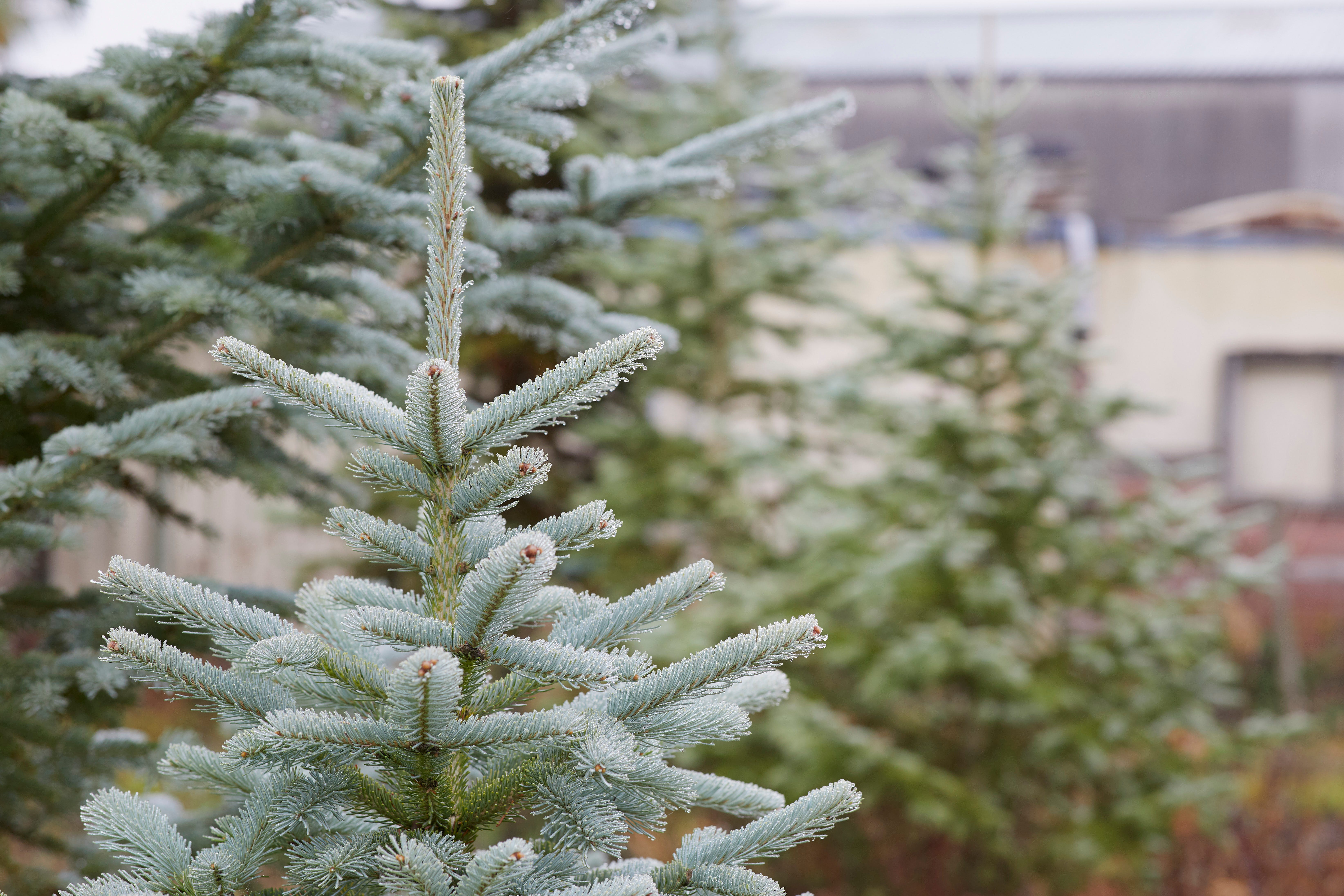
Even if the growing part is done ethically, I have stumbled across a couple of articles in recent years that cast a shadow over harvesting tree nuts to grow Christmas trees from. The BBC and National Geographic have both reported that many nuts are grown and harvested in Georgia and sent around the world to Christmas tree farms. But harvesting them is often dangerous, with pickers experiencing poor working environments and low pay — it is simply another example of the agricultural industry heavily relying on low paid, poorly treated migrant workers in order for bigger industries to turn a profit.
And though trees are biodegradable in the wild, millions of Christmas trees are sent to landfill, where that they don’t break down nicely on forest floors further contributing to the natural ecosystem but, instead, create methane as they degrade which is one of the worst kinds of greenhouse gas. There are a number of schemes that try to repurpose Christmas trees. Some are sent to farms for animals like goats to eat, some become building materials — amazingly, some of them are used to support flood defences. This is great! But 10 years after launching this project, I have finally had enough of hearing about what to do about Christmas tree waste.
I’m aware that I’ve spent a decade winding myself up about something that is supposed to be a bit of fun. I’m also aware that, in the grand scheme of things, stopping the harvest of Christmas trees absolutely will not make a dent in the amount of emissions we need to capture to reduce the impacts of global warming — animal farming, fossil fuel burning and billionaires all pollute far more than any Christmas tree ever will. But I guess my point is this: if we stopped outdated practices that no longer make sense in the face of impending climate catastrophe, such as cutting down trees unnecessarily, could we at least reduce our gargantuan carbon footprint by a teeny tiny bit? And if there were several polluting practices (like keeping pumpkins or gifting roses in February) that we could simply and easily put an end to without having to restructure the whole bloody global order (which we also need to do but this is a story for another day), why not do it?
NOT keeping trees is also, to me, a symbolic gesture. The way we commodify nature must end. We must make way for kinder, more respectful and more sustainable traditions that we don’t impact ANY PART of the planet negatively if we are to have any hope for our environment in the future.
This Christmas just gone, I refused to borrow my sister’s fake plastic tree that she has lent me for the last few years, I didn’t buy a potted tree Christmas tree and then keep it which I have on occasion recommend that people do, I didn’t dig up the spruce that I planted in my mum’s garden about 5 years ago which is now looking very handsome. Instead, I decorated my 6 foot cactus, covering it with the sustainable decorations, colourful rope and fairy lights. I used what I already had, without putting additional pressure on the environment and I felt a lot less grumpy about the whole thing.
Thanks for reading! This post is public so feel free to share it.
No posts
Comments
Nothing yet. Say the first thing.
Sign in to join the conversation.