
This month, I’ve got a trio of recent novels to share with you, with a bit of an international theme. The first is in translation from Spanish by a Chilean writer who grew up in The Hague, Buenos Aires, and Lima (and much of the book takes place in Europe). The second is by a Scottish poet and features an Australian protagonist in an English boarding school setting. And the third is written by an American, but most of its key action takes place abroad, most notably in Japan and North Korea.
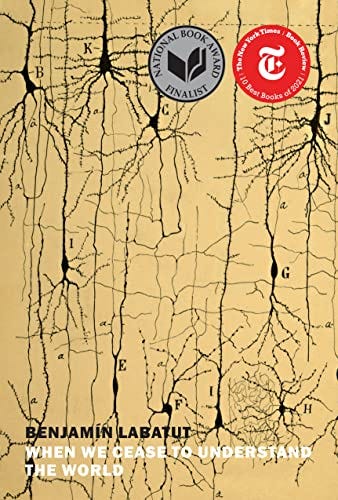
When We Cease to Understand the World by Benjamín Labatut, translated by Adrian Nathan West
Those hopes were shattered in light of Heisenberg’s discovery: what was beyond our grasp was neither the future nor the past, but the present itself. Not even the state of one miserable particle could be perfectly apprehended. However much we scrutinized the fundamentals, there would always be something vague, undetermined, uncertain, as if reality allowed us to perceive the world with crystalline clarity with one eye at a time, but never both.
I discovered this book thanks to this Lit Hub post of book recs in which Ingrid Rojas Contreras (whose novel The Fruit of the Drunken Tree I covered here in September 2024) named it as the last book she’d loved. It’s a wonderfully strange book that blurs the lines between fiction and nonfiction. As I was reading it, I was constantly looking up the biographies of these mathematicians and scientists, trying to discern what might be fiction. In the first piece in particular, I was fascinated to discover from the Acknowledgements that only one paragraph is fiction, which is not labeled, of course.
On its face, it seems to be a series of essay-like stories (or story-like essays) about various brilliant mathematicians and scientists (mostly hailing from Germany) during the twentieth century, whose work brought about some kind of encounter with horror. In some cases, the horror is quite concrete—the gassing of Jewish people in concentration camps or soldiers in the trenches of WWI—while in others, it is a more abstract kind of horror at how strange and tenuous is our actual understanding of reality. It’s a fascinating and haunting book, and the final piece takes a turn that reminds me a bit of the ending of Han Kang’s Human Acts (which I loved so much) in the way it invites the reader to read backwards into the book’s genesis. (Not incidentally, I think, Kang’s book is also fiction but deals closely with real historical events.)
When We Cease to Understand the World is sometimes labeled a “nonfiction novel,” which I think is a strange description because some of the pieces are more ostensibly fiction (according to interviews with Labatut) and though the book is very much of a piece thematically, it does not have the cohesion I associate with novels, or even a novel-in-stories. It’s something else, perhaps like light, which behaves as both a particle and a wave, depending on how it’s measured.
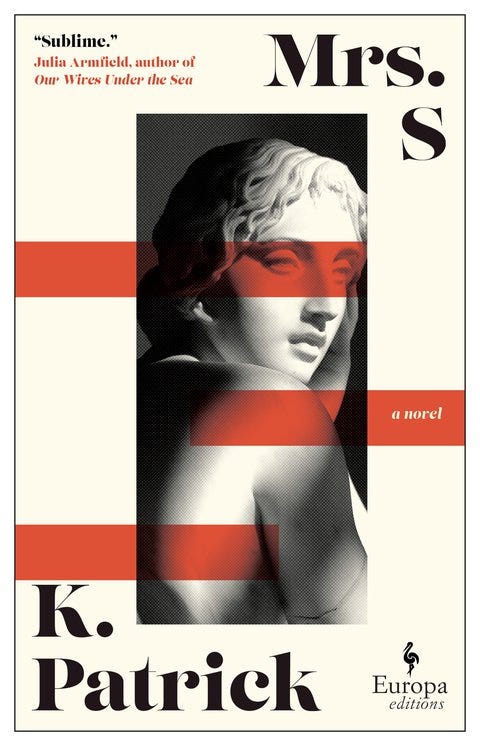
This is no ordinary rain. Water thumps the skylight like knuckles, thumps the ancient slate roof. My eyelids close. I am made from weather. I try to see myself at fourteen, at thirteen, at fifteen. Already living in my knees. Shoulders rolled forward, hunched, why are you always hunched, my mother asking me. She did not know I was protecting the core of myself.
A writer I admire recommended this book, and honestly, I probably would never have read it otherwise, because it’s set at a boarding school in the English countryside and the plot revolves around an adulterous affair involving a huge power imbalance, two elements that typically signify that a book is not going to be my jam. (I know, lots of people love English boarding school dramas and adultery stories—just not me.) The writing is also extremely lyrical but terse—very short sentences with no dialogue tags, which is also usually not my speed. All of that said, I pressed on because of their recommendation and was so, so glad I did.
The novel is about a twenty-two-year old Australian spending a year in England on a work visa as a kind of residential assistant for a girls’ boarding school who ends up having an affair with the wife of the headmaster, the eponymous Mrs. S. Though it was difficult to read at times because of how keenly I felt for the twenty-two-year-old genderqueer protagonist, who is socially isolated and longing for connection, the story subverted my expectations in some incredibly satisfying and redemptive ways. It’s a book about navigating early adulthood, particularly as a genderqueer person in a context where there is some acceptance but also antagonism and rejection. I dearly wish it had existed fifteen or twenty years ago when I was at that stage of life, but I’m very glad it exists now.
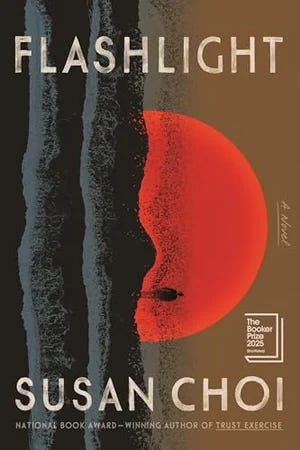
Compared to her prior knowledge of Korean it’s enough to make her feel like a virtuoso, this dinky bit of recent learning, as insignificant a fraction of Korean as the fraction representing her knowledge of her father to whatever the whole. The sum of the things she knows about her father could fit inside the sum of the things she’ll never know about him an infinite number of times. The things she knows about him are as meager as a pair of backgammon dice rattling in their cup.
After trying to read Choi’s Trust Exercise a few years back and struggling to get into it, I didn’t actually have very high hopes that this novel was going to be a good fit for me, despite Choi’s wide critical acclaim. I even perused some of the negative Goodreads reviews, as if to talk myself out of it. Nevertheless, there was something about there being EIGHTY holds on the electronic copy at my library while the lone print copy was sitting on the new books shelf that made me think, “Eighty other people in this town are waiting to read this, and it’s RIGHT THERE. Just give it a try.”
As you might guess from its presence in this post, I was pleasantly surprised by how much I enjoyed this book, which focuses on the story of a young woman whose father mysteriously disappears and is presumed dead. Unlike some of the more dour Goodreads reviewers, I did not find the first half slow—not fast, per se, but I didn’t find myself anxiously flipping ahead to count chapter pages and instead looked forward to picking it up again each evening (one of the highest compliments I can pay a book). It’s definitely more character-driven than plot-driven, though it does tie in with a dramatic geopolitical incident that was long covered up by the nations involved—Japan, South Korea, North Korea, and China—and therefore largely lost to history.
Another common Goodreads’ complaint regarded the characters being unlikeable, and while they aren’t likeable in the saccharine ways I find many of the characters of contemporary fiction to be, they are not flat in their unlikability either. Rather, they are very human—the closer you get, the more complex they become. I felt deeply for these characters and their situations and admired Choi’s decision to resist making them overly sympathetic despite the tragedies that befall them.
The book does take off in the second half, so if you start reading and find yourself enjoying it, you can be confident that the book will only pick up speed and grow stronger. I also found the writing rock solid, and the frequent comparisons to Pachinko (which I also really enjoyed and covered here two years ago this month) feel quite apt. Flashlight isn’t as sweeping in its scope as the former, but in my view, its strength is that it probes its smaller cast of characters more deeply.
I hope at least one of these novels turns out to be just right for your winter armchair travels. As always, thanks so much for reading!
Until next time,
Jules
No posts
Comments
Nothing yet. Say the first thing.
Sign in to join the conversation.