
Happy Solstice, friends! Today marks the third year of me sending out these monthly missives. Whether you’ve been with me from the get-go or have just recently found your way here, I appreciate knowing you’re on the other end of all these letters I jettison out into the digital ether. Writing these newsletters has been an act of reflection, a labor of love, and a reminder of my connection to so many communities, far and near.
And yet, summer is here, with its lure toward leisure, its enticements toward ease, its temptation toward time off. So, for the next few months, aside from a few brief updates, Practice Makes will be on hiatus, while I practice making myself more at home in a hammock than behind a screen. I’ll be back at it later this year. In the meantime, on this day where the sun is abundant here on my little patch of earth, I hope you, too, are soaking up some radiance and warmth.
xo
JP
A few weeks ago, I attended a ceremony for the Asian American Journalists Association Diversity and Inclusion Awards, which highlight stories about issues that disproportionately affect people of color. I’d had a piece about Black and brown conservationists nominated in the Environment/Health category but didn’t really expect to win. And I didn’t—this great piece about the green Islam movement did. I applauded, happy for the winner, and kept nibbling on my dumplings and tteokbokki as the remaining awards were announced.
And so I found myself with a mouthful of spicy rice cakes as the host announced the final category of the night, Opinion, and described the selected essay, a piece that intertwined questions about a family member’s citizenship status with commentary and research on the U.S. citizenship process, which, it slowly dawned on me, was an essay I wrote about my mother. I hadn’t known that this essay was also nominated, and so dazedly muttered something nonsensical into the microphone when I went up to accept the award.
I was still dazed later, as I headed home. I was happy that the story was recognized, but also felt a frisson of something that seemed an awful lot like fear. Being recognized for a story about conservation and stewardship was one thing, but being recognized for a story that shared both some wonderful and some difficult aspects of my relationship with my mother, that offered a glimpse into our estrangement, and that revealed some childhood trauma? Eek. I’d written about those things in poetry before, where I could hide behind the veil of poetic license, but this was a journalism award, something that might bring attention to this as an account meant to be read for its honesty or authenticity. I felt exposed.
I went into work the next day, and coworkers were sending me messages about the award over our office productivity platform. Apparently, the awards were a headline in the local news, and though I appreciated the kindness of my colleagues and their thoughtful perspectives on the essay’s broader themes, I could also feel the thin partition between my personal and professional life starting to crack. Now they know me, I thought, in terror.
I don’t tend to think of myself as shy. When I meet people, I often don’t divulge much about myself, but if anyone asks me a question that shows true interest, I will share and share and share. I can’t remember the last time I was nervous speaking in public either. Give me a microphone and a spotlight, and I’m in my happy zone, doing readings or giving artist talks or hosting events. In those spaces, though, whether it’s talking one-on-one or in front of an audience, I feel a kind of authority—as in, I am authoring both my own narrative and an experience for someone else. I am creating and crafting, choosing what to divulge and how to phrase, gauging how my words are landing with listeners, and altering course based on what I discern.
But writing, once it’s out in the world, has a narrative of its own, crafted as much by the readers as by the writer. They will make whatever meaning as they read, without me to guide them or nudge them toward a version of the story—a version of me—that I might find more accurate or nuanced or flattering. When readers reflect back to me what they’ve read in a personal essay, that particular flavor of attention feels less like a limelight and more like the glare of a surgical light, illuminating my personal operating theater so intensely that there’s nary a shadow to hide in.
I’m not sure what this all means, as I continue to write—and probably, at least in some cases, to publish—personal essays. That same part of me that likes to ham it up in front of a mic also drives me to want to keep writing and sharing my stories. And the part that cringed the moment I realized an award might put my essay in front of more readers is also advising me to be careful with how much I let the ham take the wheel. But here I am, writing this newsletter, sharing this story about the terrors of sharing, and so, for today at least, Ham 1, Fear 0.
For most of my adult life, I’ve worked jobs that kept me on my toes. Whether I was waiting tables or answering phones or teaching classes, I had to be nimble, ready to respond to whatever a diner or caller or student brought my way. In my current job, though, I work with folks who are planning parks that will be used for decades or restoring natural areas by planting trees that will still be growing generations from now. Every choice requires meticulous deliberation, which is wonderful for me as a writer used to careful crafting and as a person trying to be more conscientious about being a future ancestor. But the more I've practiced this long-range thinking for forty hours a week, the more I've felt the spontaneity and agility that served me so well all those years starting to atrophy. I could feel my mental playfulness and spryness slipping away, and I didn’t want to let it go. So I did what any fool would do and signed up for an improv class. (Ham 2, Fear 0.)
I knew going in that I probably wouldn’t be good at improv. And I wasn’t. During the first class, in the midst of a low-stakes game in which we were supposed to invent ridiculous compliments for each other, my mind went utterly blank. As other people lauded their scene partners with comments like You rock mom jeans and You knit beautiful sweaters for your dog, I blurted out a phrase that at best was a jumble of word salad and at worst sounded like an outright insult. I was mortified and apologetic, and later, on my drive home, I was filled with white-hot shame and utter embarrassment, sure that everyone else in the class thought I was an idiot and a weirdo.
I had a good cry, and a good sleep, and a week of doing other things at varying levels of well and not-so-well, and when the next Tuesday rolled around, I went back to the class, where everyone was kind and generous and supportive, and if anyone thought I was an idiot or weirdo, they weren’t letting on. And so, during that second class, I felt more comfortable, and though I still wasn’t good, at least I was having fun, even when I froze or made mistakes. I kept going back, week after week, and discovered games that felt easier, ones that started with movement rather than speaking. I learned that although my comedic tastes as an audience member tend to run toward witty and wry, as a performer, my talents tend toward physicality and slapstick. (And even there, though I love a good Charlie Chaplin movie, I suspect I’m more of a Stooge.)
As the class continued, several other brave souls piped up about how they sometimes went blank or struggled with feeling slow, and the instructor gave great, practical tips for those moments. (My favorite, repeating whatever your scene partner just said, is a twist on that age-old interview tip that’s meant to give you a chance to collect your thoughts before you respond.) Now, as the class is drawing to a close, I still have plenty of scenes where I blurt out something that’s not particularly funny, or even interesting, but I don’t feel mortified when that happens. I don’t feel like an idiot or a weirdo or a failure. I just feel relief that I’ve internalized enough of my classmates’ generosity that I’m comfortable saying the first thing that comes to mind, trusting that my scene partner will do something funny with it… or not. I feel—at least sometimes—free, present, not worried about failing or succeeding, but satisfied that whatever comes out of my mouth will be fine.
It is, I think, the same conclusion I came to during all those years when I was talking to customers or to students seeking guidance, when I knew that sometimes I’d give people just what they needed and other times I’d let them down. My ability to be nimble may have little to do with the pace of my decision-making, after all, and more to do with the levity with which I hold my decisions or the pace at which I’m able to forgive myself.
This month, I got the good news that my essay, “You-Are-Not-Mad Lib,” which was published in The Maine Review last year as nonfiction, was selected to be included in the 2024 Best Small Fictions anthology, raising the question, “What is genre, anyway?”
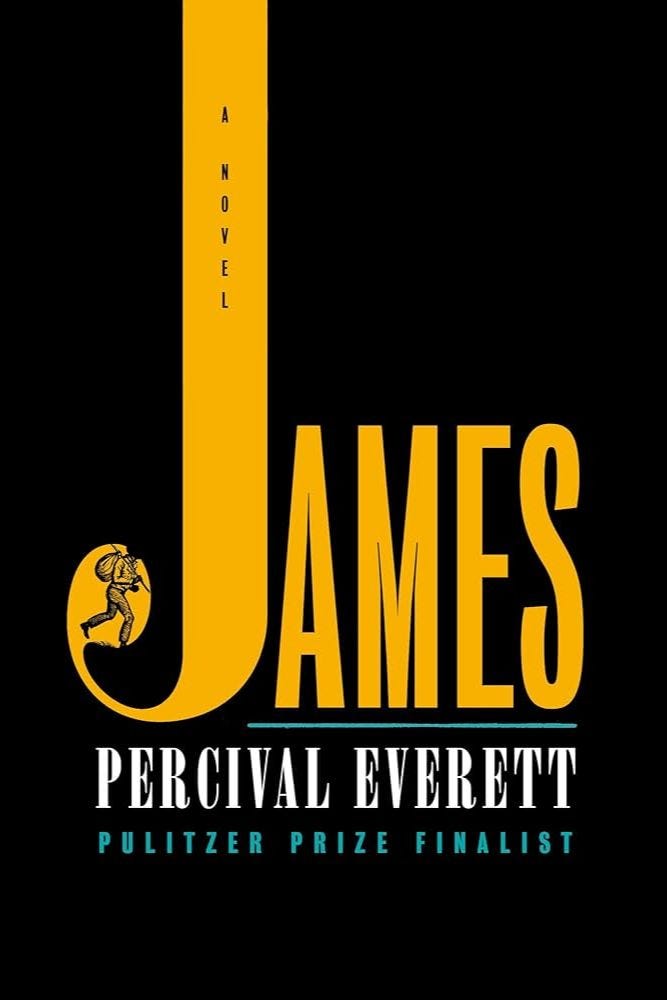
It’s a question that I imagine Percival Everett—a writer who’s played with the lines between fiction, nonfiction, and metafiction in novels like Percival Everett by Virgil Russell: A Novel—might appreciate. This month, I read two of Everett’s novels, James and Erasure. James, his most recent novel, is a retelling of Mark Twain’s The Adventures of Huckleberry Finn from the perspective of Huck’s enslaved friend Jim, who refers to himself as James. I love a good retelling, especially from the point of view of characters who were peripheral in the original stories, and James does an excellent job of illuminating James’ interiority, his dreams, his motivations, the emotions behind his relationship with Huck. What struck me most about James, though, was its exploration of language, as James code-switches between the voice he uses among other Black people, which reveals his intellect and literacy, and the dialect he uses among white people to live down to their expectations of his inferiority. Everett’s novels always grapple with the relationship between language and agency, and this book made me think deeply about the power of language as a tool for liberation.
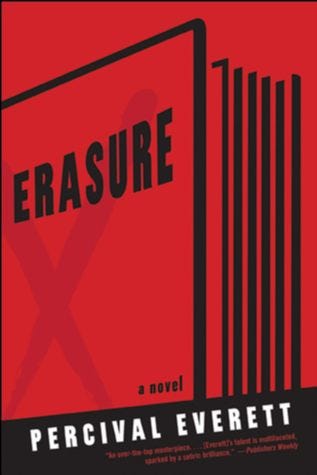
Erasure, too, wrestles with language. If you’ve seen American Fiction, you’re already familiar with the plotline of Erasure, the novel on which the film was based. If you haven’t, a) you missed the best film that came out last year, and b) the brief synopsis is that Thelonious “Monk” Ellison, a Black writer who’s having increasing difficulty publishing his challenging, experimental novels, dashes off a novel that’s meant to be a satire of stereotypically “Black” novels, only for it to be taken seriously by publishers and lauded by readers and critics. I read Erasure back when it first came out in the early 2000s and revisited it now to see how it compared to the movie. (If you loved the film as much as I did and are interested in the adaptation process, I highly recommend Larry Wilmore’s Black on the Air podcast with the movie's writer/director, Cord Jefferson.) One of the major differences between the two versions of the story is that Erasure includes the entirety of the satirical novel, My Pafology, which somehow on my first read twenty years ago I didn’t recognize as a retelling of Richard Wright’s Native Son. My Pafology, as it appears in Erasure, is a much more horrific text than the one in American Fiction, which diminishes the misogyny and abuse in the original story to focus instead on how it relies on lazy stereotypes about Black language and Black stories. Like the film, though, Erasure is as much a family drama and an exploration of the intersection of race and class as it is a scathing and humorous critique of dominant culture’s appetite for a particularly narrow version of Black literature.
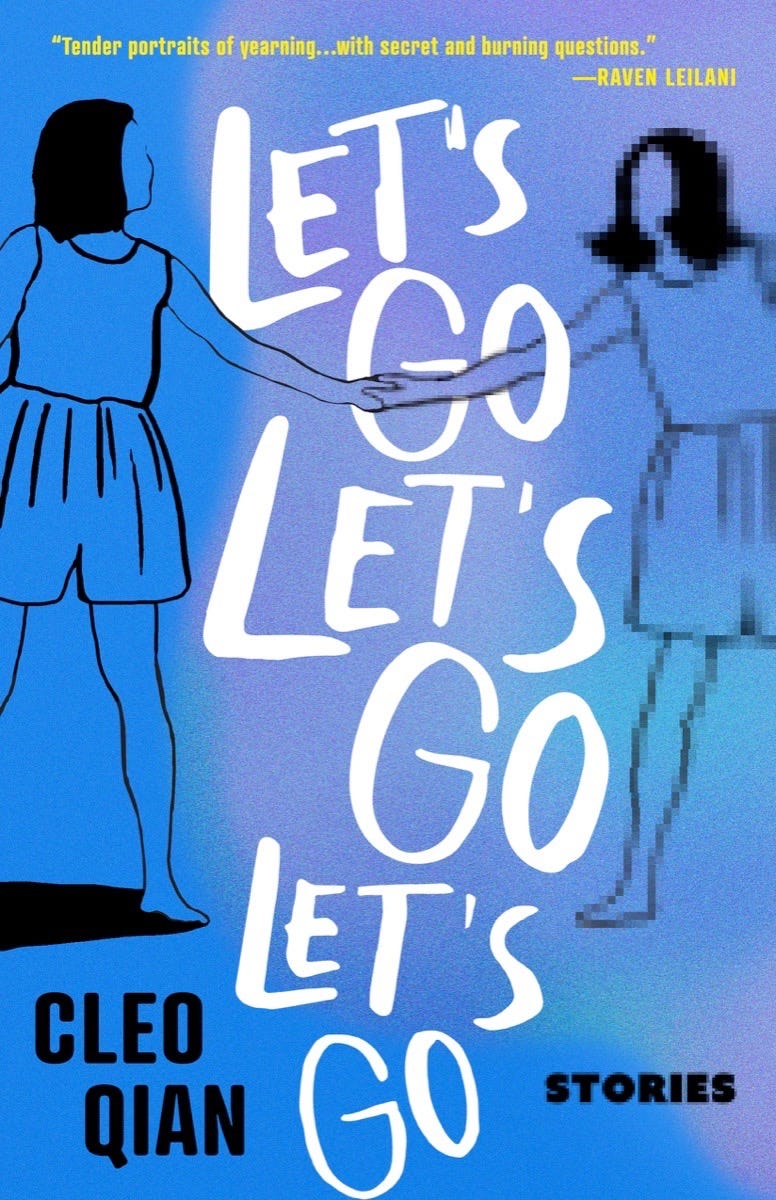
This month’s reading also included another excellent book, the short story collection Let’s Go Let’s Go Let’s Go, by Cleo Qian. A friend was recently lamenting how every book they read by an Asian American author fell back on the same old tropes about assimilation and generational divides, and I recommended Qian’s collection as an alternative. The stories’ protagonists are young Asian and Asian American women reckoning with the dawning of their own desire, their awareness of how they’re perceived as they’re coming of age, and their experiences of living in a tech-mediated social world. What truly sets these stories apart, though, are the speculative elements that enter each story, which set the narrative worlds ever-so-slightly askew and helped me fathom the strangeness of growing up in a hyper-digital world. Influenced by avant garde art, pop celebrity culture, online dating, and more than a dollop of horror, this collection is a beautiful, haunting debut. My favorite story in the bunch, “Power and Control,” about an abusive relationship, feels like it would be at home among terrifying fairy tales like Carmen Maria Machado’s Her Body and Other Parties, and I highly recommend the collection to anyone who appreciates surrealist tales in that vein.
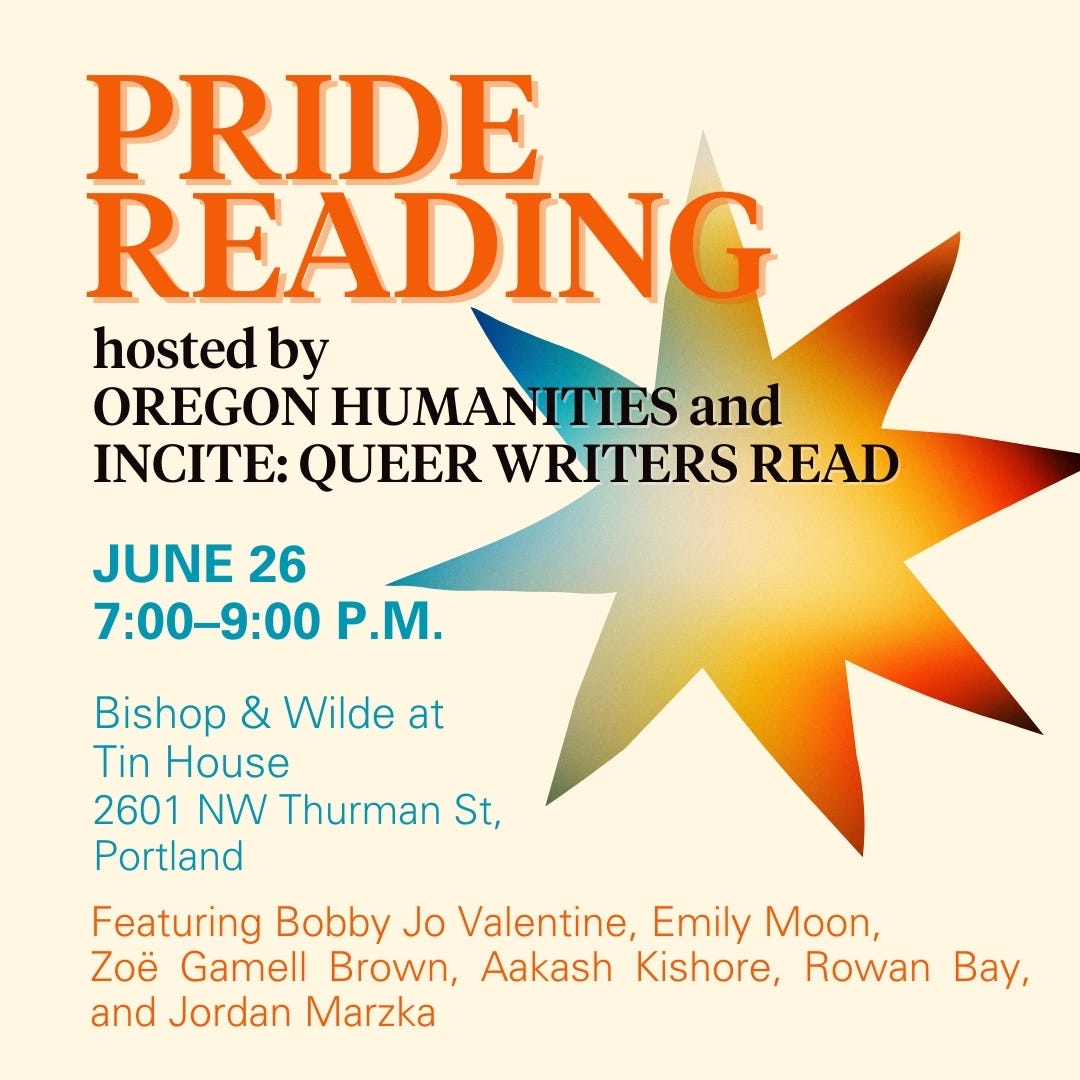
In celebration of Pride, I’ll be co-hosting a collaboration between Incite: Queer Writers Read and Oregon Humanities on Wednesday, June 26, 7pm PT, at Bishop & Wilde in Portland. The event will feature performances by Bobby Jo Valentine, Emily Moon, Zoë Gamell Brown, Rowan Bay, Jordan Marzka, and Aakash Kishore.
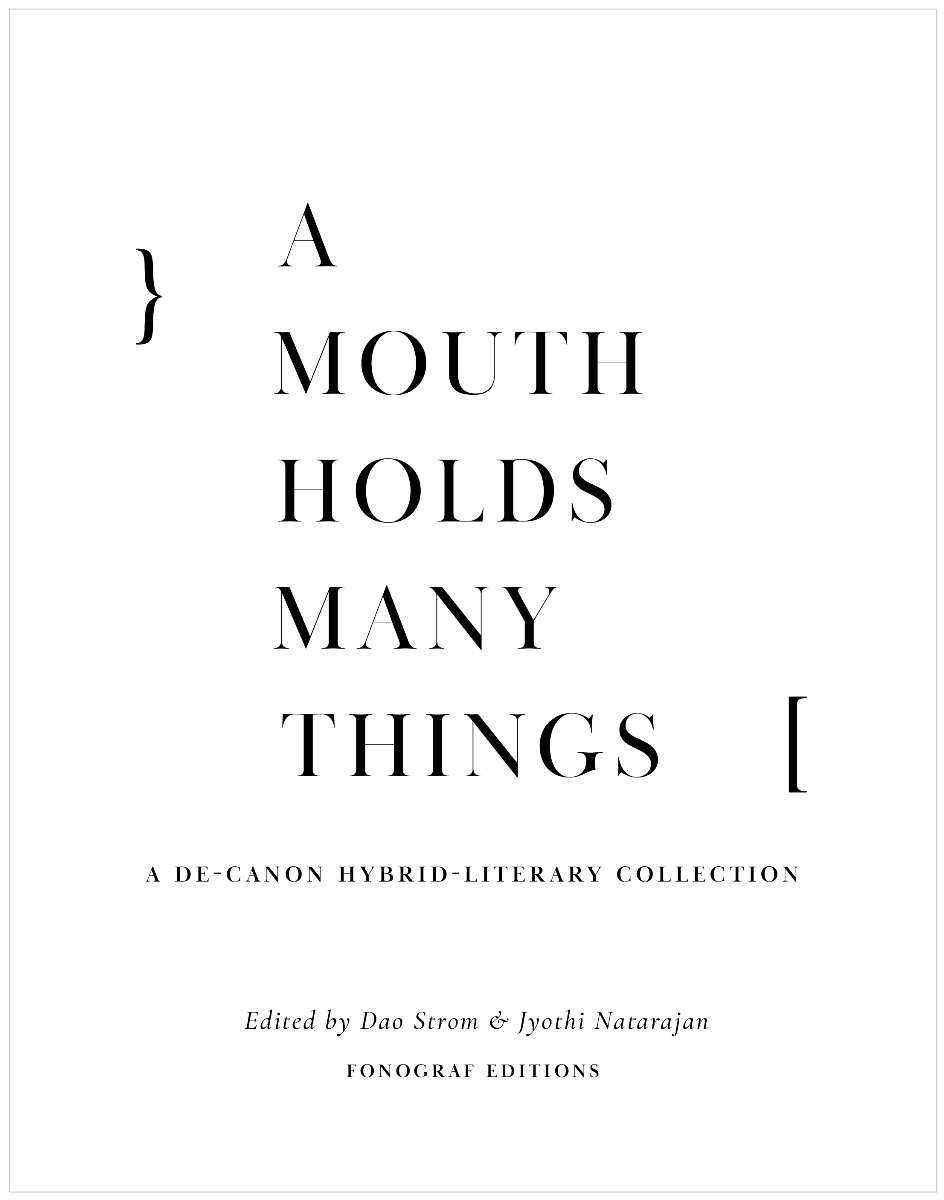
On Friday, June 28, 6pm PT, I’ll be part of a book launch for A Mouth Holds Many Things, a new anthology edited by Dao Strom and Jyothi Natarajan. The anthology, which features hybrid work from 36 women and nonbinary BIPOC writer-artists, is also being celebrated with an exhibition at Stelo Arts, 412 NW 8th Ave, Portland, where the launch will take place. Swing by to see/hear work by me and fellow contributors Stephanie Adams-Santos, Jennifer S. Cheng, Gabrielle Civil, Monica Ong, and Sandy Tanaka.
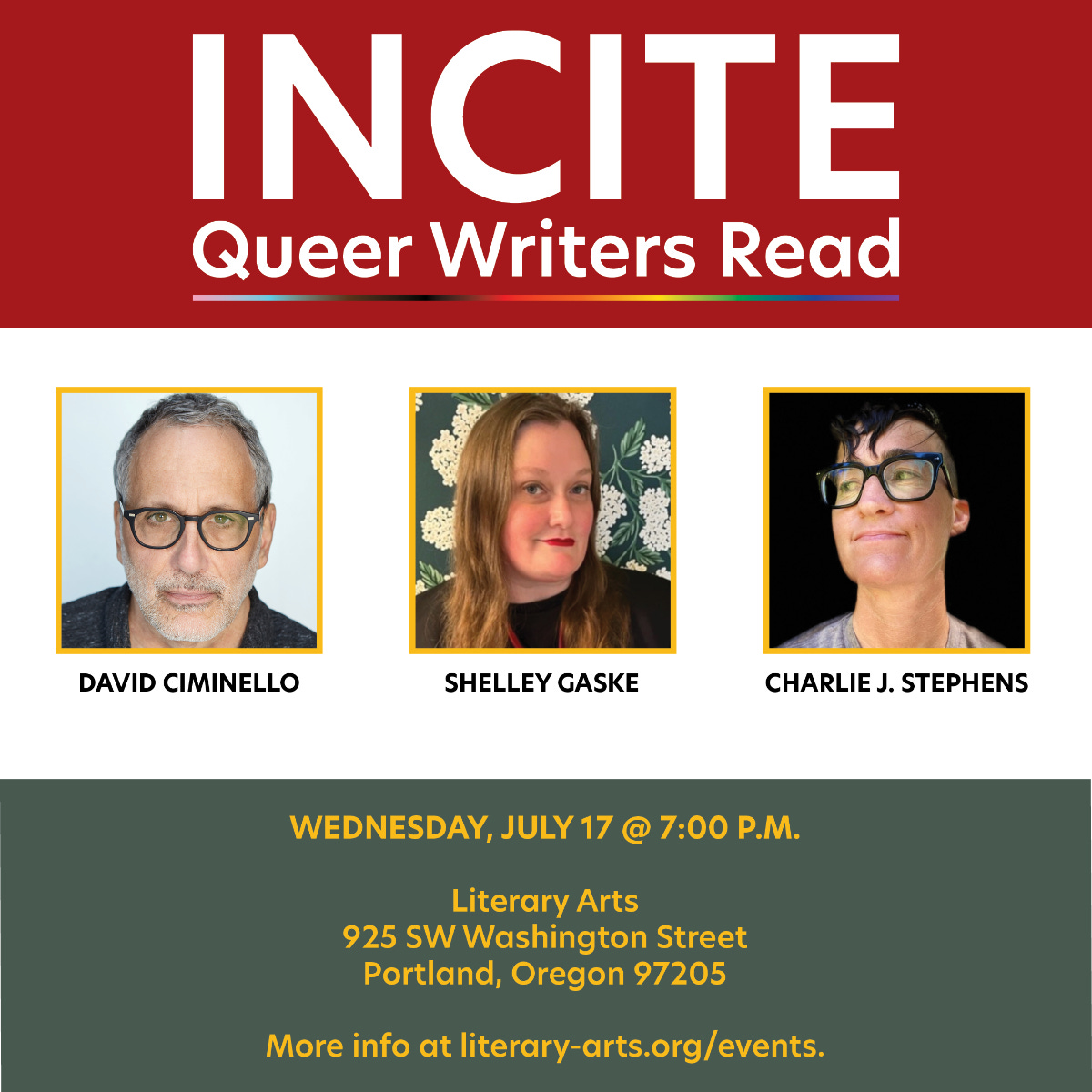
On July 17, 7pm PT, I’ll be co-hosting the last Incite: Queer Writers Read event at the current Literary Arts space at 925 SW Washington St in Portland. (Don’t worry, we’ll be back when Literary Arts’ new space in SE Portland opens this fall.) The July event, which will feature David Ciminello, Shelley Gaske, and Charlie J. Stephens reading on the theme of “Found Family,” will be followed, as always, by a community conversation on the same theme.
Although summer is just dawning, if you’re already looking ahead to fall, I’ll be teaching at Northwest Writers’ Weekend in Port Orchard, Washington, Thursday, November 7-Sunday, November 10. The camp includes classes on songwriting, poetry, creative nonfiction, cross-genre writing, and art. I’ll be teaching two classes: “Writing with Our More-Than-Human Kin,” and “Poetry Is a Party, and You Are Invited.” Registration covers classes, housing in a cabin in the woods by a lake, and scrumptious meals. Scholarship funding is available by contacting the camp’s incredible organizers, Karee and Janet, at nwwritersweekend@gmail.com.
Other opportunities I recommend:
For Job-Seekers in the Portland Metro Area:
Come work with me! Metro’s Diversity, Equity and Inclusion (DEI) Department is looking for a Variable Hour Program Assistant III who can work up to 20 hours a week. This is a one-year temporary position with the potential for renewal. This role will work closely with other DEI staff to support programs that advance racial equity and inclusion through Metro’s internal and regional initiatives. The hourly rate for the position is $32.70 and is eligible for overtime and union representation. Apply online by June 27, 5pm PT.
For Bird Enthusiasts in California, Oregon, and Washington:
Dr. Olivia Sanderfoot, whose community science Lockdown Birding Study sparked what has now become my full-blown obsession with birds (and also kept my mental health afloat during the early pandemic), is now leading Project Phoenix, a new community science monitoring project to help gather critical data to test hypotheses about the effects of wildfire smoke and urban air pollution on birds. The project is looking for volunteers in California, Oregon, and Washington to conduct weekly, 10-minute point counts of birds in a place of their choosing from July-November 2024. The program is open to all, regardless of previous birding experience. Learn more and sign up here.
For BIPOC Youth (Grades K-5) in the Portland Area:
People of Color Outdoors (POCO) is offering a series of free five-day programs for young students at Columbia Park in Portland. The POCO Guardians Environmental Education Summer Program is an opportunity for BIPOC children to connect with nature and each other in a gentrified city where it can be challenging to find a welcoming community of friends. Each day includes home cooked meals, playtime, outdoor adventures, and learning. Upcoming programs start on July 1, 8, 15, and 22. Register here to secure a spot.
For Writers and Artists Disappointed by Celebrities:
Zines + Things is compiling an anthology, Fallen Idols, which aims to explore the profound impact that celebrities can have on our lives and the unique heartache that can follow when they let us down. They welcome poetry, prose (up to 1000 words), and visual art (up to 5.5” x 8.5”). Send your work by July 10, 2024.
For Artists and Justice Workers in the Portland Area:
On June 22, 12:30pm-3pm PT, at Historic Alberta House in Portland, brilliant artists Bobby Bermea and Rene Denfeld will be facilitating a workshop, “As Often as the Bold: Fear, Community, Movement, and Change.” The workshop will draw from liberatory frameworks including restorative justice, Michael Rohd and Sojourn Theatre, and Augusto Boal's Theatre of the Oppressed, to help participants experiment with movement-based techniques to navigate the fears that hinder us. Participants will leave feeling more empowered to use fear as a stepping stone for making greater changes in their own lives and beyond. Learn more about and register for this free, all-ages workshop here.
For Writers and Nature-Lovers in Eastern Oregon/Western Idaho:
On July 20, 12:30-3:30pm MT, at Four Rivers Cultural Center in Ontario, OR, friend and fellow poet Amelia Díaz Ettinger will be hosting “Touching Inspiration: Embracing Creativity through the Senses.” In this workshop that blends poetry and visual art, participants will explore the literal and symbolic meanings of our hands as they relate to creative acts, collaboration, and renewal. They’ll also engage in activities that encourage them to witness the human and more-than-human world through touch, smell, and sound. Learn more about and register for this free, all-ages event here.
For Creators of Tiny Works:
The Stacks Coffeehouse in Portland is hosting a gumball machine that recently held some of my poetry in its whimsical orb. Want one of your creations featured there next? Send your poetry, micro fiction, love notes, artwork, or something else lovely and smaller than 2” diameter to https://gumballpoetry.org/submit. Open to creators anywhere, though there’s an emphasis on people living or working in this region.
If you’ve got an opportunity you’d like me to include in a future newsletter, please let me know.
No posts
Comments
Nothing yet. Say the first thing.
Sign in to join the conversation.