
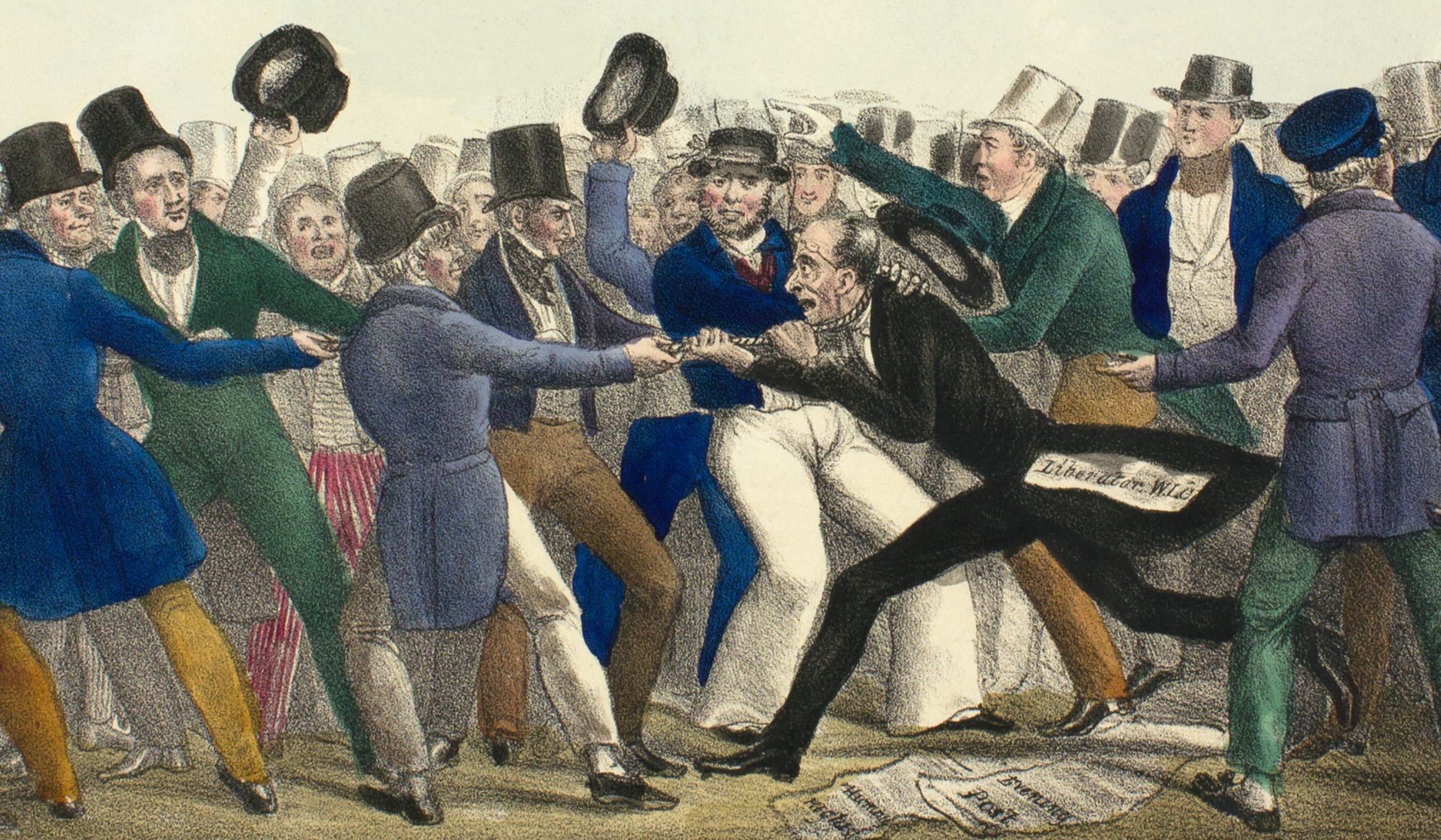
PART 2: The spectacle outside the Old State House began to calm soon after William Lloyd Garrison’s departure, and within an hour the rowdy crowds had mostly dispersed. Some of the rabble reassembled around the jail, others caroused on the Common and some migrated to nearby taverns, wine cellars and coffeehouses to cap off a long day of rioting by quaffing pints of porter and ale.
Wendell Phillips may have returned to his law office on Court Street before heading home that evening, or joined the other young attorneys in his building to confer on the riotous scene they had just witnessed. Whatever his immediate steps, the day’s events left Phillips feeling deeply unsettled.
While some of the rioters were unskilled, working-class laborers, many of the gentlemen rallying in the streets, dressed in their broadcloth, camlet coats, cassimeres and beaver hats, were his own peers. The sartorial splendor of the crowd certainly stood out. “I have kept a hat store thirty years and never saw so many good hats before in my life,” one local hat seller later remarked.1
Phillips did not agree with, or even fully understand, the abolitionist movement. Yet the open contempt and defiance of the laws, the disorder, the lawlessness, ran counter to his own deeply held beliefs. It was his first lesson of the inadequacy of republican institutions, he later said.2 He was especially dismayed by the treatment of the women, who had been unceremoniously evicted from their meeting and paraded through a hostile street. It was not until much later, however, that he fully realized how deeply these moments were shaping his convictions.
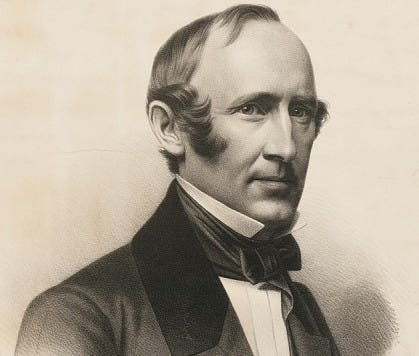
Still, Phillips’s evolving views on the matter did not immediately translate into any action. He remained a curious spectator, neither joining the fracas nor intervening to allay it. One critic later pointed out as much: “Mr. Phillips was hanging his head in shame, which act seems to be the only support he gave to the law and the authorities on that occasion.”3
Like everyone else in the city, Phillips read the newspapers and heard the chatter among his Court Street colleagues and Brahmin neighbors in the days that followed. His reaction fell somewhere in between Mayor Lyman’s defensiveness and the outrage expressed by Harriett Martineau, a visiting British writer. Martineau had been stunned to hear a Boston attorney insist there’d been no mob at all, only “gentlemen... in fine broad-cloth.” “Not the less a mob for that,” she’d shot back.
The mob’s actions violated Phillips’ ingrained sense of fair play and left him feeling conflicted. He was not quite ready to rush out and subscribe to the Liberator as some others did, but his transition had begun. Many years later he would remember the day as the first time he “touched the point of Radicalism.”
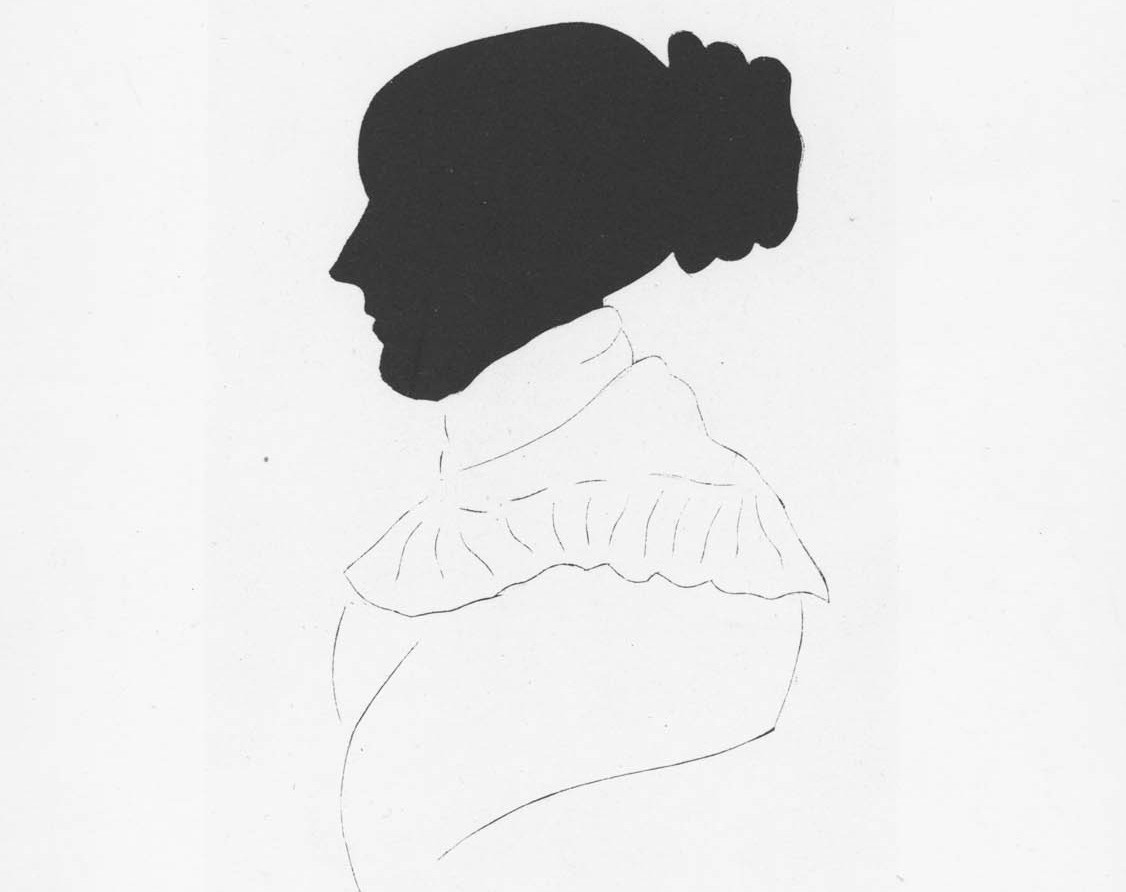
If the cause had not yet stirred Wendell Phillips to action, there was one abolitionist who soon would. Ann Greene was a bright, outspoken and determined young woman with long hair and striking blue eyes, just shy of her twenty-second birthday. She came from a wealthy Boston family, but her parents had both died when she was young, and she’d been raised by the family of her uncle, Henry Chapman, Maria Chapman’s father-in-law.
Greene and her cousin had planned a long carriage ride out to Greenfield, Massachusetts. The cousin’s fiancé asked a pair of young attorneys he knew to come along as company, Charles Sumner and Wendell Phillips. Sumner begged off at the last moment, citing bad weather, though Phillips suspected it had more to do with his friend’s shyness than the forecast. As a result, Phillips was left to serve as wingman alone.4
He’d been explicitly warned about Ann Greene beforehand: “The cleverest, loveliest, most brilliant young woman, but a rabid abolitionist. Look out or she will talk you into that ism before you suspect what she is about.”5
Greene came as advertised, and talked passionately of abolition for much of the long ride. She’d been inside the anti-slavery office with Maria Chapman when the Gentlemen’s Mob began, and she had plenty to recount. Phillips listened intently and was intrigued. He found her strong-willed and opinionated, though also warm-spirited and vivacious, and he admired her passion. When the ride was done, Phillips asked if he could call on her again. She readily agreed.
The courtship took. Phillips and Ann Greene were married in 1837.
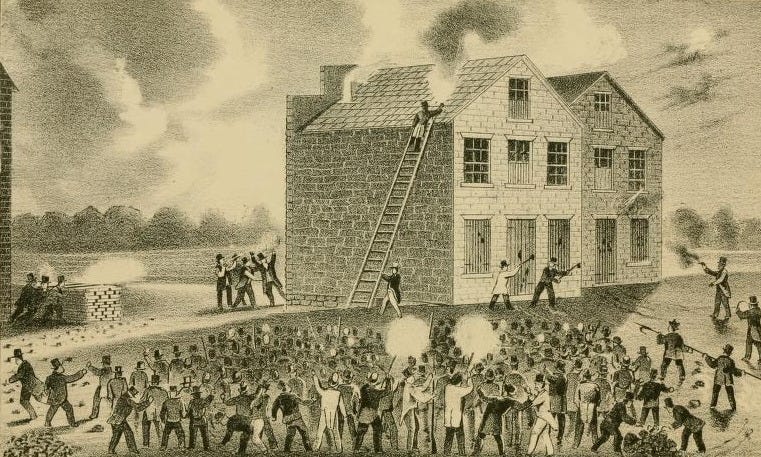
On the evening of November 7, 1837, two years after the riot outside the Old State House, a pro-slavery mob attacked an anti-slavery newspaper office in Alton, Illinois. Editor Elijah Lovejoy tried to defend the building and his printing press and was shot five times and killed. The news sparked outrage around the country, and a public meeting was called at Faneuil Hall in early December that drew a standing-room-only crowd of several thousand. The audience was nearly all men, save Maria Chapman and a handful of women in the gallery, and reportedly included a “large mobocratic element.”
Following introductions, a lengthy list of resolutions was read denouncing the attack on Lovejoy. The first few speakers stuck safely to the script and spoke out against the mob violence. But then the state’s attorney general, James Austin, rose, red-faced, and passionately spoke out against the resolutions.
Austin criticized Lovejoy for provoking the mob incident and accused proponents of politicizing his death for their own cause. “I have little sympathy for a minister of the gospel who is found, gun in hand, fighting in a broil with a mob,” he argued, callously declaring that Lovejoy had “died as the fool dieth.”
Austin was a well-known figure in the city and one of the state’s leading law enforcement officers, and many found his remarks compelling. The raucous crowd reacted with a tense mix of hisses and applause. Some spectators feared that the anti-mob resolutions would be voted down entirely.
The din of the hall eventually abated when a young man—a complete stranger to most—strode forward unannounced and stepped onto the raised platform. His voice quickly commanded the attention of the cavernous hall. Wendell Phillips did not have formal remarks prepared and could not have predicted the curveball Austin had just thrown, but his antislavery feelings had been percolating and germinating for some time. His moment had arrived.
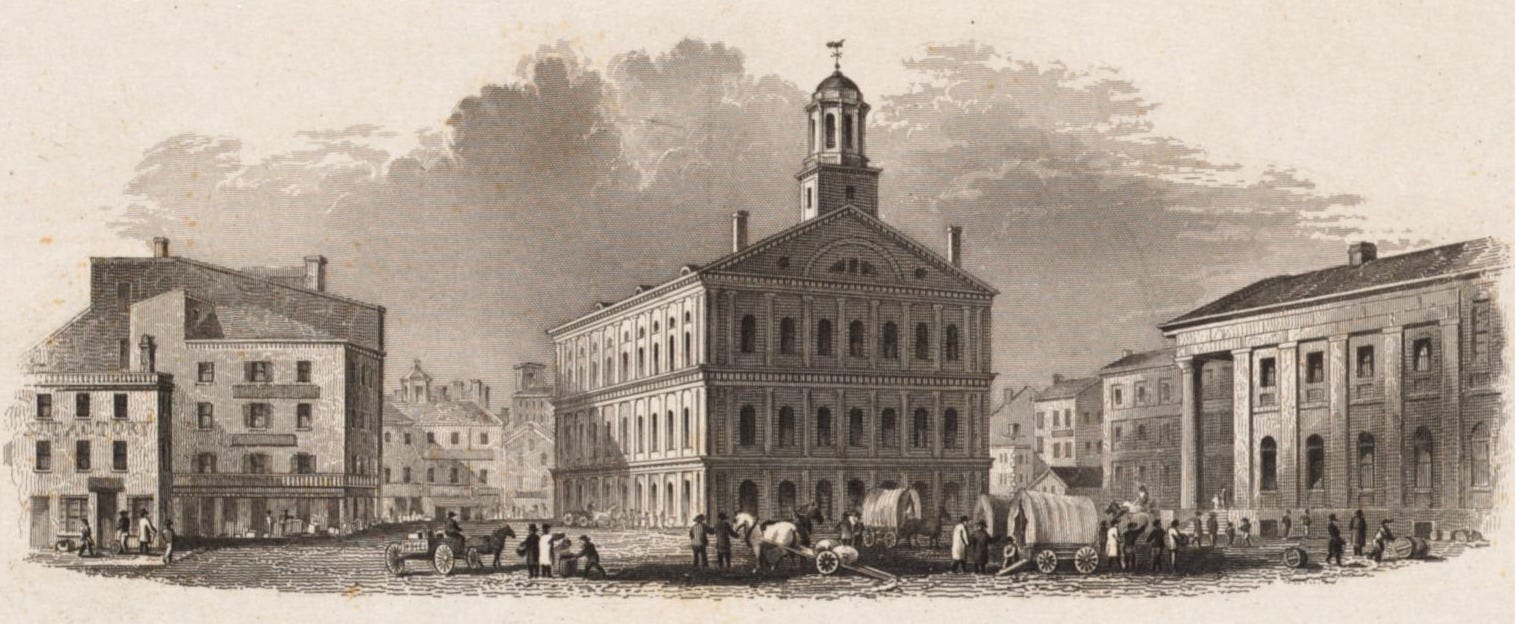
“We have heard it asserted here, in Faneuil Hall, that Great Britain had a right to tax the colonies, and we have heard the mob at Alton, the drunken murderers of Lovejoy, compared to those patriot fathers who threw the tea overboard!” Phillips began, his voice ringing out. “Fellow citizens, is this Faneuil Hall doctrine?”
He gestured to the historic portraits hanging on the wall and launched into a stinging rebuke of Austin. “Sir, when I heard the gentleman lay down principles which place the murderers of Alton side by side with Otis and Hancock, with Quincy and Adams, I thought those pictured lips would have broken into voice to rebuke the recreant American—the slanderer of the dead.”
A thunderclap of approval erupted , mixed in with boisterous shouts, jeers and hisses. “Take that back!” came the cry from some. Two men rose and marched toward the platform on either side of Phillips. Thinking they intended to put an end to Phillips’s speech, the Austin contingent reacted with glee, shouting out, “He shan’t go on till he takes it back”—until it became apparent the two men meant to protect Phillips to ensure he could finish his remarks.
“Fellow-citizens, I cannot take back my words,” Phillips countered calmly. “Surely the Attorney-General, so long and well known here, needs not the aid of your hisses against one so young as I am, — my voice never before heard within these walls!”
The crowd settled down, and Phillips continued with his speech for at least twenty-five more minutes. He laid out the facts of the case with lawyerly precision, methodically dismantling the attorney general’s arguments before drawing powerful comparisons to the patriots of the Revolutionary War who had defended free speech at all costs.
By the time Phillips wound down his remarks, the passage of the Lovejoy resolutions seemed a foregone conclusion. His soaring eloquence and powerful oratory had won over the room. When it came time to vote, the measures carried overwhelming support, and many of Austin’s backers, now resigned to the outcome, did not even bother to cast a vote.
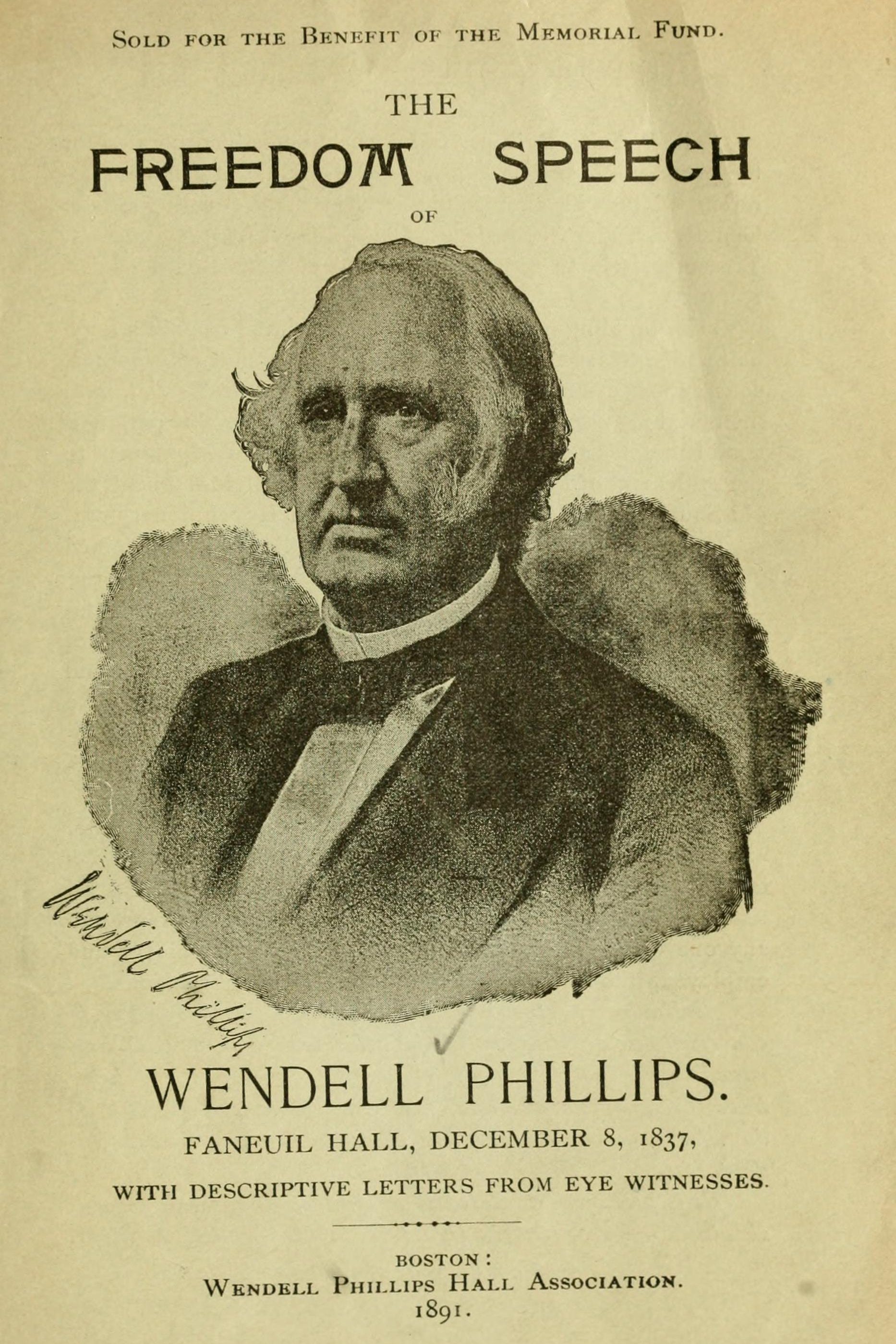
The immediate reaction to Phillips’s speech was electric, and as years passed, it took on even greater significance in abolitionist lore. “I think Mr. Phillips’ power over that audience was one of the most remarkable scenes on record,” recalled Sarah Southwick, who watched the drama unfold from the gallery.6
Others referred to it as “the birth speech of Wendell Phillips.” Decades later, the Boston Globe called it “one of the most memorable and effective appeals for freedom that has ever waked the echoes of the old Faneuil Hall.”7
At twenty-three, Phillips had been nothing more than a curious spectator in broadcloth watching a pro-slavery mob. At twenty-six, standing on the platform at Faneuil Hall, he emerged as an eloquent new voice for the cause of freedom. By the time Boston’s abolitionists gathered to mark the mob’s twentieth anniversary, Phillips would be forty-three years old, with speckles of gray in his sweeping sideburns, occupying a radical role that no one watching him in 1835 could have ever predicted.
See Part 3: The Civil Rights Crusader
See Full Series:
·
Jun 26
October 21, 1835: Wendell Phillips was working in his law office on Court Street when he first heard the angry voices. The young attorney looked out and saw a crowd parading through the street. Whatever was happening had to be more interesting than the contracts, wills and workaday woes that normally comp…
Wendell Phillips and the Mob That Made Him, Pt. 2
·
Jun 26
PART 2: The spectacle outside the Old State House began to calm soon after William Lloyd Garrison’s departure, and within an hour the rowdy crowds had mostly dispersed. Some of the rabble reassembled around the jail, others caroused on the Common and some migrated to nearby taverns, wine cellars and coffeehouses to cap off a long day of rioting by quaffing pints of porter and ale.
Wendell Phillips and the Mob That Made Him, Pt. 3
·
Jun 26
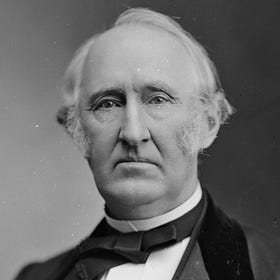
PART 3: In the years marching up to the Civil War, Wendell Phillips continued his anti-slavery campaign with unmatched zeal, intellect and eloquence, earning the moniker of abolition’s “golden trumpet”—or, as one critic declared him, an “infernal machine set to music.”
1. Maria Chapman recalled the comment from Stephen Rhoades, who owned a hat store on Court Street. See Chapman letter to Francis Jackson Garrison, August 9, 1881, Boston Public Library.
2. Woman’s Journal, October 27, 1878, 340.
3. Lyman, Papers, 40.
4. The other companion was her cousin’s finance, James Alvord, who practiced law in Greenfield. He was later elected to Congress in 1839 but died before he could take office. He claims one other unusual fact which is that he was born in a town that no longer exists; Greenwich, Massachusetts, was subsumed to form the Quabbin Reservoir in 1938 and is now mostly under water.
5. Sears, Wendell Phillips, 34.
6. Phillips, Freedom Speech, quoting letter from Sarah Southwick to John Latham on November 17, 1890.
7. Boston Globe, February 5, 1884, 1.
See also:
Phillips, Wendell. The Freedom Speech of Wendell Phillips. Faneuil Hall, December 8, with Descriptive Letters From Eye Witnesses. N.p.: Wendell Phillips Hall Association, 1891.
Marcus, Robert D. “Wendell Phillips and American Institutions.” The Journal of American History 56, no. 1 (1969): 41–58.
Garrison, Francis Jackson. Ann Phillips, Wife of Wendell Phillips, a Memorial Sketch. Cambridge, MA: Riverside Press, 1886.
Austin, George Lowell. Life and Times of Wendell Phillips. Boston: Lee & Shepard Publishers, 1893.
Comments
Nothing yet. Say the first thing.
Sign in to join the conversation.