
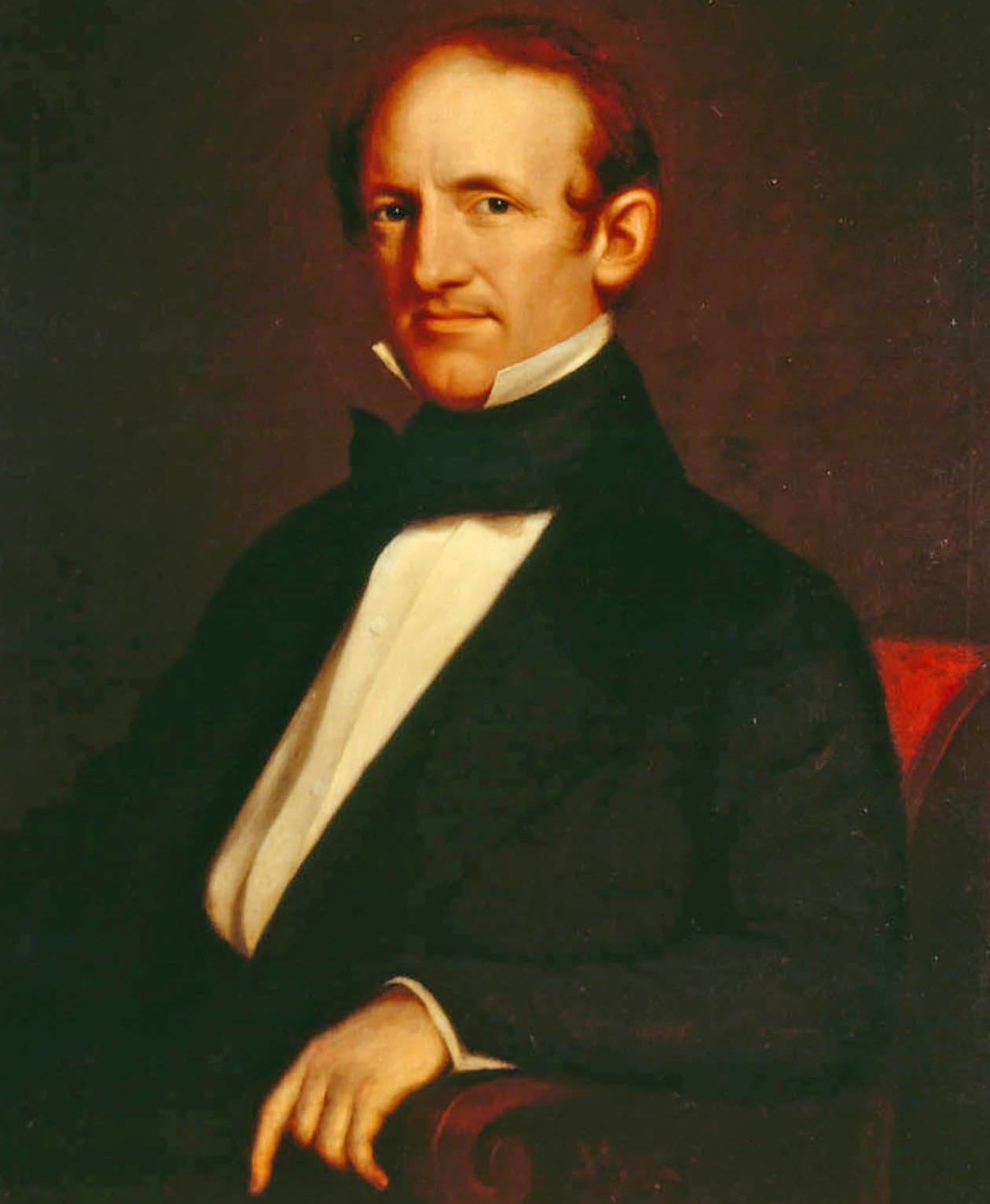
October 21, 1835: Wendell Phillips was working in his law office on Court Street when he first heard the angry voices. The young attorney looked out and saw a crowd parading through the street. Whatever was happening had to be more interesting than the contracts, wills, and workaday woes that normally composed his nascent law practice, so he closed his books and stepped outside.
He followed the boisterous crowd gathering near the Old State House. It was a Wednesday afternoon, unseasonably warm for Boston in late October. The clippity-clop of hooves and the creak of carriage wheels rumbled past, mingling with the pungent aroma of tobacco wafting from a nearby reading room.
There were already hundreds of people in the streets, and it was quickly transforming from a crowd to a mob. That morning, a Boston newspaper had run a notice offering one hundred dollars to whoever could drag British abolitionist George Thompson “to the tar kettle before dark,” and handbills repeating the threat had circulated through the city’s business district. Thompson was nowhere to be found, but the angry throng didn’t seem to care. Instead, they were congregating by the anti-slavery office around the corner on Washington Street, where the women of the Boston Female Anti-Slavery Society were attempting to hold their annual meeting.
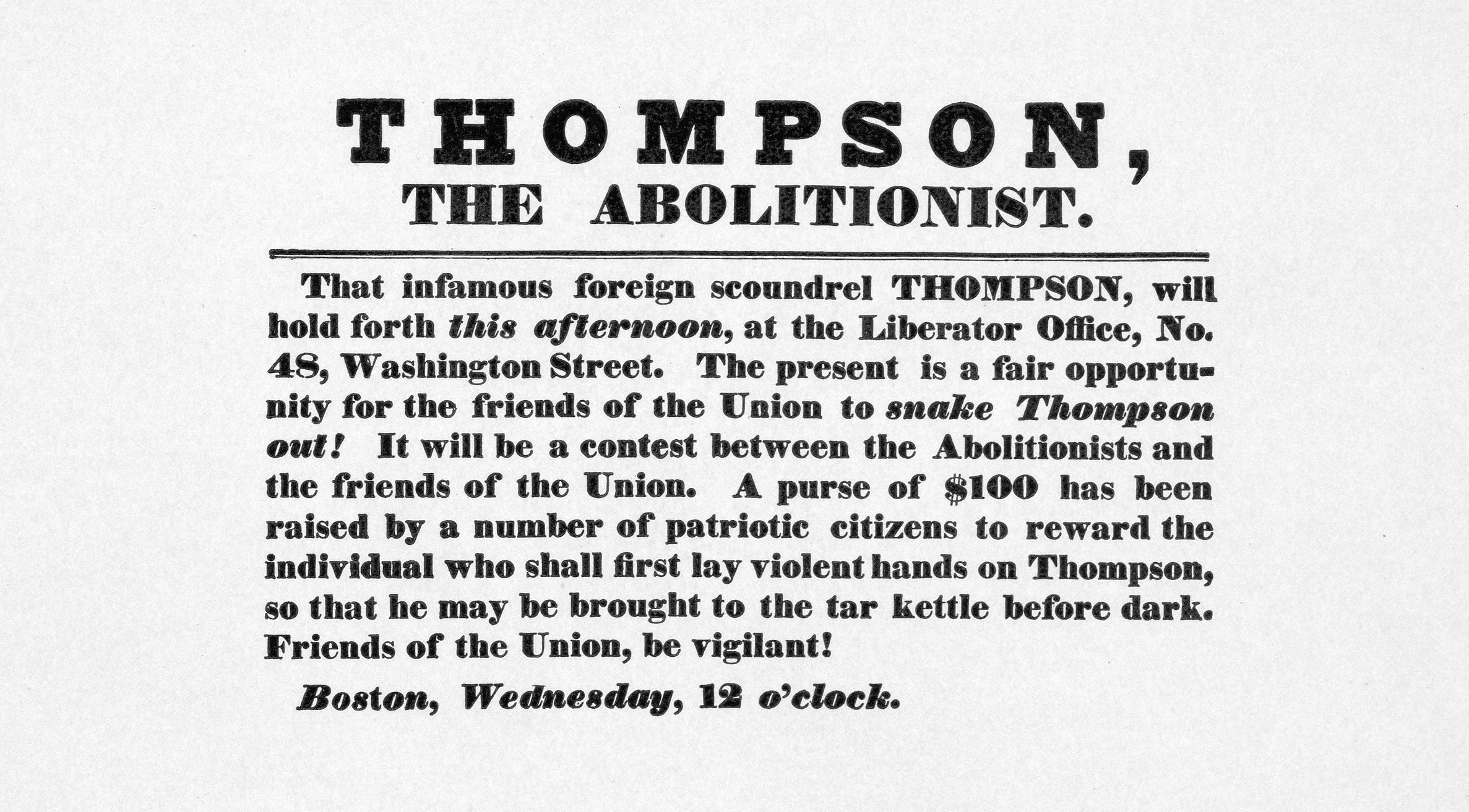
Phillips noticed a few women and children in the crowd, but it was mostly men. Strikingly, many wore the same fashionable English and French broadcloth coats that he did. They were merchants, shopkeepers, tradesmen, bankers and militia members. They looked angry. And they looked like him.
By all accounts, Wendell Phillips was a gentleman of property and standing. The twenty-three-year-old lawyer had recently opened his practice in Boston after graduating from the Boston Latin School, Harvard College and Harvard Law School. He hailed from an “Old Boston” family, was the son of Boston’s first mayor, John Phillips, and had enjoyed an aristocratic upbringing in an expansive Beacon Hill home.
Phillips had been blessed in every conventional way. Friends described him as classically handsome, refined and charming. He was tall and athletic, with a muscular physique, and skilled at boxing, fencing and horsemanship. “Handsome, indeed, in form and features,” recalled one classmate.1 He was a leading member of the most exclusive social clubs, a devout Bible reader, and known for his plain-spoken eloquence.
His oratorical skills were equally lauded. As a young man, Phillips was invited to give a Fourth of July speech in the fishing port of New Bedford. He spoke about the state’s political history, and his rhetorical talents were apparent. “When he stood up in the pulpit I thought him the handsomest man I had ever seen; when he began to speak, his elocution seemed the most beautiful to which I had ever listened,” a local journalist recalled many years later.2
At Harvard, Phillips was an above-average student, interested in history and mathematics. He was a quick learner, though not a natural academic—one who “sauntered and gently studied.” He pursued his law degree but did not appear to have any special fondness for the law.
While known for his personal faith and decency, Phillips was certainly no reformer. In fact, he helped defeat efforts to establish the first temperance society at Harvard. Any efforts he might have undertaken to offer aid to the poor and other marginalized members of society came more from a grand sense of morality, rather than any belief in radical social change. He was, in short, “the proud leader of the aristocracy,” as his alma mater once described him.3
“In a good sense of the words, he was a born patrician; in the sense of the French expression ‘noblesse oblige,’” a Harvard classmate recalled. “He felt the responsibilities of his birth and education, — his responsibility to keep himself pure, upright, and good.”4
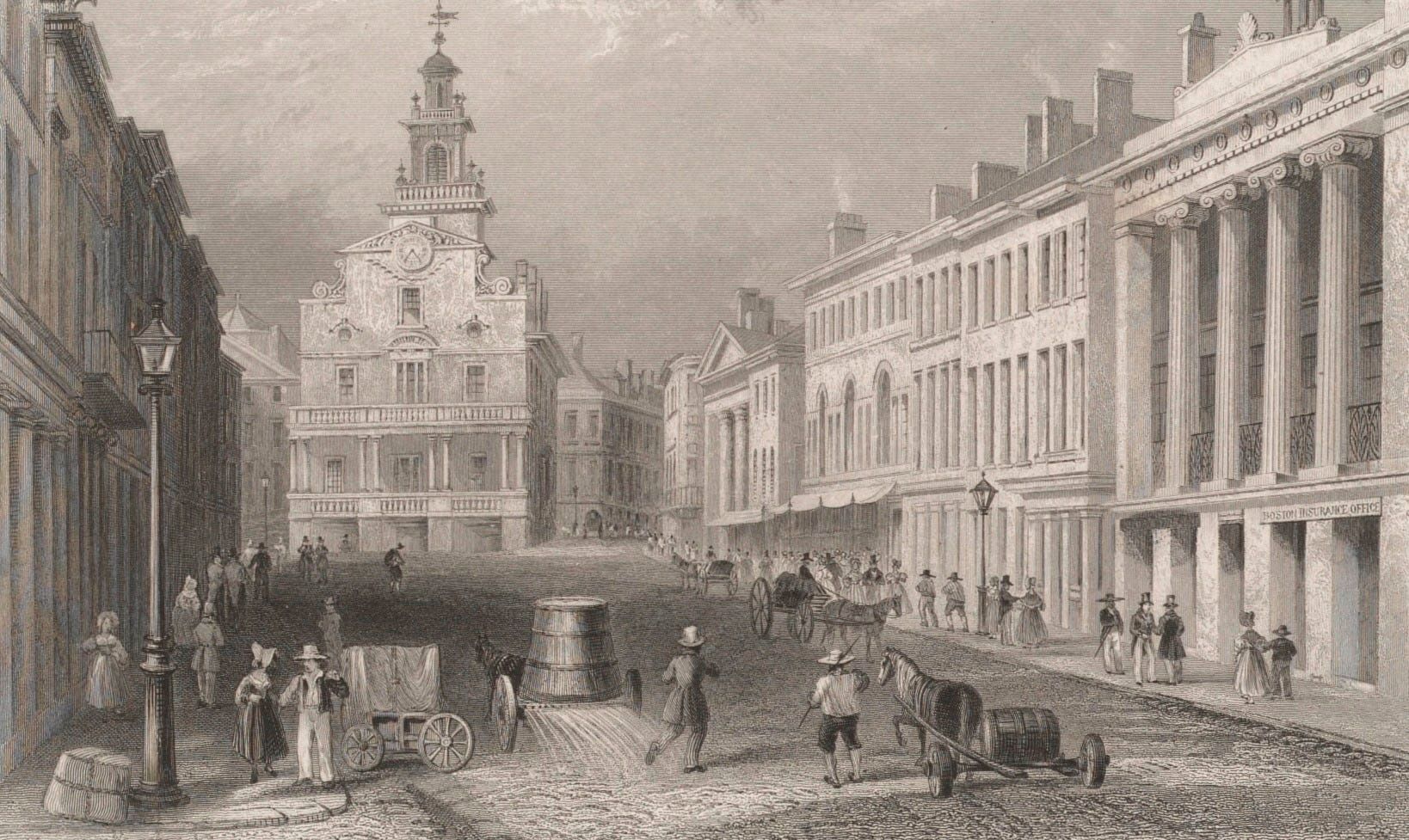
After a brief stint practicing law in Lowell as an apprentice, Phillips returned to Boston in 1835 and opened his own practice. He rented space in the same building as another scion of a famed Boston family, John C. Winthrop, who was already making a name for himself in state politics. He socialized with many of the up-and-coming young lawyers who had offices nearby, including a former schoolmate named Charles Sumner.
Phillips joined the local militia regiment, as many young men of his age did. He also developed an interest in his own family history and remained a “voracious reader” of ancient and modern literature, no doubt frequenting Burdett’s foreign bookshop located across from his office. There were few hints that Phillips would do anything other than continue along his expected trajectory toward further success, wealth and prestige.
Phillips pushed his way through the unruly crowd toward the antislavery office, where members of the Boston Female Anti-Slavery Society were trying to hold their annual meeting.
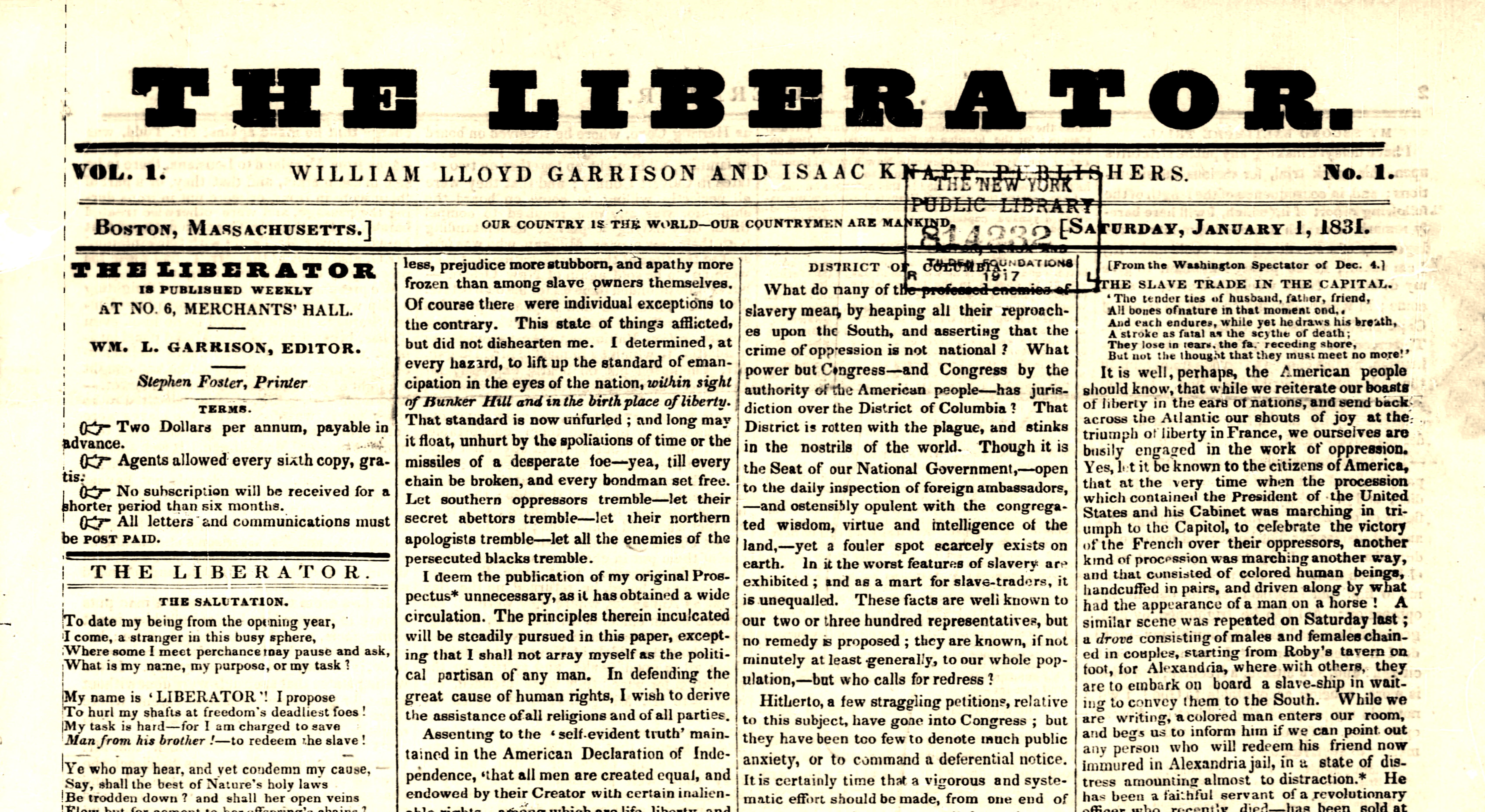
By 1835, the antislavery movement had been building in Boston for several years, even as it passed Phillips by entirely. William Lloyd Garrison had launched the Liberator in 1831, vowing he would “not retreat a single inch,” and the following year helped found the New England Anti-Slavery Society, predicting that “Faneuil Hall shall ere long echo with the principles we have set forth.”5 That uncompromising approach deeply unsettled establishment Bostonians, many of whom had deep mercantile ties to the South and feared that pressing too hard on slavery would rupture the Union.
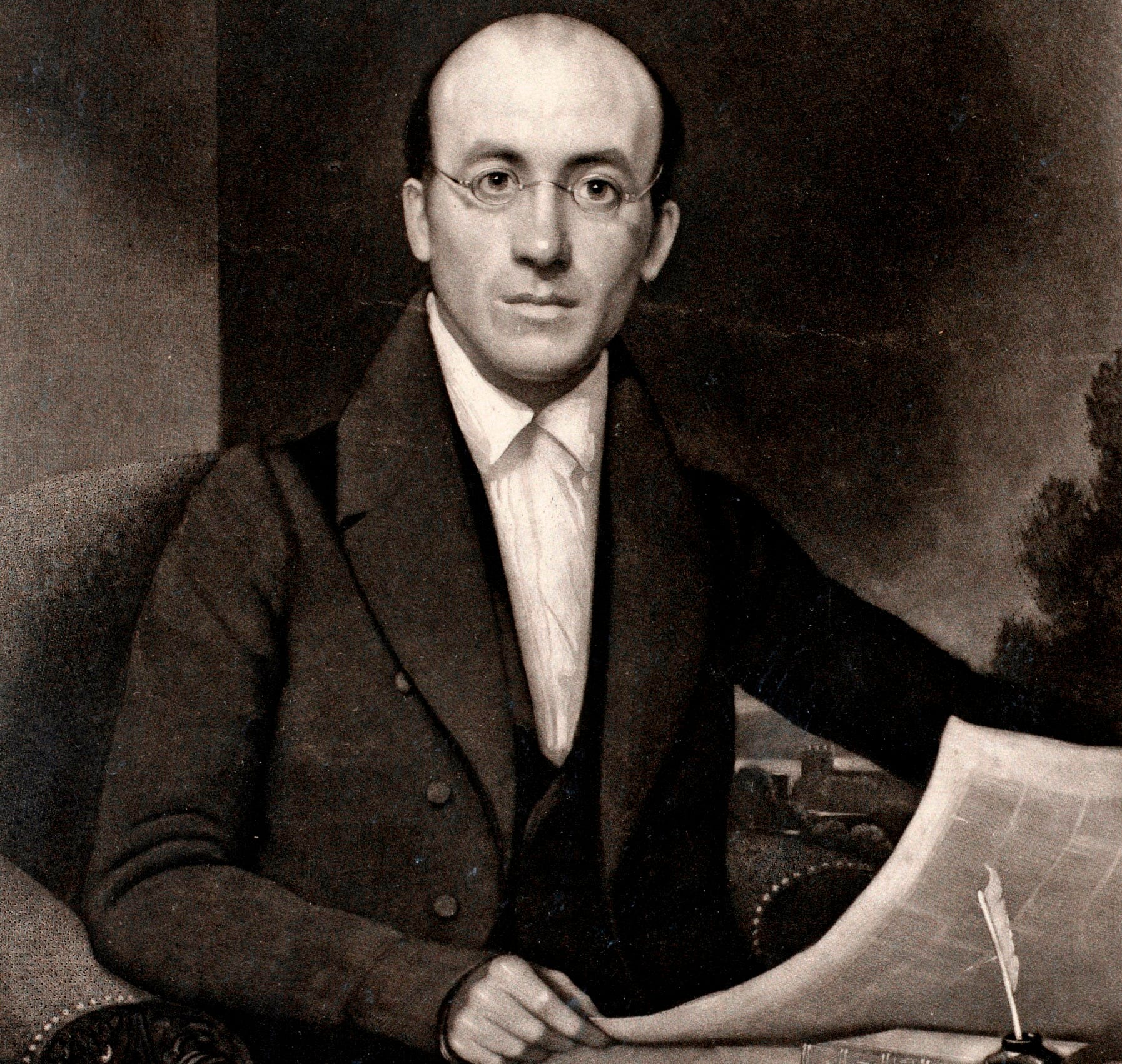
None of it had yet registered with Phillips. Wealthy and educated though he was, he rarely ventured outside his comfortable conservative bubble. “I did not understand anti-slavery then,” he later admitted.6
From his vantage, Phillips watched Mayor Theodore Lyman arrive on the scene. The mayor stepped into the anti-slavery building’s entryway to get a better look at the crowd. Sharing the mayor’s concern over the escalating tempers, Phillips watched as Lyman tried to quiet the restless men, armed with little more than a walking cane and a handful of deputies.
At one point a figure emerged from the building and the crowd mistakenly seized him for Thompson, the British abolitionist they’d really come looking for. “We could see the poor devil thumped and kicked and otherwise roughly used,” one witness said.
The ringleaders of this violence were men Phillips recognized, if not personally, then by reputation. They drew from similar social and political spheres: merchants, bankers, Central Wharf men. Some state legislators, rather than take their seats for the afternoon session at the State House, had come down to check it out too, some like Phillips as spectators, and others likely as more active participants.
If the lawlessness disturbed Phillips, he did not articulate it at the time. Boston’s gentlemen of property and standing had been awakened, and these “mobocrats in broadcloth” would not be going quietly. The remaining question now was which side Phillips was on.
As the streets grew more violent, Phillips spotted a fellow attorney named John C. Park, whose law office sat directly across from his own. Park was president of the Irish Society and a colonel in the local militia regiment.
“Why does not the mayor call out the regiment?” Phillips asked. “We would cheerfully take arms in such a case as this. It is a very shameful business. Why does he stand there arguing? Why does he not call for the guns?”
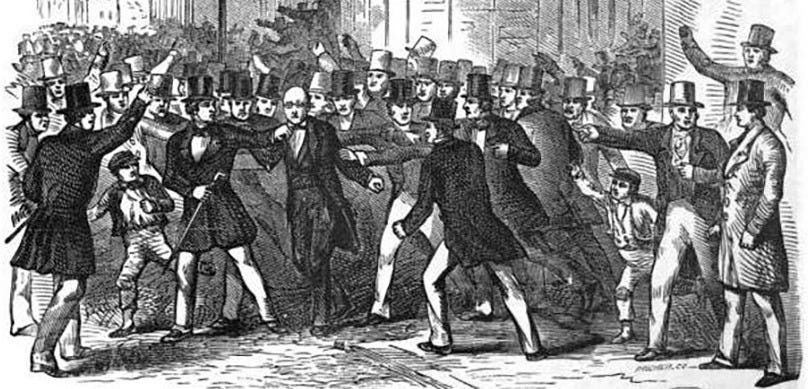
Park gestured to the crowd and explained to his colleague that the mob and the militia were one and the same. Phillips later acknowledged his own naivete: “I did not know that the guns were in the street, that the men who should have borne them were the mob, that all there was of government in Boston was in the street,” he said.
It was a chilling realization, and the memory would stick with him long after that day. This was not how gentlemen of property and standing were expected to act. Phillips certainly didn’t consider himself an abolitionist, and he probably shared many of the same apathetic views of the anti-slavery cause as other men his age. He was standing here in the streets, however, and thus was at least tacitly part of the mob, though he considered himself only a spectator.
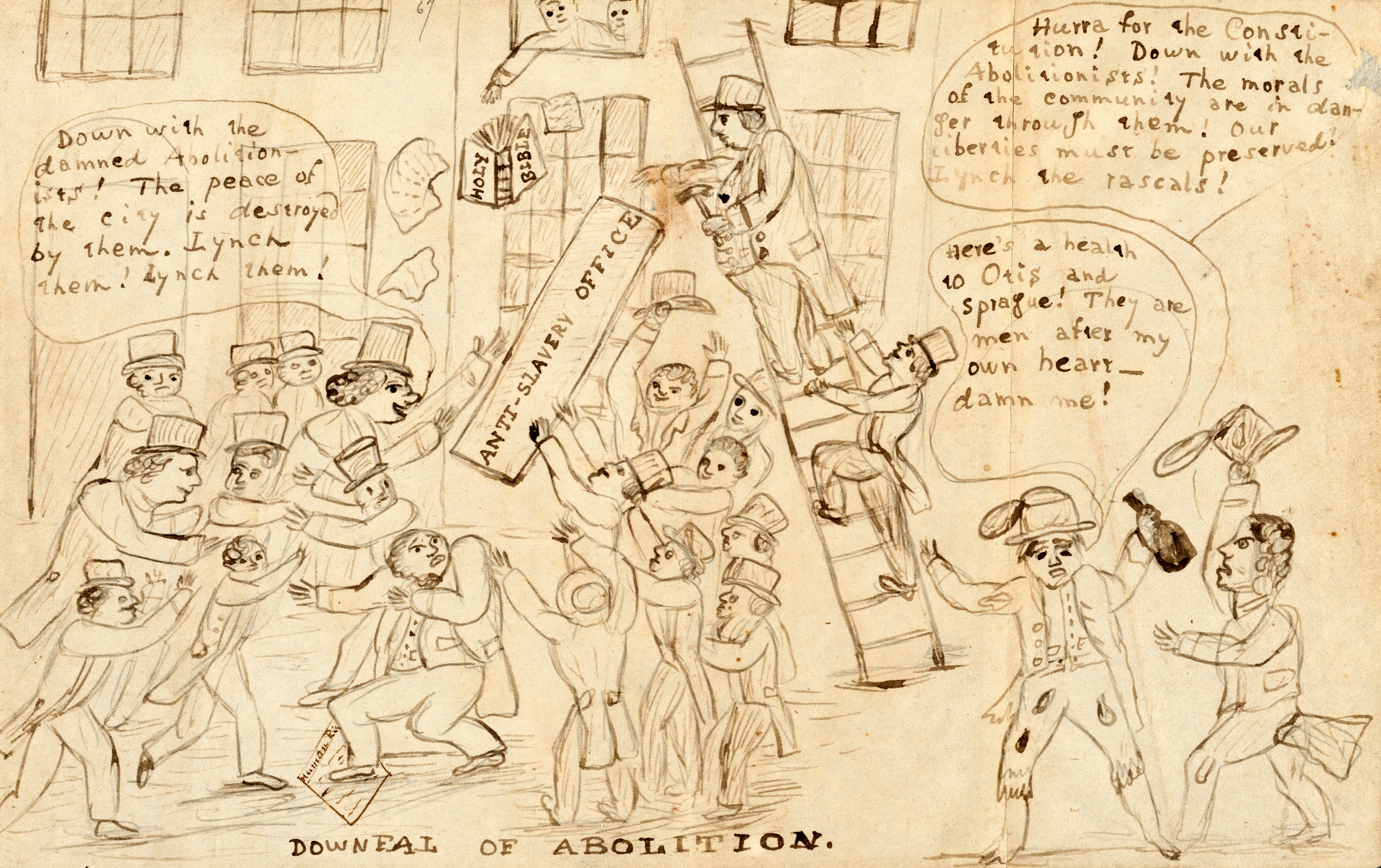
He kept watching as the mayor tried to manage the crowd from a balcony, vowing that any attempt to force entry into the building would be over his own body. Not everyone was impressed. Wendell Phillips was appalled at what he saw and critical of the mayor’s generally hands-off approach with the mob, comparing him to a beggar.
“Mayor Lyman besought instead of commanding that day, and was, metaphorically speaking, on his knees to the mob,” he wrote much later.7
By the time the rioters dragged a bareheaded, half-stripped William Lloyd Garrison from his hiding place in a nearby carpenter’s loft and hauled him out to the street, Phillips was still just a face in the crowd. He stood among the curiosity seekers and spectators, watching his own social class tear the city apart.
It would take a little over two years, and another mob entirely, before the full weight of what he had witnessed that afternoon finally took hold.
See Part 2: The Birth of an Abolitionist
See Full Series:
·
Jun 26
October 21, 1835: Wendell Phillips was working in his law office on Court Street when he first heard the angry voices. The young attorney looked out and saw a crowd parading through the street. Whatever was happening had to be more interesting than the contracts, wills and workaday woes that normally comp…
Wendell Phillips and the Mob That Made Him, Pt. 2
·
Jun 26
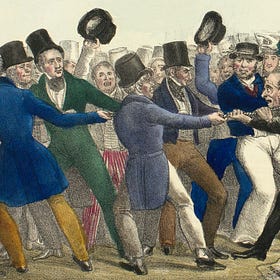
PART 2: The spectacle outside the Old State House began to calm soon after William Lloyd Garrison’s departure, and within an hour the rowdy crowds had mostly dispersed. Some of the rabble reassembled around the jail, others caroused on the Common and some migrated to nearby taverns, wine cellars and coffeehouses to cap off a long day of rioting by quaffing pints of porter and ale.
Wendell Phillips and the Mob That Made Him, Pt. 3
·
Jun 26
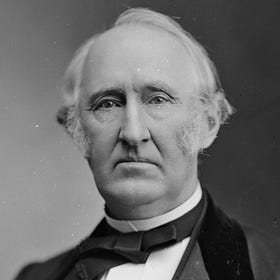
PART 3: In the years marching up to the Civil War, Wendell Phillips continued his anti-slavery campaign with unmatched zeal, intellect and eloquence, earning the moniker of abolition’s “golden trumpet”—or, as one critic declared him, an “infernal machine set to music.”
1. Martyn, Wendell Phillips, 43, quoting Edgar Buckingham.
2. Congdon, Reminiscences of a Journalist, 59.
3. Harvard Illustrated Magazine, January 1900, 183.
4. Austin, Life and Times, 39.
5. Recollection of Benjamin C. Bacon. See Johnson and Whittier, William Lloyd Garrison, 88.
6. Speech given on the twentieth anniversary of mob attack. Phillips, Speeches, Lectures and Letters, 213
7. Lyman, Papers, 70, quoting “New York Lecture, Nov. 16.”
See also, Boston Globe, “To the Memory of Wendell Phillips,” Remarks of Benjamin F. Butler, February 4, 1884, 1; Stewart, Wendell Phillips, 42; and Boston Sunday Budget, “The Garrison Mob,” March 18, 1883.
Comments
Nothing yet. Say the first thing.
Sign in to join the conversation.