
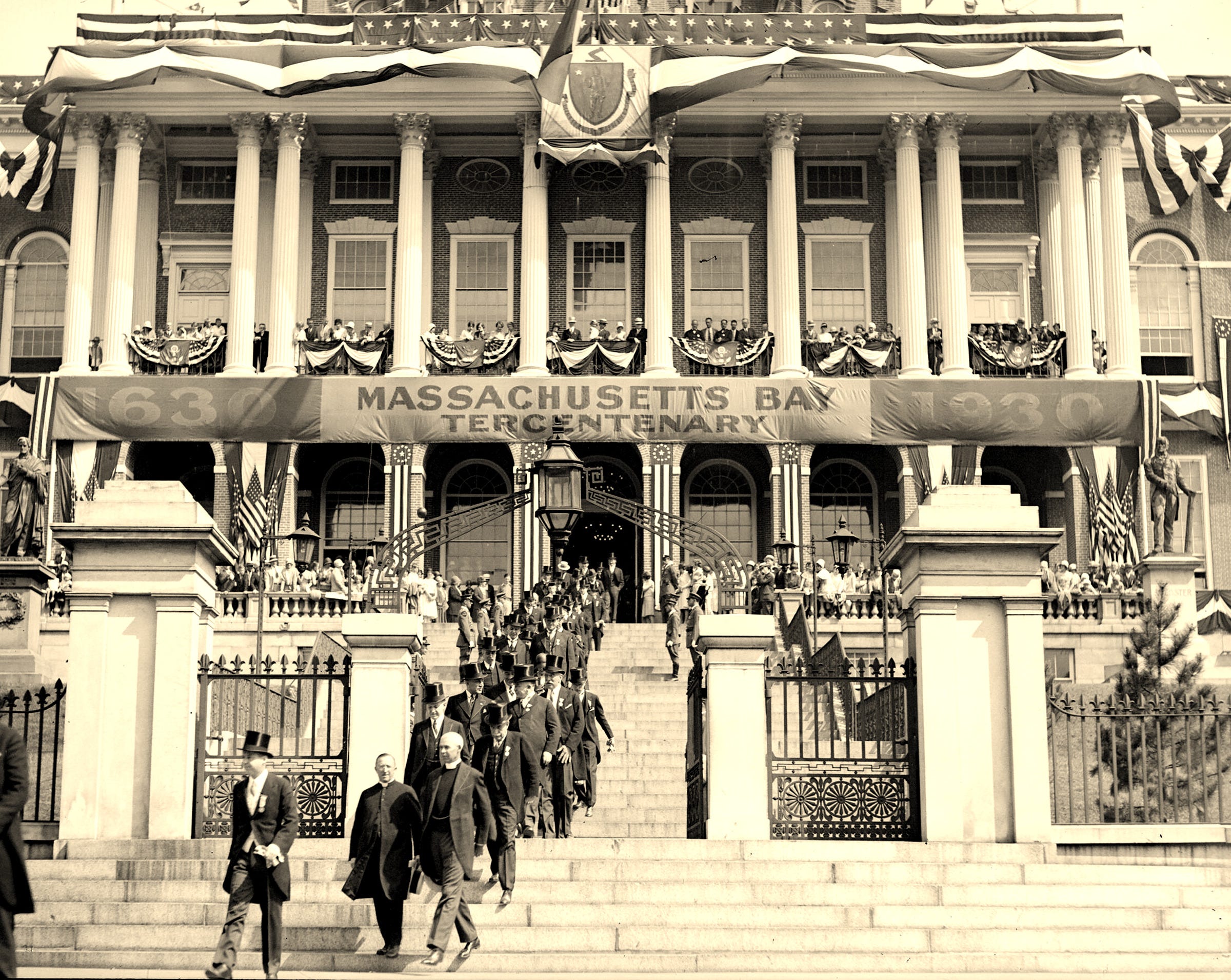
OCTOBER 20, 1930: Puritan leaders held the first session of the Great and General Court of the Massachusetts Bay Colony in Boston on October 19, 1630.1 Three hundred years later, some of their progeny now celebrated the historic anniversary with a special session of the state legislature––still formally known as the General Court.
Speaker Leverett Saltonstall, a descendant of one of the original members, presided over the joint session along with Senate President Gaspar Bacon. Patriotic melodies from a cadet orchestra filled the crowded House chamber.
“Massachusetts has ever gone forward. She has been a pioneer in all movements for the betterment of her people,” Senator Bacon told the members gathered for the solemn occasion. “She stands today in the forefront of the states in the union, a leader in administration, a leader in legislation, a leader in the dispensation of justice.”2
The speakers also included Governor Frank Allen and Chief Justice Arthur Rugg. A host of former legislators, mayors, and other dignitaries from all corners of the state were also in attendance––although perhaps the most well-known living General Court alumnus was not.
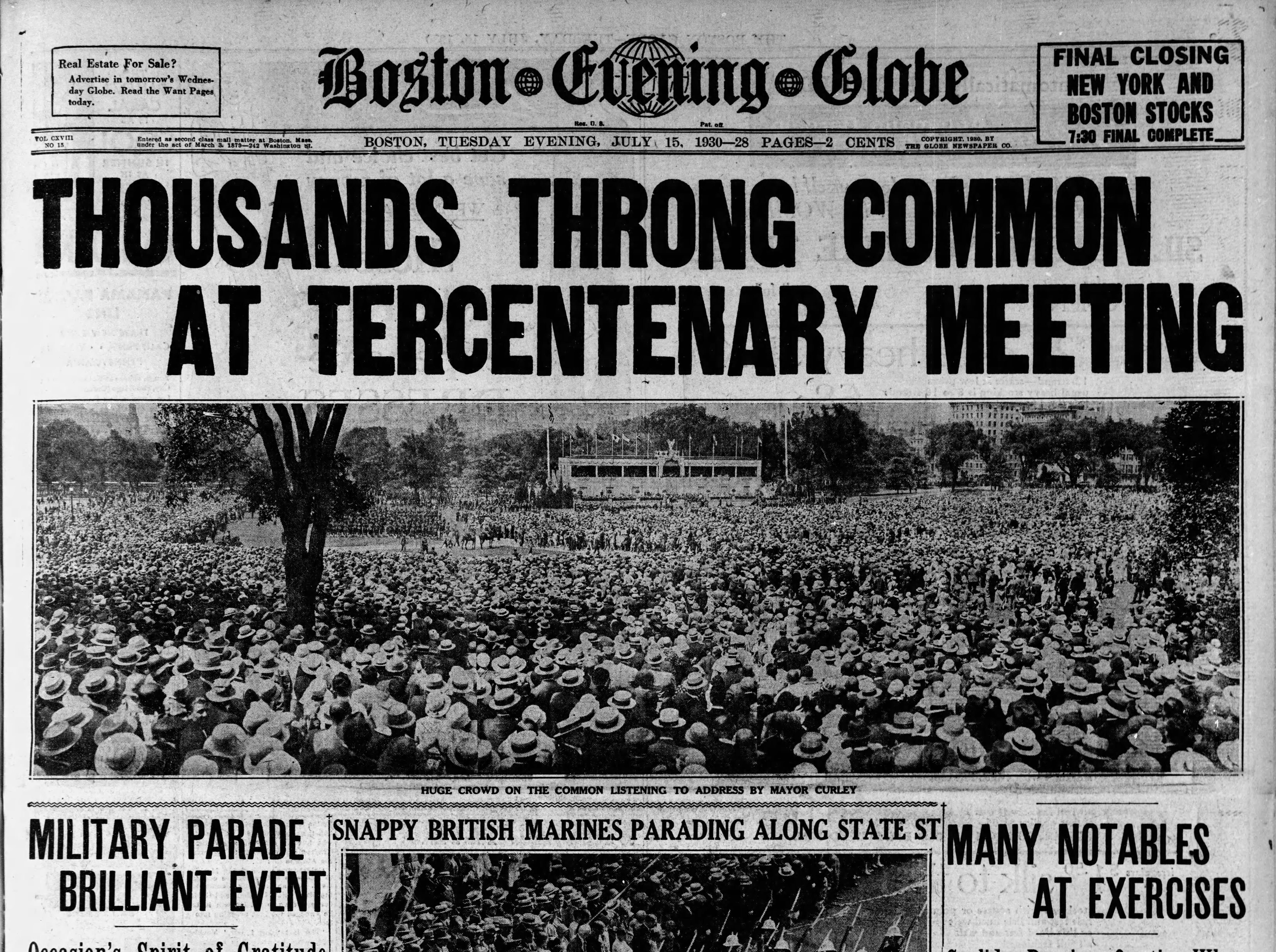
Former President Calvin Coolidge, who had served as a state representative, state senator, lieutenant governor, and governor before his time in the White House, sent his regrets. Coolidge had attended other tercentenary celebrations earlier in the year, however, including an elaborate parade and gathering on the Boston Common in July.
The broader historical significance of the Massachusetts Bay Colony founding in 1630 was embraced with patriotic fervor throughout the year. It also coincided with the 150th anniversary of the adoption of the Massachusetts state constitution, a model for the United States Constitution.
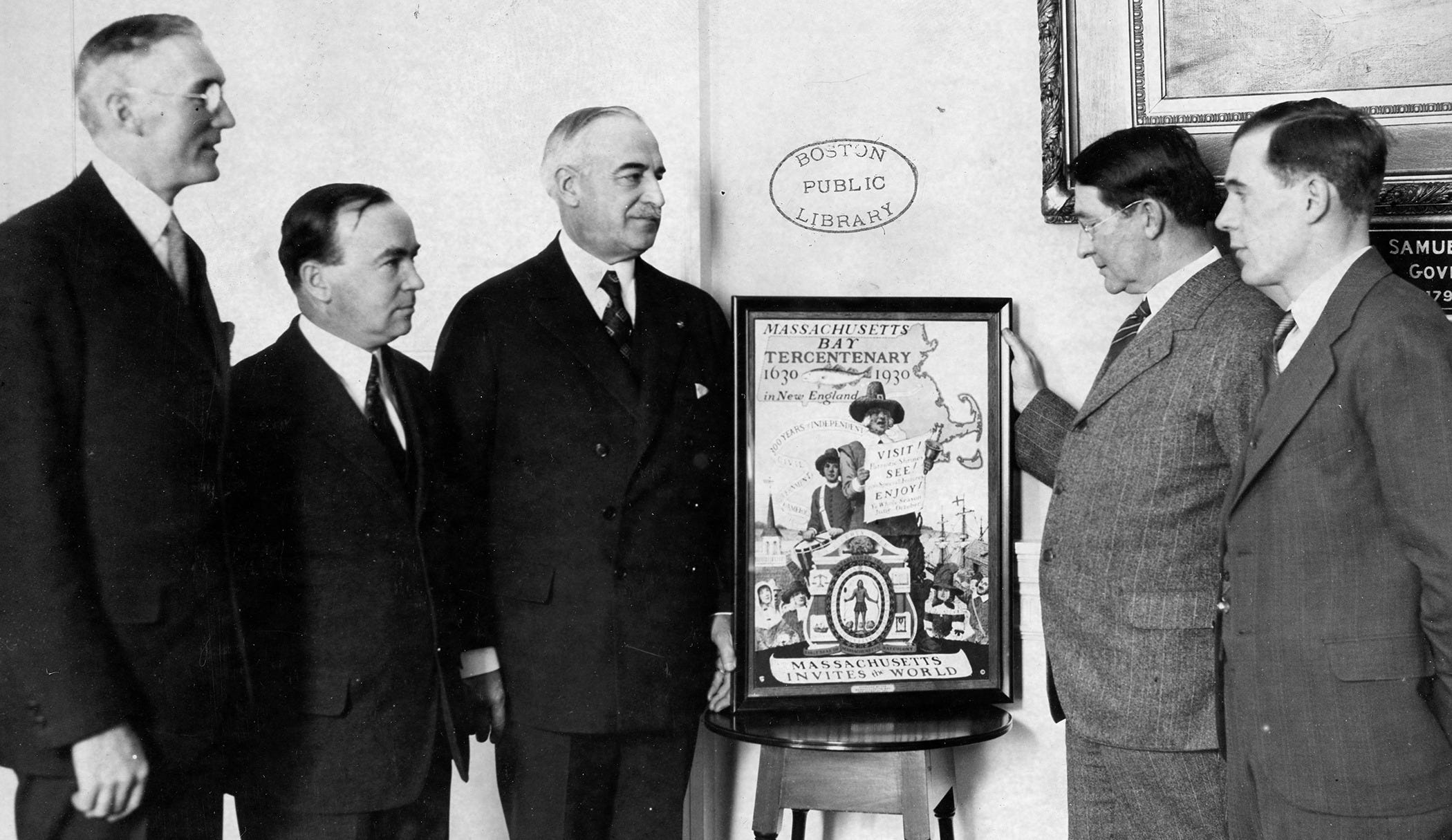
State leaders had planned ahead for the tercentenary and appointed a special commission two years earlier to devise a series of observances. The commission formulated an ambitious agenda with equal parts pageantry, patriotism, historical observance, and marketing, to highlight the state’s role as the shrine of American democracy. The Commission planned for a budget of $105,000 and expected eight million additional auto tourists to visit the state over the course of the year.3
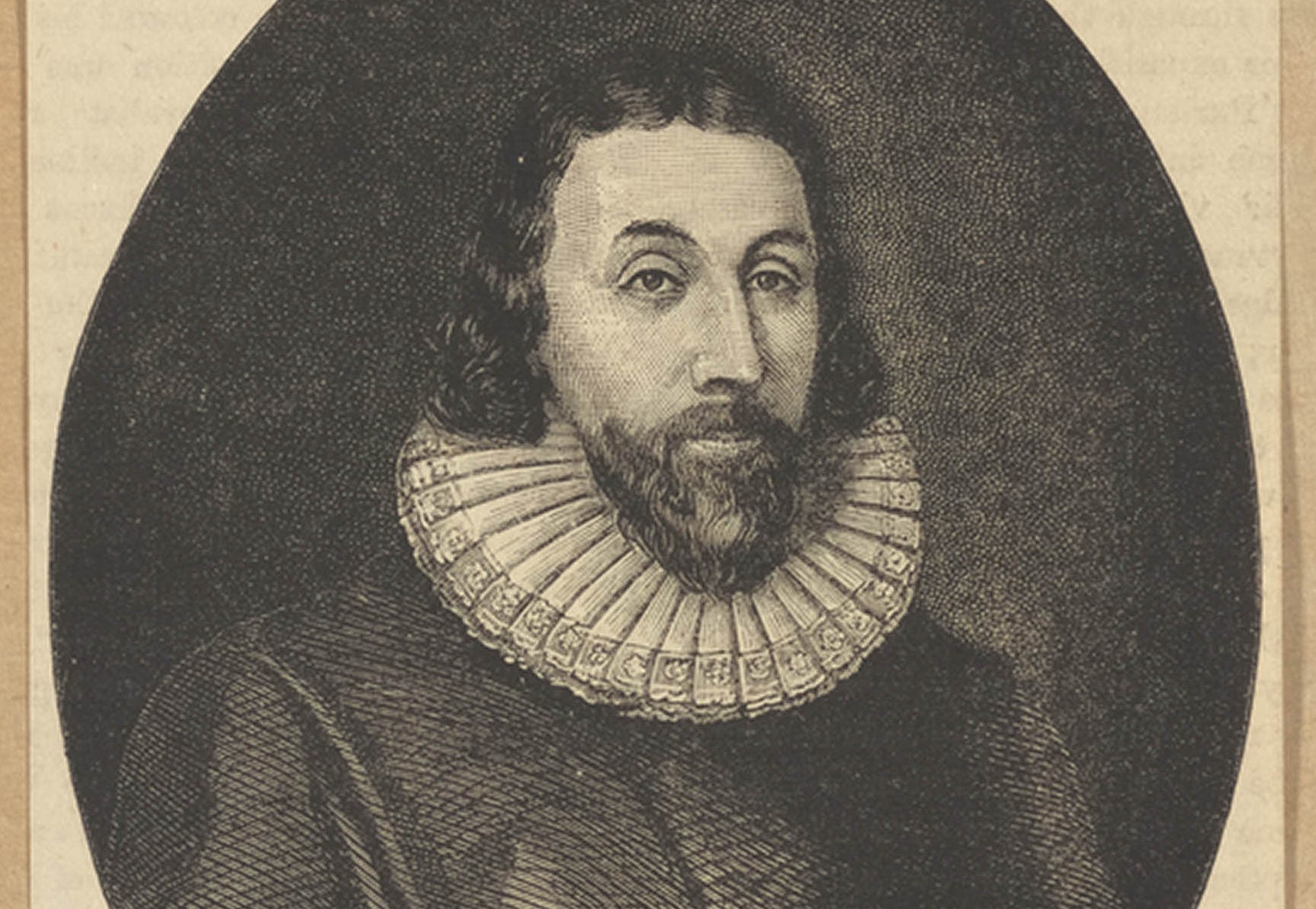
Governor Allen helped kick off the commemoration with his inaugural message to the legislature delivered in January. Allen invoked John Winthrop, the Colony’s first governor, who had famously delivered a sermon during his voyage across the Atlantic setting forth the Puritan settlers’ divine mission. “For we must consider that we shall be as a City upon a hill. The eyes of the people are upon us,” Winthrop wrote.4
Allen leaned in heavily to the same historical themes:
“Long before Voltaire and Rousseau had fired the world with their theories of equality, the Puritan fathers had planted the seeds of a government which was to lead the world in its march toward democracy. From the very beginning the principle of representative government has been the keystone in our political arch. The New England town meeting has demonstrated the actual operation of democratic principles in pure form. Our great Republic, whose birth altered the entire course of human events, owes its existence to the leadership of Massachusetts in the great struggle for American independence.”
After more speeches, handshaking, and pageantry the State House ceremony wrapped up with a public reception in the Hall of Flags. State leaders were pleased with the day’s events, as well as the broader results of the tercentennial celebrations. Over the course of the year there were nearly two thousand different events across 250 towns in Massachusetts, attracting nearly ten million people.5 Some attempted to include Native American perspectives––including one event featuring a Wampanoag leader descended from Massasoit––but for the most part organizers glossed over, or ignored entirely, the negative impacts of Puritan colonists in favor of a more idealized origin story.
The nation had recently been jolted by a major stock market crash, a series of bank closures, and spiking unemployment and so the tercentennial was viewed as salve in a “time of psychological letdown and financial depression.”6 For one year at least the effort seemed to have worked. While Massachusetts, like the rest of the nation, was facing an increasingly bleak fiscal forecast, the tercentennial observances helped keep the state treading water financially.
A report released the following year estimated that the year-long 300th birthday party cost the state a little less than two million dollars and generated forty-seven million dollars in economic activity.
See related:
The Case of Mrs. Sherman's Stray Pig
·
Jun 8
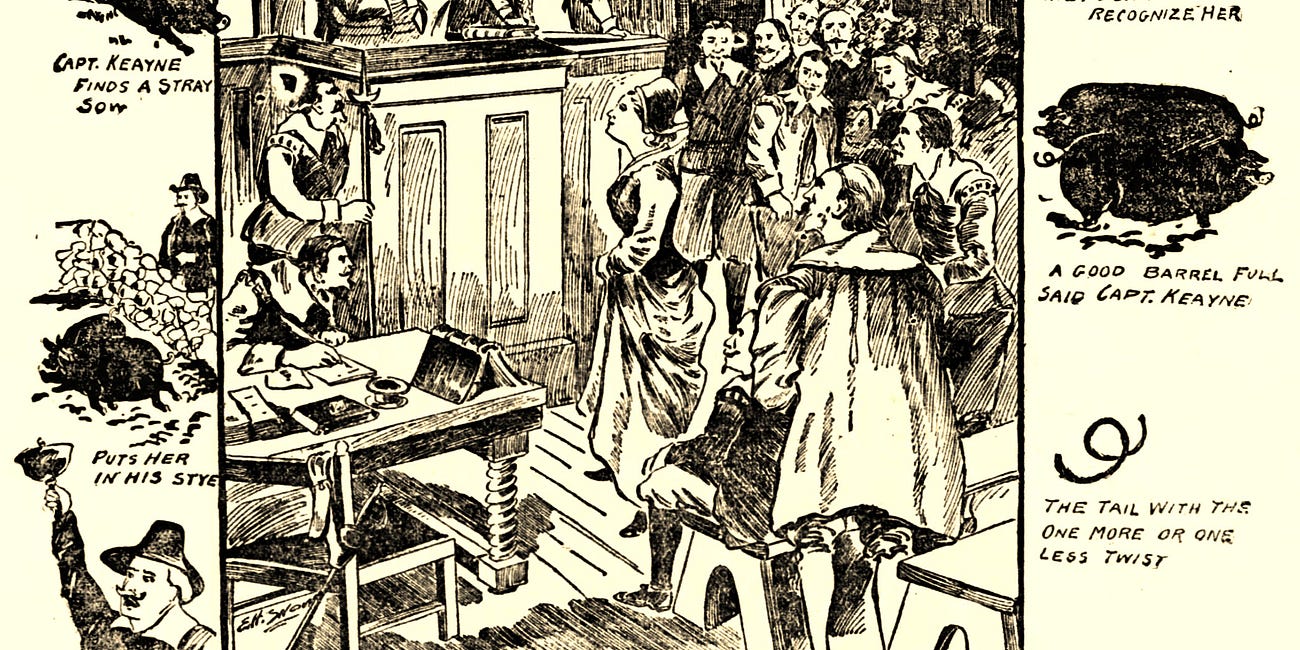
Did you know that one of the bedrock principles of representative democracy in America came about in large part to a stolen pig? –– allegedly stolen, I should say to be fair. Sharing one of my favorite chapters from “Under the Golden Dome: Historic Talks and Tales from the Massachusetts State House.”
1 This was the first session held on Massachusetts soil. The royal charter was granted in 1629 in England. See Dalton, Leading, 4-5.
2 Boston Herald, October 21, 1930, 13.
3 Boston Globe, December 15, 1928, 12.
4 “A Model of Christian Charity,” April 1630 sermon written or delivered aboard the Arabella, is widely attributed to John Winthrop, though the authorship has been the subject of some scholarly debate.
5 Boston Globe, December 31, 1930, 20.
6 Ibid.
Comments
Nothing yet. Say the first thing.
Sign in to join the conversation.