
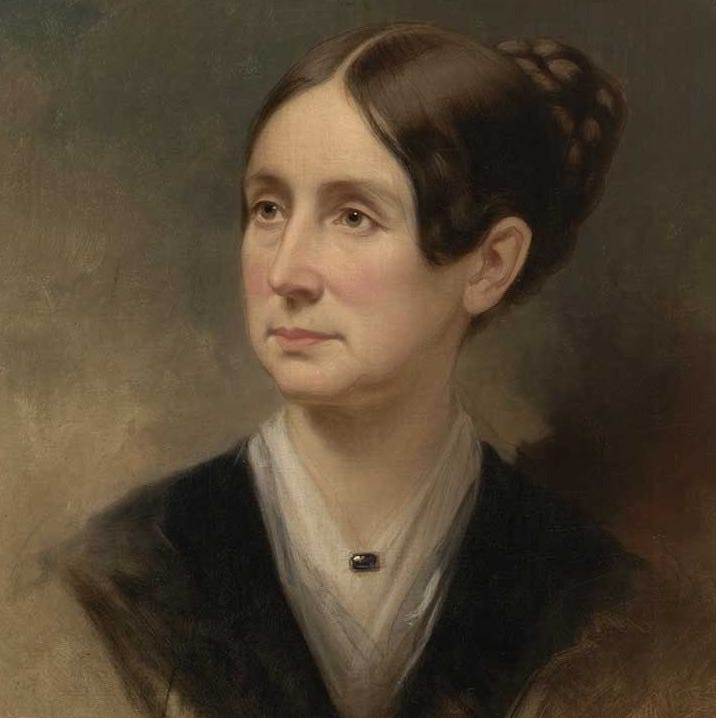
JANUARY 19, 1843: Dorothea Dix didn’t expect to become a national crusader when she first visited an East Cambridge jail for a Sunday school class.
Inside, she was shocked to find mentally ill women imprisoned in a bare stone cell without basic necessities like heat, their teeth chattering in the cold. The squalid scene left an enduring memory. When the local jailer refused to take any steps to remedy the situation, Dix spoke up. She helped bring the issue to the attention of county officials who eventually relented and approved the addition of new stoves to warm the cells.
It was a modest victory, but Dix nonetheless felt empowered. She was also determined to do more. The thirty-nine-year-old schoolteacher spent the next two years touring jails, asylums, and almshouses across the state to document the treatment of the mentally ill. She filled her journal with painful observations of the neglect and abuse she witnessed at dozens of facilities from Wellfleet to Newburyport to Springfield.
By the winter of 1843, Dix was finally ready to take the next step. She enlisted help from an influential network of like-minded reformers, including Dr. Samuel Gridley Howe, a state legislator and advocate for the disabled, and a young attorney named Charles Sumner. Her goal was to present her findings to the legislature and help secure funding for services to aid the mentally ill.
Dix carefully drafted a report laying out the facts over thirty-two pages and nearly fifteen thousand words. Knowing that as a woman she would likely be barred from addressing the all-male legislature in person, Dix arranged for her remarks to be filed as a petition in the Massachusetts House of Representatives.
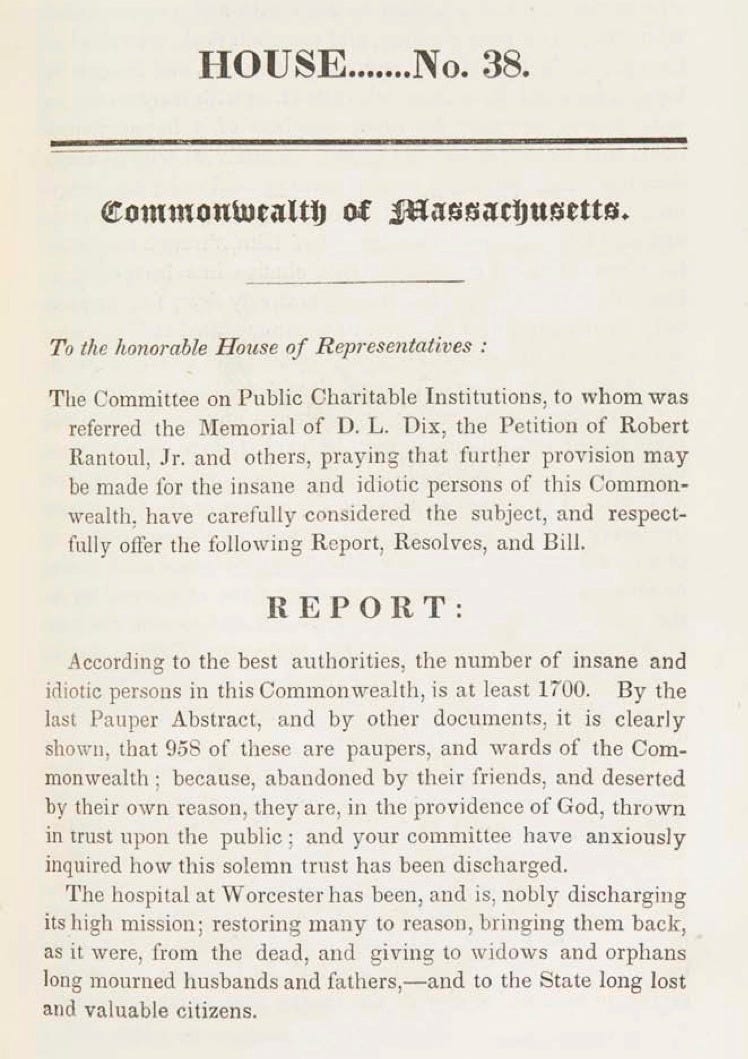
The petition, entitled a Memorial to the Massachusetts Legislature, was formally presented on Thursday, January 19, 1843, and referred to the Committee on Public Charitable Institutions. Dix had collected copious notes to document her observations and warned legislators that her findings were “displeasing, coarse, and severe.”1
“I come to present the strong claims of suffering humanity. I come to place before the legislature of Massachusetts the condition of the miserable, the desolate, the outcast,” she wrote. “If I inflict pain upon you, and move you to horror, it is to acquaint you with sufferings which you have the power to alleviate, and make you hasten to the relief of the victims of legalized barbarity.”
“I come to present the strong claims of suffering humanity. I come to place before the legislature of Massachusetts the condition of the miserable, the desolate, the outcast.”
- Dorothea Dix
Dix took care not to place all the blame with local wardens and jailkeepers. They were not acting out of willful cruelty, she explained, but oftentimes ignorance and a lack of training or resources. “Familiarity with suffering, it is said, blunts the sensibilities, and where neglect once finds a footing, other injuries are multiplied,” she wrote.
She argued that jails and almshouses were not designed to accommodate the needs of the mentally ill, and yet by law wardens were compelled to accept such patients, most of whom would be better served in a county hospital. Stronger laws were needed to make change which she hoped her observations would help spur.
“I proceed, gentlemen, briefly to call your attention to the present state of insane persons confined within this Commonwealth, in cages, closets, cellars, stalls, pens! Chained, naked, beaten with rods, and lashed into obedience!” she wrote.
Dix listed out all her various stops with descriptions of what she found. In some cases, she reported a brief summary, while in others she went into great detail with her observations.
Concord: A woman from the hospital in a cage in the almshouse.
Taunton: One woman caged.
Plymouth. One man stall-caged, from Worcester hospital.
Scituate. One man and one woman, stall-caged.
Dedham: two females in stalls, situated in the main building; lie in wooden bunks filled with straw; always shut up.
Granville. One often closely confined; now losing the use of his limbs from want of exercise.2
In Newburyport, she toured an almshouse and visited a woman held in the cellar, over the protests of the house master. Dix described descending the stairs and hearing strange, unnatural noises. “But judge my horror and amazement, when a door to a closet beneath the staircase was opened, revealing in the imperfect light a female apparently wasted to a skeleton, partially wrapped in blankets, furnished for the narrow bed on which she was sitting; her countenance furrowed, not by age, but suffering, was the image of distress.”3
The woman cried out in despair, asking why she was being held in the dark and forsaken. For Dix, the encounter left her chilled: “Those groans, those wailings come up daily, mingling, with how many others, a perpetual and sad memorial.”
Dix described an October visit to an almshouse in Newton and seeing a lodging room filled with filthy straw. “The inmate herself was even more horribly repelling; she rushed out, as far as the chains would allow, almost in a state of nudity, exposed to a dozen persons, and vociferating at the top of her voice.”4
Some of her encounters were more uplifting. To show how a kinder hand could lead to better outcomes for the mentally ill, Dix described a visit to the town of Barre, where the local practice was to have families care for the indigent in their homes in exchange for a small sum. There she met a family hosting a young woman who had previously been described as a “raving madwoman,” but now appeared “well clothed, neat, quiet, and employed at needle-work.”
The improved outcome was easy to diagnose. Instead of caging, or locking the woman up when she acted out, the family put a pair of mittens over her hands to prevent mischief, Dix recounted. “It is the same person; another family hold her in charge who better understand human nature and human influences,” she wrote.
It was a lesson she hoped her legislative audience would also heed, and she concluded her lengthy report with a call for action. “Gentlemen, I commit to you this sacred cause. Your action upon this subject will affect the present and future condition of hundreds and of thousands.”5
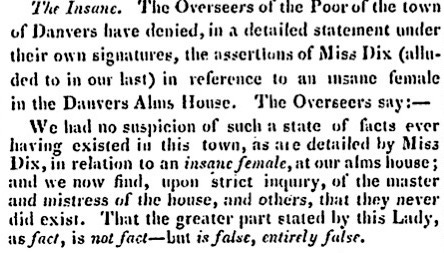
Dix’s shocking findings had an immediate impact, though not everyone was pleased. Some local officials objected to the portrayal of their jails and almshouses, and, in many cases, she came under personal attack. In Danvers, the Overseers of the Poor penned a lengthy statement to their local newspaper denying her findings.6“Bare-faced falsehoods, false impressions, and false statements,” another letter writer wrote.7
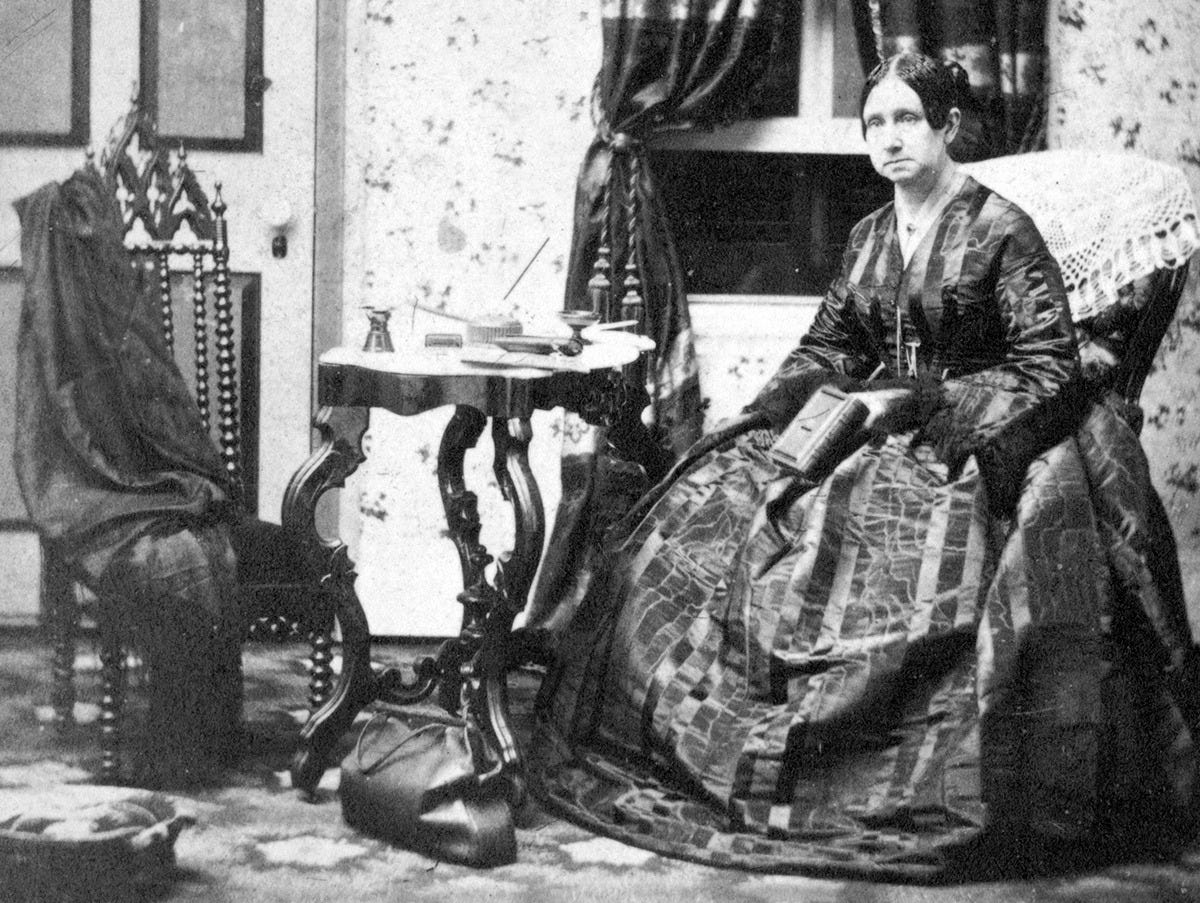
Dr. Howe, Sumner and others defended Dix’s report which, despite the objections, accomplished her goal of focusing attention on the plight of the mentally ill. Excerpts were published in area newspapers and captured the public’s attention. The Legislature’s Charitable Institutions Committee, chaired by Dr. Howe, promptly made a series of recommendations to the full body, including a major expansion of the state mental hospital. The funding was approved and Dix won a major victory.8
Fresh off the success with her Memorial to the Massachusetts Legislature, Dix was contacted by a clergy member in neighboring Rhode Island looking for help for a mentally ill inmate. Dix promptly set off in a stagecoach to Providence and thus began the next leg of what soon became a national crusade.
Over the next two decades she would crisscross the country in her quest to build more hospitals and improve the welfare of those grappling with mental illness, spurring widespread reforms. In her lobbying efforts she developed friendships with influential leaders like President Millard Fillmore and even traveled to Europe, where she once had an audience with the pope and successfully convinced him to improve conditions at the local asylum. During the Civil War, Dix served as a nurse and later continued her work as a humanitarian and social reformer until her death.
Though she was not even eligible to vote, Dorothea Dix had a major influence on public policy. Starting with her Memorial to the Massachusetts Legislature, Dix helped spark a national movement to change laws and attitudes about mental health.
1 Tiffany, Life, 76.
2 Dix, Memorial, 4-7.
3 Ibid, 9.
4 Ibid, 22.
5 Ibid, 32.
6 Salem Register, January 30, 1843, 2.
7 Franklin Democrat, February 14, 1843, 2.
8 Christian Register, January 28, 1843, 3; Boston Recorder, January 26, 1843, 14.
For further exploration see also:
Full text of petition also available at Disability History Museum: Memorial To The Legislature of Massachusetts
Comments
Nothing yet. Say the first thing.
Sign in to join the conversation.