
(scroll down for English, after the picture)
Tenis
Hay pocas cosas tan revitalizantes en la adultez como descubrir un nuevo hobby. Volver a la mente de principiante, aprender una nueva forma de pensar o moverse, crear nuevas conexiones neuronales, ejercitar músculos que ni sabías que tenías, desarrollar una táctica que te permita insistir en tus fortalezas y ocultar tus debilidades, volver a sentir la satisfacción de la superación personal, ejercitar la tenacidad en la práctica, tolerar la frustración en el error. El tenis, para mí, es eso y mucho más.
Llegué al tenis, de rebote, de la mano de mi amigo Steve, en la segunda mitad de mi treintena, justo a tiempo para relevar a Nadal, como solía bromear. Todavía recuerdo aquella vez que estaba en la fila del aeropuerto de Barcelona para pasar el control de pasaportes y tenía a Nadal unos pocos metros por delante. Ahí estaba él, sólo, tranquilo, cargando una enorme mochila con muchas raquetas, seguramente camino al US Open. La naturaleza meandriforme de la fila hizo que me cruzara con él varias veces, de forma periódica, aun así decidí que la mejor forma de agradecerle todos los buenos momentos que me había dado era no molestarle. El resto de la gente en la fila creyó lo mismo. El instante nórdico saltó por los aires cuando fue el turno de Nadal de enseñar su pasaporte en la garita de policía; todos los funcionarios abandonaron su puesto de trabajo para tomarse fotos con él. Aceptó y rápidamente siguió su camino para desaparecer en el aeropuerto.
El tenis muestra, de manera explícita, que hay muchas formas de hacer una misma cosa. Los principios de la técnica son ineludibles: la estabilidad durante el golpeo, el uso de las piernas, la rotación del cuerpo y la transferencia de tu peso corporal para generar potencia (por eso Sinner puede pegarle tan fuerte a la bola sin tener brazos musculosos), el golpeo envolvente de la pelota para generar efecto que le permita salvar la red y caer dentro de la pista; sin embargo, la ejecución de estos principios, el estilo, es tan variado como el cuerpo y la mente de cada jugador. Si ves el juego de los/as 100 mejores jugadores/as del mundo, verás 100 formas distintas de moverse en la pista, golpear de derecha y de revés, sacar, volear, tolerar la frustración, navegar los bajones y celebrar las victorias. Algunas más elegantes o efectivas, otras más toscas o poco ortodoxas, pero todas nos muestran que la diversidad de forma es simplemente algo natural.
Este deporte es también un espejo cóncavo de nuestra sociedad. La brecha salarial entre los 100 mejores y el resto, entre mujeres y hombres, es descomunal. Los jugadores/as llevan años hablando de que quieren mejores condiciones laborales, salarios más justos y calendarios más razonables; sin embargo, el carácter híper-individualista de su deporte hace que nos sean siquiera capaces de agruparse en un sindicato. Los grandes bancos, fondos de inversión y petroleras patrocinan torneos alrededor del mundo, incluso legitimando regímenes antidemocráticos, aplicando a los/as deportistas el mismo trato que aplican al resto del planeta: exprimir hasta la última gota de jugo. Cada vez torneos más largos, menos tiempo de descanso, afrontando más calor (se está viendo en París este año, y me sorprendería que torneos como Australia no estén ya planeando una transición a jugar bajo techo porque pronto será imposible hacerlo al aire libre)… y los jugadores/as cómplices de todo el circo, mirando para otro lado, como si la cosa no fuera con ellos/as.
El tenis es tan mental como físico. En un partido, cada jugador/a trae en su mente sus mejores jugadas, sus golpes fuertes, sus debilidades, intentando averiguar cuáles son las del rival desde el calentamiento: qué tipo de golpe tiene, cómo se mueve, si evita darle de revés o tiene una cadencia particular. Una vez que empieza el partido, vas desplegando tu estrategia poco a poco, ajustándola en todo momento según la respuesta que encuentras al otro lado de la red y, especialmente, según cómo te encuentras tú mismo ese día y en ese momento. La batalla es tan externa como interna. Aprender a manejar la frustración, los nervios y la ansiedad, disfrutar cuando la jugada sale como tenías previsto sin dejarte llevar por la euforia, sin olvidar la técnica de golpeo y la posición de tu cuerpo, especialmente en los momentos importante, es un aprendizaje continuo e inacabable. Todo esto sin perder las maneras dentro de la pista, respetando al rival y al deporte, marcando las bolas que caen fuera de la pista (no hay árbitros a nivel aficionado) e incluso felicitando al rival cuando lo hace bien. Juego. Set. Vida.
Gracias por leer y hasta pronto,
Jose
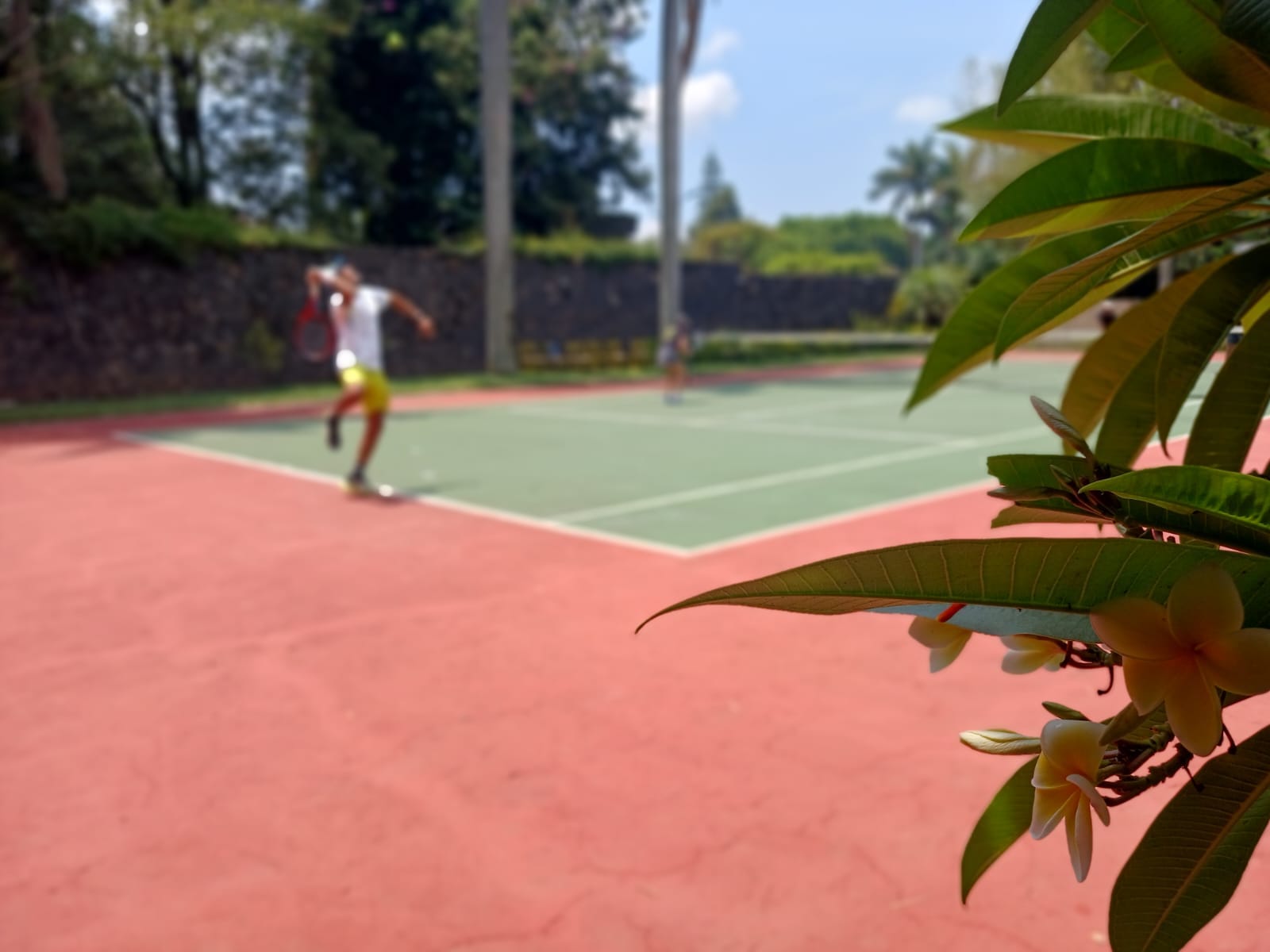
(Español más arriba)
Tennis
There are few things as invigorating in adulthood as discovering a new hobby. Returning to a beginner’s mindset, learning a new way of thinking or moving, creating new neural connections, exercising muscles you didn’t even know you had, developing a strategy that lets you play to your strengths and hide your weaknesses, feeling the satisfaction of personal growth again, practicing tenacity, and tolerating frustration when you make mistakes. Tennis, for me, is all that and so much more.
I stumbled into tennis, thanks to my friend Steve, in my late thirties, just in time to take over for Nadal, as I used to joke. I still remember that time I was in line at the Barcelona airport to go through passport control and had Nadal a few meters ahead of me. There he was, alone, calm, carrying a huge backpack full of rackets, surely on his way to the US Open. The winding nature of the line meant I crossed paths with him several times, periodically, yet I decided the best way to thank him for all the good times he’d given me was not to bother him. The rest of the people in line thought the same. The Nordic moment was shattered when it was Nadal’s turn to show his passport at the police checkpoint; all the officials left their posts to take photos with him. He obliged and quickly went on his way, disappearing into the airport.
Tennis clearly demonstrates that there are many ways to do the same thing. The technical principles are inescapable: stability during the swing, the use of the legs, body rotation and the transfer of body weight to generate power (which is why Sinner can hit the ball so hard without having bulky arms), and the sweeping motion of the ball to generate spin that allows it to clear the net and land inside the court; however, the execution of these principles—the style—is as varied as each player’s body and mind. If you watch the world’s top 100 players, you’ll see 100 different ways of moving on the court, hitting forehands and backhands, serving, volleying, dealing with frustration, weathering slumps, and celebrating victories. Some are more elegant or effective, others more rough or unorthodox, but all show us that diversity of form is simply natural.
This sport is also a distorted mirror of our society. The pay gap between the top 100 and the rest, and between women and men, is enormous. Players have been calling for years for better working conditions, fairer wages, and more reasonable schedules; however, the hyper-individualistic nature of their sport prevents them from even forming a union. Major banks, investment funds, and oil companies sponsor tournaments around the world, even legitimizing undemocratic regimes, treating athletes the same way they treat the rest of the planet: squeezing every last drop of juice out of them. Tournaments are getting longer and longer, with less rest time, and players are facing more heat (we’re seeing it in Paris this year, and I’d be surprised if tournaments like the Australian Open aren’t already planning a transition to indoor play because it will soon be impossible to play outdoors)… and the players are complicit in the whole circus, looking the other way, as if it had nothing to do with them.
Tennis is as much a mental game as it is a physical one. During a match, each player keeps their best shots, their strongest strokes, and their weaknesses in mind, trying to figure out their opponent’s from the warm-up: what kind of shot they have, how they move, whether they avoid backhands, or if they have a particular rhythm. Once the match begins, you gradually unfold your strategy, adjusting it constantly based on the response you get from the other side of the net and, especially, based on how you yourself are feeling that day and at that moment. The battle is as much external as it is internal. Learning to manage frustration, nerves, and anxiety; enjoying it when a shot goes as planned without getting carried away by euphoria; and not forgetting your stroke technique and body position—especially in crucial moments—is a continuous and never-ending learning process. All of this without losing your composure on the court, respecting your opponent and the sport, calling balls that land out of (there are no umpires at the amateur level), and even congratulating your opponent when they play well. Game. Set. Life.
Thanks for reading and take care,
Jose
No posts
Comments
Nothing yet. Say the first thing.
Sign in to join the conversation.