
(Español tras la foto)
Authentic
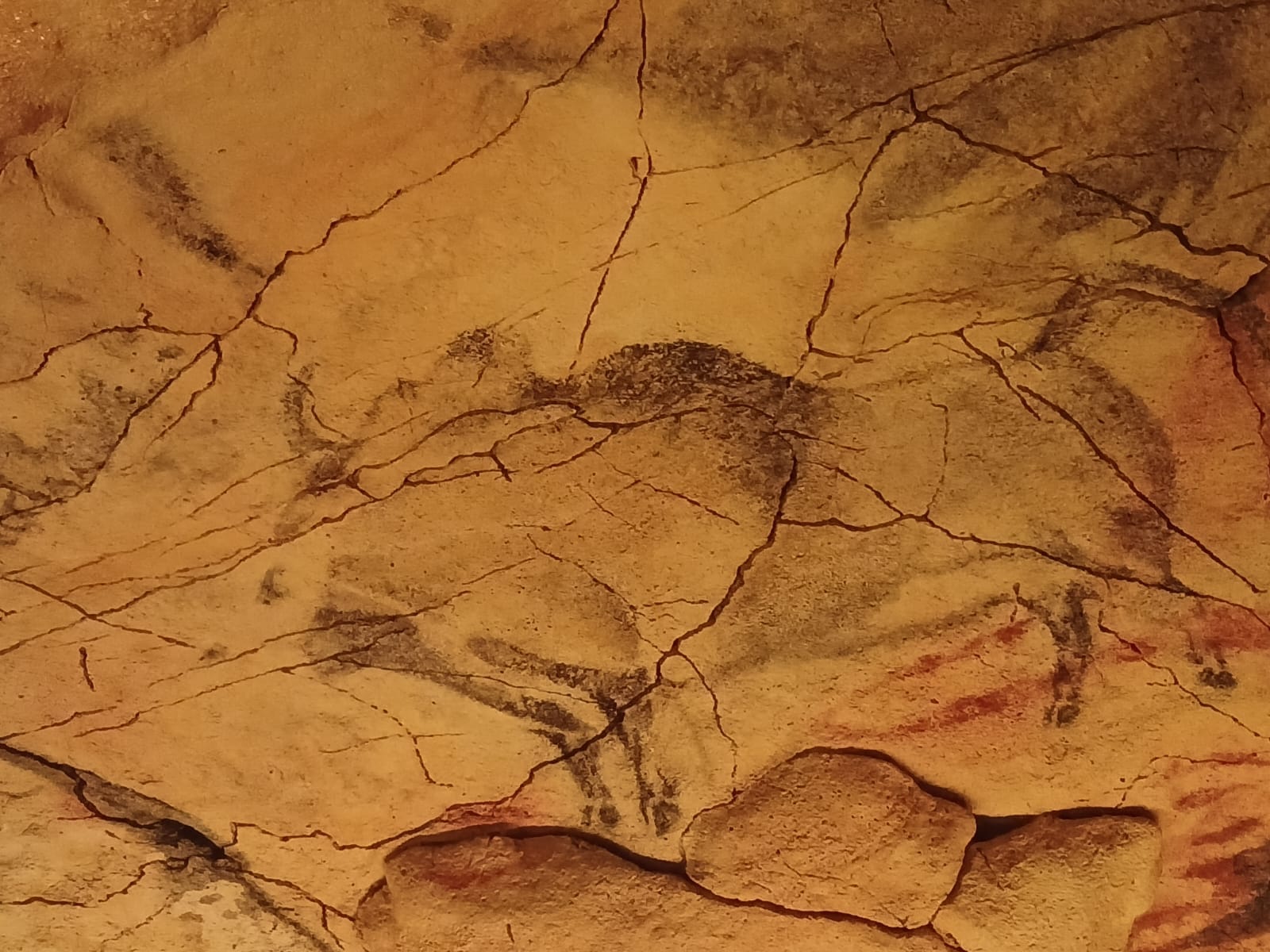
This summer I had the opportunity to visit the Altamira Cave in Cantabria, Spain. The Sistine Chapel of Paleolithic art, as it is also known, is a gateway to other worlds within our own. The paintings and engravings of bison, deer, horses, and wild boars, sometimes overlapping, sometimes in conversation, indicate that it has always been a special place, a space for rituals. Only this explains why Homo sapiens chose it to leave their mark for more than 20,000 years, from 36,000 years ago to 13,000 years ago, when the entrance to the cave was blocked by a landslide. The sensitivity of the strokes, the use of the natural relief of the cave to give volume to the backs of the bison, the choice of colors, the probable use of bone marrow as fuel for lighting... the desire to express oneself traveling for 36,000 years to touch the deepest part of our being. However, I must confess that during the visit I couldn’t get it out of my head that what I was seeing was a replica. The original cave was closed to the public years ago to slow its deterioration, and a group of experts made a life-size copy inside the museum next to the cave. I understand that the replica is extremely accurate (they say that they analyzed the original paintings and engravings so thoroughly in order to make the copy that in the process they identified new details that were previously unknown), that the original cave is so low that you can barely see the drawings, that the lighting in the replica makes it possible to appreciate the art even more; I understand all of this, but the filter of inauthenticity remained present between my eyes and my heart.
This week, news broke that Canadian-American writer Thomas King, who based his career on narrating what it means to be Indigenous in North America at this moment in history, is not Indigenous. The news has come as a shock to Canada’s cultural and political circles. King is a highly successful writer who has received numerous awards and honours for his contribution to advancing the Indigenous cause. It has not come as a surprise to various Indigenous communities, who have said that there have been rumors for more than a decade that King did not have Cherokee ancestry, as he claimed. I find this quite upsetting. King was the author who introduced me to Indigenous culture in North America. In the absence of institutional recognition (in the hegemonic Canadian narrative, indigenous cultures do not exist, it is a thing of the past), he was a clear, incisive, funny, and realistic (?) voice on life on a reservation, the abuses of the Canadian government, and the contradictions of contemporary North American society. His book “The Inconvenient Indian” took me from disbelief and pain to laughter in just one page. I remember attending one of his talks at the Toronto Public Library. Hundreds of people came to see him, and there were even other rooms in the library where they broadcasted his speech. For an hour and a half, he had us spellbound, captivated by his storytelling skills, demolishing colonial narratives with a brilliant, budding sense of humor (“I am glad they were looking for India and not for Turkey, indians is not that bad after all”). Reading his book, listening to his words, I believed what he said. That belief was backed by institutional validation; it wasn’t a copy, it was an authentic source. And I drank from that source with pleasure for a long time. And what I drank quenched my thirst and allowed me to keep moving forward and keep searching. The belief that I was witnessing something authentic allowed me to get carried away, immerse myself, and live it. I wish I hadn’t known that Altamira was a replica until after I had finished the visit.
Thanks for reading and take care,
Jose
(Scroll up for English)
Auténtico
Este verano tuve la oportunidad de visitar la cueva de Altamira en Cantabria, España. La capilla Sixtina del arte paleolítico, como también es conocida, es una puerta a otros mundos dentro del nuestro. Las pinturas y grabados de bisontes, ciervas, caballos, jabalíes, a veces superpuestos, a veces en conversación, indican que siempre ha sido un lugar especial, un espacio de rituales. Sólo eso explica que el homo sapiens lo eligiera para dejar su huella durante más de 20.000 años, desde hace 36.000 años hasta hace 13.000, cuando la entrada a la cueva quedó bloqueada por un derrumbe. La sensibilidad de los trazos, el uso del relieve natural de la cueva para darle volumen a los lomos de los bisontes, la elección de los colores, el probable uso del tuétano de los huesos como combustible para su iluminación… el anhelo por expresarse viajando durante 36.000 años hasta tocar lo más hondo de nuestro ser. Sin embargo, debo confesar que durante la visita no podía quitarme de la cabeza que lo que estaba viendo era una réplica. La cueva original fue cerrada al público hace años para frenar su deterioro, y un grupo de expertos realizó una copia a tamaño real dentro del museo que está junto a la cueva. Entiendo que la réplica es exactísima (dicen que analizaron tanto las pinturas y grabados originales para hacer la copia que en ese proceso llegaron a identificar nuevos detalles antes desconocidos), que la cueva original es tan baja que apenas tienes perspectiva para ver los dibujos, que la iluminación de la réplica hace posible apreciar el arte aún más; lo entiendo todo, pero el filtro de la inautenticidad no dejaba de estar presente entre mis ojos y mi corazón.
Esta semana ha salido a la luz la noticia de que el escritor canadiense y estadounidense Thomas King, quien basó su carrera en narrar qué significa ser indígena en norteamérica en este momento de la historia, no es indígena. La noticia ha caído como un jarro de agua fría en los ámbitos culturales y políticos de Canadá, King es un escritor muy exitoso, condecorado con multitud de premios y distinciones por su contribución a avanzar la causa indígena. No ha sido una sorpresa para diversas comunidades indígenas, que han expresado que ya había rumores desde hace más de una década de que King no tenía ascendencia Cherokee, como él mantenía. A mi me ha dejado bastante contrariado. King fue el autor que me introdujo a la cultura indígena en Norteamérica. A falta de reconocimiento institucional (en la narrativa canadiense hegemónica la cultura indígena no existe, es algo del pasado), él era una voz clara, incisa, divertida y realista (¿?) de la vida en una reserva, de los abusos del gobierno canadiense, de las contradicciones de la sociedad norteamericana actual. Su libro “El Indio Inconveniente” (The Inconvenient Indian) me llevaba de la incredulidad y el dolor a la risa en apenas una página. Recuerdo cuando asistí a una de sus charlas en la biblioteca pública de Toronto. Cientos de personas acudieron a verle, incluso había otras salas de la biblioteca donde reproducían en vídeo su intervención en la sala principal. Durante hora y media nos tuvo con la boca abierta, abducidos por su capacidad de contar historias, repartiendo hostias como panes mezcladas con un humor incipiente y brillante. Leyendo su libro, escuchando sus palabras, yo me creí lo que decía. Esa creencia venía respaldada por la validación institucional, no era una copia, era una fuente auténtica. Y de esa fuente bebí con gusto durante mucho tiempo. Y lo que bebí sació mi sed y me permitió seguir avanzando y seguir buscando. La creencia de estar presenciando algo auténtico me dejó llevarme, sumergirme y vivirlo. Ojalá no hubiera sabido que Altamira era una réplica hasta haber acabado la visita.
Gracias por leer y hasta pronto,
Jose
No posts
Comments
Nothing yet. Say the first thing.
Sign in to join the conversation.