
Welcome !
In this Metabolic Insight Thanksgiving special, I cover the physiology of how the body responds to maximal eating.
Picture the Thanksgiving table (For UK readers, apply this to Christmas dinner). Overflowing with turkey, ham, potatoes, stuffing, sweet potato casserole, bread rolls, and maybe some pumpkin pie. You have one plate, then another. Gradually it creeps up on you, you cannot eat another bite. Discomfort builds.
While you relax, your autonomic digestive and metabolic systems work overtime. Hormones go up and down, incoming nutrients are shuttled into tissues for storage, and the sensory-specific satiety mechanism, known as “dessert stomach ”, kicks in.
Let’s take a closer look at the details.
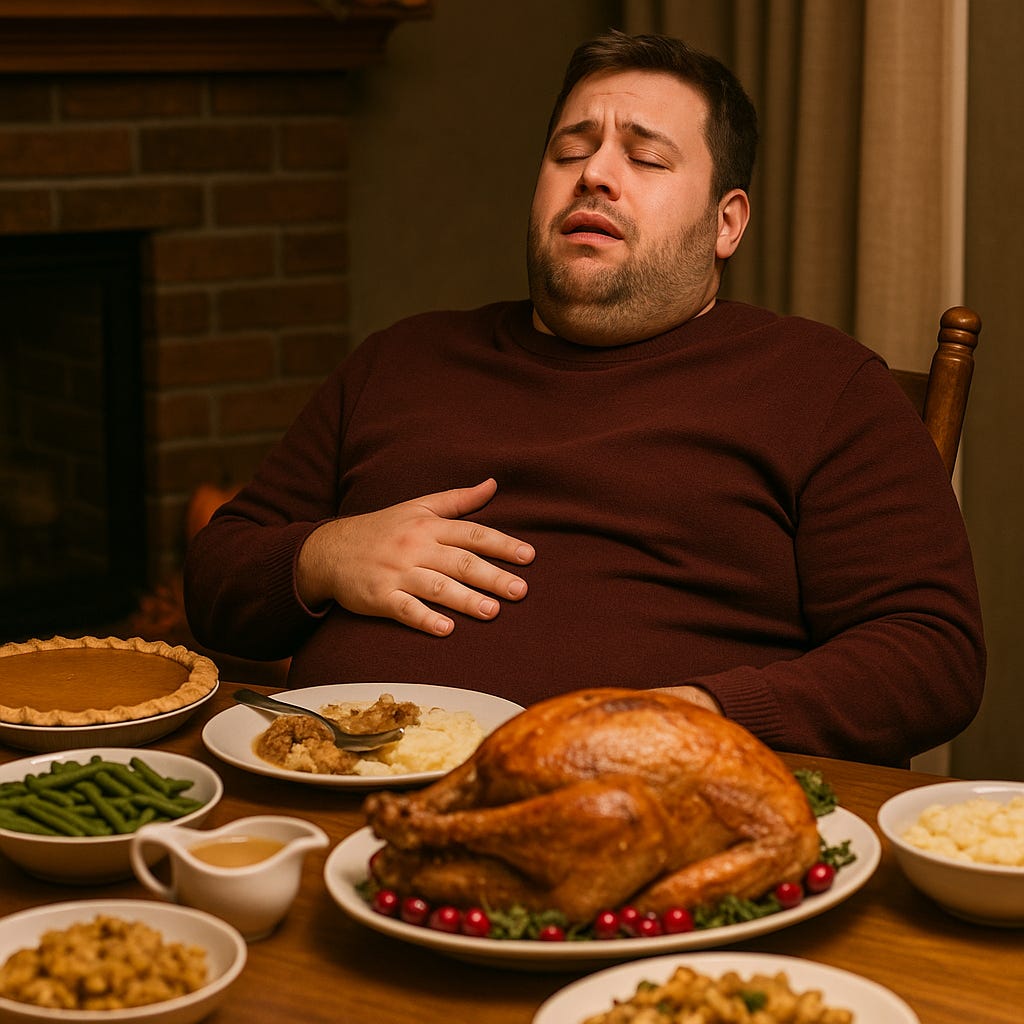
Many studies measure responses to ad libitum eating, a Latin phrase meaning ‘at one’s pleasure’ usually interpreted as eating until you are comfortably full.
But one study took things a step further.
Fourteen young, metabolically healthy men, performed two eating trials. One was ad libitum where they were instructed to ‘eat until you are comfortably full’, ‘eat all you would like to eat’ and ‘until you have satiated your hunger’.
The other eating trial was maximal, where they were instructed ‘this is maximal eating’, ‘eat all you can eat’ and ‘until you cannot physically eat another bite’.
With this study design, they were able to compare how the body responds to normal eating until full compared with excessive eating.
These men attended the laboratory after an overnight fast and were fed a ‘homogenous mixed-macronutrient meal’: academic speak for an unlimited supply of Domino’s® Original Cheese & Tomato pizza. Not quite Thanksgiving ham or turkey but the macronutrient composition resembled a normal meal: ~19% protein, ~48% carbohydrates, and ~33% fats.
Researchers tracked hormones, metabolites, and mood for four hours after the first bite.
Average energy intake doubled from ~1580 kcals in the ad libitum condition to ~3110 kcals in the maximal condition, equating to 147g protein, 367g carbohydrates, and 113g fats.
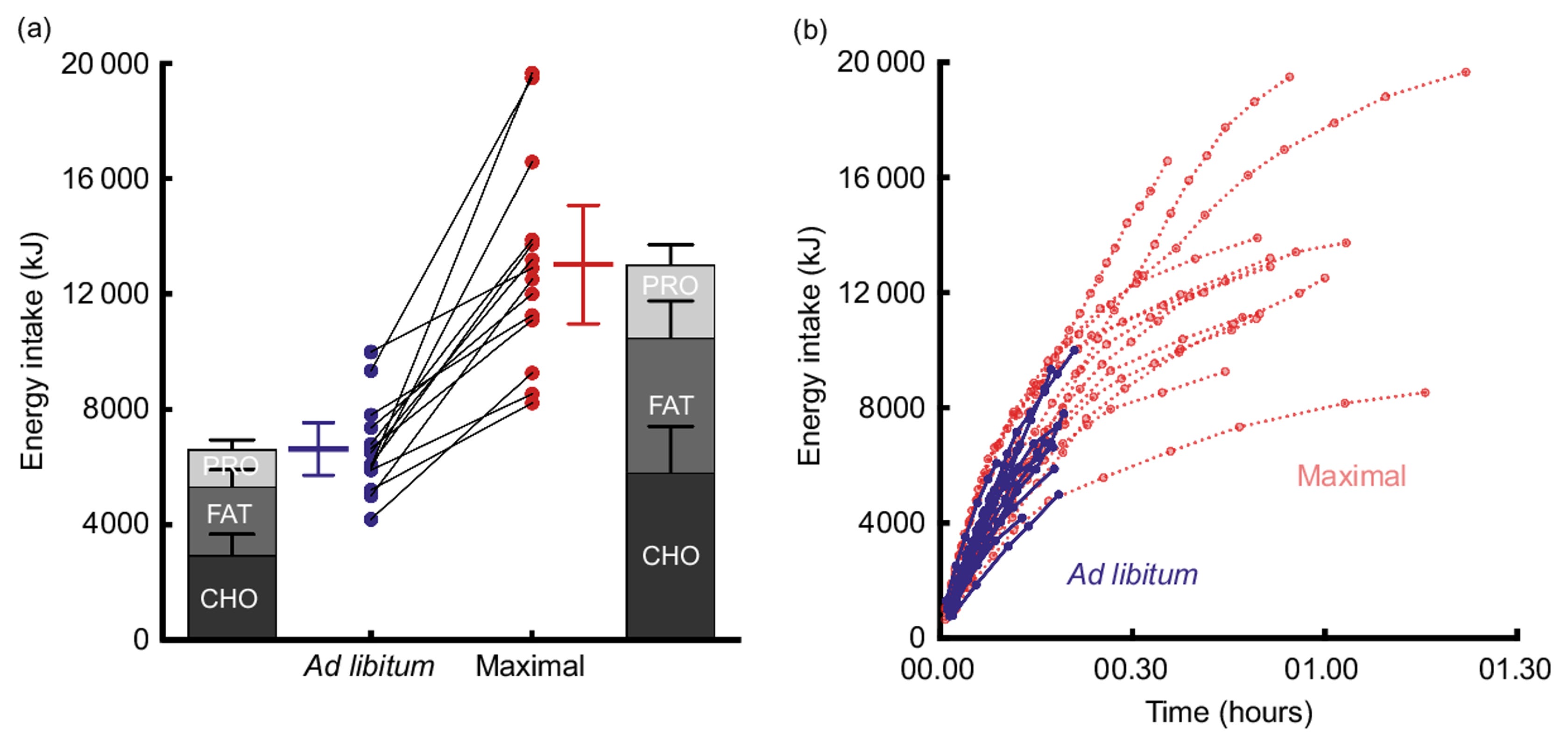
Notice the wide range between eaters: one person only ate an additional 29% kcals, but another person ate an additional 227% kcals.
The winner (buffets hate to see him coming) ate ~4700 kcals in the maximal condition, consisting of 220g protein, 555g carbohydrates, and 170g fats!
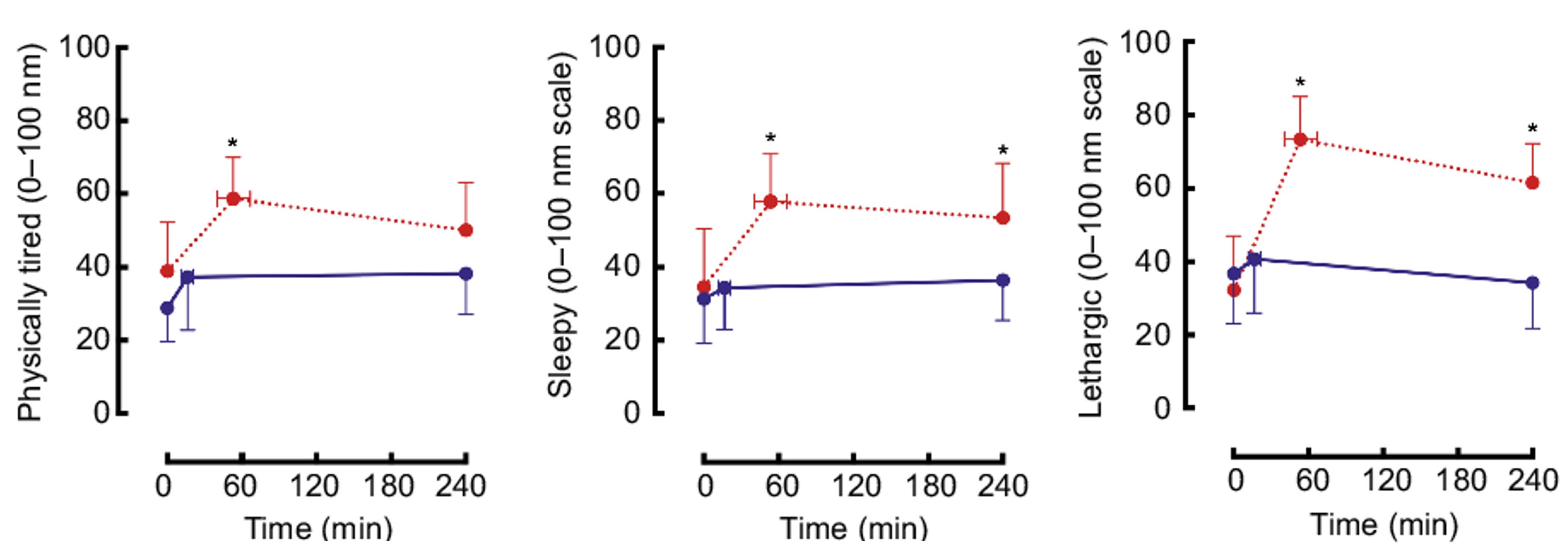
Within one-hour of maximal eating, participants reported high levels of tiredness, sleepiness, and lethargy. These feelings remained for the next few hours.
The biology of the food coma is interesting but not fully understood. It was thought that excessive eating diverted blood flow away from the brain to digestive tissues, causing tiredness. We now know that although blood flow does get redirected, the energy-demanding brain still receives its usual supply.
Our current best guess instead comes from glucose-sensing data in rodents.
Orexin neurons in the lateral hypothalamus (a region in the brain) signal “wakefulness”. Their activity falls as blood glucose rises: a sharper rise in glucose equals a sharper fall in orexin, leading to sleepiness. At the same time, rising glucose stimulates VLPO (ventrolateral preoptic nucleus) neurons, which release adenosine. This inhibits arousal and amplifies feelings of tiredness.
*Side note: caffeine is an adenosine receptor antagonist and blocks this pathway, which is how it reduces sleepiness.
But does this fully explain the food coma? Even when glucose levels decreased in the pizza study, feelings of tiredness, sleepiness, and lethargy remained.
Post-meal malaise has also been linked to the release of gut hormones (more on these later) and inflammatory cytokines, like interleukin-1 (IL-1), that dampen arousal and induce fatigue.
If that all sounds a bit unclear, it is!
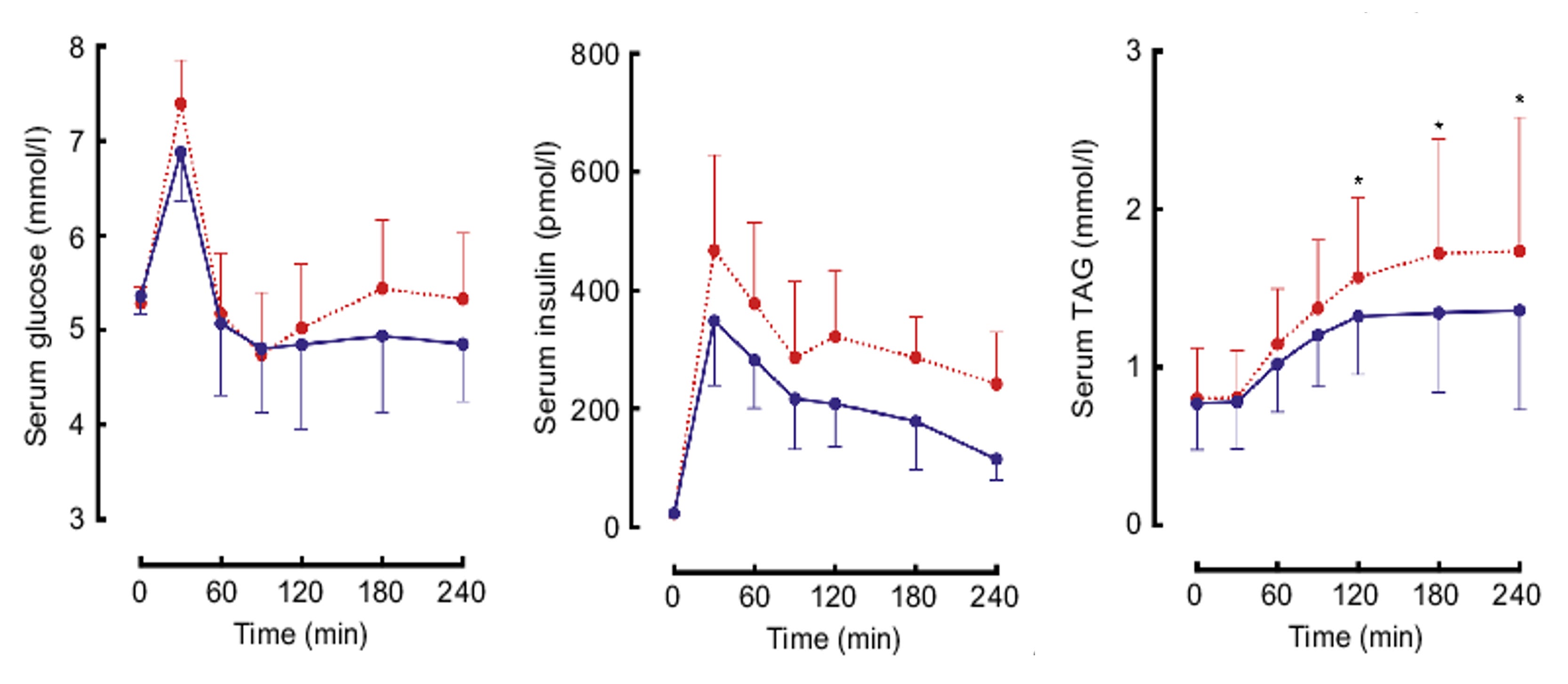
The most striking thing to me is the exceptional glucose disposal relative to the massive carbohydrate intake.
There was a large initial rise in blood glucose levels after 30 minutes of eating, returning to baseline levels within 60 minutes. This impressive metabolic control was achieved by a rapid insulin and GLP-1 response, with both hormones staying elevated well above the ad libitum condition across the 4-hours.
The caveat here is that these were young, metabolically healthy men with excellent insulin sensitivity. Under these conditions, ingested carbohydrates are readily taken up by the liver and skeletal muscle. A low or moderate carbohydrate intake combined with exercise in the days before the trial could mean that participants started with a large capacity for glycogen storage—in the range of 300 to 500 grams.
As an additional means of disposal, the body shifts as much as possible towards oxidizing the incoming carbohydrates. This ability to shift between using fats and carbohydrates as fuel sources is known as metabolic flexibility.
I would not expect this level of metabolic control in people with insulin resistance, as occurs with type-2 diabetes. Instead, post meal glucose levels reach higher peaks and remain elevated for several hours. A lack of metabolic flexibility means excess carbohydrates are diverted to the less efficient metabolic fate of de novo lipogenesis in the liver, which transforms carbohydrates into fatty acids for storage.
Blood triglycerides (TAGs) continued increasing, only just beginning to plateau at the 4-hour mark. This represents the slow-digesting nature of dietary fats with TAGs transporting their fatty acid cargo to adipose tissue for storage. It would have taken a much longer measurement period, up to 8-hours, to fully capture their journey.
Side note: as a protein and amino acid researcher, I would have loved to see these measured and I expect they would also have still been increasing in the blood at the 4-hour mark.
You know this sensation.
As well as reporting lower hunger levels and higher fullness levels in the maximal condition, they also experienced significantly higher heart rate over the 4-hours.
The stomach walls stretch, creating gastric tension, and intragastric pressure increases. This triggers the vasovagal reflex, slowing gastric motility. Sympathetic nervous system activity drives heart rate up and induces mild sweating (“uh oh, here come the meat sweats”).
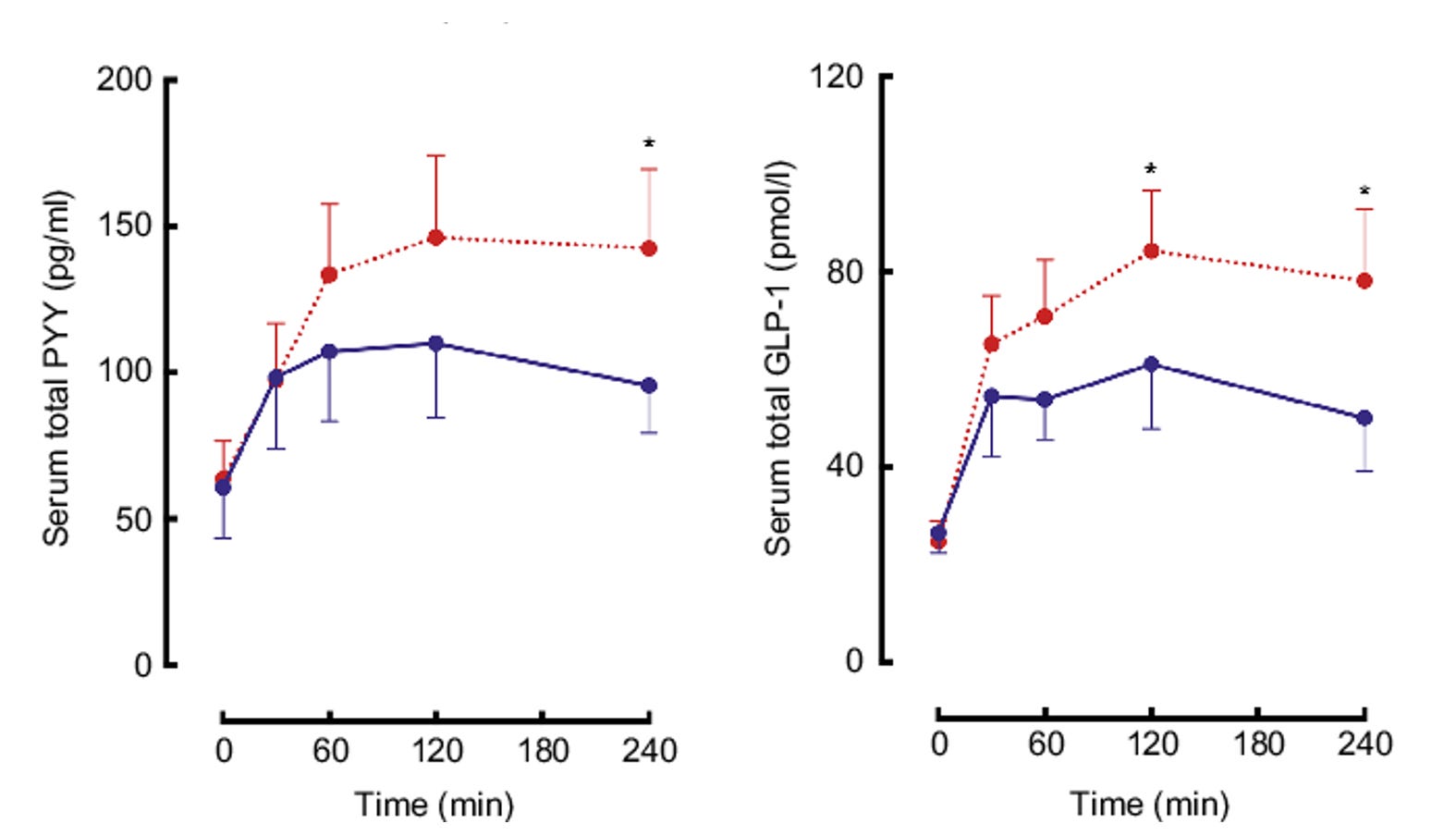
At the same time, PYY and GLP-1, two important gut hormones, rose well above ab libitum levels. These compound the mechanical effects, further slowing gastric emptying and gut motility, contributing to the feelings of nausea.
Next, come the secondary effects: gas and bloating.
Large amounts of proteins, carbohydrates, and fats overwhelm digestive enzymes and the absorptive capacity of the upper small intestine. Excess nutrients reach the lower small intestine or the colon undigested where they undergo fermentation, producing gas as a by-product. Gas accumulation expands the intestinal space, causing abdominal distension and visible bloating. The discomfort continues.
These signals surely convince the body enough is enough. But what about something sweet…?
You cannot eat another bite.
You smell warm pie… Scents of pumpkin, sweet potato, maybe even apple.
Suddenly there’s room for more.
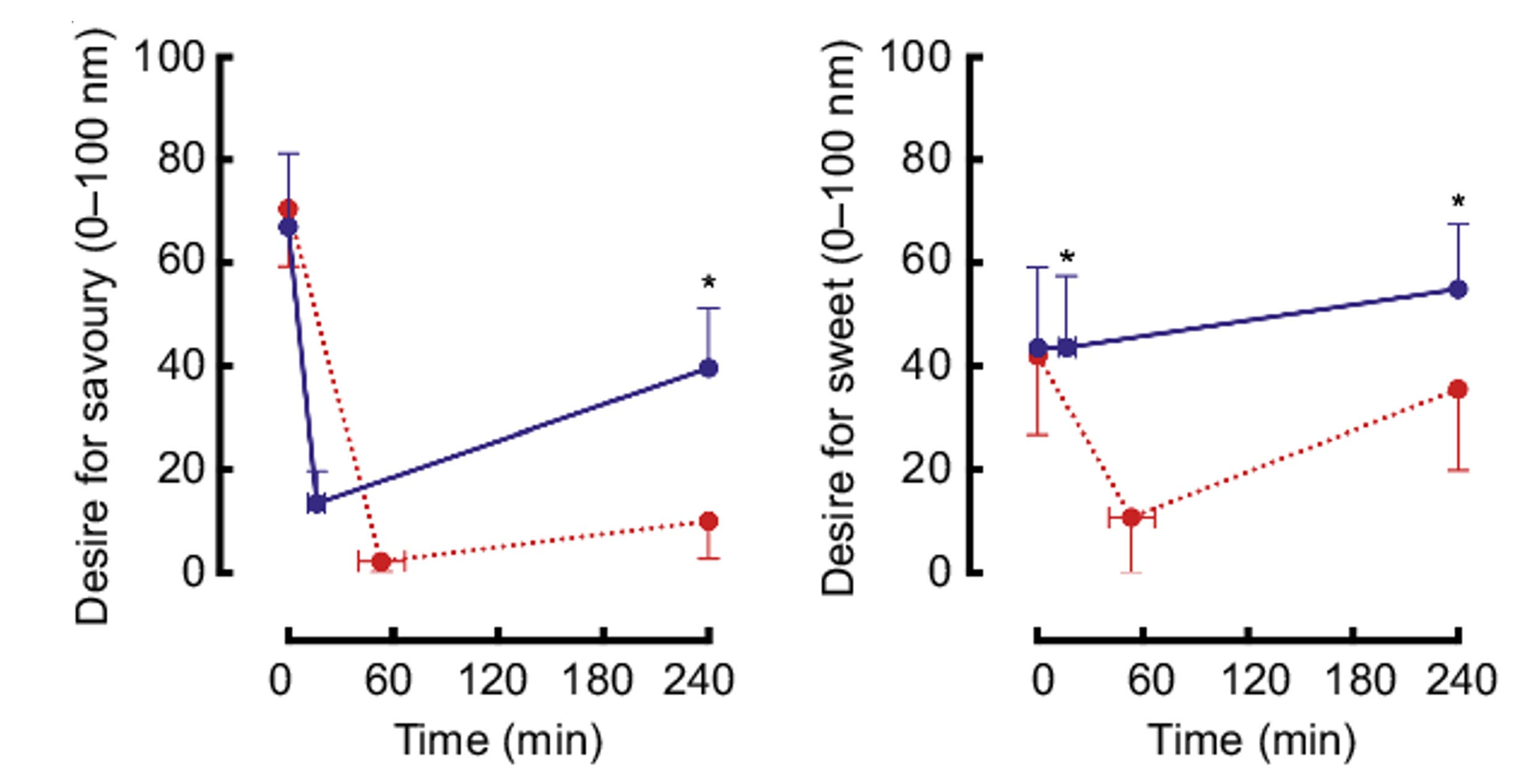
In the pizza study, ab libitum and maximal eating led to a sharp decrease in self-reported ‘desire for savoury food’. No real surprises there.
But the ‘desire for sweet food’ was the same after ad libitum eating despite consuming ~1580 kcals! Even with maximal eating there was some (albeit very small) desire for sweet foods, and this continued to rise over the next 3-hours despite fullness ratings staying high.
This metabolic quirk is called sensory-specific satiety.
Eating a large amount of one flavour profile, like savoury foods, causes the brain reward response to gradually decrease. As food intake continues, it loses appeal and taste ratings drop. But this decline is highly selective and applies mainly to the flavour profile you’ve just eaten.
Despite feeling nauseous, the brain is willing and able to receive pleasure from a new flavour profile: sweet foods. These activate different taste receptors and hedonic pathways, satisfying the dopamine reward system.
I find it interesting that maximal eating of savoury foods was able to suppress the desire to eat sweet foods even if only for a little while - a few hours later they were dessert ready.
Our “pizza study” did not study alcohol intake, but the inventive “tailgate study” did.
They provided eighteen men (body mass index >25 kg/m2) with an unlimited supply of buffet food and alcohol over 5-hours - to give the full American tailgate experience, participants were paired up with friends and watching sports of their choice.
In that time, they consumed an average of 5087 kcals and 171g of alcohol, equivalent to ~15 cans of 4% beer or 2.2 bottles of wine.
The metabolic response was a 4-fold increase in de novo lipogenesis (the liver transforming carbohydrates into fats) along with continually rising blood triglycerides and fatty acids.
Despite having a similar alcohol exposure, some participants saw an increase in their intrahepatic triglycerides (a marker of fatty acid deposition in the liver) while others saw a decrease. This reveals large person-to-person variability in the liver’s capacity to handle excess nutrient load. Some do well, other’s do not.
I love how the pizza study used a simple, elegant design to show an interesting metabolic phenomenon:
Humans have substantial capacity to eat more energy than required to achieve comfortable fullness.
This can be an advantage in times where the food supply is unpredictable; storing excess energy helps protect us during scarce periods. But many of us in developed countries do not live in that environment, and it can be detrimental to continuously override our control systems that regulate energy intake.
This raises several interesting questions about what makes us stop eating. Perhaps our modern food environment interferes with our innate calorie-sensing mechanisms that served us well throughout history. More food for thought (sorry, not sorry).
If you decide to indulge in the holiday spread, at least you’ll know what is happening underneath the surface, and why the pumpkin pie still looks appealing.
I hope you enjoy a happy and healthy Thanksgiving with family and friends!
No posts
Comments
Nothing yet. Say the first thing.
Sign in to join the conversation.