
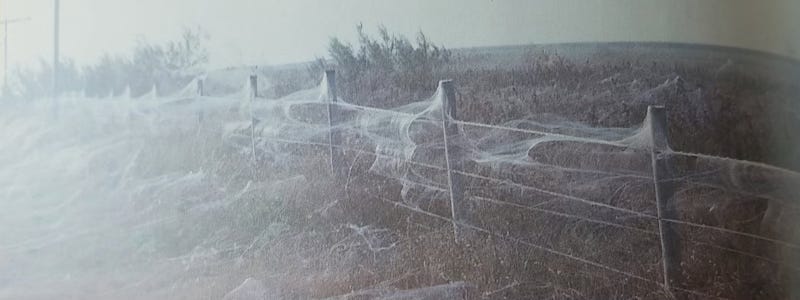
“Start a song in the middle / So I can hear you better / Drop words from the sky / Into this parking lot / Watch ‘em bouncing round/ On the pavement / They’re raining down”
(The Silos, “When All Of This Goes By”)

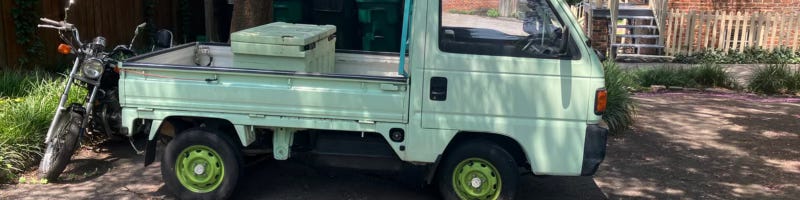
When I was a kid, summers were slow.
We didn’t take family vacations — just occasional long weekends at someone’s cottage on the Rappahannock or Piankatank. Swim practice most mornings. Swim meets, unless it stormed. Football in the lot behind Southern Bank. Slurpees after we scoured construction sites for recyclable bottles.
I read. A lot. One hundred and thirty-five books one summer. I marked each one off on the Bon Air Library’s summer reading contest sheet.
I had all the time in the world.
Today, slowing down sometimes feels like I’m stealing from myself.
I careened into last weekend with some force, despite the smoke-filled skies. (Thanks, Canada. Also, I’m so sorry.)
Author interviews and art openings and poetry readings had rolled into seven events, two books I wanted to finish, the usual household chores, and a yard to cut if the smoke and heat cooperated.
And then I gave myself a break.
I skipped Shut Up & Write. Canceled something else. Sat around reading for most of Saturday, then had dinner with a good friend.
Sunday, I slept in. Skipped an online writing conference. Had coffee with another friend. Saw two bands. Slowly wandered my way into the work week.
I didn’t slow down because I wanted less of anything. I slowed down to take a breath.
I’ve known for years — since the first time I lived on my own — that putting something on the calendar does not obligate me to become the person who can do everything. A plan is not a promise. An opportunity is not an assignment.
But I used to treat them that way.
Then I realized that most of the time, I’m the only person who knows I didn’t go to the movie, or the nature walk, or show up to make Moon Spell Jars.
Going or not going matters mostly to me. Increasingly, that means going more to the things that matter mostly to me.
Throttling down doesn’t mean I have to disappoint anyone. Not even myself. It’s just making room. To read a book or binge a TV show. To walk the dog when it isn’t a hundred degrees and the air no longer resembles Mordor.
This coming week is interesting.
Three days packed with Floricane work — client interviews, a self-awareness workshop, a strategy session, and planning for a project that may well destroy all my myths about work-life balance.
Three more filled with lunches and movies and walks and lectures and music with friends. Plus a lot of writing, and a meeting with my writing coach.
On the seventh day, I’ll rest.
Because the following week, I’m taking the kids on vacation.
I envy Monica Hesse many things — her semi-steady job as a journalist; her many books, her almost Pulitzer.
I don’t envy her responding individually to more than 700 Washington Post readers who wanted details.
In her essay last week about Christopher Nolan’s The Odyssey, she mentioned that she cut three paragraphs about linguistics. And then wrote, ‘please email me if you would like to hear’ the details.
They did, natch. More than 700 of them. (I thought about it at the time, but demurred.)
You know what that means, right? You’re correct, and she wrote about it a few days later.
Since I’d promised to write back to everyone directly, I wanted to write back to everyone directly, and I have just emerged from 16 hours of doing that.
I appreciated her commitment to her readers. But what I really enjoyed was her take on a dodgy older man who berated her for not reading Homer in high school or college. Then noted he was just starting Pride and Prejudice.
She had some spicy things to say in return about who reads Jane Austen in high school, versus who might read Homer.
What caught my eye was her suggestion that reading is not a competition, not a game.
Books are not a timed exercise, a game you are only eligible to play between the ages of 12 and 18. The literary canon is not a puzzle with a set number of pieces that perfectly interlock and must be picked up and put down in a certain sequence. You can’t read everything, and it’s never too late to read something.
It’s never too late to read something. It’s never too late to be inspired to read something. It doesn’t matter why you walk through the open door of a book, or what inspired you to take the step. You’re never behind. And you’ll never catch up.
When I scan the NYTimes’ list of ‘The 100 Best Books of the 21st Century,” I realize there are plenty of literary fish in the sea. And that’s just 21st century fish. And, being fully honest, I’ve only read 8% of them. (Note: I’m surprised to see Elena Ferrante listed three times.)
Which is why I stayed home last weekend and read comic book icon Frank Miller’s take on his life and his craft. Finished I See You Called in Dead by John Kenney. Re-started The Iliad, and have Everything Was Beautiful and Nothing Hurt and Whistler and Water Moon on hold. It’s why I bought Thea a copy of To Kill A Mockingbird last week. Not because they were on the list. But because I want to read them, or share them.
Hot Analogue Summer continues this week. It’s time to finally crack the spine on Tomorrow, and Tomorrow, and Tomorrow.
My musical dance card has been coming up handsome in recent weeks — and decidedly heavy on the XY chromosomes.
Which is funny since my daughter mocks my playlist — thick with women-fronted bands from the British Commonwealth.
July has inadvertently resurfaced a series of long-deferred musical crushes on Richmond (and Richmond-adjacent) musicians. Turns out they all share similar characteristics.
Let me explain.
The Silos released their second album, Cuba, when I was starting college. It parallels This Is the Sea by the Waterboys, released two years earlier, as one of the more genuinely complete albums of my younger life. Singer and artist Walter Salas-Humara founded the band in New York City. Their Richmond connection is through co-founder Bob Rupe, who settled in Richmond years back and recorded and played with House of Freaks, Sparklehorse and Cracker.
I never got to see The Silos live. But this week I’ll see Salas-Humara live and up close at Chilton House.
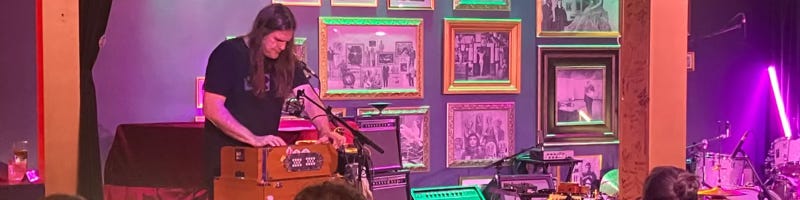
Last week, I managed to slow down just enough to dodge a thunderstorm and see one of my oldest Richmond friends play a brief set of ambient/experimental electronic music. It was a treat to see Greg Darden, one of Richmond’s dreamiest (and maybe least visible) musicians doing what he loves.
Tonight, I’ll resurface my boy crushes on Steve West and Steve Malkmus when I squeeze into the National to catch Pavement’s return to Richmond. I first fell for Steve West when his band Contoocook Line released their only album — honestly, I had a crush on the whole band, John Smith, Hanby Carter, Rob Williams. West went on to join Pavement as their drummer, and that band had already been on my radar courtesy of my prescient then-girlfriend Chesley, who lived with half the band during her UVa days.
The capstone? Discovering this week that Tulsa Drone — another Richmond band formed around lean stature, chiseled cheek bones, cinematic vibes and musical brilliance — is releasing its third album. Scott Hudgins, Jim Thompson, and Bobby Donne all would have made my wall of alternative-adjacent boy band posters if I had ever thought to create one.
I hadn’t really thought about a gender throughline to these bands I’ve loved over the years. But there it is. It’s still about the music first — these are all bands whose music broke through my American hardcore teenage brain, softened its edges. They’re all extremely competent with a deep commitment to their art, their craft. And they’re, individually, some of the kindest men I’ve known — some long and well, others on the margins.
I’m enjoying spending these last weeks of July with music crafted along a spine of competent, creative and kind. My kind of guys.
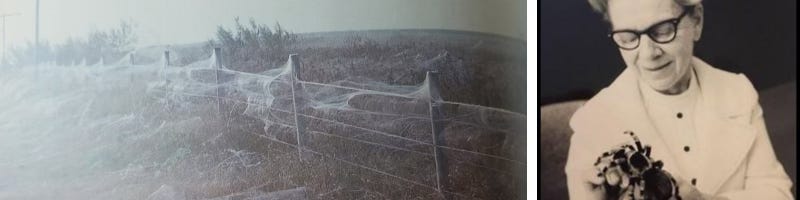
A recent Facebook group chat — the Richmond Counterculture group — surfaced a fun trip down memory lane, and the imperfection of what we think we know.
For the longest time, if you had asked me where the old ‘Richmond spider museum’ was I would have hemmed and hawed and pointed generally in the direction of Route 360 north and toward Mechanicsville.
Wrong.
Does anyone remember the Spider Museum? It was run by a woman on the outskirts. An abandoned house with no windows. Spiders on display. A path in the woods with webs and the species labeled.
I remembered. So did the Washington Post. And their 1982 story about araneologist Ann Moreton told me far more than I remembered about the museum, including its location in Powhatan (south and west). And much more about the woman who left her adult life as a wife and mother in Mississippi and turned in a new direction:
I came from a large family, and I married into a large family,’ she says. ‘I didn’t know if I had the ability to live by myself. You know, just say ‘good morning’ to people and then take care of yourself the rest of the day.’ She sought her answer about isolation in the Everglades, and after two weeks photographing spiders there, as Christmas rolled around, ‘I didn’t want to go home.
Moreton spent the next five years on the road, chasing spiders in 50 states. In time, her photographs were published in encyclopedias and placed on the walls of New York’s American Museum of Natural History and Washington’s Smithsonian Institution. Now, she says, ‘I wouldn’t trade my life for anyone’s life in the world.’
Moreton was 71 when the Post interviewed her — 44 years ago. The museum went to the Math and Science Center in 1979. Her live spiders were later donated to Harvard, and her photos to the Smithsonian.
Moreton’s life is so much richer now that I’ve moved past “Does anyone remember?” to “Tell me a story.” I wonder what I’d chase on the road for five years, through 50 states…
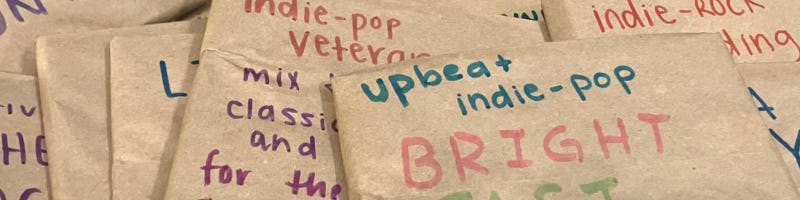
A week into book six.
A deep dive into The Iliad, and an Appointment in Samarra, and Anabasis. Character sketches that tell me nothing useful about what the five main characters look like, how they dress, what they eat — but everything about how they emotionally and socially navigate the world.
When I was writing Off Belay, I was struggling with behavioral consistency. I wanted to make sure that Harrison and Ellie, especially at their most vulnerable and intimate, were acting in ways that were really aligned with who I thought they were, and who they were becoming.
Thank you, Carl Jung.
I’ve spent most of my consulting life facilitating thousands of people through conversations about their personal preferences and behavioral styles (using a tool called Insights® Discovery).
So when I thought about how Christopher and Andrea, the guy who builds jetties and berms in coastal North Carolina and writes villanelles and his wife, the emergency room doctor who hunts for sea glass in her off hours, would navigate a serious health crisis and its impacts on his adult daughter and their teenage son, I turned first to the Insights® color wheel.
He was, I thought, an introverted feeler. A dominant sensor. Lime Green on the Insights® wheel. A supportive helper in Insights® language. A man who needed to chew on something until it made deep sense. Hence the repetition of the villanelle. The knowledge of tidal charts that lived in his bones. His reliance on Andrea as a catalyst to unmoor him, get him moving.
She was a deeply intuitive feeler. But equally a strong extraverted thinker who pivoted fast, acted before she fully knew a thing. Orange. A directing motivator. The emergency room. Her assertiveness within her family. Her reliance on Christopher to add dimensionality to her motion, to bring the periphery to her vision.
That was the first week, and now I’m in it. Just a few thousand words. But it’s already a different story than I first expected. Because that’s how writing life — well, life — works.
Comments
Nothing yet. Say the first thing.
Sign in to join the conversation.