
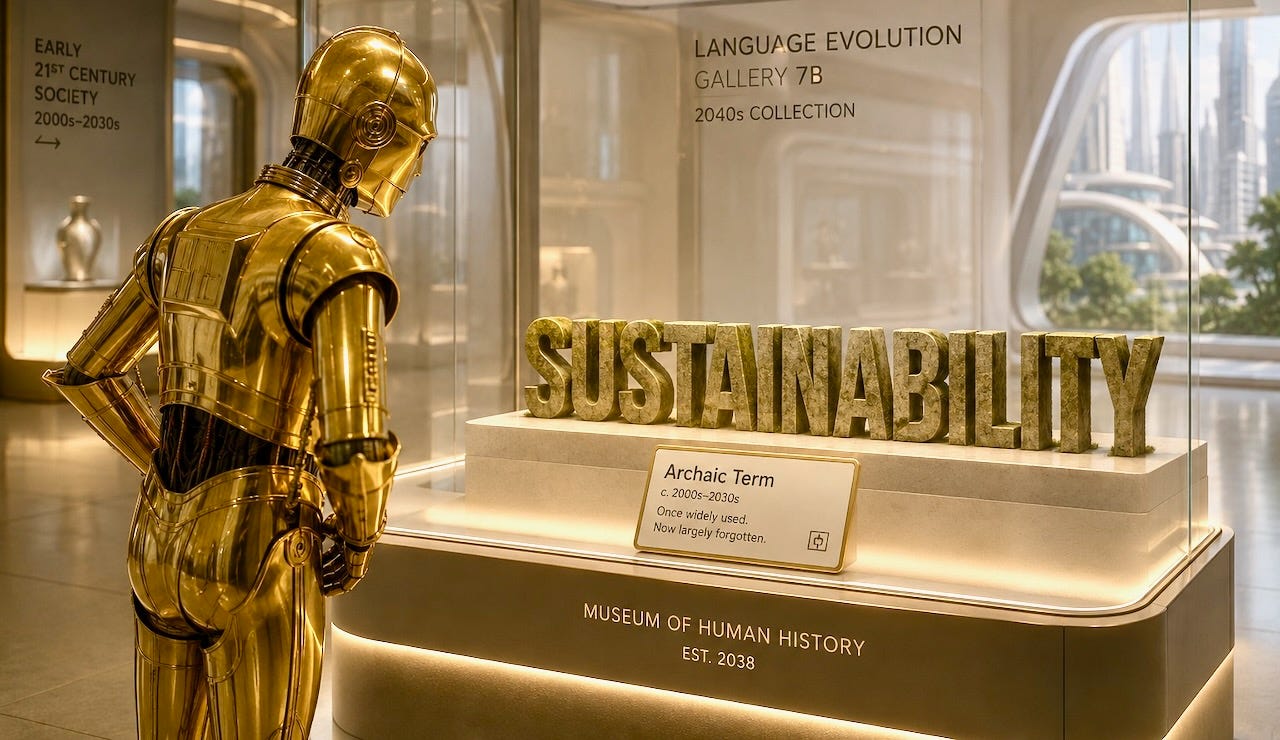
In writing our 2037 Green Paper for launch in October, I have been toying with the future of language. It surfaced as an issue in early results from our 2026 Routes to Transformation survey with GlobeScan and ERM, just completed. And every definition of the S-word, sustainability, reveals two things: what seemed most scarce at the time and who was shaping the conversation.
In 1987, Gro Harlem Brundtland and her commissioners laid the foundations of the modern conversation, focusing on both time and ethics. Our Common Future defined sustainable development as meeting present needs without limiting future generations. At its core, it was a moral claim about debt: the idea that the unborn have rights, and that we are quietly borrowing from them.
By 1994, when I introduced the triple bottom line, business leaders were shaping the discussion. The focus became integrating people, planet, and profit within company decisions, encouraging managers to balance all three. This approach made a real difference, giving sustainability a place in boardrooms where it was rarely considered before.
However, as I noted when I called for a ‘product recall‘ of the concept in 2018, the triple-win approach also risked turning into a balancing act—a way for some to justify trading some environmental harm for more profit and then considering the books balanced.
By 2026, terms like circularity, decarbonization, the triple bottom line’s many offshoots, and just transitions show that operators, regulators, and auditors are now shaping the conversation. This is the language of taxonomies, disclosure rules, scope 3 inventories, and assurance statements. It is more rigorous than before, but also more fragile. It is easier to manipulate, easier to become frustrated with, and easier to reverse when political priorities change.
So, instead of simply extending the 2026 checklist, maybe the better question for 2037 is: what will seem most scarce in a decade, and who will be shaping the conversation then?
The biggest limitation of the word ‘sustainability’ is in its meaning. To sustain means to hold steady, do less harm, slow the damage, and maintain what we have. That was a worthy goal when we thought the planet was just under pressure. But it is not enough for a world where natural systems are already badly damaged, soils are thinning, and biodiversity is collapsing.
A real reboot in 2037 will focus on regeneration, not just maintenance. It will mean rebuilding natural and social resources instead of just slowing their loss. The goal will be to create a net-positive impact, not just reach net-zero. And in multiple dimensions.
This is more than just changing the words we use. It addresses the main problem in Brundtland’s 1987 idea: you cannot truly help future generations by simply maintaining a depleted world. You can only help by leaving them with more than you received. Regeneration is what real fairness between generations looks like when you do the science.
Decarbonization is important, clearly, but it has taken over the conversation. For about ten years, ‘sustainability’ and ‘net zero’ almost meant the same thing, and anything that could not be measured in tons of CO2—like rivers, wetlands, pollinators, or communities—had trouble getting attention and finding funding.
By 2037, a more balanced approach will treat carbon as just one part of the picture and bring other planetary boundaries back into focus, like biodiversity, freshwater, nutrient cycles, and the health of the biosphere. The main question will shift from ‘how much carbon?’ to ‘how much life?’
This is the most important change for anyone thinking about markets, and it will likely decide whether 2037 brings real progress or steps backward.
Today, sustainability is still largely separate from the market. It is an extra layer of reporting added after value is created, describing harms that prices do not reflect. In a way, every disclosure rule admits failure, because we measure these outside effects only when we have not included them in the system.
Sustainability will have truly succeeded when its impact is fully included in prices. This will happen when true-cost and impact-weighted accounting become standard financial tools, not just experiments. When the cost of harming a watershed or workforce is reflected in capital costs, taxes, and balance sheets, externalities will be built into the system instead of just reported after the fact.
This is what it means to rewild a market: connecting prices to real consequences, so that the feedback that shapes every part of a business finally includes the effects on the natural world.
Here is the paradox: when something truly becomes mainstream, it no longer needs a special name. Think of total quality management, or TQM, which was widely discussed until it became standard practice and faded from view. Or ‘e-business,’ a huge topic for about a decade, until all business became digital and the term largely disappeared.
Now, ‘sustainability’ may be on the same path—not because it failed, but because it succeeded so well that it became part of what we mean by ‘business’ and ‘market.’ Becoming mainstream and becoming invisible are really the same thing. The best outcome for the word is for it to become unnecessary.
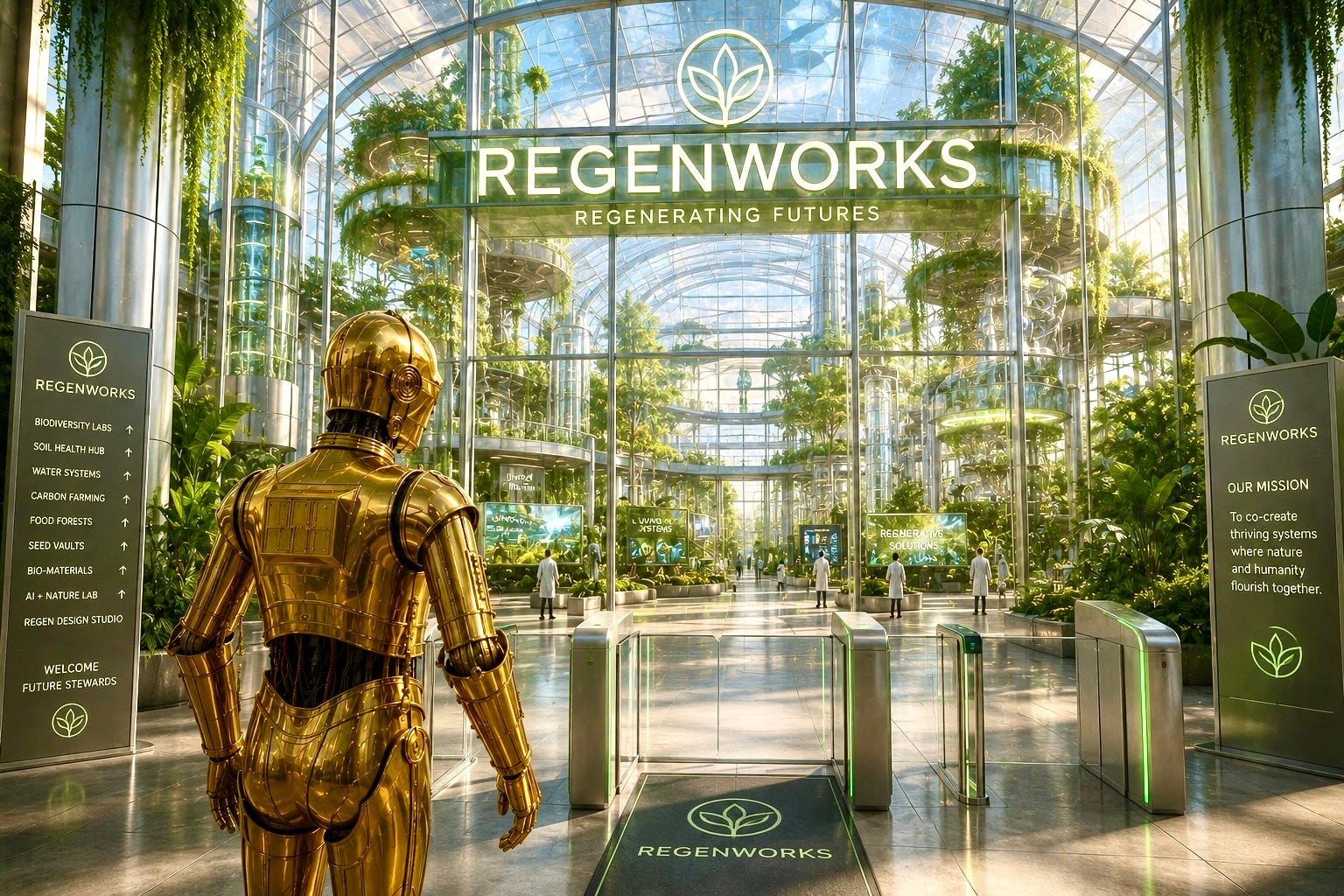
There is one more change to consider, however, and it is often stressed in transition studies but overlooked in discussions about disruption. A transition is not just about building something new; it is also about breaking down, phasing out, and carefully dismantling what came before. Markets are very good at speeding up the new, but almost comically bad at letting go of the old thoughtfully.
A mature version of sustainability in 2037 would be better balanced. It would focus just as much on respectfully winding down existing systems—through managed decline, exnovation, or what some call ‘hospicing’ a dying order—as it would on speeding up clean alternatives.
This is where just transition becomes central, not just an afterthought to decarbonization. The decline of old systems is where jobs are lost, legitimacy is tested, and backlash can grow.
It would be unrealistic to stop there, though, because ‘going mainstream’ can also have a darker side—which is just as likely to occur as the more hopeful ones. Mainstream can also mean being captured. It can mean sustainability is reduced to a compliance routine, a label on letterheads and in job titles, while the real meaning is lost.
The same forces that could help include externalities in the system can also take over the tools that measure them, turning disclosure into a performance and ‘transition’ into a way for the old system to continue with a greener image. When a movement becomes mainstream, it also becomes a target for co-opting.
So, in our increasingly complex world, 2037 seems to offer two possible futures, and current trends do not yet help us decide between them in terms of greatest likelihood. In one, the word disappears because it has succeeded, becoming so much a part of markets and law that we no longer need to mention it. In the other, the word survives because it has failed, kept as a comforting label over an unchanged system.
If I had to compress all of this into one sentence each for yesterday, today and tomorrow, it would be: in 1987 sustainability meant not stealing from the future; by 2026 it means carefully measuring how much we steal; and by 2037, if the agenda is rebooted rather than captured, it will mean running markets that quietly pay the future back—at which point, having finally done its job, the word may no longer be needed at all.
That outcome, as an aside, still seems wildly unlikely to me. A hundred years from now, I think people will still talk about sustainability much as they talk about civility, liberty, and democracy today. But we’ll see.

No posts
Comments
Nothing yet. Say the first thing.
Sign in to join the conversation.