

Some of the best conversations, I find, start with a confession.
And a few weeks ago, not long after I had spoken at a pioneering business-and-nature conference in Norway—the one held in an Oslo church with real grass carpeting the floor—an email arrived from someone I had met there. Ingrid Lomelde, head of sustainability at Hafslund, the 130-year-old, Oslo-owned renewables giant, wrote to say she had been reading my book Tickling Sharks while travelling in Vietnam. All the while “battling with a little conundrum” of her own.
To her Norwegian friends and circles, she confessed, the conundrum would seem odd, or simply not relevant. Might she, if she came to London, buy me a cup of tea and talk it through?
I was intrigued. And the conundrum turned out to be one of the most consequential questions in business today, even if it is rarely put so plainly: how do you recruit, induct, enable and—hardest of all—retain the radical spirits needed to drive the necessary scale and pace of change in business?
By radicals I mean the people the literature has variously christened tempered radicals, positive deviants and social intrapreneurs: the bright, committed young people who walk into a corporation wanting to bend it toward something better, but who then discover just how much the corporation wants to bend them back.
The age-old proverb says you cannot put new wine into old bottles—the ongoing fermentation bursts the bottles, or skins, and the wine is lost. Ingrid’s conundrum, and mine, is whether that proverb must always be true. If we are serious about rewilding markets, we will need an awful lot of new wine, and most of our corporate and institutional bottles are very old indeed.

Once Ingrid and I started teasing this issue apart, we found ourselves sketching a rough field guide to what happens to those idealistic new entrants.
Some stayed a year or two and then left to “open yoga studios.” There were the ones who burned out, damaging their health, physical or mental, on the altar of their own commitment. The ones who worked stolidly toward a pension, deferring their idealism to a volunteering retirement. The ones who curdled into cynicism and hunkered down to serve out their sentence. And the ones who concluded the whole system was irredeemable and left to build their own solutions-oriented enterprises.
Five folk-types, scribbled on the back of our metaphorical napkin. The obvious next question—has anyone studied this properly?—sent me, as these questions increasingly do, into an extended conversation with Claude, Anthropic’s AI. I have come to treat these exchanges less as look-ups than as interactions with a virtual thinking partner. I sent the whole transcript to Ingrid.
What came back reframed my five amateur sketches as recognisable citizens of a surprisingly crowded scholarly world.
The oldest and most encompassing lens turns out to be Albert Hirschman’s Exit, Voice, and Loyalty (1970), later extended by Caryl Rusbult and Dan Farrell into a four-way model with Neglect added—EVLN, for short.
Almost every one of our Oslo five involves one of these four responses to dissatisfaction. The yoga-studio founders and the build-my-own-enterprise rebels are both Exit, differing only in whether they exit toward an alternative life or a rival solution. The pension-servers are Loyalty. The cynics hunkering down are textbook Neglect. And the ones who stay and push are Voice.
That single insight did something rather marvellous. It told us our napkin taxonomy was not just an anecdote but a local dialect of a canonical framework—and it also flagged a type of change agent that our folk-list had under-weighted.
The people who neither leave nor go sour, but negotiate a lifelong tension inside the organisation, are precisely Debra Meyerson and Maureen Scully’s tempered radicals (dating back to 1995): those who want to succeed in an institution while staying true to values at odds with its dominant culture, living with permanent ambivalence, forever choosing between the small win and the open confrontation.
The sustainability field has its own, more specific overlays. Christopher Wright and Daniel Nyberg’s wonderfully titled “Hippies on the Third Floor” (2012) gives corporate environmental managers three working identities: the green change agent, the passionate internal transformer; the rational manager, who reframes everything as the business case and quietly downplays the green motive; and the committed activist, who will sacrifice their career or walk out when their values are breached.
A 2023 study by Fontana, Frandsen and Morsing then added the dimension that should give every one of us pause—time. Tracking practitioners across their careers, it documents a drift from activistic purpose (”make a difference”) through win-win compromise to corporate purpose—idealism, in other words, being slowly metabolized.
And a 2025 paper, “Champion, Activist or Intrapreneur?”, offered exactly the named typology the field had been missing, sorting change agents along axes of intention, seniority and whether they hold a formal sustainability role.
At which point I pressed send on an email to Ingrid.

Her reply, when it came, contained the move that turned a literature review into something alive. She did not start with the natural human thing, asking which type she was. Instead, she asked whether the types might all live within us, surfacing to varying degrees depending on the circumstances we find ourselves in.
She recognized herself, she said, simultaneously in the change agent, the rational manager and the committed activist brackets—and admitted she rather hoped the time-dimension model was wrong, because she had no wish to watch her own sense of purpose being metabolized on schedule.
She spoke of her “swarming head,” a phrase that I have not been able to get out of my own mind since. Perhaps the useful unit of analysis is not the person-as-type but the mind as a small swarm of possible responses—exit, voice, loyalty, neglect; hippie, rational manager, activist—with the environment deciding which of them takes the controls on any given day.
If that is borderline right, then retaining radicals is less about hiring the right personalities and more about engineering the conditions under which the radical response, rather than the cynical or the departing ones, surfaces routinely.
Retention is not a fixed property of the hire; it is an emergent property of whether the organization keeps its radicals inside the circle of trust or slowly, often unthinkingly, pushes them to its edge.
Ingrid then did something I should have expected from a systems thinker. She took the whole picture into her own conversation with Claude and added one more variable: the group. What happens, she asked, if you drop these individual response types into the classic negotiation game — the one where two teams can each grab a bigger slice by defecting, or grow the whole pie by cooperating, with rounds of talks in between?
The research here fits well, but comes with a warning. The headline finding is called the interindividual–intergroup discontinuity effect: groups negotiating with other groups behave far more competitively than individuals negotiating with individuals. It has held up under meta-analysis and across cultures.
Two things are usually blamed: fear of the other group, and greed that your own group makes acceptable. And here is the cruellest detail for anyone running a corporate change programme — accountability makes it worse. Having to answer to your own team switches on a loyalty norm that pushes you to play harder against everyone else. Which is exactly what happens every time a task force reports back to its home department.
The bridge concept, Claude suggested to Ingrid, is parochial altruism (Choi and Bowles, 2007). The same loyalty that holds a group together also permits hostility toward outsiders. So loyalty is not one thing but two: how much you value your own people, and, separately, how much you want them to beat everyone else.
That second half turns cooperators into defectors. Hirschman’s exit has an almost literal equivalent in the game theorists’ loner strategy, where you can take a guaranteed opt-out payoff instead of playing. And just as Hirschman argued, an easy exit quietly removes the pressure that would otherwise force people to make Voice work.
Ingrid ended her message with the thought experiment that has bothered me ever since: what if most of the natural cooperators eventually leave to become yoga teachers?
In the cold logic of the game, the answer is that defecting only ever paid because there were cooperators to exploit. Take them away, and you are left with defectors grinding against each other in a zero-trust equilibrium — every interaction falling back to contracts, monitoring and short-termism, because nobody can credibly signal goodwill any more.
The winners then discover that their winning move only worked while someone else was still playing to win together. And the yoga studios, she noted drily, would be the last pocket of real cooperation left in the economy.
Put the three layers together and something that deserves to be more than an anecdote comes into view. First, take Hirschman’s EVLN as the skeleton—the four irreducible ways a committed person can respond to a values-gap. Then hang the sustainability-specific identities on it as the flesh: the change agent and the tempered radical as forms of voice; the rational manager as a survival strategy that can slide either into loyal accommodation or quiet neglect; and the committed activist as voice with one foot already in exit.
Then add the dimension neither Hirschman nor the sustainability scholars fully modelled—whether, in any given moment, the person feels themselves to be in an in-group or an out-group within their own organization.
That third axis decides which response prevails. The very same individual—Ingrid’s point about the swarm made structural—will play Voice when she feels part of a trusted in-group and play Exit or Defection when she feels cast as the out-group, the lone sustainability nag on a leadership team optimizing for something else.
Again, retention is not a fixed property of the hire; it is an emergent property of whether the organization can keep its radicals inside the circle of trust or slowly, often unthinkingly, pushes them to its edge. Metabolize a person’s sense of belonging, and you metabolize their purpose soon after.
Retention is not a fixed property of the hire; it is an emergent property of whether the organisation keeps its radicals inside the circle of trust or slowly, often unthinkingly, pushes them to its edge.
Which brings us back to those proverbial bottles. The conventional wisdom that new wine bursts old skins is really a claim about brittleness—that established organizations cannot flex enough to hold radical commitment without one or the other being destroyed.
Our Oslo-London synthesis suggests where the flex must happen, and it is not where most retention programmes look.
First, stop building accountability structures that reward tribal defection and then wondering why your change agents go feral or leave. If reporting back to the mothership activates the in-group norm that licenses hostility, then the design task is to widen the in-group until the “other team” is no longer a rival department but part of the answer to a shared problem.
Second, take Voice seriously as infrastructure, not sentiment: the pre-play communication that lets cooperators find each other is one of the most robust levers we have for keeping cooperation alive, and most organizations starve it, whether or not they intend to do so.
Third, treat the metabolizing of purpose as an occupational hazard to be actively resisted, not an inevitability to be mourned—because a firm that lets its idealists drift from “make a difference” to “win-win” to whatever the quarter needs has quietly converted its new wine into vinegar while calling it maturity.
At least one other thread is worth pulling here, because it runs through this whole story. Ingrid and I built none of this alone, and neither did we build it only with each other. We each thought it through in dialogue with an AI, swapped the transcripts across the North Sea, and let the machine’s swarm of references argue with our human swarm of intuitions.
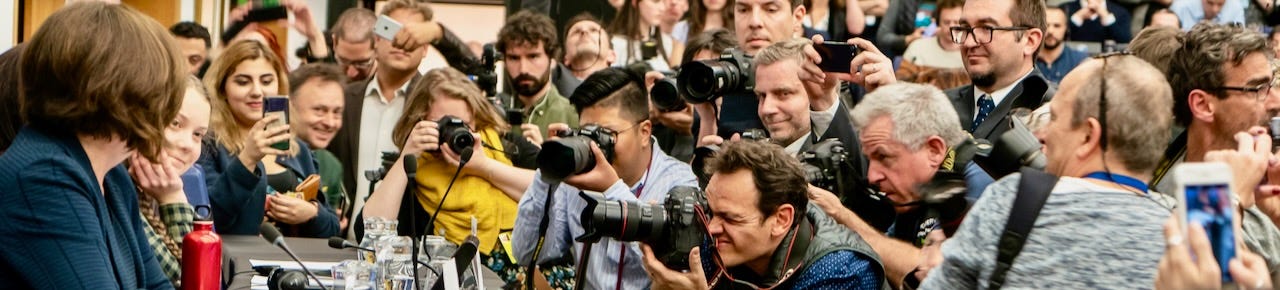
That, too, is new wine—a way of thinking together, at a distance, with a third party in the conversation which has read more of the literature than either of us ever will. It is worth saying plainly, both because the ideas above are genuinely co-authored and because the method is part of the point: rewilding markets will be done by hybrids of human judgement and machine breadth, tempered radicals and their tireless research assistants alike.
Ultimately, a rewilded market will be one that can hold its radicals rather than expelling or digesting them—because the natural cooperators, the ones who still believe the pie can grow, are the very people who keep the whole system’s transaction costs low enough to function. Lose them and trust collapses into monitoring, and the market reverts to the grinding, defect-against-everyone equilibrium we are supposedly trying to escape.
New wine, it seems, is not the problem. The old corporate and institutional bottles will simply have to learn how to cope with the new physics, chemistry, biology, sociology and, critically, politics. In the same way that we now discover that retroviruses spurred ancient fish species onto the path to higher intelligence, so every corporate incumbent today needs an urgent, sustained and well managed infusion of insurgent DNA to succeed in tomorrow’s markets.
No posts
Comments
Nothing yet. Say the first thing.
Sign in to join the conversation.