
“The wicked flee when none pursueth.” - Proverbs 28:1
Early in Charles Portis’ 1968 Western novel True Grit, Mattie Ross — a 14-year-old girl growing up on the Arkansas frontier — quotes this proverb to conclude her account of her father’s murder. He was killed by a hired hand, Tom Chaney, when the latter was drunk and humiliated after a card game. Mattie’s father tries to calm him down; Tom shoots him dead, robs his “warm body” and escapes into Indian Territory on her father’s horse. She notes that he didn’t need to rush, since none of the men of the town came to her father’s aid. The wicked flee when none pursueth.
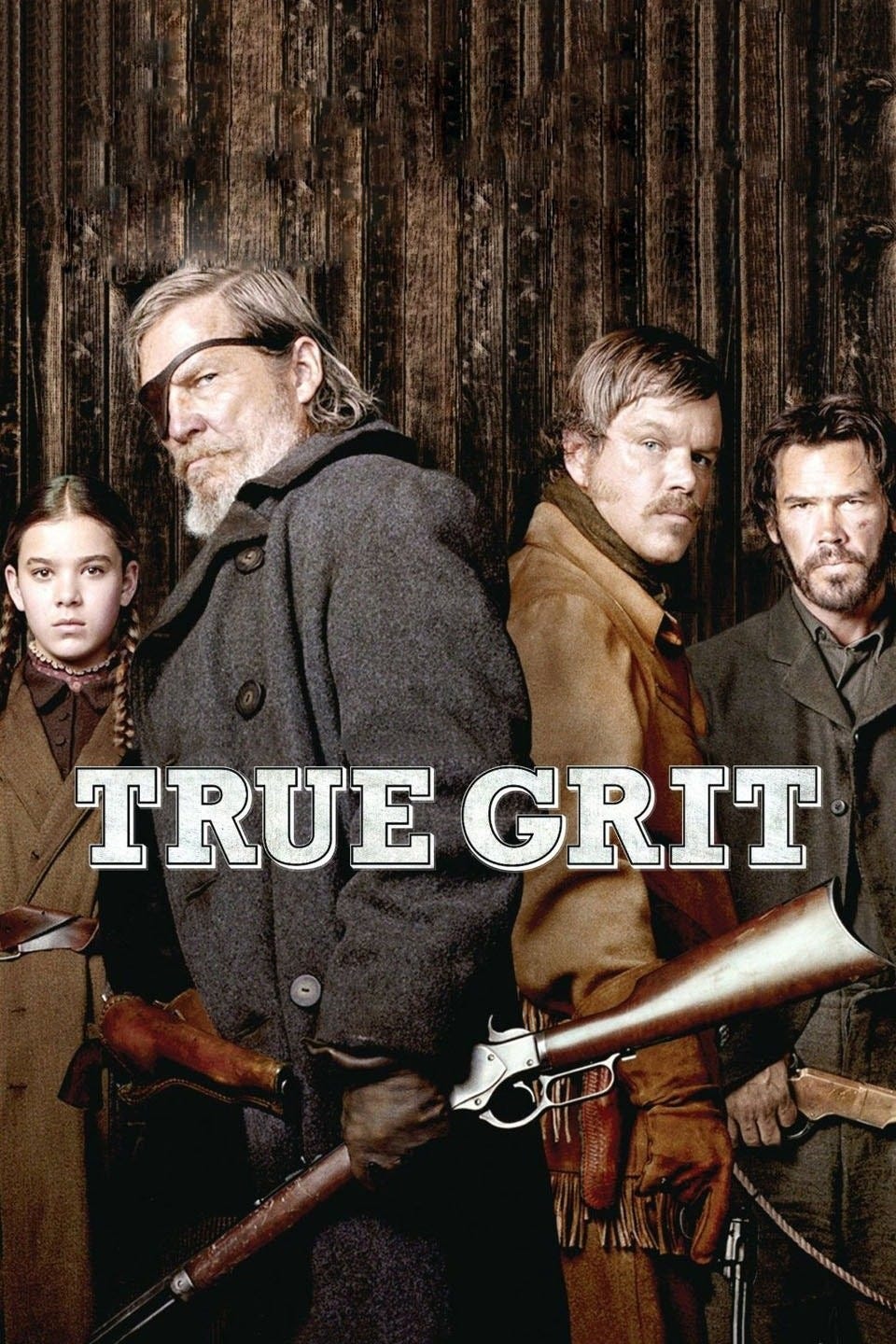
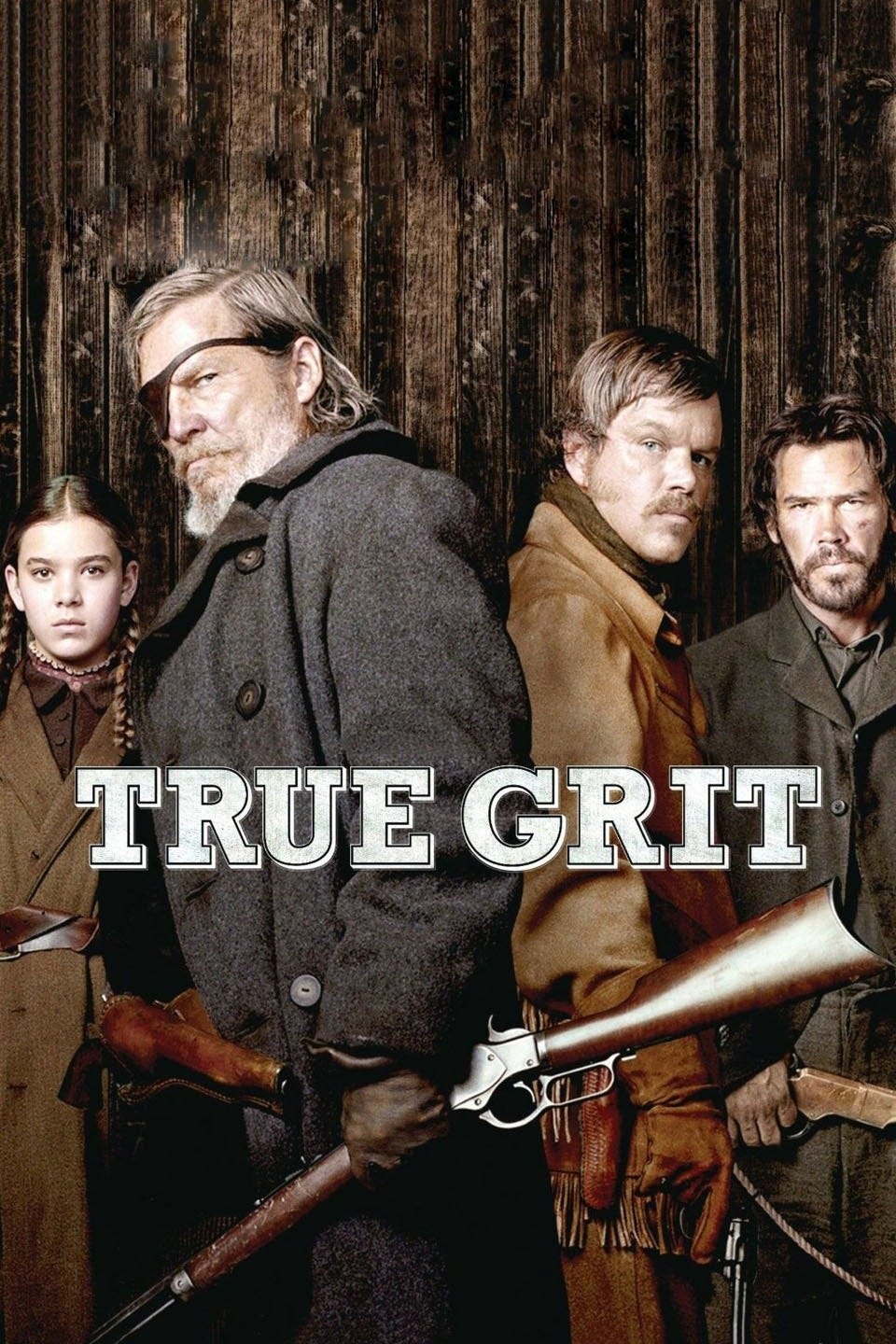
True Grit was adapted as (I’m told) a pretty bad John Wayne vehicle in 1969 and a really great Coen Brothers movie in 2010. Hailee Steinfeld, in her first film role, is Mattie Ross and Jeff Burns is Rooster Cogburn (the same role Wayne played in 1969), the US Marshall she employs to help her track down Chaney. Rooster is old, one-eyed, irascible, and “loves to pull the cork.” Mattie chooses him from among several better candidates because he’s “the meanest.” She doesn’t want Chaney brought to justice. She wants him in the ground. It’s a thrilling, often funny, but also searing meditation on the spiritually corrosive nature of violence and vengeance.
It’s very tempting for me to spend this whole newsletter talking about True Grit, particularly the Coen Brothers adaptation (one of their best and, consequently, one of the best movies made in the last 50 years). But, no, I’m here to talk about a much worse movie that wants to be True Grit.
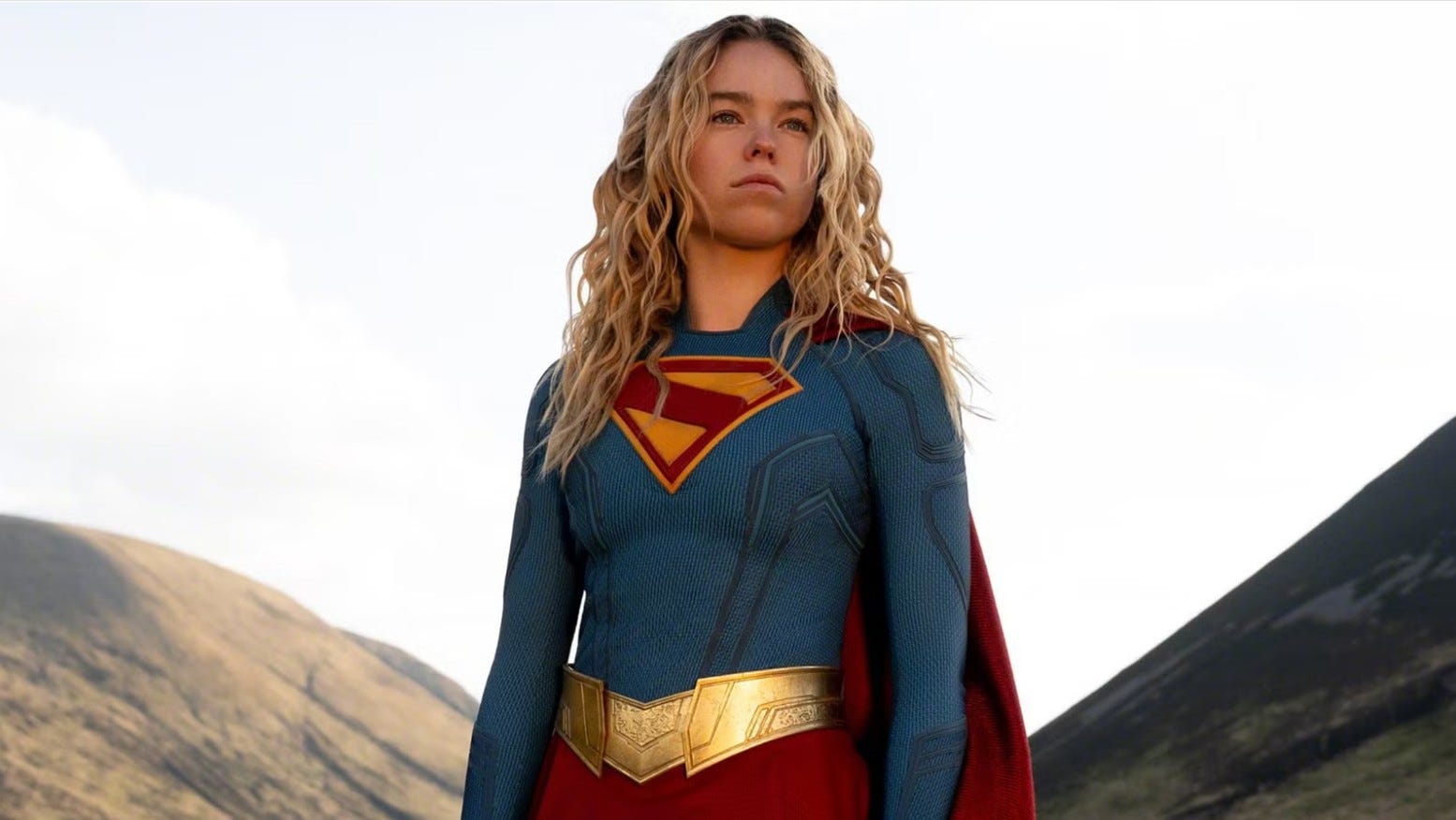
See, in 2021 comic book writer/former spook Tom King and artist Bilquis Evely created Supergirl: Woman of Tomorrow for DC Comics. King told ScreenRant that he was “very inspired by True Grit,” but all you need to do is read a summary to know that. Ruthye, an alien girl, contracts a hard-drinking Supergirl to help her avenge the murder of her father. In the comic, Ruthye narrates events with Mattie Ross’ verbosity. Apparently it’s very good, though I haven’t read it yet.1 Now that storyline has gotten its own big screen adaptation, in Craig Gillespie’s Supergirl (2026), starring Milly Alcock as the Girl of Steel and Eve Ridley as Ruthye.
Supergirl is a bad movie. Even worse, it’s a cowardly movie: a lazy, uninspired, pitch-down-the-middle from a studio that relaunched itself last year with talk of fresh ideas and new energy. All of that hype, and the second film of the James Gunn/Peter Safran helmed DC Universe is just more of the same lackluster filmmaking that created the “superhero fatigue” they were rallying against in the first place. But the wicked flee when none pursueth, and big studios will always stick with an established formula, even if it’s a failing one.
If you’re reading this review, I’m assuming you don’t need me to do a rundown of DC film history or Supergirl/Kara Zor-El as a character. (But if you see me in person and want to buy me a beverage, I would be happy to discuss either at length and make you regret ever meeting me). The short version of the latter: Kara (Milly Alcock) is Superman’s cousin, who also survived the destruction of Krypton and now lives on Earth. Except she isn’t spending much time on Earth, preferring to drink her days away in various alien bars on planets with red suns, which remove her powers and allow her to get drunk.
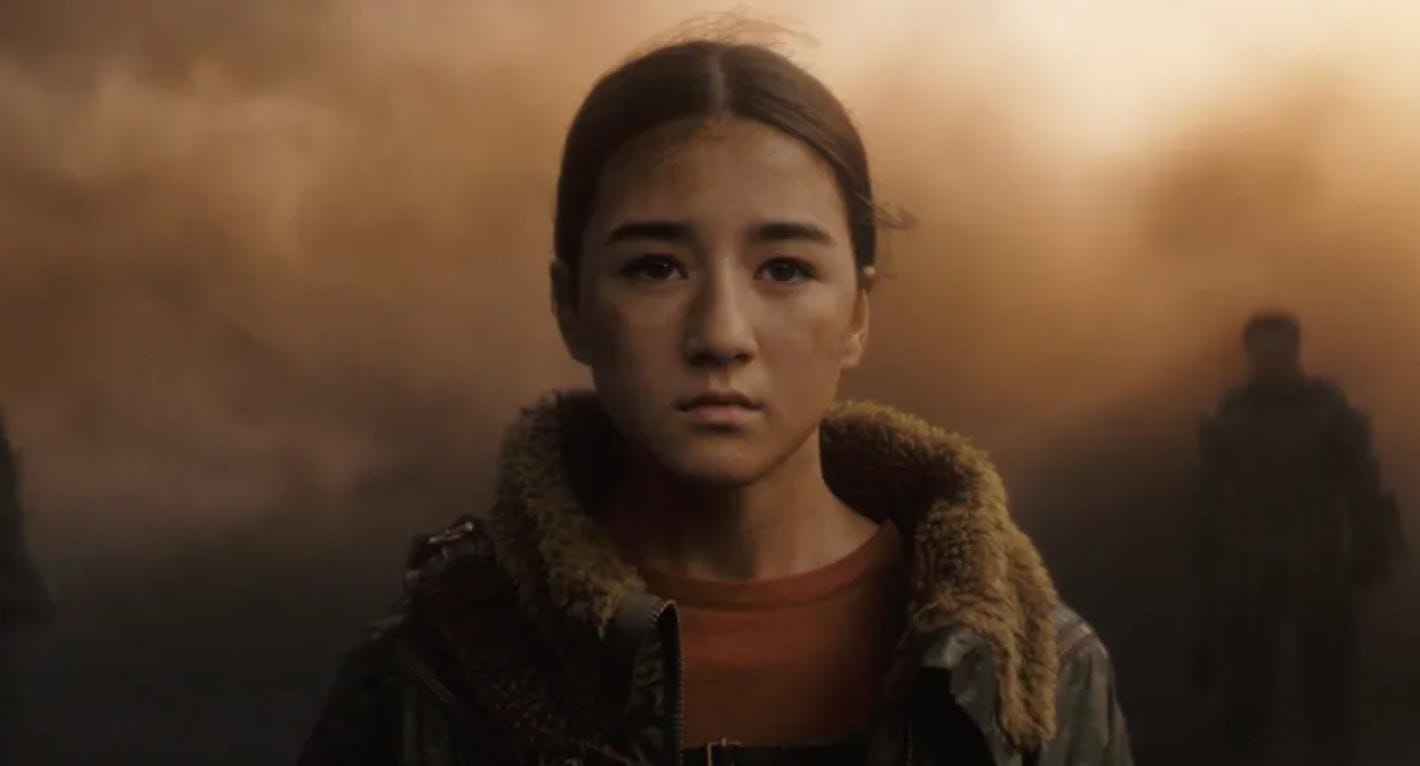
Ruthye (Eve Ridley) is an alien girl (who looks exactly like a human; just roll with it) whose family has just been murdered by Krem of the Yellow Hills (Matthias Schoenaerts): a merciless space marauder. Finding Kara at a local bar with her horrible dog, Krypto, Ruthye tries to enlist her help. Kara is uninterested — until Krem shoots Krypto with a poison dart and flies off with the antidote. Together, Kara and Ruthye pursue Krem and his crew of Fury Road extras across several brown, ugly planets. At some point they run into Lobo (Jason Momoa) who pops in and out for the rest of the movie to kill people and say Lobo one-liners.
As noted above, I’ve heard that the source comic is very good and there’s a lot to like about the premise “True Grit in space.” Supergirl is a great character and you could tell a ton of interesting stories about her. And Milly Alcock is a great actor and a great choice for Supergirl! As often happens when a woman-led blockbuster fails, a lot of the blaming fingers are pointed in her direction, which is as stupid as it is sexist. Imagine watching a movie this incompetently made, and thinking the problem is the film’s best performance.
There’s plenty to complain about: there are some cool alien designs/makeup, but otherwise it looks horrible, Gillespie’s direction is indifferent, and the needle drops are embarrassing.2 The film’s biggest liability, however, is its writing. This is baffling not only because of the aforementioned source material but because in one of their early interviews Gunn and Safran made a big deal about how the new DC would put screenwriting first. “People have become beholden to [release] dates, to getting movies made no matter what,” Gunn told Variety at the time. “I’m a writer at my heart, and we’re not going to be making movies before the screenplay is finished.”
I’m pretty skeptical of Gunn’s take on these stories and find a lot of his storytelling sensibilities very irritating, but I do believe he cares about story and characters. None of that care is present here. Ridley is a solid actor, but Ruthye is completely devoid of personality except “driven by revenge” and, I guess, “plucky.” Kara is a more realized character, but even she feels pretty one note in this particular story.
Without strong characters, this story doesn’t work. True Grit isn’t great just because it has a strong premise, but because the characters who animate that premise are so complicated and interesting. Mattie is courageous, precocious, whip-smart, and a little terrifying: you root for her to get what she wants, but also become increasingly worried about what achieving her goals will do to her. Rooster is a homicidal drunk with no sense of loyalty, the myth of the American West stripped down to its essential, ugly brutality. But he’s also very good at what he does and capable of genuine selflessness, even heroism. Those are fascinating tensions for characters to embody! They’re characters you want to follow on this journey, and the story benefits so much both from seeing them bounce off of and, eventually, learn from each other.
Supergirl has none of that. I think you could accuse most big studio tentpoles of lacking actual character arcs. Characters go through stuff and are in a different mood at the end of the movie than they were at the beginning, and this is supposed to stand in for growth. Part of this is that the modern film franchise system curses these movies with a long-running TV show’s need to keep resetting to the status quo between episodes; but part of it is just lazy writing.
Without compelling central characters, the story’s attempted meditation on revenge falls completely flat. It’s already hamstrung by the fact that screenwriter Ana Nogueira expresses Kara and Ruthye’s dialogue on this topic entirely in cliches. Ruthye says: “He must pay for killing my family.” Kara says: “Revenge won’t help. It will haunt you forever.” They repeat this cycle at least three times.3 But, despite extensive flashbacks to Kara’s past, you never get the sense that she’s speaking with any authority. All of her formative traumas are due to natural disasters; she never had anyone to take revenge on.
Certainly there’s something compelling about her trying to do good in what she’s learned is an uncaring universe, but the movie doesn’t explore this. In True Grit, Rooster is aware of how much being an agent of death has destroyed his humanity; when he warns Mattie off of revenge, you know he’s speaking from experience. You might argue that’s Kara’s motivation, too, but that would require the character to convey a much deeper sense of self-loathing and a more complicated relationship with the violence she inflicts. As written, she has neither.4
The story also suffers because Krem is such a flimsy villain. He’s a bad guy who does bad things and seems to enjoy it. He has no depths, no contradictions, which means you don’t really feel any squeamishness about Ruthye possibly killing him (except, again, for the spiritual toll it might take on her). He’s so cartoonishly evil that when Kara repeatedly saves him/in one case lets other people die to prevent Ruthye from killing him, it makes her look insane. Which isn’t to say that Krem needed to secretly be a nice guy with six kids who murdered Ruthye’s family for totally understandable reasons. Turning to True Grit again, Tom Chaney — the man who killed Mattie’s father (Josh Brolin in the Coens version) — is an interesting character not because he’s redeemable but because he’s completely pathetic. He’s such a wretched and hapless specimen of humanity that, once you meet him, the prospect of Mattie killing him loses all sense of catharsis. He’s like Gollum: dangerous, but also pitiful. Gillespie also says he was inspired by Mad Max: Fury Road, and the film adds a human trafficking/sexual assault storyline to make Krem even more evil that’s ripped directly from that film. But even Immortan Joe in that film, or Dementus in the prequel, Furiosa — despite being dialed-to-11 evil monsters — were more dynamic characters than Krem. Dementus even had a degree of pathos to him! Krem can’t even manage to be fun to watch.
These character problems come to a head in the film’s climax…
SPOILERS FOLLOW
… where it resolves its debate about revenge by having it both ways. Ruthye has Krem at her mercy, and Kara makes her plea against revenge (again). For reasons that aren’t apparent from the screenplay, this time Ruthye tearfully drops her sword and walks away. Kara waits until she’s gone and then stabs the unarmed Krem to death. It further confuses why she so earnestly preaches the healing power of letting go to Ruthye, and not even in interesting ways. As previously mentioned, she saves him multiple times in the movie — once even when it allows him to murder some innocents. If she was always just going to kill him, why do that? And if it’s just to teach Ruthye an anti-vengeance lesson, doesn’t the ending make her a hypocrite?
I’m not saying the movie has to end with forgiveness or a nonviolent resolution (even though that, obviously, is my philosophical bias). There are plenty of great revenge dramas that end with the main character enacting their revenge. But those are interesting because they lean into the discomfort of cathartic violence, and are willing to entertain difficult questions. Supergirl doesn’t: it just has its vengeance cake and eats it, too.5
I also have to imagine that this is in service of differentiating Supergirl’s moral code from Superman’s, and setting up their dynamic in next year’s Man of Tomorrow. See, Superman won’t kill anyone, but Supergirl… will. Can you even imagine? A character with Superman’s powers… who’s willing to kill? What a shocking, transgressive, and wholly original idea!
But anyway.
SPOILERS END
Skeptical as I am about the new DC, I really wanted this movie to work. I love Supergirl the character (I love the whole “Superman Family,” in fact!) and I was excited when they cast Alcock. But they both deserved a much, much better movie. Despite how much I’ve talked about True Grit, I didn’t need it to be that. I just needed it to be interesting and complicated and considered — to at least reach for the material its aping, instead of vaguely imitating it. There was enough I liked in Superman that I’m still hopeful for Man of Tomorrow, but I’m already at the “Yeah, I probably don’t need to drop ~$20 to see every one of these” point with this franchise. Maybe they’ll prove me wrong, and Gunn and Safran will fulfill their vow to make good movies with good stories.
But so far, DC Studios/Warner Bros. are signaling that they don’t care about making good movies, they only care about making money. With Supergirl, they’ve made neither.
Random Thoughts
You may have gathered from subtle hints that I’m a fan of Joel and Ethan Coen’s True Grit (2010). It’s a fantastic movie, and a much more complex and thorny look at revenge than this film (or a lot of others with less interesting thoughts about violence).
To prove I’m not a snooty intellectual, let me also mention my love for the CW’s Supergirl series starring Melissa Benoist. You don’t need to watch it all (I didn’t, to be honest) but you should look up the Supergirl/The Flash musical crossover episode, where they weaponize the fact that 90% of the casts of each show are Broadway heavyweights.
At the risk of making enemies: Krypto sucks. I’m sick of him. I hope he’s visiting another planet in Man of Tomorrow.
A final note: I only realized while drafting this that I didn’t write a newsletter at all in June! Sorry about that! “Time just gets away from us,” as Mattie Ross says. Hoping to post some more in July including, possibly, some catch-up reviews of Backrooms and Toy Story 5 in the near future.
Also, if you want some Semiquincentennial writing from me, check out this week’s Catholic Movie Club on the other Founding Fathers musical, 1776 (1972) over at America Magazine!
Hope you’re all having a great summer!
I’ve had mixed responses to King’s work (loved Vision, was pretty annoyed by both Rorschach and Heroes in Crisis) but Evely’s work is consistently gorgeous.
The one that plays over the climax has gotten the most heat online, but personally I was most annoyed by the sheer laziness of having the characters walk into a space bar where the alien singer is crooning “The Girl From Ipanema.”
The same number of times, by the way, that Kara gets poisoned, further underscoring how much of a mess this script is.
Also puzzling is the studio-mandated Lobo, who is also a Rooster Cogburn type character. Mattie has a second guide, too — a Texas Ranger named LaBoeuf — who is kind of a pompous idiot but also serves as a foil to Rooster because of his cleaner sense of morality. Again, a great and interesting dynamic! Supergirl is “True Grit: Oops! All Rooster! Edition” which is the kind of thing that sounds cool but is actually dull. (Also, to further plug the Coens’ True Grit: you will not believe how funny Matt Damon is as LaBoeuf).
See also: the regime change storyline in Superman.
No posts
Comments
Nothing yet. Say the first thing.
Sign in to join the conversation.