
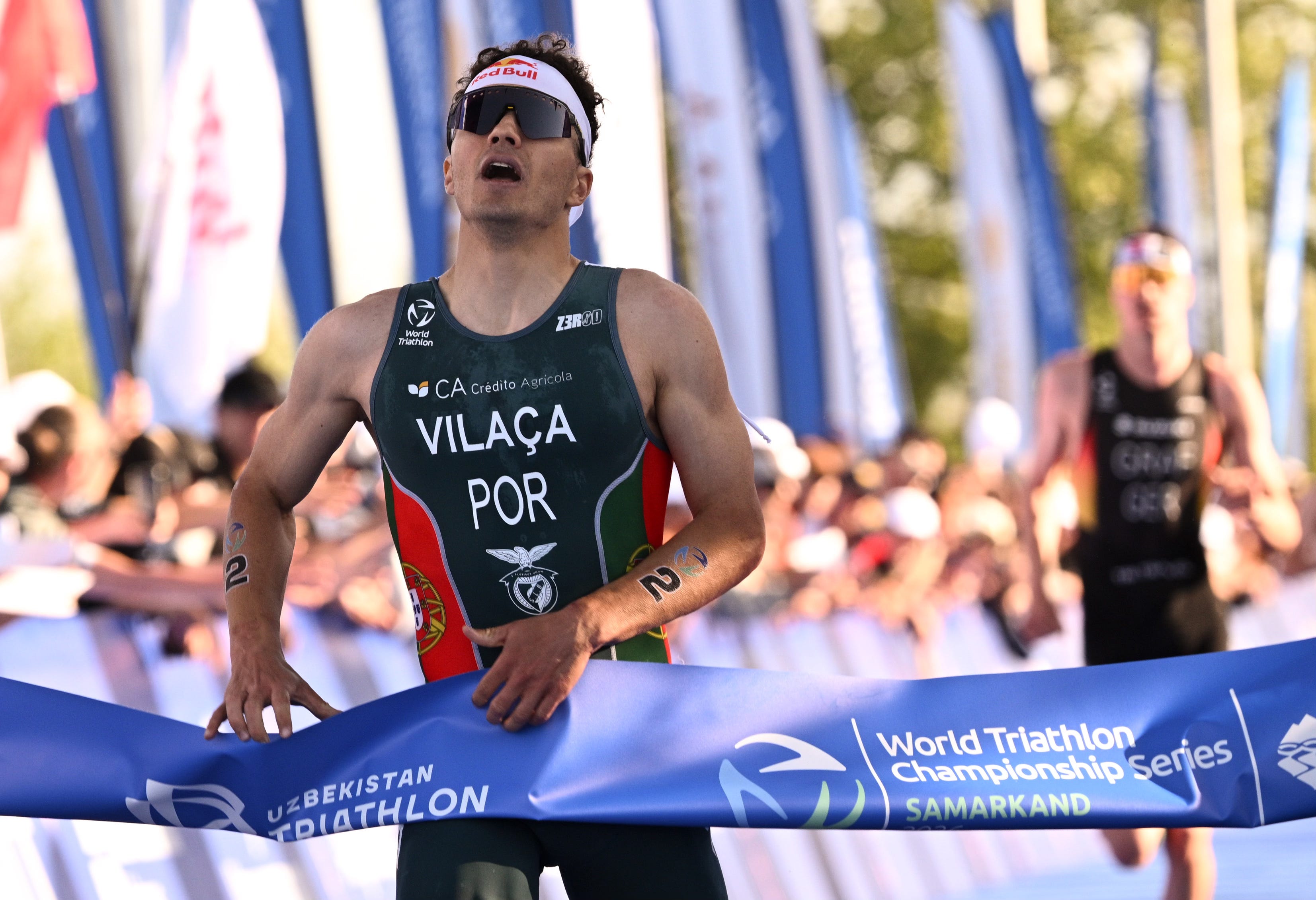
Last weekend Vasco Vilça won the WTCS race in Samarkand, his first WTCS win, after achieving 9 other WTCS podium performances over the past several years. Vasco is the 10th different JFT crew squad athlete to win at the WTCS level - with the total now 34 WTCS wins dating back to 2014 for the squad.
Mola, Zaferes, Groff, Murray, Birtwhistle, Luis, Stanford, Geens, Jackson, and now Vilaça. Ten athletes with ten different journeys, but all of them going through the same process, finding their individual paths to compete at the highest level of the sport, and then finding a way to win. Some came to the squad having found success before, and the process was about finding that winning formula. For the others it was development all the way from lower levels to the top step.
Reflecting on these processes over time, there are some common characteristics of those who managed to put their puzzle pieces together. Not just what talent they bring to the table, but coach-ability and mentality, commitment, and self investment: and how they see and manage themselves on a daily basis.
Vasco joining JFTcrew
Before joining the squad, Vasco had spent years working with coach Joachim Willen where he went to school in Sweden. Joachim and I have worked closely together for a more than a decade, having spent time together with the squad through his own initiative and self development. Joachim also recognised that there were limits to the environment in Motala, and what Vasco may need to get to the next level in his performance was going to be different to what got him to that stage.
What that meant in practice is that when Vasco arrived to the squad it was a smoother transition than happens in many cases. He came in already thinking the right in a way that was aligned with the squad philosophy, already trained in the right direction by Joachim. That kind of continuity in athlete development is more rare than people realise and makes a big difference. So many times the development years of athletes are significantly compromised - athletes doing the wrong things in training, bringing injuries, burn out, bad habits, poor decision making, and more forward that makes achieving their ultimate potential much more difficult.
Samarkand WTCS build up and reflections
Vasco has been knocking on the door for a couple of years. He has come close to a win more than once, but not quite getting there. That gap between nearly there, and first is one of the hardest things to close in sport, and it’s been the main outcome goal the last couple of years, once the WTCS podiums reached some consistency — figuring out what it would take to win.
Although the main principle behind that outcome goal was getting better at the daily processes: mastering doing the basics to the highest standards and making the right decisions along the way to smooth the path.
It’s not always obvious what the differences may be between top 5-8, podium and winning. Races have different dynamics, and what it takes to win, it isn’t just one formula, repeated, but the long game of developing the skills to be adaptable and able to manage different scenarios, courses, and in race tactics - and in the the case of Samarkand - be in a position in the final kilometre to unleash a big kick.
That preparation coming out of the winter preparation period into Samarkand saw Vasco in good condition, having been consistent through the off season build up. But it was not extraordinary or different in terms of the quality or volume compared to other years, just solid and consistent. No big running focus on PB performances were planned, no January Champion mentality, just a consistent and progressive build up, adding a layer on top of the work done the previous years.
If there was a difference in this year’s build up it was a subtle increase in consistency, adaptation and absorption of the training load. It’s difficult to quantify, but fewer adjustments were needed and things mostly, but not totally, went to plan. That’s often what progress looks like year on year. Not necessarily training PB’s, but more consistent, and subtly better.
We used the Abu Dhabi postponement earlier in the season to create a break in what we have ended up a longer build up - giving us a home race in Quarteira for Vasco to support the Portuguese triathlon community and ended up take a win there. So he had some momentum going in Samarkand.
But all was not smooth and often there are things behind the scenes taking up energy - and that was the case here as well. In the end Vasco managed himself well and arrived in Samarkand healthy and ready to race. It’s a reminder that it’s always the first goal we have - race readiness. So often we are dealing with issues that have impacted the preparation, injuries, illnesses or otherwise things that have made compromised the preparation.
It was great to be there on the ground in Samarkand to support the transition to the top step, especially on a day when he didn’t feel good. My view is we don’t want athletes to depend on us as coaches to be present on race day - self management skills are critical - but being present does add value and context that is difficult to capture when supporting remotely. Credit to the Portuguese Federation who supported two personal coaches: Paulo Antunes and myself to be in Samarkand, over any federation staff - it’s an exceedingly rare quality and vision to prioritise those with the personal coaching relationships to the athletes on the ground over the ‘neutral' staff.
Post race the theme of the post race discussions was that it was a hard day, that the performance didn’t come easily at all. In the post race aftermath while he completed the anti-doping process, we sat together and discussed the ins and outs of the performance - that it wasn’t an easy, that he didn’t feel well or full of energy, but was able to make it happen. We did some high level analysis to understand the performance and context - and how we can continue to improve, what we can do differently in the next block. Despite taking the win on the day - Vasco was already thinking of what we needed to do differently for the next goal.
It’s one thing to win when everything clicks. It’s another to get the best out of yourself when it doesn’t, and still come out on top. That’s the goal we have and what underpins consistent performers - still managing to deliver when it’s not an easy day.
In a piece I wrote a few years ago on the characteristics of high-level triathletes, I talked about how athletes who reach the top share a few qualities that are not just about raw talent.
One of them is what I described as being coachable — the openness to take on board what coaches and training partners offer, the ability to see yourself from the outside, and the willingness to be challenged even when it’s uncomfortable. I have butted heads with Vasco on various topics over the years - often about racing priorities, and demands outside of training - all healthy and challenging discussions about issues impacting his performance - but one thing is clear about his coachability and strong trust in his team and that has been a real difference maker over time. He has been able to do the work with minimal noise because of this trust and relationship we have build over time.
Another is self-investment: taking genuine ownership of your own process, not waiting for someone else to create the conditions for your success. Making the move to the squad in 2022 was a significant life change - changing environments to the unknown - new coaches, people, location and culture. The first year of working together was about finding stability and structure, and from then we could build on that foundation. The power of independent squads like JFTcrew is that it’s up to the athlete and coach to invest in the process to make performance happen - it’s not the default federation funded option where everything is easier - but easier doesn’t mean it’s the right environment for each athlete. And choosing your own way and owning the process as an athlete is extremely powerful.
These principles make an impact over the long term. They show up through the daily decisions that either reinforce the core principles, or end erode up eroding the process, and can result in self-sabotage or worse.
Vasco has both a strong long term view and short term decision making consistent with our core principles, and you could see it in Samarkand — an athlete managing himself well on a hard day, finding a way to get the best out of himself.
There’s also a concept in that piece around commitment — specifically the idea that “surrounded by commitment, success is inevitable.” The squad environment works because people in it hold each other to a standard. There is both a balance of support for each other, within what each individual needs, and challenge that the group provides for each other in what they bring to the environment. Vasco stepped into that environment and fit immediately. He adapted, found his footing, and kept moving forward. He started as an apprentice to the senior athletes like 2x World Champion Luis, and is now the senior athlete in the squad.
A first WTCS win is a big moment. While post race we delved right into what comes next, and how to keep getting better, it’s also important to celebrate the milestones. His win validates years of decisions - the day to day grind, the training camps, the races that didn’t go to plan, the months where progress is invisible but the work keeps happening.
We’re also honest about the context. Some very strong athletes weren’t on the start line in Samarkand — Yee, Hauser, Wilde among them. That’s just the reality of the circuit this time of year with different racing options and calendars. The work now is to keep improving so that when those matchups come, he’s ready. This is a long season and there will be more opportunities.
For the squad, the milestone is worth marking. Ten athletes. Ten different journeys. All through the same commitment to the process, and all contributed to and supported each other along the way.
I’m proud of what Vasco achieved. And I’m proud of the way he got there - through a proper development path with Joachim, supported on the daily by Drew Box in Girona, and then expressed through the support of the squad, coachabilty, trust and relationships, and self investments into his performances. That’s the way it’s supposed to work.
Congratulations Vasco. More to come.
No posts
Comments
Nothing yet. Say the first thing.
Sign in to join the conversation.