
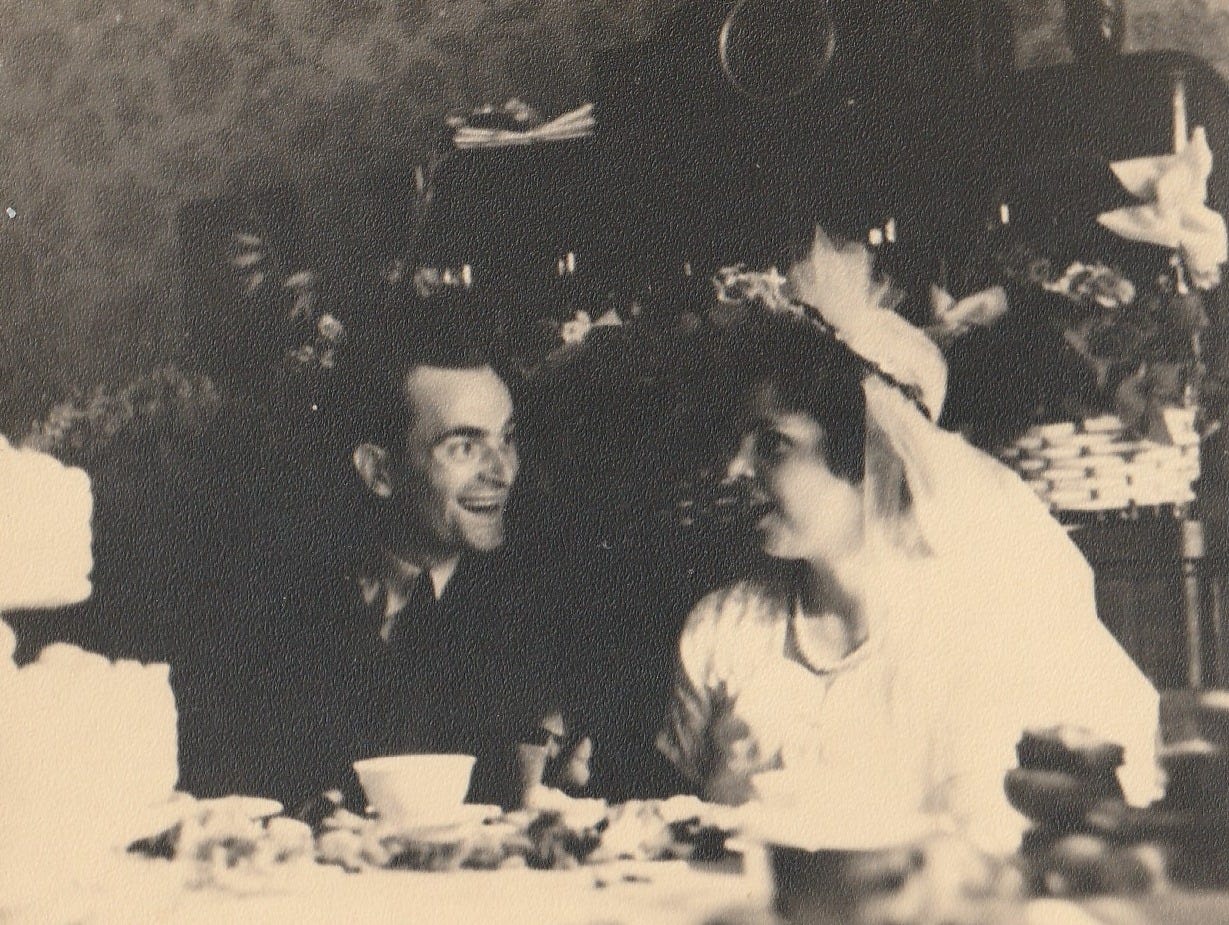
Today would have been my parents’ 79th wedding anniversary. They lived together as man and wife for 51 years, and considering the generation they came from, it was a good stretch. Mum died from cancer when she was seventy-one, in 1999.
Her last living act was to kiss my Dad before dying. Their marriage wasn’t a fairy-tale romance, and in many ways they were ill-suited for each other but still carved out a measure of happiness.
As marriages go, it was loving, meaningful, and respectful. Each was loyal to maintaining the other’s dignity.
When my parents married in Hamburg on 16 August 1947, Europe was in a heatwave. The war against fascism only ended two years previous and it was a fresh and hurtful memory. Europe was still licking its wounds from that brutal conflict.
My mum was an 18-year-old German woman, and my dad was a 23-year-old lad from Yorkshire stationed in the city as part of Britain’s occupation force following the war. They both suffered from traumas caused by the war, but also from what they had experienced growing up as children.
My parents, like most young people, stumbled into their love affair by chance. My dad noticed my mother bartering away prized family possessions at a black market. He thought she was the most beautiful woman he had ever seen, and he lusted after her.
So, he pursued her, and eventually, they became lovers. My mum did not have as strong a feeling for my dad as he had for her when they were first lovers. Life was short, and she was young and wanted to taste as many pleasures as possible because she had seen so much death and come close to it herself.
Over time, because of his devotion and my father’s endless ability to help her family survive an unforgiving post-war world, my mother agreed to his marriage proposal. It took a year for my father and mother to receive the necessary military and civil permissions to wed.
After my mother’s death, my father wrote about their wedding day but also how their relationship waxed and waned over the years.
On my wedding day, it felt like I had finally arrived at a life worth living.
‘Don’t bugger it up,’ I said while brushing my hair tightly back.
When Stan and I rode up to the church in a jeep, a growing crowd of onlookers was loitering around the entrance. Stan and I quickly rushed through the church doors and passed the assembled guests as we moved towards the altar. While I waited for Friede, Stan cracked jokes with the vicar and me.
It was hot inside the church, and the air was stagnant. The padre was sweating, and the organist looked uncomfortable on his stool. I mopped my brow with a handkerchief; Stan said, ‘Hope none of the neighbours nicks the beer while we’re at church.’
After several more perspiring moments, I heard the doors open at the back of St Luke’s. The guests shuffled in their seats and then made an appreciative collective sigh.
The music was struck, and Friede slowly walked towards me with Max, her foster father. Walking up that aisle, she wasn’t just coming towards me; she was walking away from her childhood sorrows, pains, and humiliations. I wanted to turn around but dared not. Stan glanced backwards and whispered to me, ‘Blimey, she’s beautiful.’
Finally, Friede and Max were beside us. The organ notes faded away like a feather caught in a breeze. Max ceremoniously relinquished Friede to my care. He whispered in my ear, ‘Remember to be tender to my Friedl.’
Friede and I sheepishly smiled at each other. She whispered the words, ‘Ich liebe dich.’
Friede held a bouquet of wildflowers, whose scent perfumed the air around us. It was a wonderful, fresh aroma that made me think of our time walking in the botanical gardens.
The feast following the wedding ceremony could not have been better. Everyone was content; no one brought any disgruntled or disjointed emotions to the party. Congratulatory telegrams arrived from my mother and sister. Friede translated them into German and read them to the guests, who applauded my English family for their warm-hearted support.
We drank wine and beer and ate cakes and delicate sandwiches. Cigarettes were shared and hands held. They talked in low voices and then hugged each other warmly. Friede walked over to a painting hanging on the wall and placed a small wallet-sized photo of her father, Fritz, along the edges of the frame. She raised her glass and announced:
“To my mother who loved me in dangerous times; to my foster mother for caring for me; to my foster father who loved me as his own.”
The wedding table broke into applause at the dedications. When the clapping stopped, Friede continued:
“I raise my glass to Harry, who will love me until the end of days, and I shall love him whether the sea is in a storm or the waters calm.”
But it didn’t last.
During the dying days of 1948, my relationship with Friede started to unravel. Our love was forged in the cauldron of Germany’s terrible winter of hunger. But Britain’s season of discontent tore apart the delicate bonds that held our marriage together.
“After living too long in the bleak and hopeless world of England’s working class, our affections began to cool.”
By Christmas Day, our marriage began to founder.
The culture shock of working-class Britain during an age of austerity was too much for Friede, whose command of English wasn’t strong. Yorkshire was all sharp edges and damp draughts for Friede.
With Dorothy gone, we had free licence to argue from sunup to sundown with only the hiss from the gas lights to distract our thoughts from our disintegrating union.
By Boxing Day, Friede and I were worn down from quarrelling. We argued over trifles, from whether the room was too cold or hot to why the tea always tasted like tepid water with a hint of rust. We no longer spoke to each other in civilised tones — but instead were surly and sarcastic.
By the end of January, Friede said she was leaving for Germany: “I don’t think I will be coming back.”
If it were today, my parents’ marriage would probably have ended when Mum left my father and returned to Germany. It’s not because my parents and that generation were more serious about their relationships. It’s because they had fewer options due to societal pressures and prejudices. I think it took a great deal of courage on my mother’s part to leave my father and much less to return. I am glad she did because without it, I wouldn’t exist.
I am not entirely sure what convinced Mum to return to Yorkshire.
I suspect my Dad begged because he admitted at the end of his life the separation made him emotionally unstable. It was a trigger that tore open scar tissue from his horrendous childhood. However, my Dad’s despair over the end of his marriage was not my Mum’s fault. I don’t know what ultimately convinced her to return, but it probably saved my father from a short and angry life.
Below are my father’s recollections about Friede’s return and how they began a new life far from Yorkshire.
When I saw Friede disembark from the ship that had returned her to me from Hamburg, I felt that I had been given a second chance for a happy life. We had decided that there was no future for us in Britain and so made plans to emigrate to Canada. The next few months I was occupied with selling the few possessions we owned and book passaging for our new life in Toronto. Most of my friends thought I was daft but I didn’t care.
A month before we were scheduled to sail from Liverpool to Montreal, I ran into my mother on the street.
‘A little bird told me that you are leaving Halifax.’
‘It is true, mum; Friede and I are going to Canada.’
‘Make sure you don’t drown in one of them lakes. I hear that in Canada, they be deep and cold. It’s best you be gone, Harry, ‘cause this country — like your old mum — is ready for the knackers.’
It was a November night when our ship slipped her moorings in Liverpool and began its voyage to Canada.
As the ship began to glide away from the empty pier, Friede and I stood on the third-class passengers’ deck.
“In my imagination, I saw all the people who — whether living or dead — had influenced the course of my first thirty years bid me farewell.”
The further we moved from land, the fainter were the echoes stirring from my past. The last one to leave me was comprised of words I thought my father might say to me:
‘It’s time to make your mark, lad. Have a bloody good life for those of us who didn’t.’
Soon, there was only silence from the shore, and the sound of the steamship cutting through the sea towards the future.
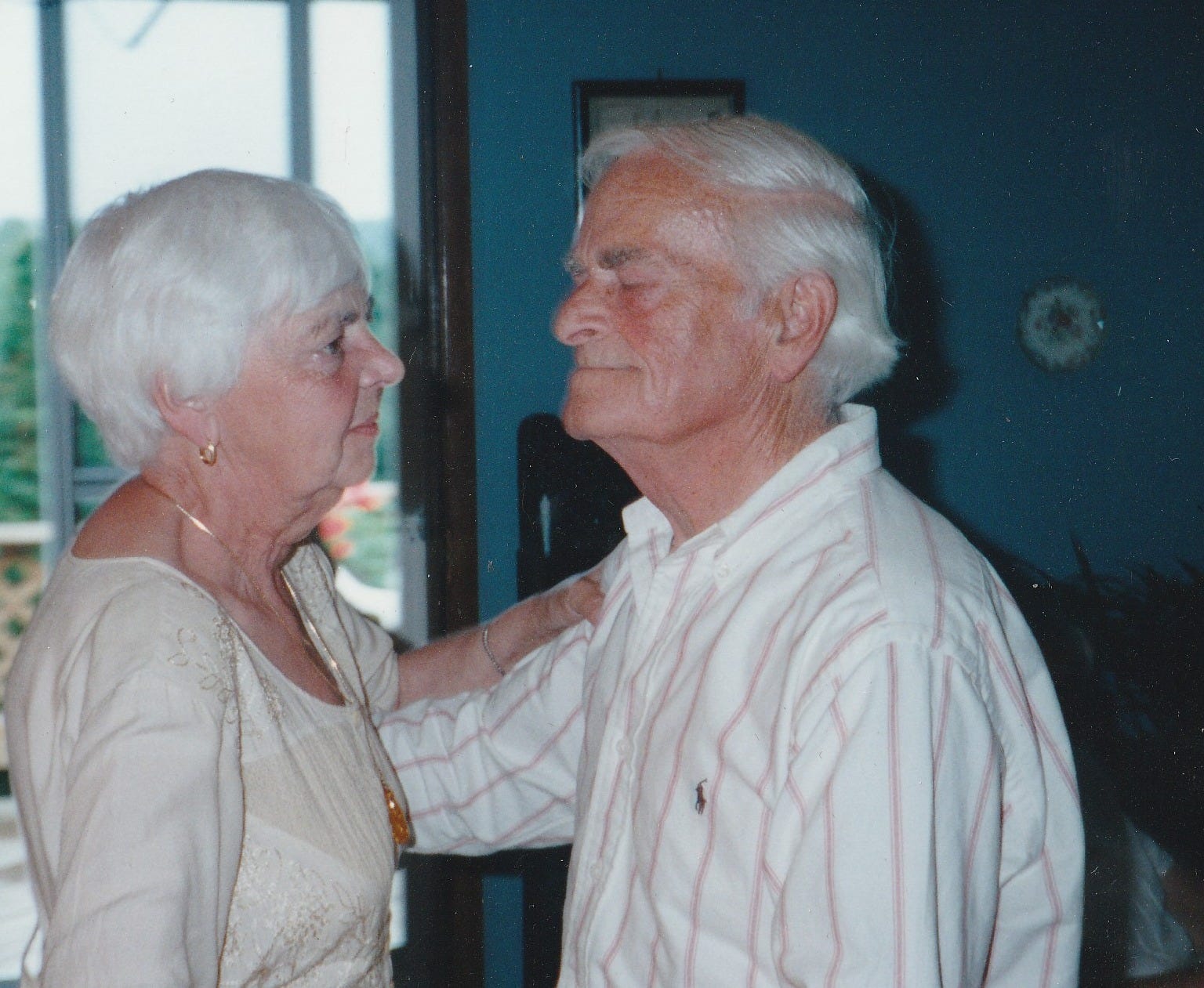
In the forty-fourth year of my parents’ Canadian residency, they celebrated their 50th wedding anniversary with a small party at their house. Mum, two months prior, had undergone emergency quintuple bypass heart surgery. She was exhausted but joyous at being alive and having friends and family around for the celebration. Their marriage hadn’t been an easy ride, but it had been their ride, and they rode it until death intervened.
A Legacy Nearly Complete
The manuscript for The Green and Pleasant Land Volume One is now done, save for a few edits which I will complete by the end of August. It traces Harry Leslie Smith’s life from 1923 to July 1945, ending with Labour’s landslide victory. But it is more than a personal story. It is a testament to a generation of ordinary working people who endured poverty, war, and hardship, yet refused to accept a society where only the wealthy thrived.
Through struggle and resilience, they helped build a welfare state where everyone mattered, not just a privileged few.
These achievements were hard-won, forged in opposition to both rampant, unfettered capitalism and the dark allure of fascism.
We forgot the lessons of that generation, and because of it, 2026 is under threat from authoritarianism, fascism, and a new Gilded Age.
The Green and Pleasant Land is a story of survival, hope, and the enduring power of ordinary people to shape history.
Your support keeps these stories alive. Paid subscriptions and contributions to the tip jar allow me to preserve my father’s legacy and continue sharing these pieces. Every subscription, tip, or share helps keep my dad’s history and legacy alive. It also helps keep me housed.
No posts
Comments
Nothing yet. Say the first thing.
Sign in to join the conversation.