
I haven’t been watching or reading much of the news this past month. And yet I am up to date on how shitty things have become, or how much worse they are likely to get.
I’ve also been mildly under the weather for weeks, which, as it turns out, is down to a B12 deficiency that is now being sorted with high-dose supplements. It’s the result of malabsorption caused by my cancer radiation treatments. I feel that I am also suffering from corporate news media malabsorption because their propaganda has become harder to digest, hence my avoidance of it.
It made for slower final edits of The Green & Pleasant Land. But it will go off to publishers in the first week of September.
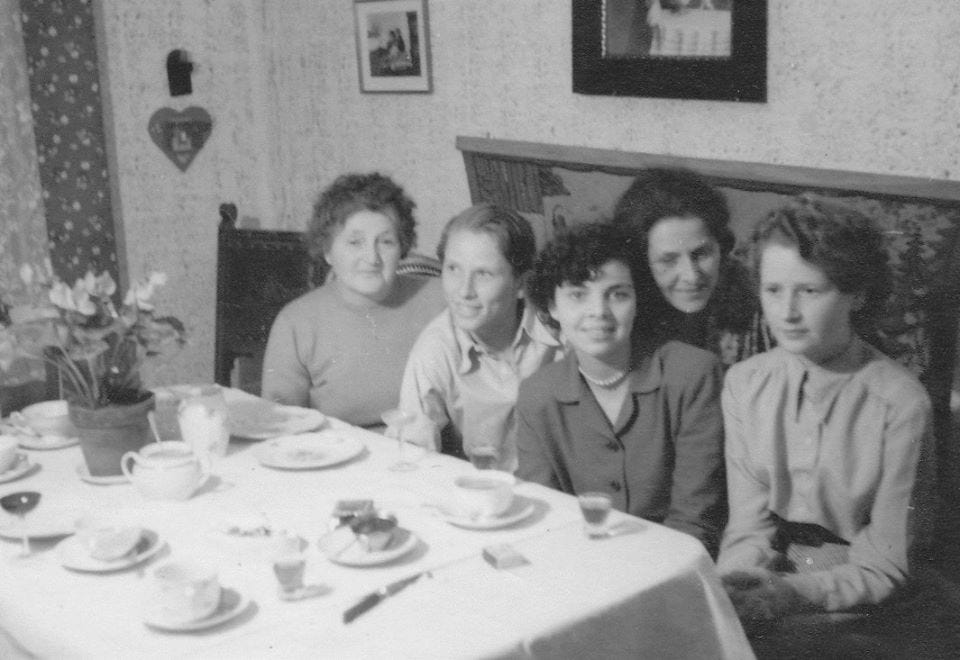
Below is a chapter from its second volume, Love Among the Ruins, which deals with the rise of fascism and Nazi Germany, and the consequences for working-class people like my mother’s family.
It is also a chapter about survival, and about how women often had to be stronger and more resourceful than the men around them simply to keep their families alive.
During the last months of 1945, civilian mortality dramatically increased throughout occupied Germany. By October 1945, Hamburg was as desolate as Carthage after Rome laid it to waste. Incessant food shortages, poor sanitation and disease were now as deadly as aerial bombardment to the inhabitants of Hamburg. As if life couldn’t get any more miserable for the metropolis, it also suffered from electrical blackouts, water shortages and a decreasing amount of food rations for its inhabitants.
German society disintegrated into pre-industrial communities ruled by the victorious armies of the West and the East. The occupiers appeared ill-equipped to manage the responsibilities of peace. During the first year of occupation, Germany plunged to the bottom as an elevator with its cables cut. Hamburg existed in the sub-basement of civilisation. Many of its residents lived in hovels dug from the ruins of bombed buildings. It was a miserable time, with starvation and hopelessness driving multitudes of women onto the streets to barter their bodies for cigarettes to battle-numb soldiers.
Hamburg was a city where sexual commerce transpired on every boulevard and beneath every burnt-out street light. When it came to distinguishing between a girl on the game and a girl down on her luck, soldiers were myopic.
The week before her birthday, Friede wanted to introduce me to her foster parents, who lived in the Altona district. We agreed to meet each other in the afternoon at Dammtor station. Unfortunately, I was late for my train, and when I arrived, I had forgotten where we were supposed to meet. I walked outside, where the glare from the sun temporarily blinded me and left me disoriented in a crowd of strangers. It took me several minutes to adjust to the afternoon brightness, but I finally recognised Friede standing at the entrance to the Victory dance club on the opposite side of the road.
Friede was beside an airman in Canadian uniform. It appeared as if he was arguing with her because several times he threw his hands up, frustrated.
I crossed the street and yelled out, ‘Is everything all right?’
Friede looked relieved by my arrival, but the Canadian appeared less so and inquired, ‘Who the hell are you? Can’t you see I’m talking to this Fräulein? I want to ask her out on a date.’
Friede spoke hastily to me in German: ‘This very rude man cornered me and won’t let me walk away. He is drunk and stinks of beer.’
I said to the Canadian: ‘I think you are a little confused, mate, she’s with me.’
‘With you?’ he asked suspiciously.
I explained to him that we were on our way to meet friends.
‘Fuck off,’ was his response. ‘Give ’em a bit of chocolate or some cigarettes, and these Germans will go with you like a stray dog in Cabbage Town. They’re all fucking tarts.’
‘Mind your manners,’ I told him. ‘If I were you, I’d get on your bike and move on.’
‘What ya going to do about it?’ he demanded threateningly.
The Canadian swayed drunkenly from one foot to the next and gave me a stare filled with violence and hatred.
I said to him: ‘You’d better hop it or I’m going to bust your head open like a tin of kippers.’
The Canadian was about to take a swing at me, but in the distance I saw a military policeman. I told the drunken airman that the MP was my mate. ‘He’ll throw you into the glasshouse for disorderly conduct, without looking sideways at you. So best be off home.’
I called out to the MP: ‘Oi, George, over here for a second.’
Scared by my bluff, the Canadian tried to run off, but I grabbed his shirt cuff and said, ‘Before you go, apologise to the lady.’
‘Sorry, miss,’ he said in a shallow voice and disappeared into the crowd.
When the MP arrived, he asked what all the commotion was about.
‘Nothing, I thought you were my mate’s brother. Sorry for the trouble.’
‘No bother,’ he said. ‘This is no place to loiter.’ He looked suspiciously over at Friede.
‘Is this woman with you?’ he asked.
‘Yes.’
‘Well then, I suggest you both get a move on.’
We walked on, and Friede laughed at my deviousness. She gently grabbed hold of my arm and asked, ‘When are you going to take me dancing in that club?’
‘I’ll take you there in a week, when you turn eighteen,’ I told her with forced enthusiasm. ‘How do we get to your foster parents’ apartment from here?’
‘Today, we will go through Planten un Blomen. We can take the U-Bahn from there. It is no more than ten minutes,’ she said definitively.
Hand in hand, we strolled across the city’s botanical park, Planten un Blomen. Even in the autumn, it was a beautiful green space that included an artificial lake populated by graceful swans. Some of the flowerbeds had been turned into potato and cabbage patches, but it was still more picturesque than London’s Hyde Park.
It was a quick walk to the U-Bahn station. When we were inside the tube train, Friede gossiped about her girlfriends and how much everyone’s lives had changed since the German surrender.
‘Gerda, for instance, is all for having foreign boyfriends. But Ursula wouldn’t be caught dead with a Tommy.’
‘I don’t think we’ve met,’ I said.
‘You probably won’t. I love her to bits, but she believes shaking hands with a Tommy is something close to treason.’
‘What do you think?’ I asked jokingly.
Friede paused to collect her thoughts. ‘My world has changed forever. Nobody knows what is going to happen tomorrow or five years from now. Both the war and now this peace have taught me that I am going to experience my adventures today, because nobody can be sure what tomorrow is going to be like.’
When our train passed the Reeperbahn station, Friede spoke in a serious tone of voice. ‘I’ve heard rumours that the British are going to cut our food and wood rations by a third. Do you think that will happen, because I don’t know how Mama and Papa are going to be able to survive if their food allotment is reduced? Papa hasn’t been able to work since the end of the war.’
I replied, ‘Don’t worry. I will find a way to take care of them through the winter.’
‘That would be fantastic,’ she answered in a happy voice.
It would be incredible, I thought, if all my brazen promises to Friede were kept. I calculated that if half of my pledges materialised, everyone would have enough food and fuel to live until the spring thaw. I was terrified that I’d fail and her family’s desperate bid to survive was going to end in tragedy. There was only so much I could barter from the mess sergeant or steal from the cookhouse before someone noticed. If I was discovered, my borrowed philanthropy would end with me on charges and Friede out in the cold.
After emerging from the Altona U-Bahn terminal, we went south along the Allee, which had received a lot of bomb damage. The buildings on the street were in a bad state; most were burnt fragments where hungry feral cats and dogs now took shelter. Remarkably, along the way, there were also some apartments and shops that had remained unmolested by the bombing.
‘It looks like a lot of people were bombed out here,’ I remarked.
‘Thousands,’ Friede commented in a faraway voice. ‘Mama and Papa were lucky. Our building never suffered a direct hit. But I spent a lot of nights in the bomb shelter because we are so close to the harbour. The RAF never seemed to tire of dropping bombs on us.’
Friede asked me if I had ever been in an air raid. When I told her no, she sarcastically responded, ‘Of course not, you are in the RAF. Your job was to drop the bombs.’
‘Not me,’ I said. ‘You know I was on the ground in the mobile communications unit.’
‘I do,’ she responded in a softer tone of voice. ‘That is why you are my boyfriend. I would never have a lover who dropped bombs on Germany.’
Ambivalently, I nodded, but I wasn’t about to condemn my RAF for the brutality of the air war. I knew there were two sides to this conflict and the skippers and crew of Bomber Command suffered appalling casualties. Those men waged a war they didn’t create but were compelled to win for civilisation’s sake.
I also understood it was just too difficult for Friede or anyone else who had endured the firebombing to be reminded of General Sherman’s aphorism that war is hell.
When we approached her foster parents’ apartment on Klausstrasse, Friede pointed towards a five-storey apartment building on the corner. For a working-class apartment block, it seemed stunning and elegant to me. The windows facing down onto the street were immense, and although the paint was faded and chipped in places from the masonry, it was an impressive building for the common man.
‘This was my home when I was a little girl,’ she noted with some ambivalence.
‘What about your mother’s apartment?’
‘That was my weekend home, but only if Uncle Henry said it was OK to go and visit. That is why I always feel like I am just a temporary lodger at Mutti’s. At Mama and Papa’s, I was happy.’ She paused and qualified her statement. ‘Well, I felt happiest here when Mama was nice to Papa and didn’t call him all manner of names. Do you see the window beside the balcony on the fourth floor?’
I looked up at the apartment window where Friede had been sent to live in the summer of 1932. The day Friede went to live with the Bornholts, her mother had treated it as a normal outing. ‘Mutti packed my suitcase and said, “Hold onto your doll, kid, hold onto your doll.”’
Friede wasn’t aware that when she left her mother’s apartment on Weidenallee, it was for the last time. On the way to her new home in the taxi, Maria Edelmann prepared her daughter for their separation. Maria told her that she would be in the care of the Bornholts for only a short while. It was to let her mother get back on her feet financially. She said there was nothing to worry about because the Bornholts were the kindest of folk and everything was going to work out just fine.
When mother and daughter arrived at the Bornholts’ apartment, Maria Edelmann rang the doorbell and kissed Friede on the forehead. Maria said to her daughter: ‘Remember to be a good girl for your Mutti and always obey the Bornholts.’
The door opened, and Max Bornholt and his wife walked out to greet Friede. Maria Edelmann refused to display any sorrow or any guilt she carried for relinquishing her daughter, and turned emotionally to ice. She let go of Friede’s hand and bid her a perfunctory adieu. Maria didn’t look back, and she didn’t cry out her daughter’s name when she rushed downstairs to her taxi, which was waiting to take her to her lover’s home in the suburbs.
Friede said: ‘After Mutti left, Frau Bornholt grabbed me and scooped me inside the apartment. I cried for a week and thought I must have done something very bad to Mutti to be left with the Bornholts.’
‘That sounds horrible,’ I said.
‘That was life in Germany during the Depression. What can you do but survive?’ Friede said in a matter-of-fact voice.
Friede explained that the trauma of being separated from her mother quickly passed. ‘Soon after Mutti left me with the Bornholts, the whole neighbourhood was turned into a battleground between Hitler’s Brownshirts and the communists.’
It was called the Bloody Sunday massacre of 1932. In that year, the Nazis were a strong political force, but not a supreme power in German politics. The Communist Party was one of their major rivals, and it had a strong following in working-class districts of Hamburg. The radical SA, or Brownshirt wing of the Nazis, was entrusted with eradicating their Red rivals once and for all, in the Altona district where Friede’s foster parents lived.
So on a seemingly quiet and normal Sunday in July, a street war erupted between well-armed SA stormtroopers and the out-gunned but enthusiastic adherents to socialism and communism. The SA hunted down their Red enemies from apartment block to apartment block and rooftop to rooftop. From her bedroom window, Friede witnessed Brownshirts battle Red-shirts with pistols and machine guns.
‘So after all that bloodshed,’ Friede said, ‘I adapted to living with the Bornholts, and Mutti visited me on most weekends.’
I was still confused and asked why the Bornholts were chosen to take care of her.
Friede explained to me that there was no other possible solution for her mother but to have Friede live with the Bornholts because her father Fritz was out of work and out of luck. ‘He didn’t even live with us,’ she said. ‘He was like a sailor that rolled in and out of our lives to escape a storm.’
Friede’s mother loved Fritz, but she knew their affair was doomed. Ever since he was traumatised by his experiences in the German army in the First World War, Fritz had problems keeping a job. After Germany plunged further into economic and political chaos after the Wall Street Crash, life only became more difficult for Fritz. He wasn’t any help to himself, and he was certainly no real help to Maria Edelmann. So Fritz moved on and out of Hamburg with a promise to make things right for his daughter and Maria.
Maria Edelmann didn’t put much stock in the words of men, especially sentimental ones damaged in the war. She knew Fritz wasn’t going to save anyone. The only thing that was going to keep Maria Edelmann above water was her sex appeal to certain men of influence and wealth.
‘My mother wasn’t going to let me starve. In those days, she was very beautiful and was a gifted singer and dancer. She did what was necessary; Mutti took a rich, fat old man as her lover. His name was Hinrich Karp, or as he used to say: “Friede, think of me as Uncle Henry.” Uncle Henry liked me, but he liked me best from a distance. He didn’t want me in their Fuhlsbüttel love nest because he was a businessman and some big shot in business and politics. So I was sent to live here with the Bornholts.’
‘So your mother chose Hinrich over you?’
‘No, it wasn’t like that at all,’ she said, irritated. ‘Back then, Germany was economically destroyed, just like it is today. How could we have survived if Mutti had not become Henry’s lover? Do you know?’
‘I’m sorry, I don’t know.’
‘It would have been the orphanage for me and the street for Mutti.’
‘But why were you sent to live with these people rather than another family?’ I asked. ‘Surely, if your mother couldn’t provide for you, the government would have sent you to a foster home?’
Friede laughed and explained to me that Hinrich Karp was a man of some influence and authority. Karp also knew that Maria Edelmann wasn’t prepared to forsake her daughter for him and the safety he provided. It was imperative that Friede be given a good upbringing and that she was never allowed to forget her real mother or the sacrifices she made for her daughter.
Placing Friede in the care of Max Bornholt and his wife was the best solution for Henry because he knew Bornholt through his import and export business. Bornholt worked for the state railway company in the customs department. He always ensured that Henry got his goods on time with little trouble or government interference. Naturally, for his ability to make Karp’s customs problems disappear, Max was rewarded with gifts of cash.
‘What did Henry import?’ I asked.
‘Tobacco, cigars, smoking accessories from lighters to hookahs; he manufactured them or imported them with his partner, Jons Rodmann. Their company, Rodmann und Karp, were known all across northern Germany for good cigars, excellent carved pipes and elegant silver lighters. How Henry got his goods I was never told, but I am sure there was some dirty business in it. Anyway, you are letting me get away from how I ended up as the Bornholts’ foster child.’
Friede told me that Max and his wife Anna weren’t happily married. They already had two children, Alvin and Herma, but they were pretty well grown. After their daughter Herma was born, Anna couldn’t have any more children. She developed an early menopause, which she blamed on Max’s wandering eye for the ladies. Both she and Max thought they might be able to find peace with each other if they could have another child.
So, fortune in the guise of corpulent Hinrich Karp walked into their lives and left Max with an exciting proposal. One typical business day, Karp showed up at Max’s office at the railway company to enquire about some tobacco orders held in customs. However, Karp wasn’t his usual jovial self and was in a sour mood. So out of sorts was Karp that he began to complain to Max about his mistress’s kid, Elfriede.
Henry said: ‘The little so-and-so is getting in the way and being a real chatterbox.’
Max, half-serious, said that he would love to make this problem go away for Henry. He even offered to raise the girl like she was his own. Naturally, whether it was his own or someone else’s, there were costs involved with raising a little girl.
‘Naturally,’ said Henry, ‘and how many Reichsmarks will this cost me?’
‘That many Reichsmarks,’ Max suggested, and both men agreed upon a sum to ensure the health and well-being of Elfriede.
The crisis of where to put Friede was solved like it was a problem about what to do with a pet dog that was too noisy. After Friede had related to me how she ended up in the care of the Bornholts, she added with no apparent bitterness: ‘Somehow it is funny to me to think how I was traded from one household to the next and everyone said they loved me the more for it.’
‘How is that funny?’ I asked.
‘Well, everyone ended up happy, just like a fairytale. Mama and Papa got a little child to love and some extra money, while Henry got my mother all to himself.’
‘And what did you get from it?’ I asked.
She smiled enigmatically. ‘I got to survive and was loved. That is more than most people ended up with in this war.’
A Legacy Nearly Complete
The manuscript for The Green and Pleasant Land Volume One is now done, save for a few edits which I will complete by the end of August. It traces Harry Leslie Smith’s life from 1923 to July 1945, ending with Labour’s landslide victory. But it is more than a personal story. It is a testament to a generation of ordinary working people who endured poverty, war, and hardship, yet refused to accept a society where only the wealthy thrived.
Through struggle and resilience, they helped build a welfare state where everyone mattered, not just a privileged few.
These achievements were hard-won, forged in opposition to both rampant, unfettered capitalism and the dark allure of fascism.
We forgot the lessons of that generation, and because of it, 2026 is under threat from authoritarianism, fascism, and a new Gilded Age.
The Green and Pleasant Land is a story of survival, hope, and the enduring power of ordinary people to shape history.
Your support keeps these stories alive. Paid subscriptions and contributions to the tip jar allow me to preserve my father’s legacy and continue sharing these pieces. Every subscription, tip, or share helps keep my dad’s history and legacy alive. It also helps keep me housed.
Harry’s
No posts
Comments
Nothing yet. Say the first thing.
Sign in to join the conversation.