
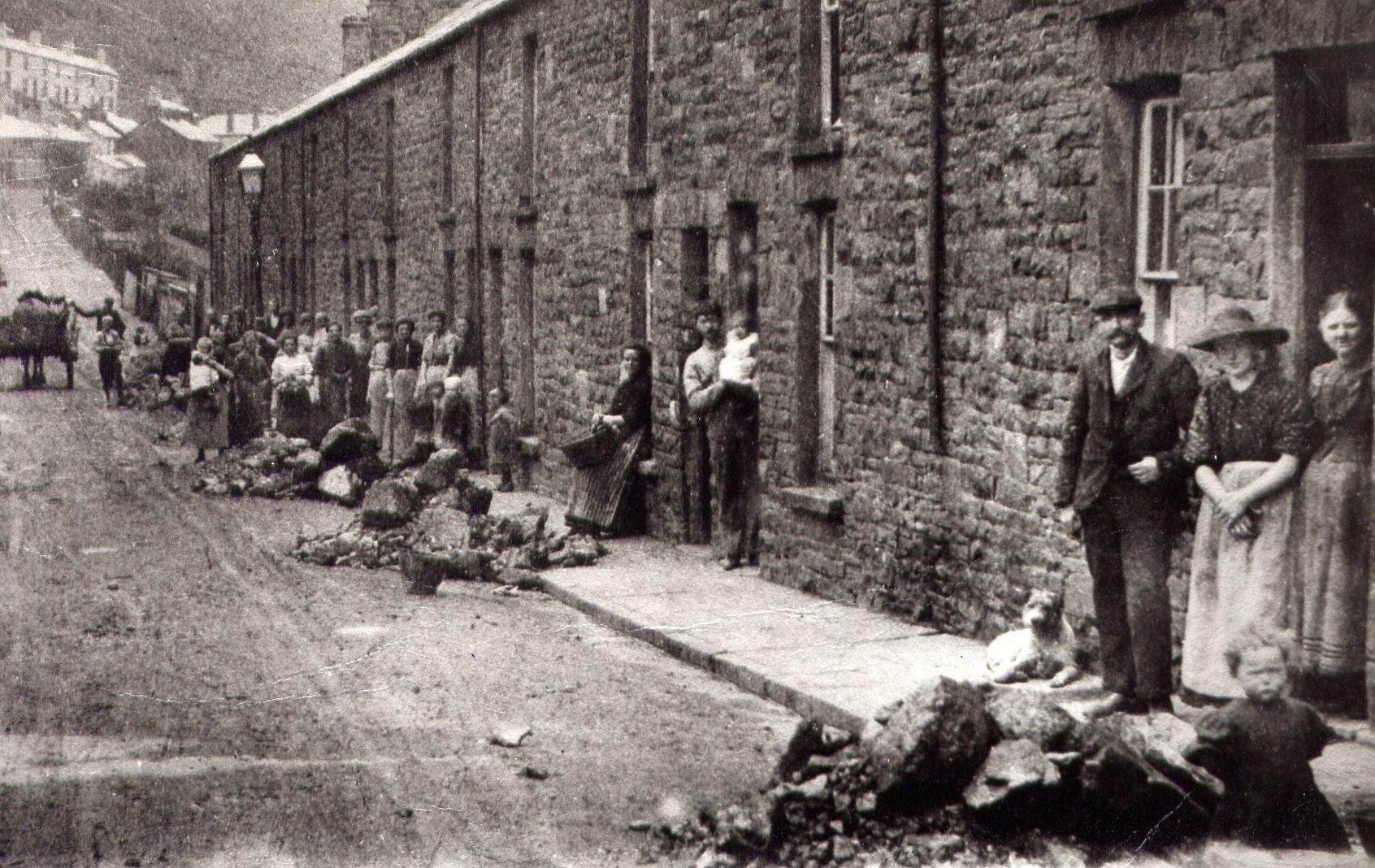
I fear that everything is being turned into AI slop: history, politics, even love. Once we can’t distinguish between reality and fantasy, truth and lies, society becomes collectively psychotic.
AI is changing us as human beings. The ubiquity of AI, rendering the past into a version that best suits modern authoritarians, is terrifying.
History written by its victors has always existed; imperial powers, oligarchies, and giant corporations mould “official” history, normalising their oppression of foreign nations and the poor in their own countries. However, this curation of reality became worse in the 21st century as society shifted from analogue to digital mass communication. In that new environment, neoliberalism spread across democracies like an invasive species. This dominant political/economic ideology destroyed the institutions that once preserved and promoted working-class history, socialism, and independent thinking. We are now nearly defenceless against the end of historical truths.
It’s why I believe my father’s Harry’s Last Stand project, which consisted of five books and the now-finished Green and Pleasant Land, is important today. In these books, my father used his personal odyssey across Great Depression Britain and the Second World War to explore his life and defend the necessity of the Welfare State as it protects civilisation against the few. I am sending Volume One of The Green and Pleasant Land to my father’s old publisher in the first week of September, come hell or high water. Below are two chapters from it.
Most nights, following a day of slaughtering livestock, Bill drank just enough rum to make himself irritable and worrisome to those around him. He was unkind, verbally abusive and menacing but not physically violent. That was something Moxon kept in reserve, like some men save their best shirt for Saturday night.
During the week, Mum never touched alcohol, which didn’t make her any less volatile. Anxiety over money made Mum angry and panicked. Her tongue was a dagger of insults, and her threats were thrust against her children’s emotional well-being. Once, a customer tipped me for delivering their coal.
“They’ve got boys to do a man’s work. England has gone to hell in a handbasket.”
When Mum discovered I had used the money to buy sweets for Alberta and me, she hollered.
“Do you want us all dead from hunger because that money is for everyone, Greedy guts.”
Bill also became Mum’s target as she found that showering him with love wasn’t making him a better provider. Perhaps a few sharp words might focus his attention on keeping our household afloat.
“Maybe, if you bought less rum, we’d have something better to eat than fried bread.”
It didn’t. Instead, Bill took note of her scratching at his sense of self-worth and stored it away as a resentment to be paid back in full when he was properly drunk at the weekend.
I avoided them when I wasn’t at work or school because the outbuilding was already stifling without their vicious bickering. Alberta said, “They are like two alley cats circling each other, getting angrier and angrier until claws come out and fur flies.”
For Mum and Bill, that moment always began on Friday at tea time and lasted until Sunday at bedtime.
It was forty-eight hours of angry, spiteful words, curses, and invective, but it was not always limited to that. There was always the possibility it would go further because Bill treated Saturday night as he did shore leave during his stint in the Royal Marines. He drank until he passed out. As for the time in between, Bill believed that was his to do as he pleased, even if it harmed others.
Mum joined Bill on these weekend piss-ups less as a companion and more as a sentinel to stop our meal ticket from spending his entire pay packet. My mother also tagged along because she didn’t trust Bill to be faithful to her. His eyes too often lingered longingly on the pub’s barmaid, and she returned his interest.
Saturday drinking gave them no joy, but it gave them licence to unleash their rage at each other or anyone who got between them and a pint or a swig of gin. The more Bill drank, the more rankled he became about my mother and her children. The drink and his stupidity convinced Bill that he was a cuck for supporting Mum and her kids.
Moxon thought himself a fool everyone laughed at for having a soft heart.
It was a motif that reached a crescendo after the last bit of gin or beer was gone on Saturday night.
“You caught me, Lil, with lies. A mountain of lies. Nothing but rubbish from yer gob. You and your useless children are nowt but trouble for me.”
Then Bill would overturn the kitchen table, sending beer bottles, plates, and empty jam jars we used for cups crashing onto the stone floor.
Every Sunday morning, the stone kitchen floor resembled a beach strewn with the wreckage of a ship cast onto land by an ocean storm.
Alberta and I were, in turn, terrified and disgusted by the verbal and emotional violence Bill and Mum hurled at each other every weekend. We knew our lives were hostage to their regrets, drunkenness, and violence.
It was like being forever in a trench, suffering heavy bombardment from enemy guns. Silence turned to shrill voices, tears to accusations, love to vitriol and contempt.
From weekend to weekend, while Bill and Mum stormed at each other, my sister and I tended to Matt, whose early years were nurtured by siblings who were still just children themselves.
Bill didn’t beat Mum every weekend, but on enough of them, their yelling crossed an unmarked border between verbal abuse and physical assault.
Each weekend, my sister and I slept uneasily, bracing for Mum’s cries of pain and fear because Bill believed he had the right to strike a woman if she irritated him.
In the early hours of many Saturdays, Alberta and I were jarred awake by the sound of Bill’s open hand or fist hitting Mum.
We scrambled downstairs to protect her.
We’d find Mum on the ground, being kicked by Bill. Together, Alberta and I would leap on his back and hit him with our fists.
“Get off me,” Bill yelled. “Or I’ll clobber you!”
We didn’t stop, even when he began hitting us.
We held onto his back until Mum escaped him.
Moments later, she stood, blood dripping from her lips, with eyes black and swollen.
“That’s enough, Bill. Alberta, Harry, get off him. Stop this now.”
Bill Moxon never met a job he couldn’t lose thanks to his short fuse.
One day, Bill was too hungover, and his temper got the better of him. A foreman said something harmless, and Bill went off like a bull at a red flag. Bill punched his boss and was sacked on the spot.
Naturally, he took his anger out on my mother and broke his rule of only hitting her on weekends.
After Bill became unemployed, nothing kept us in Sowerby Bridge.
So my mother’s boyfriend decided that because he always got into rows with his bosses, he should become one himself. Bill convinced a landlord in King Cross on the outskirts of Halifax to let him use a hole-in-the-wall building to open a butcher shop.
It was a shop for those too skint to afford anything better than meat not fit for dogs.
We packed up what little we had, left the bleak, dishevelled stone outbuilding that stood on top of the moor above the village, and never looked back.
At King Cross, Mum believed things were looking up.
“The jobs are coming back. I can feel it. Look all around here. The skies are thick with coal smoke.”
She needed to believe we had moved on to somewhere better, and that Bill’s new business might finally lift us up.
But it wasn’t true.
In 1934, 2.5 million men were out of work, or around 17% of the workforce.
In Yorkshire, it was worse. In mining and manufacturing, almost half of the workforce wasn’t employed.
We left Sowerby Bridge as light as we came. Memories from the past, especially what we had done to my father, were the heaviest baggage we brought to King Cross.
I hadn’t seen my father in three years and struggled to remember the soft cadence of his Yorkshire accent.
Still, I avoided talking about him, even to Alberta.
Even before our first night in King Cross, Bill said to me:
“Lad, when I was in the navy, lazy sods were tossed overboard.”
He didn’t need to say it twice.
I began looking for work the next day.
A few miles from our new lodgings, a Jubb’s outlet had a Delivery Boy Wanted sign in its front window.
Inside, the manager asked if I could ride a bike and handle heavy lifting.
When I said yes, he hired me immediately.
It was arduous work. At the beginning of my shift, I loaded 40 pounds of groceries into a woven basket mounted atop the bike’s front tyre. Most days, I pedalled a 20-mile route across Halifax and the rural areas surrounding King Cross.
I did my duties energetically and without complaint because I wanted to be known as a “good worker.”
Emotionally, I understood my servitude was unjust, and I resented how I was meant to live.
Yet, I concealed my true feelings from those above my economic station.
They wouldn’t have listened anyway. I knew that from how middle-class kids saw me, as if I were beneath them and not wholly human.
I was someone not equal to them, but there to make their lives less burdensome.
To them, I existed to be their workhorse.
Their fathers’ wages, grammar school upbringing and class snobbery made them believe they were naturally superior to the working class.
I despised them and envied them.
As I huffed and puffed, sweated and groaned while transporting my cargo, I caught glimpses of middle-class kids on their way to birthday parties, music lessons, or the matinee.
Sometimes, a middle-class kid did react to my presence. It was an awkward and uncomfortable glance one might give an animal burdened with cargo.
After a few months at Jubb’s, the manager expanded my duties to include working behind the counter.
He liked keeping me at the front of the store because he was having an affair with one of the married female clerks and spent much time with her in the back storeroom.
I caught them having sex on the sugar sacks once too often.
But instead of firing me, the manager gave me the task of designing the store’s window display.
I became so adept that one of my displays took second place in a community-wide competition.
I began smoking at the age of eleven because my manager said it would give me more energy and stop me from feeling hungry.
Every week, I bought Woodbine cigarettes for two pennies a packet of five fags.
At break time, I stood outside, placed a fag on my lips, and struck a match.
The coarse tobacco soaked into my callow lungs, made my head dizzy, but quieted my hunger pangs.
Next door to Jubb’s was a high-end chocolate confectioner.
Locally, the shop was renowned for its hand-crafted chocolates whose price made them far out of reach of an ordinary worker.
When cleaning the stoop at Jubb’s, I’d glance at the shop’s clientele and feel both envy and hatred at their affluence. The chocolate confectioner’s customers didn’t even bother to notice me.
With a reputation for excellence, the shop routinely discarded entire boxes of chocolates deemed unsatisfactory.
They were dumped in a bin behind the store that they shared with Jubb’s.
Out back, in the rubbish bin, were exquisite boxes of chocolates wrapped with bows and ribbons, buried treasure amidst rotting produce.
It seemed too good to waste.
And many times, at the end of my shift, I dove into the rubbish bin to fish out a box.
The top layers were usually mouldy, but the chocolates beneath were perfectly edible.
So I brought them home to share with the rest of my family.
Eating them gave me a taste of how the better half of Yorkshire lived and left a sour feeling in my stomach. They had so much, and the rest of us so little.
Thanks for reading and supporting this Substack. Without your loyalty, I honestly don’t know where I’d be. You’ve helped keep both my father’s legacy alive and the wolf from my door.
The last few months have been difficult. New subscriptions have slowed, and some long-time readers have had to step away because of the cost-of-living crisis. August is naturally slow because it marks the end of summer and people are on vacation and wanting to escape the politics of today.
The first week of September, The Green and Pleasant Land will be sent to my father’s old publisher for consideration. A small independent publisher has already expressed interest in bringing it into print, which is heartening. But for my father’s legacy, and for the book itself, it makes sense to try first for the widest possible readership.
I’m starting my rent appeal earlier than usual, so I’m offering annual subscriptions at 20% off. Seven new subscribers should put me over the top for September. My subscription rates haven’t changed since 2021: $3.50 a month or $30 a year.
Take care,
John
No posts
Comments
Nothing yet. Say the first thing.
Sign in to join the conversation.