
If I tell people that I am a community archaeologist, they often nod politely. Sometimes they imagine volunteers digging in a muddy trench. Others think of local history groups, museum events or school visits.
The truth is that community archaeology can be all of these things.
Over the years I have come to realise that there is no single model of community archaeology. More importantly, there is no single reason for doing it.
To explain what I mean, I need to begin long before I ever picked up a trowel.
Looking for Something Better
Back in the 1980s I worked as a social housing officer in Plymouth, Poole and Cambridge. It was rewarding work, but increasingly frustrating. The number of houses available to help people was shrinking and my ability to improve lives felt constrained by decisions far beyond my control.
I found myself looking for something different. Something that inspired me.
That something turned out to be archaeology.
For three years I had been spending my holidays on a training excavation at Symons Castle, near Churchstoke in the Welsh Marches. Looking back, I now realise that I was already experiencing one form of community archaeology.
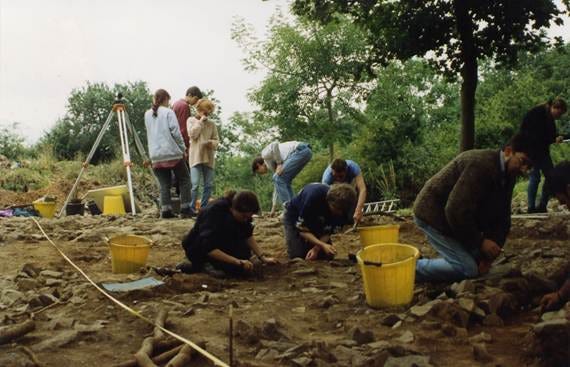
Trainees and staff excavating at Symons Castle in the Welsh Marches during the late 1980s. Looking back, this was my first experience of community archaeology.
The training dig is one of the oldest and most successful models. Participants pay to attend, receive practical training and become involved in genuine research. In return, the project gains the workforce needed to undertake excavation. It is a partnership rather than a transaction.
Today organisations such as DigVentures have refined this model, but the principle remains the same. Archaeology becomes something people do rather than simply observe.
What Is the Point of Archaeology?
When I arrived at university in York in 1992, one of the first essays we were asked to write posed a deceptively simple question:
What is the point of archaeology?
My answer was shaped less by archaeology than by housing.
Many of the people I had worked with were interested in the past. They watched documentaries, visited museums and enjoyed local history. Yet many also felt excluded from deeper participation. Archaeology seemed to belong to experts, academics and television presenters.
I began to wonder whether archaeology could become a way of expanding people’s experience of the world.
That question has stayed with me ever since.
Different Ways of Doing Community Archaeology
Over the years I have encountered several different approaches.
The simplest is outreach.
Developer-funded archaeology carries out most excavation in Britain today. Increasingly, archaeologists recognise the importance of sharing their discoveries through open days, talks and public engagement. Rather than working entirely behind closed fences, projects invite communities to see what has been found beneath their feet.
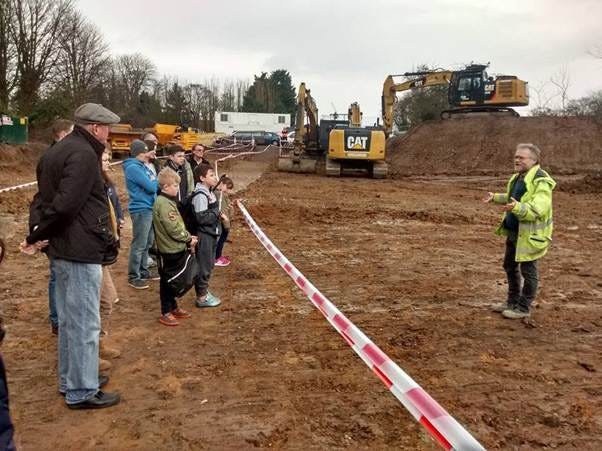
Public engagement during a developer-funded archaeological project in Thorne.
Outreach is one important form of community archaeology.
A second approach is the training excavation. Here the archaeologist identifies a research opportunity and invites people to join the investigation. Participants gain skills, confidence and experience. Archaeology comes first and the community forms around it.
But there is another approach that has become increasingly important in my own work.
Starting with the Community
In the late 1990s and early 2000s, heritage funding bodies became increasingly interested in community identity and local participation.
When I joined York Archaeological Trust and later worked on the Greater York Community Archaeology Project, I found myself developing relationships with local history groups, parish organisations and community volunteers.
Instead of starting with an archaeological site, we often started with a question.
Why does our village or district in a city like York look the way it does?
Where was the medieval settlement?
What happened to the manor?
Can we better understand the landscape around us?
The community supplied the curiosity. My role was to help develop research questions, identify evidence, seek funding and support volunteers in their investigations. Over the years this approach has led to projects at places such as Skipwith, North Duffield, Osgodby and Cawood, each beginning with local people asking questions about the places where they live.
This is what I think of as a bottom-up model.
It is not better than the training excavation model. Nor is it worse. It is simply different.
Over the years I have practised both approaches.
Learning as Community Archaeology
Community archaeology is not limited to excavation.
Many people encounter archaeology through education.
Today I spend a significant amount of my time teaching courses on subjects ranging from Vikings and the Maya to medieval medicine and DNA research.
At first sight, teaching and excavation may seem very different activities. Yet both are fundamentally about participation.
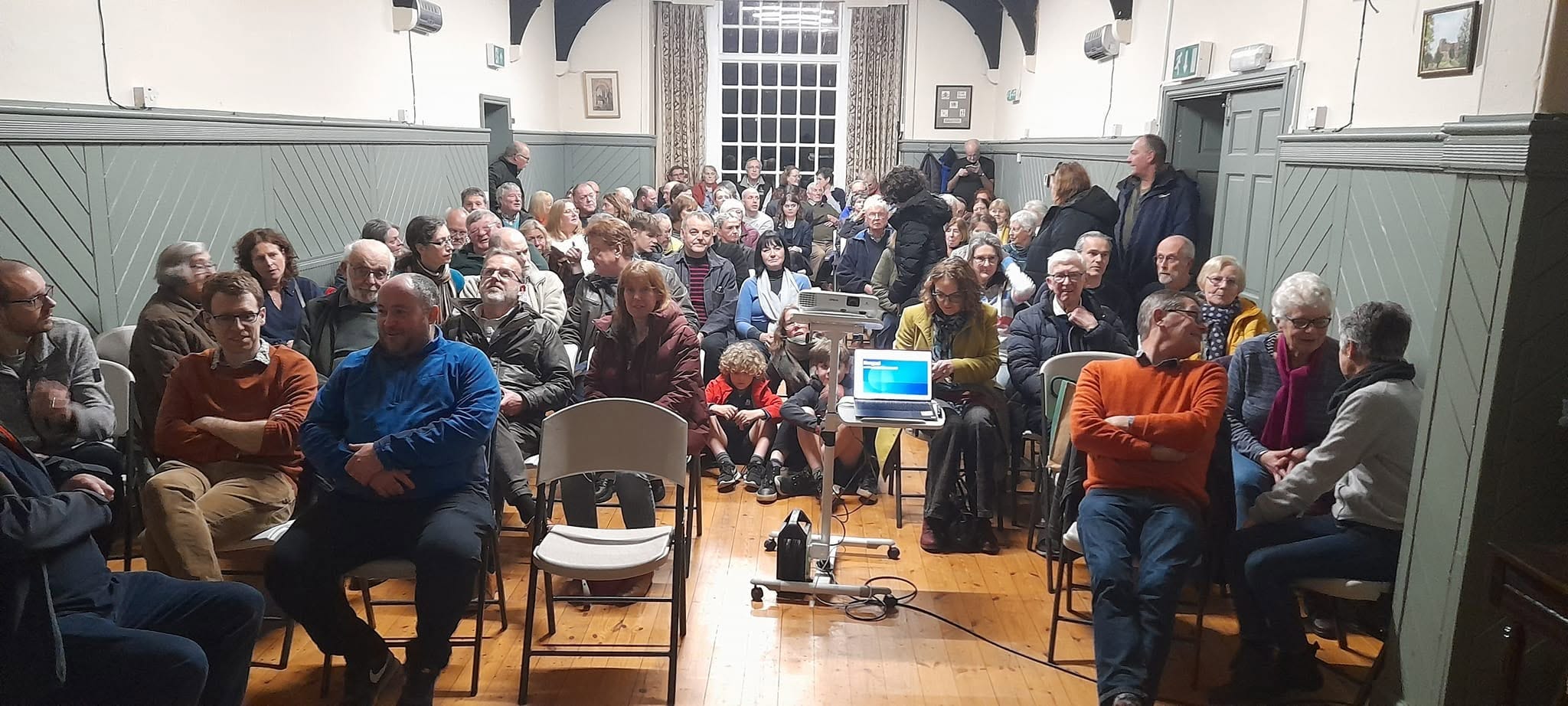
The village turns out to discuss a project at Kirk Hammerton.
Community archaeology often happens in village halls as well as trenches.
People learn new skills. They meet others with shared interests. They gain confidence in understanding evidence and interpreting the past.
In many cases today’s student becomes tomorrow’s volunteer archaeologist.
The Question Nobody Asks
There is one question that rarely appears in discussions of community archaeology.
Who pays for it?
People often assume that archaeological projects simply happen. Yet every excavation, survey, workshop, course and publication requires time, expertise and resources.
The answer is usually a mixture of:
Grant funding.
Educational activity.
Consultancy work.
Participant fees.
Partnerships.
Volunteer effort.
A community group may provide local enthusiasm and knowledge. Grant funding may support equipment, fieldwork and even professional guidance and learning from someone like me! Educational courses may generate income that helps sustain wider activities. Volunteers contribute thousands of hours of effort.
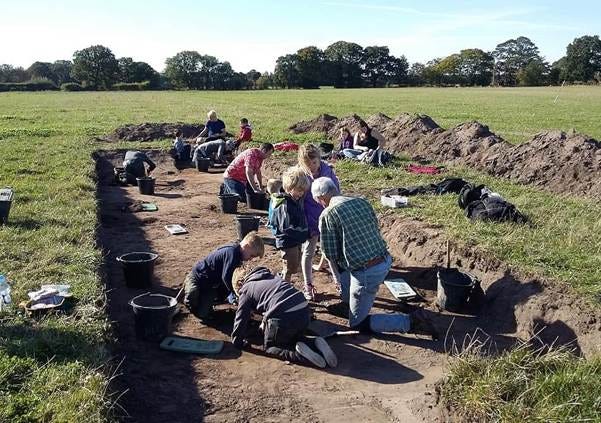
Volunteers of all ages excavating as part of a community-led research project in North Duffield in Yorkshire.
Community archaeology rarely survives through a single funding source.
Instead, it depends upon a network of relationships and opportunities.
Archaeology, Wellbeing and Community
Then came COVID.
Like many people, I began to think more carefully about wellbeing and why community activities matter.
In truth, I realised that wellbeing had always been part of my motivation.
People often talk about archaeology as if it is about the distant past. Yet much of its value lies firmly in the present.
Community archaeology encourages people to get outdoors. It helps people meet others. It creates shared goals and shared achievements. It develops confidence and skills. It strengthens connections to local places.
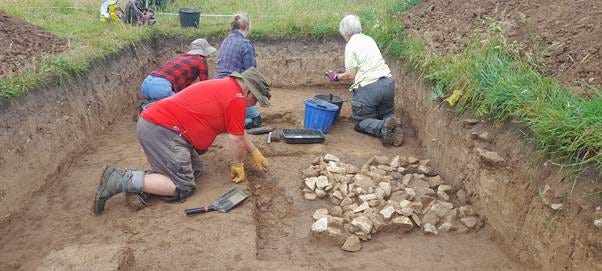
Community archaeologists uncovering the remains of a medieval building in Hook.
Archaeology is as much about people as it is about the past.
Most importantly, it is fun.
Whether I am working with local history groups, community excavations, adult education classes or York People First, I repeatedly see people gaining something much more than historical knowledge.
They gain belonging.
Why Community Archaeology Matters
There is no single model of community archaeology.
Sometimes archaeologists create opportunities and invite people to participate.
Sometimes communities bring their own questions and archaeologists help them find answers.
Sometimes the process happens through excavation. Sometimes through research, teaching, oral history or landscape study.
The approaches are not mutually exclusive. Many of the most successful projects move between them.
For me, community archaeology has always been about helping people engage with the past in meaningful ways.
Perhaps that takes me back to the question I was asking as a young housing officer in the 1980s.
How can we help people expand their experience of the world?
Archaeology turned out to be my answer — and community archaeology became the way I put that answer into practice.
No posts
Comments
Nothing yet. Say the first thing.
Sign in to join the conversation.